Strategic Plan
-

Citizens’ attitudes toward taxation in Malawi
Writing in the Office of Cross-College Initiatives' BreakThru blog, political science Ph.D. student SangEun Cecilia Kim finds that poverty is the most common factor driving the tax aversion of Malawi citizens. Read MoreNov 15, 2017
-

LGBT rights and health on the African continent
The recent decriminalization of homosexuality in Mozambique has not made it easier for LGBT advocacy groups to support these populations within the country. Read MoreNov 10, 2017
-

South African prison life: The importance of religion to inmates and ex-offenders
Many incarcerated South Africans find religion in prison, found undergraduate Zoe Psakis. Read MoreNov 9, 2017
-

College career expert: Four myths about job-hunting in college, and what to do right now
As college students prepare to head home for Thanksgiving, many of them are bracing for a question they may not be able to answer: “What do you want to do after you graduate?” Read MoreOct 26, 2017
-

Cell signals that trigger wound healing are surprisingly complex
Vanderbilt scientists have taken an important step toward understanding the way in which injured cells trigger wound healing, an insight essential for improving treatments of all types of wounds. Read MoreOct 3, 2017
-

New research on Fragile X syndrome reinforces importance of early detection
New insights into the long-lasting effects of Fragile X syndrome on connections in the brain during early development highlight the importance of early detection and treatment. Read MoreAug 25, 2017
-

Eclipse at The Ingram Commons
Watch as the class of 2021 join together to experience a once in a lifetime full solar eclipse on The Ingram Commons. Follow Vanderbilt on Twitter: https://twitter.com/vanderbiltu, on Instagram: http://instagram.com/vanderbiltu and on Facebook: https://www.facebook.com/vanderbilt. See all Vanderbilt social media at http://social.vanderbilt.edu. Read MoreAug 24, 2017
-

Vanderbilt University community gathers for VU Eclipse 2017
Vanderbilt University students, faculty, and staff joined together to witness a once-in-a-lifetime event: a total solar eclipse. Read MoreAug 24, 2017
-

VUSN and VUMC researchers receive FAANP funding for Choosing Wisely collaborative study
A collaborative project between Vanderbilt University School of Nursing and Vanderbilt University Medical Center has received funding to pilot a project aimed at demonstrating the influence of nurse practitioners in reducing unnecessary testing. Read MoreAug 14, 2017
-
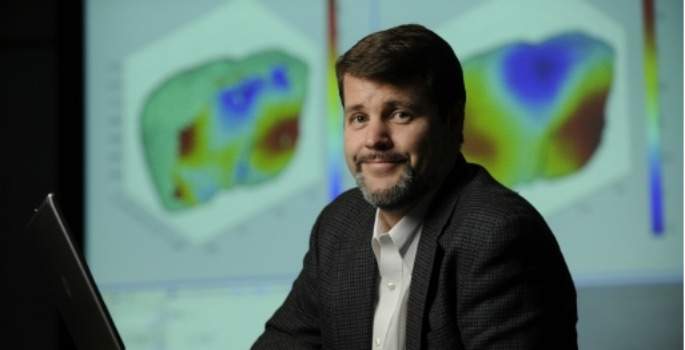
New tools help surgeons find liver tumors, not nick blood vessels
The liver is a particularly squishy, slippery organ, prone to shifting both deadly tumors and life-preserving blood vessels by inches between the time they’re discovered on a CT scan and when the patient is lying on an operating room table. Vanderbilt University’s Michael Miga and his team have published the potential solution. Read MoreJul 17, 2017
-

Cotton candy capillaries lead to circuit boards that dissolve when cooled
Leon Bellan made a dissolving circuit board that, so far, just turns on an LED light. Its potential applications are far more promising. Read MoreJun 26, 2017
-
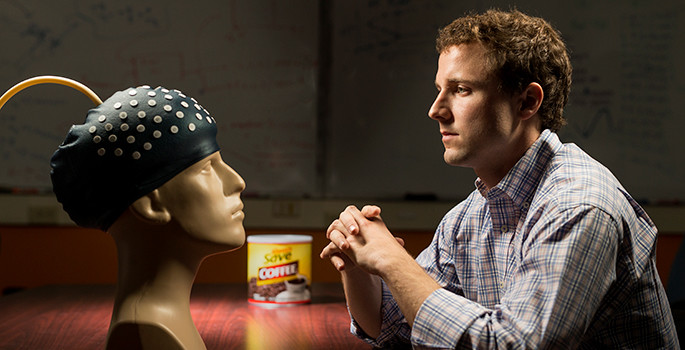
How six cups of ground coffee can improve nose, throat surgery
Vanderbilt engineers have designed a “granular jamming cap” filled with coffee grounds that can improve the accuracy of the sophisticated “GPS” system that surgeons use for nose and throat surgery. Read MoreJun 20, 2017
-

Forget sponges: the earliest animals were marine jellies
A powerful new method has been devised to settle contentious phylogenetic tree-of-life issues. such as "What is the oldest branch of the animal family tree?" Read MoreApr 10, 2017
-

Risky business
Vanderbilt investigators have developed hospital readmission models that may help prevent payment penalties to hospitals when patients are readmitted too soon after discharge. Read MoreApr 5, 2017
-
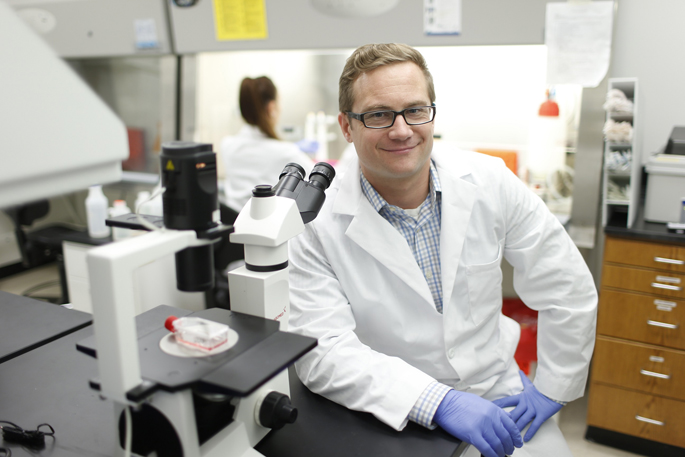
Vanderbilt investigator lands Stand Up To Cancer grant for “smart” nanoparticles cancer research
John Wilson, Ph.D., assistant professor of Chemical and Biomolecular Engineering and of Biomedical Engineering at Vanderbilt University, has received an Innovative Research Grant from Stand Up To Cancer (SU2C). Wilson is among 10 early-career scientists to receive the grant awards focused on immuno-oncology. Read MoreApr 3, 2017
-

A molecular clue to longevity
In budding yeast, accumulation of a certain type of RNA in the nucleus increased life span, offering a new clue to longevity. Read MoreMar 31, 2017
-

Organ-on-a-chip mimics heart’s biomechanical properties
Scientists at Vanderbilt University have created a three-dimensional organ-on-a-chip that can mimic the heart’s amazing biomechanical properties in order to study cardiac disease, develop heart drugs. Read MoreFeb 22, 2017
-
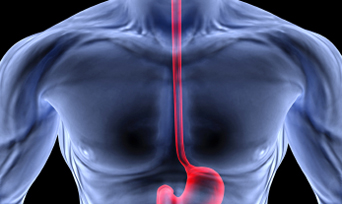
Improving therapies for GI tumors
A signaling protein overexpressed in upper gastrointestinal cancers is an attractive therapeutic target. Read MoreFeb 20, 2017
-
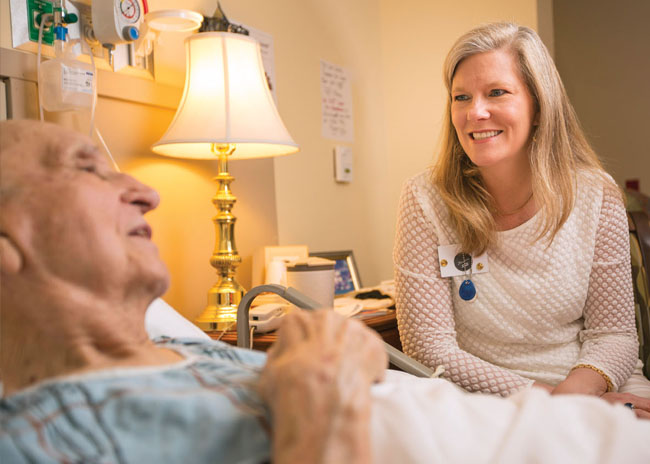
Hospice and Heart
Frequently busy with meetings, planning sessions and administrative responsibilities, Alive Hospice President and CEO Anna-Gene O’Neal welcomes the chance to slip out of her office and spend time with residents and staff in Alive’s residence near downtown Nashville. On this particular rainy morning, she sits by resident Knox Ownby’s bed… Read MoreFeb 19, 2017
-

New technique helps ease ear tumor surgery
Last fall, the Vanderbilt Bill Wilkerson Center became the second facility in the country and third in the world to use a fully endoscopic surgical technique to remove an acoustic neuroma, a rare benign tumor on the balance and hearing nerves. Read MoreFeb 16, 2017