Psychology
-

Society for Neuroscience honors Vivien Casagrande
Vivien Casagrande, a longtime professor of biology and psychology who died in 2017, has been honored by the Society for Neuroscience for her dedication to the advancement of women in neuroscience. Read MoreNov 11, 2018
-

Why does it take humans so long to mature compared to other animals? Look to your neurons!
How long humans and other warm-blooded animals live—and when they reach sexual maturity—may have more to do with neurons in their cortex than body size or mass, according to new research by Associate Professor of Psychology Suzana Herculano-Houzel. Read MoreOct 30, 2018
-

Center for Integrative and Cognitive neuroscience hosts workshop
The Center for Integrative & Cognitive Neuroscience hosted the 6th Workshop on Computational Properties of Prefrontal Cortex. Read MoreOct 19, 2018
-
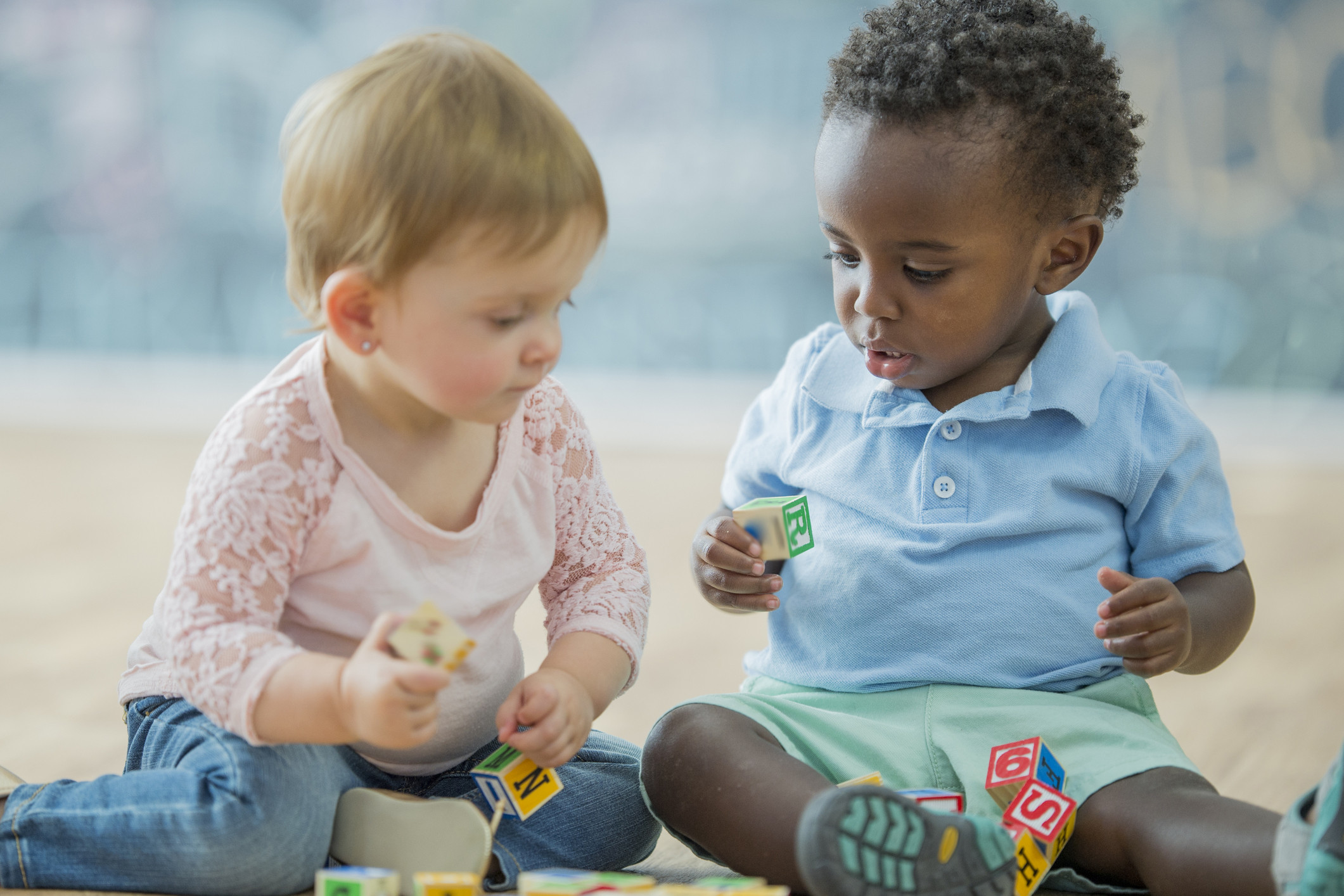
Can colorful blocks prep preschoolers for a future in math? This study says yes.
Patterning and spatial activities like block play are simple yet powerful activities in which preschoolers develop early math skills, according to a growing body of research by Vanderbilt scholars. Read MoreAug 27, 2018
-

Learning arithmetic refines the primal brain system for representing quantity
A new Vanderbilt study challenges the causal role of the Approximate Number System in mathematical ability. Read MoreJul 23, 2018
-

NSA Lablet at Vanderbilt to make sure America keeps moving after hacks
It’s not a question about whether cyber-physical systems connecting humans and technology are hackable—it's how to keep them running after inevitable hacks occur. The National Security Agency is giving a Vanderbilt University team and their collaborators five years and several million dollars to figure out how to make that happen. Read MoreMay 7, 2018
-

Class of 2018: Briana Francois wants to make content that resonates and entertains
The only thing Briana Francois enjoys more than watching TV and digital content is creating it. Her double majors in psychology and cinema and media arts have allowed her both to examine human behavior and represent it authentically on film. Read MoreApr 26, 2018
-
How the brain learns a second language is focus of Vanderbilt study
Vanderbilt University has received a four-year, $552,273 grant from the National Science Foundation to fund new research examining how the brain learns a second language. Read MoreApr 18, 2018
-
Vanderbilt education faculty to showcase research at AERA April 13-17
The AERA annual conference, “The Dreams, Possibilities and Necessity of Public Education,” will be held in New York City. Read MoreApr 10, 2018
-

Vanderbilt’s Gavin Price receives NSF CAREER Award
The National Science Foundation has awarded a Faculty Early Career Development Grant to Gavin R. Price, assistant professor of psychology at Vanderbilt’s Peabody College. Read MoreMar 20, 2018
-

Noted scholars of giftedness to receive lifetime achievement award
Camilla P. Benbow and David Lubinski will receive The International Society for Intelligence Research’s 2018 Lifetime Achievement Award. Read MoreFeb 7, 2018
-
Stephanie Carlson delivers Educational Neuroscience talk Feb. 5
The University of Minnesota's Stephanie M. Carlson will deliver the talk "Executive Function: Development and Relevance for Education" as part of the Educational Neuroscience Speaker Series. Read MoreJan 22, 2018
-

Study finds children think flexibly about gender identity
Children may think more flexibly about gender identity than previously thought, according to a study by Vanderbilt researchers. Read MoreJan 16, 2018
-

Vanderbilt faculty ranked among top influencers in education
Seven professors on the faculty at Vanderbilt's Peabody College of education and human development are once again included in the annual Edu-Scholar Public Influence Rankings. Read MoreJan 11, 2018
-
The 20 most popular research stories of 2017
New clues to Alzheimer's disease, helping kids deal with stress, understanding why our universe is three-dimensional and—of course—electric eels all appear in this year's look back on the research stories that were visited the most frequently on Vanderbilt's website in 2017. Read MoreDec 15, 2017
-
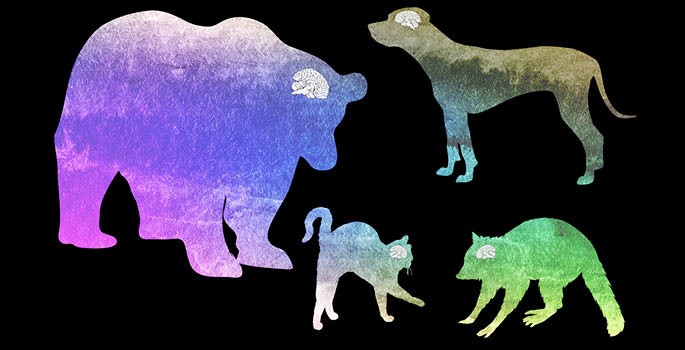
Sorry, Grumpy Cat—Study finds dogs are brainier than cats
The first study to actually count the number of cortical neurons in the brains of a number of carnivores, including cats and dogs, has found that dogs possess significantly more of them than cats. Read MoreNov 29, 2017
-
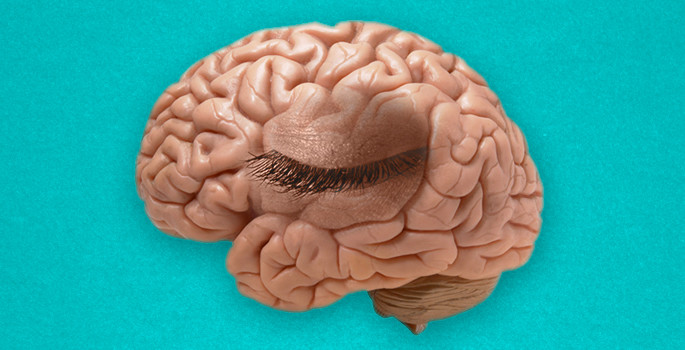
‘Mind’s eye blink’ proves ‘paying attention’ is not just a figure of speech
Vanderbilt psychologists have discovered that when you shift your attention from one place to another, your brain 'blinks'—or experiences momentary gaps in perception. Read MoreNov 21, 2017
-
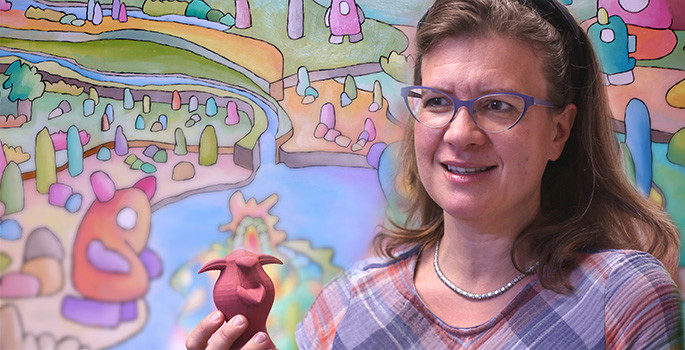
Visual intelligence is not the same as IQ
A new study shows for the first time that there is a broad range of differences in people’s visual ability and that these variations are not associated with individuals’ general intelligence, or IQ. Read MoreNov 7, 2017
-

Herculano-Houzel featured at (Lunch) Box talk Nov. 1
A noted neuroscientist who studies the number of neurons present in the brains of different species, including humans, will discuss her groundbreaking work during a lunchtime talk Wednesday, Nov. 1. Read MoreOct 30, 2017
-
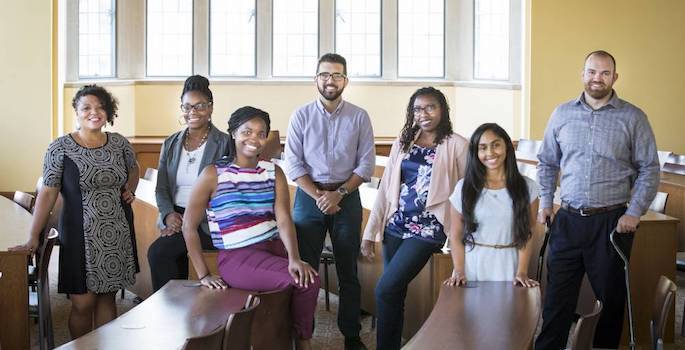
Meet Vanderbilt’s first Academic Pathways fellows
Seven outstanding Ph.D.’s with diverse backgrounds and experiences have come to Vanderbilt to pursue postdoctoral training with an eye toward academic careers. Read MoreOct 27, 2017