Physics
-
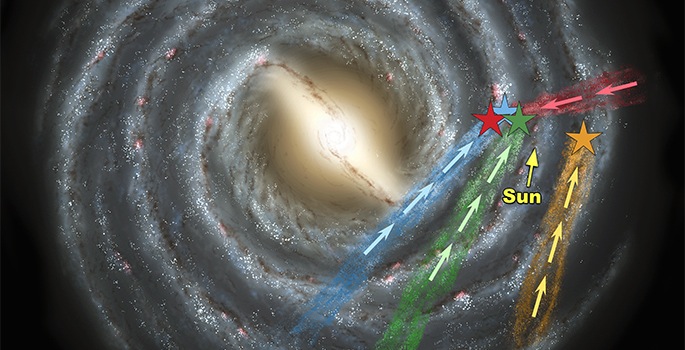
Surprising new class of “hypervelocity stars” discovered escaping the galaxy
Two Vanderbilt astronomers are among an international team that has discovered a surprising new class of “hypervelocity stars” – solitary stars moving fast enough to escape the gravitational grasp of the Milky Way galaxy. Read MoreJan 9, 2014
-

Tennessean op-ed: Solar energy is still in shadows
More can be done with sun-powered electricity source, writes Dennis Hall, vice provost for research, dean of the Graduate School, professor of physics and professor of electrical engineering. Read MoreAug 20, 2013
-

New, simple theory may explain mysterious dark matter
The reason dark matter, which makes up 85 percent of all the matter in the universe, is invisible could be because it possesses a rare, donut-shaped type of electromagnetism instead of the more exotic forces that have been proposed, according to an analysis of a pair of Vanderbilt theoretical physicists. Read MoreJun 10, 2013
-

World’s smallest droplets
Scientists at the Large Hadron Collider, the world's most powerful particle accelerator, may have created the smallest drops of liquid made in the lab. Read MoreMay 16, 2013
-
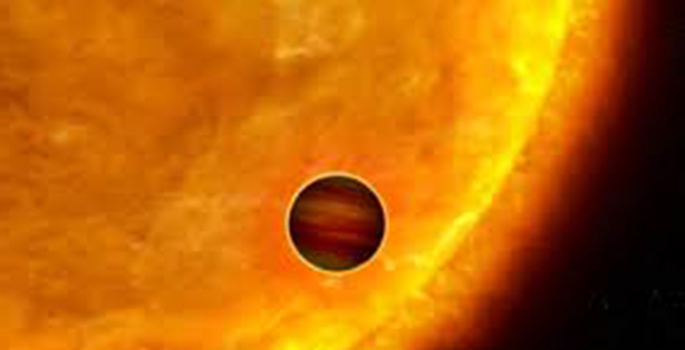
Vanderbilt’s role in new planet-finding space mission
A team of Vanderbilt astronomers will play a key role in the planet-seeking space telescope that NASA has just approved and scheduled for launch in 2017. Read MoreMay 1, 2013
-
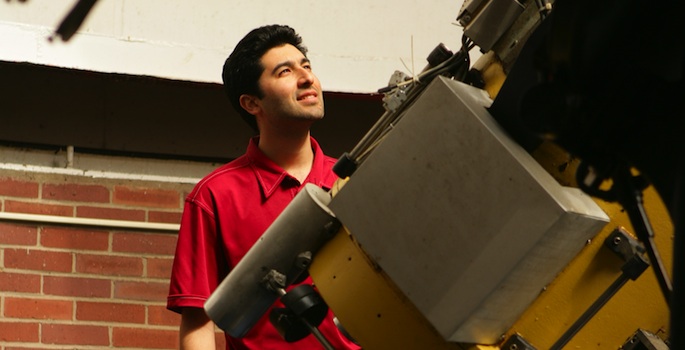
The New Face of Science: How Vanderbilt became a top producer of minority Ph.D.s in STEM
This year the Fisk–Vanderbilt Master’s-to-Ph.D. Bridge program, directed by Keivan Stassun, professor of astronomy, will become the nation’s No. 1 producer of minority Ph.D. recipients in physics, astronomy and materials science. Read MoreApr 16, 2013
-
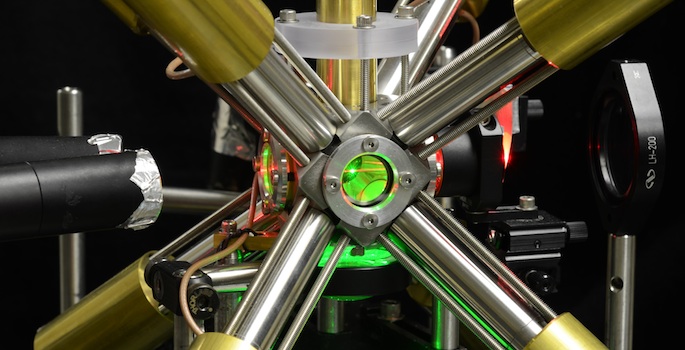
Tabletop plasma generator brings Jupiter’s core to the lab
A Vanderbilt engineering graduate student has created a small-scale, efficient way to produce high-energy density plasma--the state of matter found in the center of stars and gas giants like Jupiter--with a tabletop device. Read MoreApr 9, 2013
-
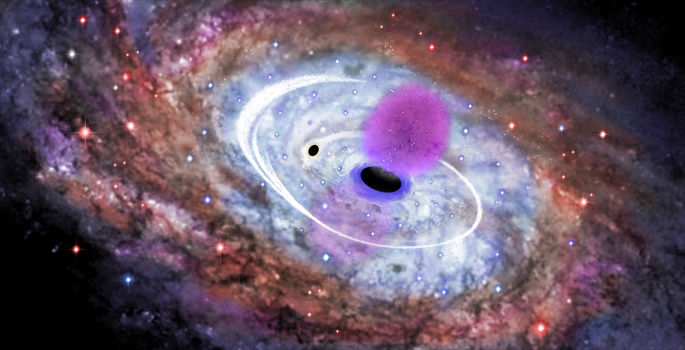
CSI: Milky Way
Two astronomers from Vanderbilt and Georgia Tech, sharing a car after a snowstorm canceled their flights home from a conference, put together everything they had learned at the conference during that snowy drive and worked out that a collision between two black holes could explain most of what is known of a violent episode in the Milky Way's past. Read MoreMar 6, 2013
-

Your Universe Today podcast: Supermassive Black Holes (Part 3)
Kelly Holley-Bockelmann, assistant professor of astronomy and physics, wraps up this three-part podcast series with an interview about her specialty, supermassive black holes. Read MoreFeb 27, 2013
-
Your Universe Today podcast: How stars die and black holes form (Part 2)
Kelly Holley-Bockelmann, assistant professor of astronomy, continues her discussion of black holes in the second part of this interview for Red Orbit. Read MoreJan 28, 2013
-
Your Universe Today podcast: How stars die and black holes form (Part 1)
Kelly Holley-Bockelmann, assistant professor of astronomy, talks about what sets black holes apart from other objects in the universe and explains how the laws of space, time and gravity bend and even break down to create the most destructive force in the cosmos. Read MoreJan 24, 2013
-

Stassun on Producing Minority Ph.D. Recipients
Not long after he arrived at Vanderbilt nine years ago, Keivan Stassun, professor of astronomy, began building on a newly forged alliance with Fisk University, a historically black college just two miles from the Vanderbilt campus, in an effort to increase the number of African Americans, Latinos, Native Americans and other minorities earning Ph.D. degrees in science. Read MoreJan 14, 2013
-
Engineer, astronomer and geologist receive NSF Faculty Early Career Development awards
An electrical engineer who is attempting to make wireless communications more reliable, an astronomer who studies the evolution of the cosmos by creating large numbers of virtual universes and a geologist who is studying the origins of super-eruptions have received the National Science Foundation’s Faculty Early Career Development awards. Read MoreAug 9, 2012
-

“Extremely little” telescope discovers pair of odd planets
A small telescope with a lens no more powerful than a high-end digital camera has discovered the existence of two very unusual exoplanets. Read MoreJun 13, 2012
-
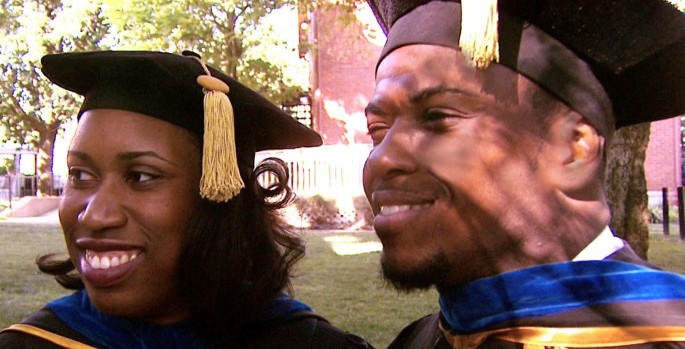
VUCast Extra: Bridging the Gap in the Sciences
Vanderbilt is on track this year to become the number one producer of minority Ph.D. recipients in physics, astronomy and materials science, an area where minorities are grossly underrepresented. Watch the emotional journey of the latest doctoral graduates from the Fisk-Vanderbilt-Master’s-to-Ph.D. Bridge Program. [vucastblurb]… Read MoreJun 8, 2012
-

Physics post-doc headed to Capitol Hill as congressional fellow
Post-doctoral researcher Andrew Steigerwald has been selected by the Materials Research Society and the Minerals, Metals and Materials Society as their 2012-2013 Congressional Science and Engineering Fellow. Read MoreMay 18, 2012
-

Fermilab Today: The consistency of quark soup
Four Vanderbilt researchers collaborated with scientists from the University of Illinois-Chicago, University of Kansas and MIT to describe the consistency of an unusual fluid produced when atoms of lead are smashed in the Large Hadron Collider. Read MoreMay 16, 2012
-
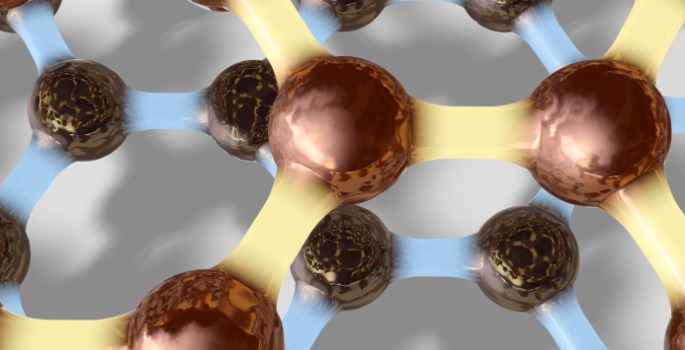
Barrier to faster graphene devices identified and suppressed
Vanderbilt physicists report that they have nailed down the source of the interference inhibiting the rapid flow of electrons through graphene-based devices and found a way to suppress it. Read MoreMar 13, 2012
-
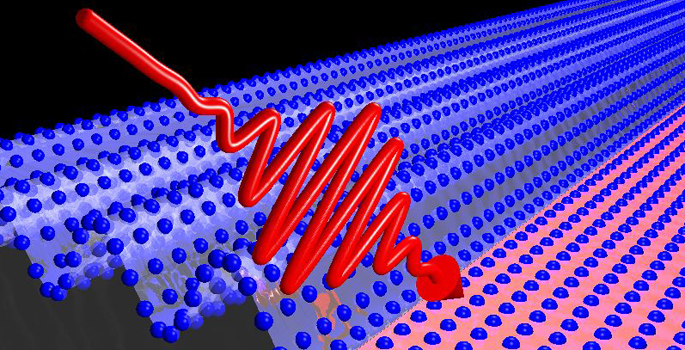
Ultrafast sonograms shed new light on rapid phase transitions
A method for taking ultrafast "sonograms" of materials undergoing phase transitions sheds new light on the dynamics of this important phenomenon in the world’s fastest phase-change material. Read MoreMar 7, 2012
-
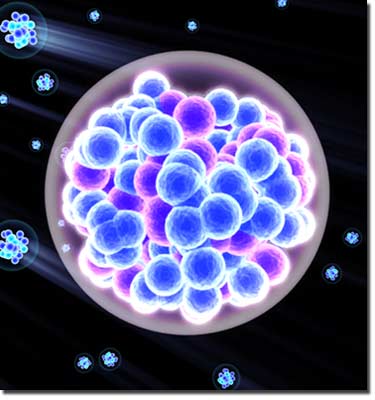
Adding to the periodic table
Nuclear physicist Joseph Hamilton (Daniel Dubois / Vanderbilt) The year has gotten off to a good start for modern-day alchemists like Vanderbilt physicists Joe Hamilton and A.V. Ramayya who are engaged in the extremely challenging scientific endeavor of extending the periodic table by creating new… Read MoreFeb 7, 2012