Physics
-
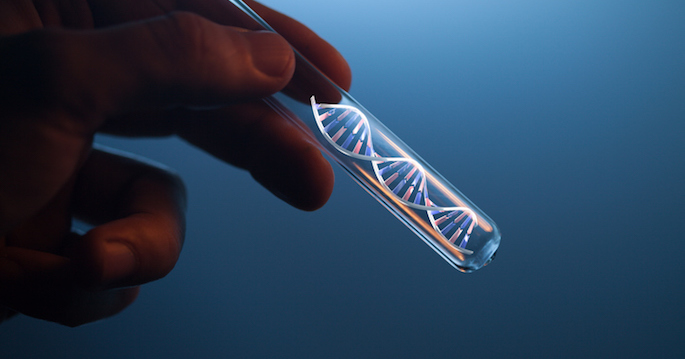
DNA duplicator small enough to hold in your hand
Vanderbilt engineers have developed a new method for duplicating DNA that makes devices small enough to hold in your hand that are capable of identifying infectious agents before symptoms appear. Read MoreJan 11, 2017
-

Measuring elements of life in Milky Way
Astronomers participating in the Sloan Digital Sky Survey have announced the results of the first study that shows how the abundance of the "elements of life" varies across the Milky Way galaxy. Read MoreJan 6, 2017
-
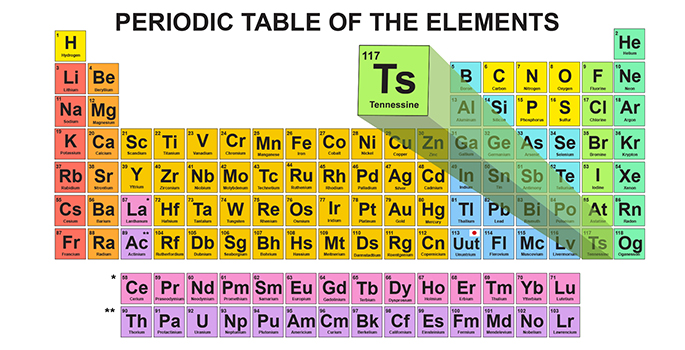
Research that ruled in 2016: Readers’ favorite stories
Artificial kidneys, gay-straight alliances and junkyard batteries captured readers' attention in 2016. Read MoreDec 16, 2016
-

Weird Science: Kit Parker’s breakthrough work on artificial hearts and brain injuries
Expect the unexpected when you walk into Kit Parker’s biophysics lab at Harvard. From cuttlefish skin camouflage to cotton candy machines used for wound dressings, his science is anything but ordinary. In fact, the young scientists inside are just as likely to be playing with crayons to visualize solutions… Read MoreDec 5, 2016
-

Building the Bomb: Vanderbilt Physicists Played a Key Role in Developing the First Nuclear Weapons
In part because much of their work remains classified even after 70 years, the contributions of a group of young Vanderbilt physicists to the Manhattan Project have never received the level of recognition they deserve. Read MoreAug 10, 2016
-

New study supports natural causes, not alien activity, explain mystery star’s behavior
The results of a new study make it far less likely that KIC 8462852, popularly known as Tabby’s star, is the home of industrious aliens who are gradually enclosing it in a vast shell called a Dyson sphere, a theory that went viral over the past year. Read MoreMay 9, 2016
-
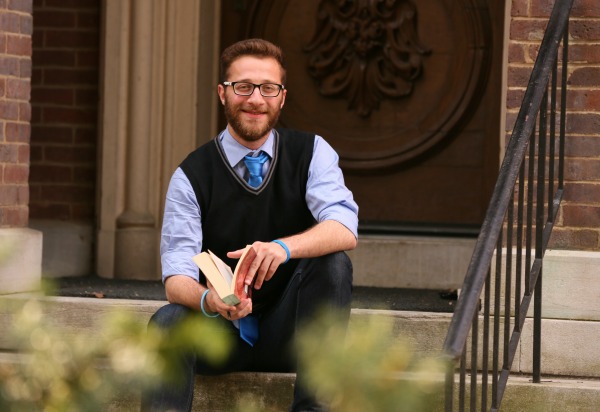
An international student is transformed at Vanderbilt
For international student Rani Banjarian, differences are what make him feel a part of the university community. Read MoreApr 14, 2016
-
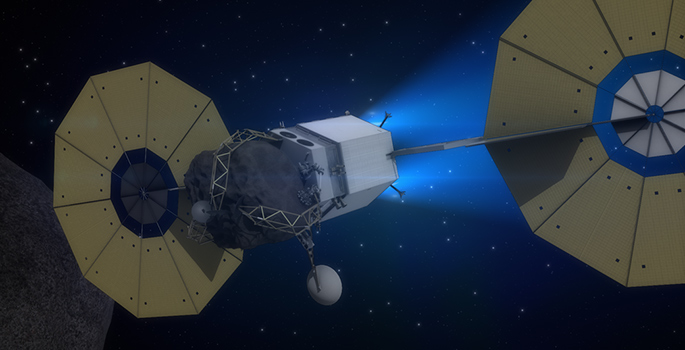
New detector perfect for asteroid mining
A new generation of gamma-ray spectrometer being developed by researchers and students in the Fisk-Vanderbilt Master's-to-Ph.D. Bridge program is perfectly suited for detecting valuable minerals hidden within the asteroids, comets, moons and minor planets in the solar system. Read MoreNov 19, 2015
-
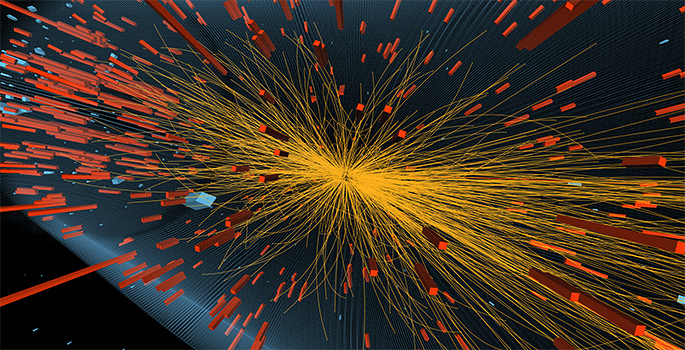
World’s largest atom smashers create world’s smallest droplets
Recent experiments at the world's largest atom smashers are producing liquid drops so small that they raise the question of how small a droplet can be and still remain a liquid. Read MoreOct 2, 2015
-

New Blog Explores Science Fiction
Since launching his blog in April, Professor Robert Scherrer has covered a range of topics, from faster-than-light warp drives and wormholes to the viability of monster ants. Read MoreJul 31, 2015
-

New model of cosmic stickiness favors “Big Rip” demise of universe
A Vanderbilt team of scientists have developed a new formulation for cosmic viscosity which strongly favors the "Big Rip" end of the universe. Read MoreJun 30, 2015
-

World’s smallest spirals could guard against identity theft
Vanderbilt researchers have made the world’s smallest spirals and found they have unique optical properties that are nearly impossible to counterfeit. Read MoreJun 2, 2015
-

The Conversation: Robert Scherrer on dark energy
Explainer: the mysterious dark energy that speeds the universe’s rate of expansion Read MoreApr 24, 2015
-
NSF research grant goes to 16 Vanderbilt graduate students
The grant program is aimed at aiding individuals who have demonstrated notable potential early in their research career, as well as promoting diversity in the sciences. Read MoreApr 8, 2015
-

Vanderbilt and Pittsburgh to lead new center to identify toxic chemicals
EPA is establishing a new center at Vanderbilt University and the University of Pittsburgh to develop an alternative approach for toxicity testing to help evaluate the safety of the 80,000-plus chemicals in general commerce. Read MoreMar 25, 2015
-

Op-ed: World War II technology still with us today
Dennis Hall writes that while 'The Imitation Game' film dramatizes technological discoveries that shortened World War II, there is a lesser known story about radar advances that brought us the microwave. Read MoreJan 19, 2015
-
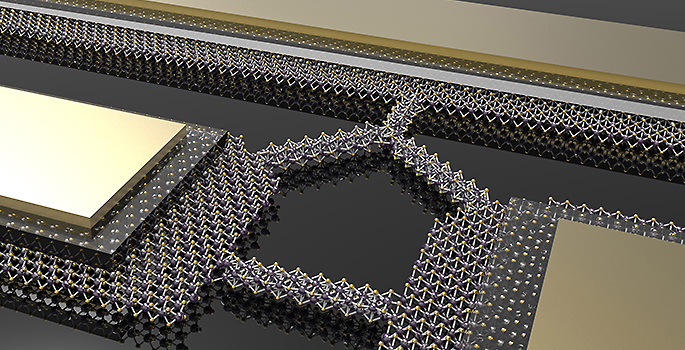
How to create nanowires only three atoms wide with an electron beam
A Vanderbilt graduate student has used a focused beam of electrons to create some of the smallest nanowires ever made, which could bring us closer to flexible, paper-thin tablets and television displays. Read MoreApr 28, 2014
-
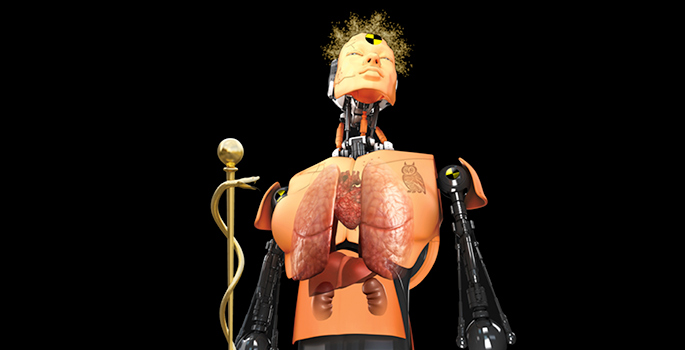
Significant progress toward creating “benchtop human” reported
Vanderbilt physicist John Wikswo reported significant progress toward creating “homo minutus” – a human-on-a-chip that can be used to test drugs and toxins – on Mar. 26 at the Society of Toxicology meeting in Phoenix. Read MoreMar 27, 2014
-
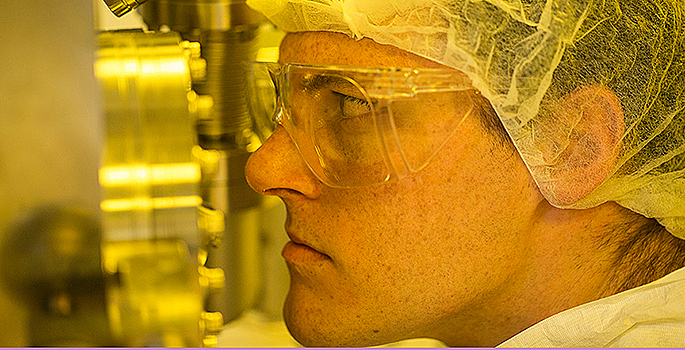
Nanoscale optical switch breaks miniaturization barrier
An ultra-fast and ultra-small optical switch has been invented that could advance the day when photons replace electrons in the innards of consumer products ranging from cell phones to automobiles. Read MoreMar 13, 2014
-

A science fiction short story by Bob Scherrer is podcast
The UK audio science fiction magazine Starship Sofa has published a podcast of "Descartes' Stepchildren," a short story by Robert Scherrer, professor and chair of the Vanderbilt's department of physics and astronomy. Read MoreFeb 10, 2014