Releases
-

Early spatial reasoning predicts later creativity and innovation, especially in STEM fields
Exceptional spatial ability at age 13 predicts creative and scholarly achievements more than 30 years later, according to results from a Vanderbilt University longitudinal study, published in Psychological Science, a journal of the Association for Psychological Science. Read MoreNov 22, 2013
-
Team incentives alone do not boost student performance
Matthew Springer In recent years, policymakers concerned with how to compensate teachers have increasingly sought to tie teacher pay to student outcomes. Market-minded education reformers have also begun to experiment by offering incentives to teachers who demonstrably add value to students’ education. But how effective are such programs? Does altering… Read MoreNov 22, 2013
-
Faculty Notes and Honors
Sun-Joo Cho Leonard Bickman was named professor of psychology, emeritus. Vera A. Stevens Chatman was named professor of human and organizational development, emerita. Chatman will also be inducted into the Academy for Women of Achievement by the YWCA of Nashville and Middle Tennessee and First Tennessee. Sun-Joo Cho, assistant professor… Read MoreNov 22, 2013
-
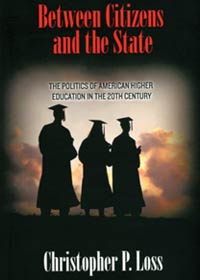
Peabody professor receives AERA Outstanding Book Award
The American Educational Research Association (AERA) presented its 2013 Outstanding Book Award to Vanderbilt University professor Christopher Loss for Between Citizens and the State: The Politics of American Higher Education in the 20th Century (Princeton University Press, 2012) in April. Loss’s book tracks the dramatic results of the federal government’s… Read MoreNov 22, 2013
-
Ford wins SEC Faculty Achievement Award
Donna Ford Donna Ford, professor of special education, is one of 14 university professors recognized by the Southeastern Conference for achievement in research and scholarship. The SEC announced April 10 the winners of its 2013 Faculty Achievement Awards. These annual awards honor professors from the SEC’s 14 member universities who… Read MoreNov 22, 2013
-

Free Vanderbilt teacher professional development course to be offered online
Marcy Singer-Gabella K-12 teachers across the country will have the opportunity to take a professional development course from Vanderbilt University faculty in 2014 via the university’s partnership with leading massive online open course provider Coursera. “Teacher professional development is one of the thorniest challenges in PreK-12 education. Teaching suffers because… Read MoreNov 22, 2013
-
Dean’s Message
Vanderbilt’s Peabody College begins the 2013–14 academic year with nearly a dozen new faculty members, 400 new master’s degree or Ed.D. students, and 35 new Ph.D. students—not to mention our usual complement of highly qualified undergraduates. We are excited! Our enthusiasm is also prompted by the establishment of a new… Read MoreNov 22, 2013
-

Patents should not have to be ‘useful’ to be approved: Vanderbilt professor
New inventions should not have to be useful to merit a patent, says Vanderbilt professor Sean B. Seymore. Read MoreNov 19, 2013
-

Frequent moves hinder children’s early education
The present housing crisis has disrupted the residential stability of families, which is adversely affecting many children’s educational development, according to researchers at Peabody College. Read MoreNov 18, 2013
-
Peabody Welcomes New Faculty for 2013-2014
Department of Human and Organizational Development Sarah VanHooser Suiter (Ph.D., Vanderbilt, 2009), associate professor of the practice of human and organizational development, previously with Centerstone Research Institute Allison Patten McGuire (Ph.D., Vanderbilt, 2005), lecturer in human and organizational development Department of Leadership, Policy and Organizations Angela Boatman (Ed.D., Harvard, 2012)… Read MoreNov 18, 2013
-
Vanderbilt’s Peabody No. 1 education school for fifth consecutive year
In March, Peabody College was named the top graduate school of education in the country for the fifth consecutive year by U.S. & News World Report. Peabody bested programs at Johns Hopkins University (No. 2) and Harvard (No. 3) for the top spot, in addition to having its programs in… Read MoreNov 18, 2013
-

Neon projects elite aura for amateur athletes
Bright-colored products and brands do more than just draw attention. They allow people to signal a personal identity that aligns them with elite athletes, explains Vanderbilt marketing professor Jennifer Escalas. Read MoreNov 13, 2013
-

Vanderbilt study: Hiring practices preventing change in law school faculties
Law school faculties are not changing with the times, and a Vanderbilt Law School professor says it may be time to look at hiring practices. Read MoreNov 12, 2013
-
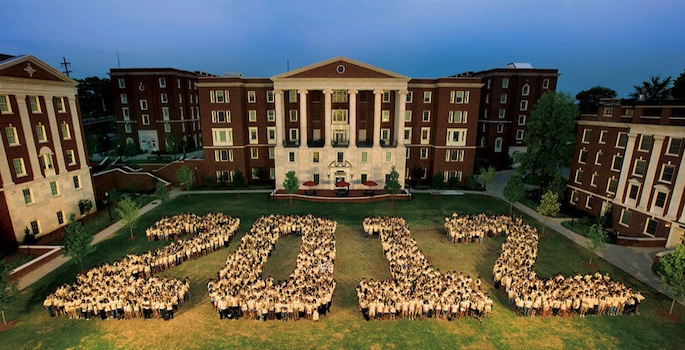
Class of 2012 leads the way in giving back to Vanderbilt
The Class of 2012 is accustomed to leading the way. As freshmen, they became the first class to live at The Martha Rivers Ingram Commons. As seniors, they broke a Vanderbilt record at the time by giving back to Vanderbilt at a rate of 48 percent through the… Read MoreNov 9, 2013
-

Robotic advances promise artificial legs that emulate healthy limbs
Recent advances in robotics technology make it possible to create prosthetics that can duplicate the natural movement of human legs which promises to dramatically improve the mobility of lower-limb amputees. Read MoreNov 7, 2013
-

Understanding the lifelong benefits of preschool
High-quality preschool is an effective way to reduce social problems associated with poverty because it teaches children the psychological skills they need to succeed as adults, according to a Vanderbilt professor who studies the economics of human development. Read MoreNov 7, 2013
-

Tricking algae’s biological clock boosts production of drugs, biofuels
Tricking algae’s biological clock to remain in its daytime setting can dramatically boost the amount of commercially valuable compounds that these simple marine plants can produce when they are grown in constant light. Read MoreNov 7, 2013
-

Involuntary teacher transfers put better teachers with neediest students
Allowing principals to involuntarily transfer teachers within a district resulted in more productive teachers replacing lower performing teachers in mostly disadvantaged schools. Read MoreNov 6, 2013
-
In light of SAC pleas, how to spot too good to be true funds
Nick Bollen of Vanderbilt's Owen Graduate School of Management can talk about SAC Capital and other hedge fund insider trading cases. Read MoreNov 5, 2013
-

Same-sex marriage issue could define Justice Kennedy’s place in history
If circumstances land the right same-sex marriage case in the hands of the U.S. Supreme Court, than Justice Anthony Kennedy may find himself in the history books as the judge who makes gay marriage legal for good, says a Vanderbilt University law professor. Read MoreNov 5, 2013