Research
-
VISE-affiliated researchers conduct phase 1 trial of novel magnetic endoscope for colonoscopies
The research team includes, left to right, Bruno Scaglioni, PhD; Keith Obstein MD, MPH; James Martin, PhD; Claire Landewee; Simone Calò, PhD; and Pietro Valdastri, PhD. (photo by Susan Urmy) by Jill Clendening A Vanderbilt Institute for Surgery and Engineering (VISE) research team is conducting the first phase 1 clinical trial of a magnetic, flexible... Read MoreOct 19, 2023
-
From blackberry juice solar cells to forensic labs: VINSE outreach is shaping the next generation of scientists
There’s a good chance many Middle Tennessee high school kids know more about nanotechnology than you do thanks to the Vanderbilt Institute of Nanoscale Science and Engineering, which has been making strides in its educational outreach for more than a decade. VINSE’s mission is to drive innovation in science, nanotechnology and education that benefits society.... Read MoreOct 19, 2023
-
From blackberry juice solar cells to forensic labs: VINSE outreach is shaping the next generation of scientists
There’s a good chance many Middle Tennessee high school kids know more about nanotechnology than you do thanks to the Vanderbilt Institute of Nanoscale Science and Engineering, which has been making strides in its educational outreach for more than a decade. VINSE’s mission is to drive innovation in science, nanotechnology and education that benefits society.... Read MoreOct 19, 2023
-
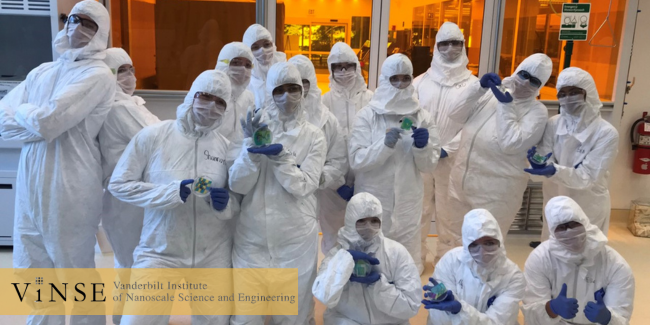
From blackberry juice solar cells to forensic labs: VINSE outreach is shaping the next generation of scientists
The Vanderbilt Institute of Nanoscale Science and Engineering is at the forefront of nurturing the next generation of nanotechnology enthusiasts and professionals in Middle Tennessee through its outreach initiatives, including the VINSE High School Field Trip Program, which includes unique hands-on experiences like crafting solar cells from blackberry juice. This month, VINSE hosted its 200th field trip. Read MoreOct 18, 2023
-
Computer science major helps fight infectious diseases with AI-focused Immersion Vanderbilt project
By Amy Wolf Today’s fight against infectious diseases is being waged in the computer lab as much as the wet lab. Using artificial intelligence and machine learning, Vanderbilt researchers and students like School of Engineering undergraduate Karen Pu are expanding the power of computer modeling to identify mutating viruses—and potentially improve vaccines. Karen Pu, class... Read MoreOct 17, 2023
-
Computer science major helps fight infectious diseases with AI-focused Immersion Vanderbilt project
By Amy Wolf Today’s fight against infectious diseases is being waged in the computer lab as much as the wet lab. Using artificial intelligence and machine learning, Vanderbilt researchers and students like School of Engineering undergraduate Karen Pu are expanding the power of computer modeling to identify mutating viruses—and potentially improve vaccines. Karen Pu, class... Read MoreOct 17, 2023
-

VUMC scientists record powerful signal in the brain’s white matter
Vanderbilt researchers report that when people who are having their brains scanned by fMRI perform a task, like wiggling their fingers, certain signals increase in white matter throughout the brain, which has long been thought to play a lesser role the more the brain's more energetic gray matter. Read MoreOct 16, 2023
-
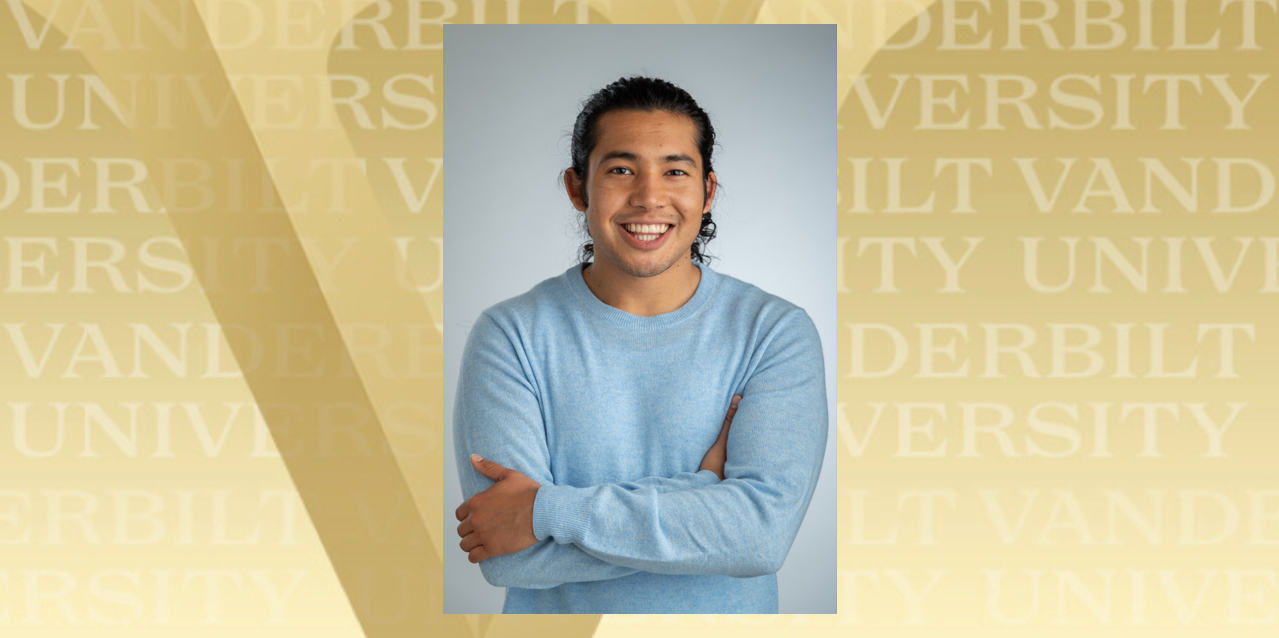
Pinedo’s study reveals importance of community-based activism on youth development
By Jenna Somers Andres Pinedo How do young people develop an understanding of societal and systemic injustices, and how are they compelled to challenge those injustices? These questions lie at the center of new research published in Child Development that illuminates the interplay between youth participation in community-based… Read MoreOct 13, 2023
-
From Scaling Success to NSF: Vanderbilt, Fisk create winning formula in multi-messenger astronomy
The Fisk-Vanderbilt Master’s-to-Ph.D. Bridge Program, emphasizing multi-messenger astronomy, utilized strategic funding from a Scaling Success Internal Award to secure a $1.7 million NSF grant. This collaborative journey, focusing on inclusive STEM education and innovative training approaches, highlights the power of adaptability and vision in research endeavors. Read MoreOct 12, 2023
-
Vanderbilt announces search for new ACCRE executive director
Vanderbilt's Advanced Computing Center for Research and Education has initiated a nationwide search for a new executive director to guide its advanced computational resources. The search will emphasize the center’s pivotal role in big data studies and Vanderbilt’s commitment to innovative breakthroughs. Read MoreOct 11, 2023
-

Burke receives $3 million to develop advocacy program for students with disabilities and families
By Jenna Somers Meghan Burke Public schools’ resources for students with disabilities are critical tools for empowering their educations, especially when families have the knowledge to advocate for their children and partner with their children’s schools to create support plans. However, research suggests that some schools may be falling… Read MoreOct 5, 2023
-
American University of Iraq—Baghdad hires Peabody College alumni to launch new College of Education and Human Development
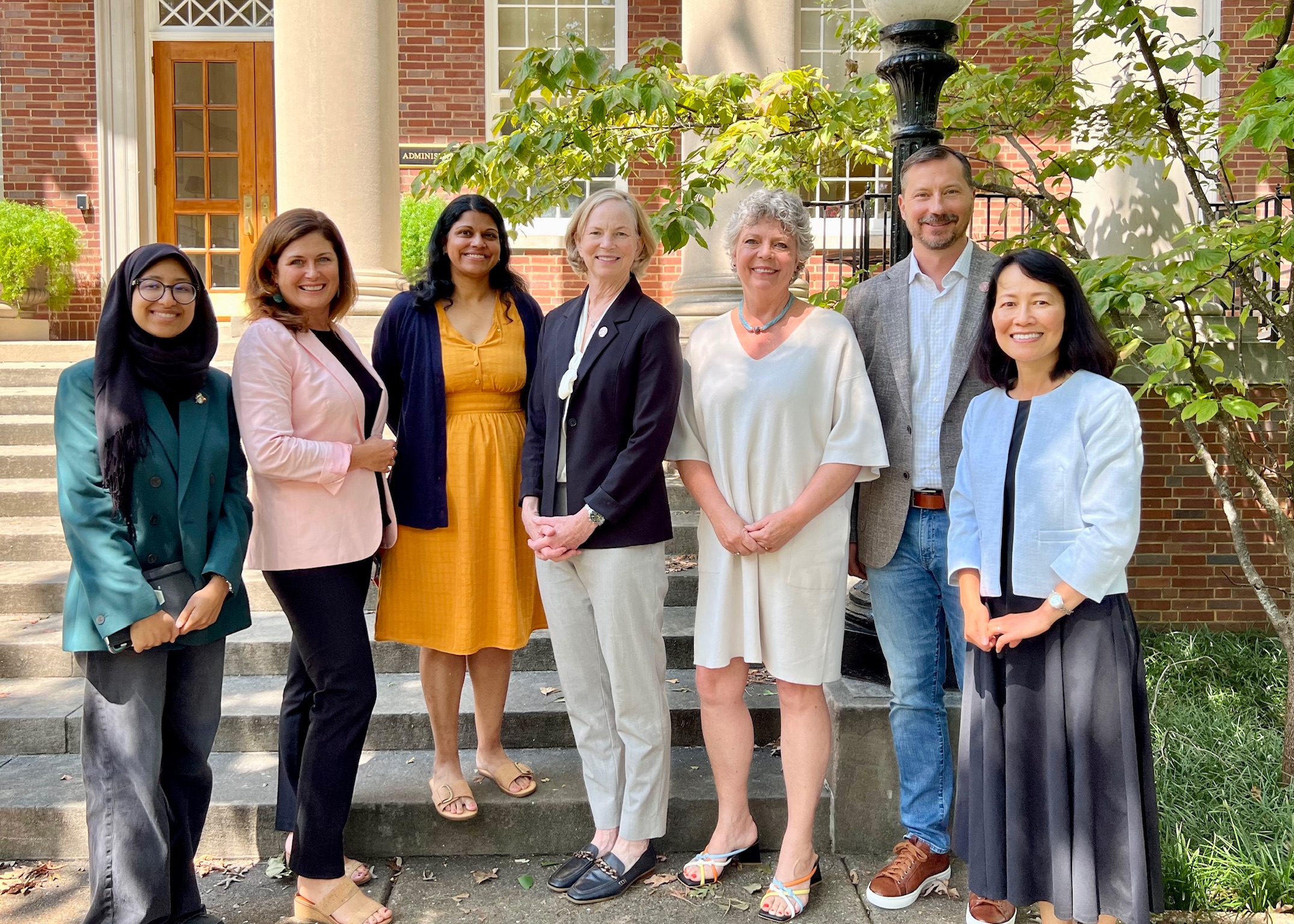
By Jenna Somers From left to right: Balkis Boum and Nancy Dickson of the AUIB Project Design Team, Pallavi Reddy, Allison Webster-Giddings, Dean Camilla Benbow, Jason Fatz, and Associate Dean Xiu Cravens The American University of Iraq—Baghdad has hired three alumni of Vanderbilt’s Peabody College of education… Read MoreOct 5, 2023
-
Biological scientists find that external factors impact vaccine belief-behavior predictions
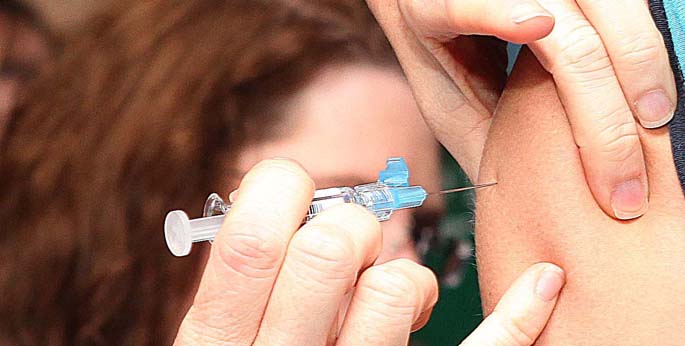
Widespread trust in vaccines often leads to higher vaccination rates, but vaccine shortages can deter even those with confidence in vaccines. Furthermore, while vaccine mandates can create an appearance of universal vaccination, people may remain hesitant, resulting in lower compliance than anticipated. Read MoreOct 5, 2023
-
Research fellowship for genetic counselors established at Vanderbilt
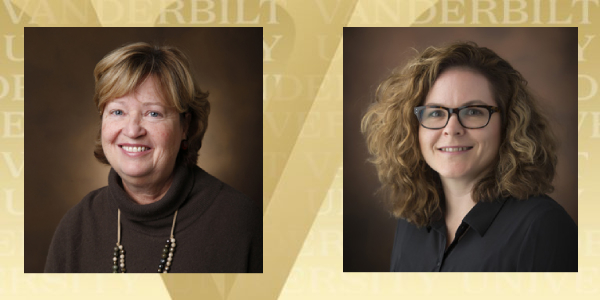
The grant will prepare genetic counselors to contribute more fully to the advancement of personalized medicine. Nancy Cox, Ph.D., who directs the Vanderbilt Genetics Institute and the Division of Genetic Medicine, and Martha Dudek, M.S. CGC, director of the Vanderbilt Master of Genetic Counseling program, will serve as co-principal investigators. Read MoreOct 3, 2023
-
A $3M NSF grant to advance biomanufacturing could help establish an innovative method to deliver medicines to cells
“Biomanufacturing is a growing but critical field that is reshaping how we diagnose and treat some of the most devastating diseases known to humanity,” said Jamey Young, Cornelius Vanderbilt Professor of Chemical and Biomolecular Engineering and principal investigator on the four-year grant. “Vanderbilt is uniquely well-suited to help advance the future of biomanufacturing, given our... Read MoreSep 29, 2023
-
Researchers discover molecular signature for aggressive thyroid cancer
A Vanderbilt study found that a molecular signature that predicts aggressive thyroid cancer could help guide treatment approaches for patients. Read MoreSep 25, 2023
-
Vanderbilt researchers seeking to aid neurodiverse adults receive prestigious National Science Foundation CIVIC Stage 2 Award
Two Vanderbilt researchers are part of a team that earned a $1 million grant to develop AI-based training that will help neurodiverse people learn to drive—addressing a huge obstacle for that population. “The ability to drive will open up new opportunities for employment and a life of independence for many neurodiverse individuals,” said Nilanjan Sarkar,... Read MoreSep 22, 2023
-
Vanderbilt researchers seeking to aid neurodiverse adults receive prestigious National Science Foundation CIVIC Stage 2 Award
Two Vanderbilt researchers are part of a team that earned a $1 million grant to develop AI-based training that will help neurodiverse people learn to drive—addressing a huge obstacle for that population. “The ability to drive will open up new opportunities for employment and a life of independence for many neurodiverse individuals,” said Nilanjan Sarkar,... Read MoreSep 22, 2023
-
Vanderbilt team reimagines kidney dialysis by creating new paradigm for dialysis membranes
A collaborative team led by Piran Kidambi, assistant professor of chemical and biomolecular engineering, William Fissell, associate professor of nephrology and hypertension at Vanderbilt University Medical Center, Shuvo Roy, professor of bioengineering at University of California, San Francisco, and Francesco Fornasiero, biosciences and biotechnology staff scientist at Lawrence Livermore National Lab, has developed a new... Read MoreSep 22, 2023
-
Vanderbilt contributes civil engineering and operational expertise to Nashville mayor’s climate adaptation and resilience plan
Vanderbilt faculty and staff have been key contributors to a Climate Adaptation and Resilience Plan that was released by Metro Nashville on Sept. 19. Janey Camp, research professor of civil and environmental engineering, and Jaclyn Mothupi, director of social innovation at the Wond’ry, Vanderbilt’s Innovation Center, co-chaired the subcommittee on adaptation and resilience as part of Mayor John... Read MoreSep 21, 2023