Featured Research
-

Bill Clinton better at rallying the Democratic base than Obama: study
The latest political ad to be rated by the Vanderbilt/YouGov Ad Rating Project shows former president Bill Clinton doing a better job of rallying Democratic voters to re-elect President Obama than the president himself. Read MoreAug 28, 2012
-

Little evidence supports autism treatment options in adolescents
There is insufficient evidence to support findings, good or bad, for therapies currently used in adolescents and young adults with autism. Read MoreAug 27, 2012
-
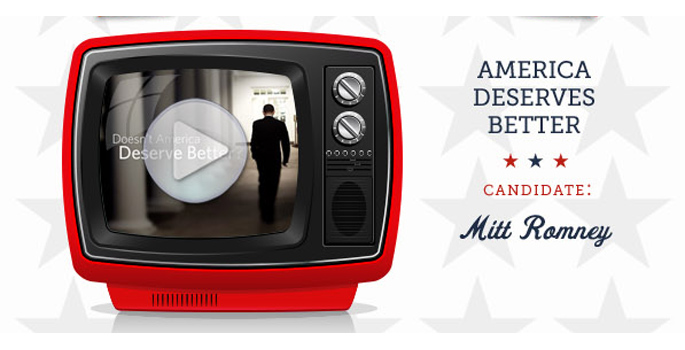
Anti-Obama attack ad finally earns Romney points among independent voters
One of Mitt Romney’s latest campaign commercials against President Barack Obama seems to be hitting a nerve among independent voters, data from the Vanderbilt/YouGov Ad Rating Project shows. Read MoreAug 21, 2012
-

Get motivated and stay motivated: Eight keys for pursuing long-term goals
Setting a goal—and sticking to it—can be difficult for anyone. A new study co-authored by Vanderbilt management and sociology professor Bruce Barry examines how certain types of professionals sustain their motivation and enthusiasm over very long periods. Read MoreAug 16, 2012
-
Engineer, astronomer and geologist receive NSF Faculty Early Career Development awards
An electrical engineer who is attempting to make wireless communications more reliable, an astronomer who studies the evolution of the cosmos by creating large numbers of virtual universes and a geologist who is studying the origins of super-eruptions have received the National Science Foundation’s Faculty Early Career Development awards. Read MoreAug 9, 2012
-
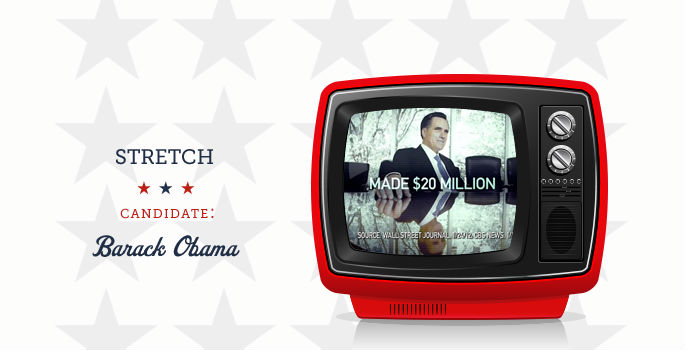
Negative ad proves more effective for Obama
Positive ads from President Obama won't get the job done of defeating challenger Mitt Romney in the presidential race, data from the Vanderbilt/YouGov Ad Rating Project continues to suggest. Read MoreAug 7, 2012
-

Celebrity endorsements: the more we know, the less we like
When it comes to using a star to endorse a product, new Vanderbilt research finds the less people know about the celebrity’s personal opinions, the better. Read MoreAug 3, 2012
-

Test flight over Peru ruins could revolutionize archaeological mapping
Archaeological sites that currently take years to map will be completed in minutes if tests of the Semi-autonomous Unmanned Aerial Vehicle system being developed at Vanderbilt University go well. Read MoreAug 1, 2012
-
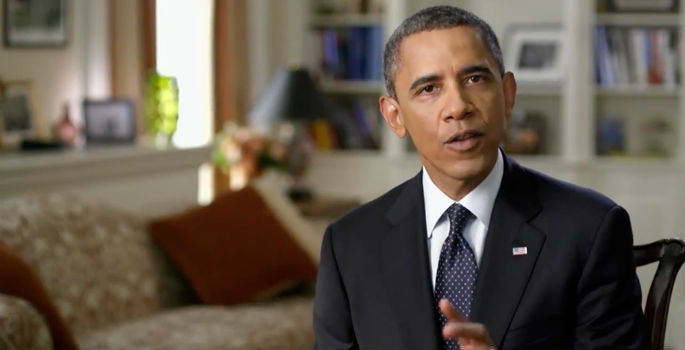
Reaction to recent positive Obama ad indicates negative strategy would be better
Nearly a third of American voters finds a new ‘positive’ ad by President Obama contrasting his approach to the economy with that of Mitt Romney to be 'disgusting.' Read MoreJul 30, 2012
-
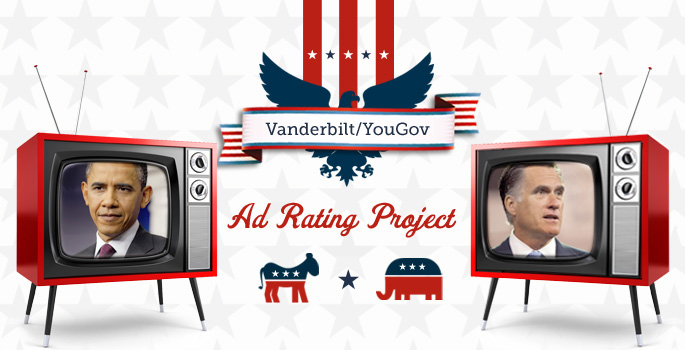
Vanderbilt and YouGov team up to survey reactions to campaign ads
Voter reaction to campaign advertisements by the presidential candidates will be evaluated this fall through a partnership between Vanderbilt University and YouGov, a prominent research firm. Read MoreJul 23, 2012
-

New federal energy regulations flawed: Vanderbilt researcher
New and proposed federal energy-efficient standards for automobiles, clothes dryers, air conditioners and light bulbs make unfair assumptions about the rationality of consumers, said researchers from Vanderbilt University and the Brookings Institution. Read MoreJul 17, 2012
-

Newborn star’s spots confirm stellar growth theory
The latest observations of a newly born star have found that it has a pair of spots on its surface that are heated to more than one million degrees. The presence of these spots confirms a theory for how stellar infants grow advanced by Professor of Astronomy David Weintraub and a colleague. Read MoreJul 10, 2012
-
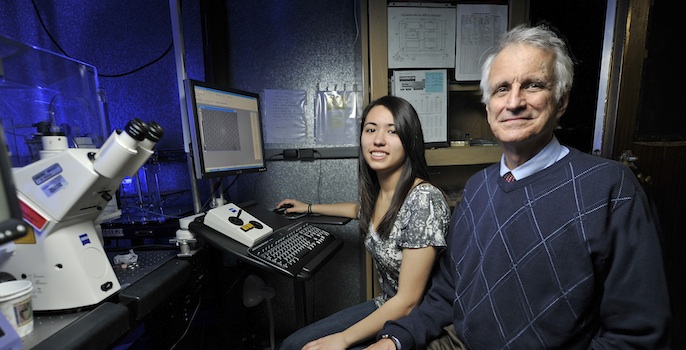
Hothouse for Scientists: Undergraduates work alongside seasoned researchers
The Systems Biology and Bioengineering Undergraduate Research Experience Searle Undergraduate Research Initiative is one of only a handful of multiyear, year-round undergraduate research programs in the nation. Read MoreJul 9, 2012
-

Evolutionary perspective illuminates controversial economic theory
Groundbreaking new research in the field of “evolutionary analysis in law” not only provides additional evidence that chimpanzees share the controversial human psychological trait known as the endowment effect – which in humans has implications for law – but also shows the effect can be turned on or off for single objects, depending on their immediate situational usefulness. Read MoreJul 5, 2012
-
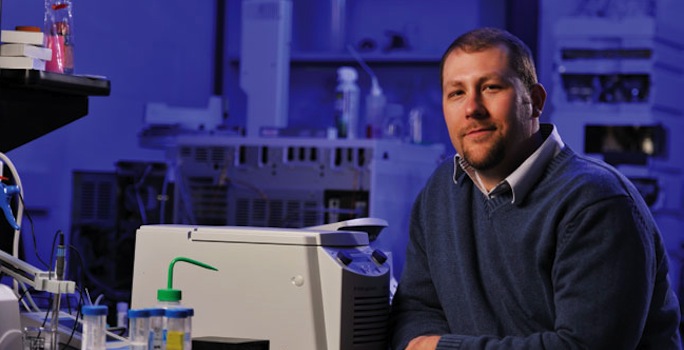
It’s his metabolism: Research into cell processes could lead to breakthroughs for diabetes and cancer
Jamey Young, assistant professor of chemical and biomolecular engineering, likes to build bridges. But rather than physical structures, Young focuses on spanning the divide between biology and engineering, diabetes and cancer, and plants and animals. Read MoreJul 2, 2012
-
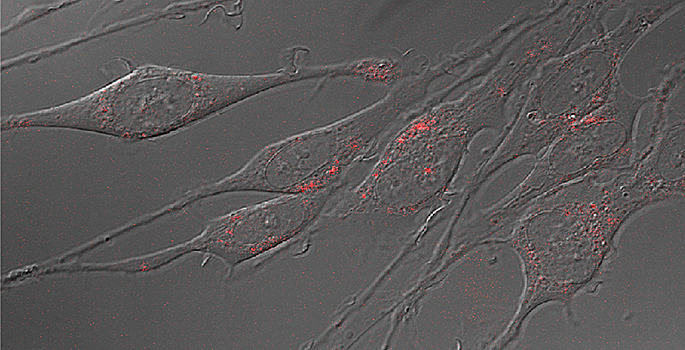
Probing the roots of depression by tracking serotonin regulation at a new level
An interdisciplinary team of scientists have successfully tagged a protein that regulates the neurotransmitter serotonin with tiny fluorescent beads, allowing them to track the movements of individual molecules for the first time. This capability makes it possible to study the manner in which serotonin regulates mood, appetite and sleep at a new level of detail. Read MoreJun 27, 2012
-

Education is the key to promoting political participation: Vanderbilt poll
The flag of the Dominican Republic (Paul Stein) One of the most important factors influencing citizens to participate actively in political campaigns in the Americas is education, according to a survey conducted by Vanderbilt University. “Working for a political party or campaign is uncommon,” the researchers wrote in a… Read MoreJun 25, 2012
-

Kids’ cells okay after mom’s cancer radiation
Study finds no evidence of increased mitochondrial mutations in the children of women treated with radiation for cancer. Read MoreJun 22, 2012
-

Two cities offer model to fight weight discrimination: Vanderbilt study
If municipalities want to combat workplace discrimination because of obesity, they should look to Madison, Wis., and Urbana, Ill., for good models. Read MoreJun 21, 2012
-

Vanderbilt and affiliates receive $18.8 million HHS innovation award
The Health Care Innovation Award from the Centers for Medicare and Medicaid Services (CMS) is one of the largest federal research grants awarded to VUMC investigators. The funding will support the implementation and evaluation of MyHealthTeam, a model of team-based care that couples collaborative health care teams with health information technology in order to improve control of chronic conditions. Read MoreJun 18, 2012