Astronomy
-

Measuring elements of life in Milky Way
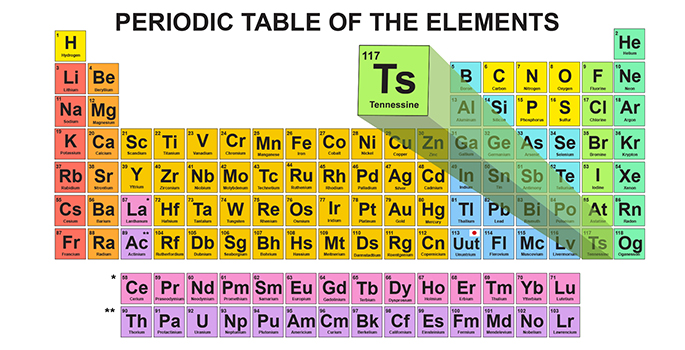
Astronomers participating in the Sloan Digital Sky Survey have announced the results of the first study that shows how the abundance of the "elements of life" varies across the Milky Way galaxy. Read MoreJan 6, 2017
-
Research that ruled in 2016: Readers’ favorite stories
Artificial kidneys, gay-straight alliances and junkyard batteries captured readers' attention in 2016. Read MoreDec 16, 2016
-

Astrophysicist explains meaning of the discovery of gravitational waves
Vanderbilt Associate Professor of Physics and Astronomy Kelly Holley-Bockelmann explains the meaning of the first discovery of gravitational waves at TEDx Nashville. Read MoreJun 17, 2016
-

Rising Star: Jedidah Isler Is Forging New Paths in Astrophysics—and Diversity Among Aspiring Scientists
Jedidah Isler, a National Science Foundation postdoctoral fellow in Vanderbilt’s Department of Physics and Astronomy, has emerged as an increasingly high-profile advocate for diversity among science, technology, engineering and mathematics researchers. Read MoreMay 12, 2016
-
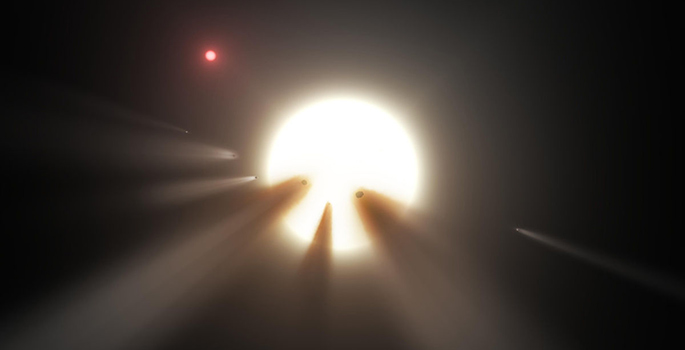
New study supports natural causes, not alien activity, explain mystery star’s behavior
The results of a new study make it far less likely that KIC 8462852, popularly known as Tabby’s star, is the home of industrious aliens who are gradually enclosing it in a vast shell called a Dyson sphere, a theory that went viral over the past year. Read MoreMay 9, 2016
-
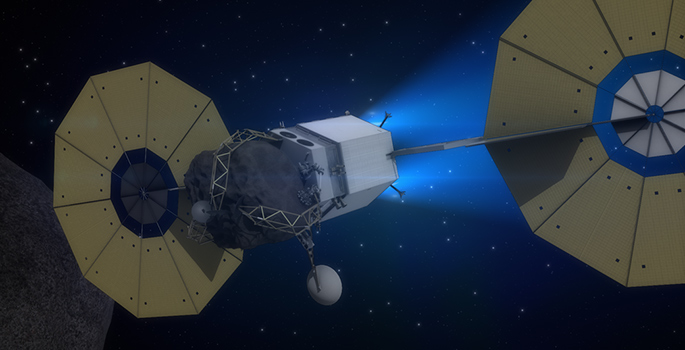
New detector perfect for asteroid mining
A new generation of gamma-ray spectrometer being developed by researchers and students in the Fisk-Vanderbilt Master's-to-Ph.D. Bridge program is perfectly suited for detecting valuable minerals hidden within the asteroids, comets, moons and minor planets in the solar system. Read MoreNov 19, 2015
-
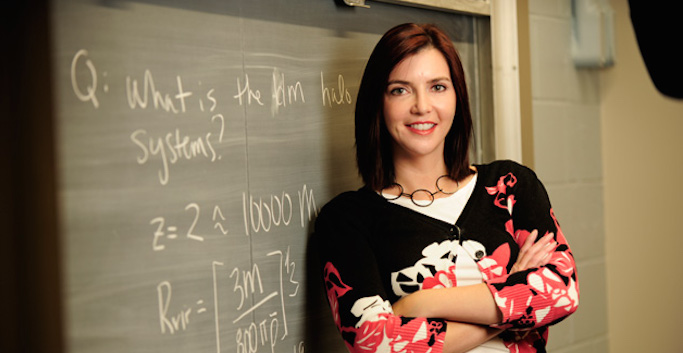
Holley-Bockelmann named director of Fisk-Vanderbilt Master’s-to-Ph.D. Bridge Program
Kelly Holley-Bockelmann, associate professor of physics and astronomy, has been named director of the Fisk-Vanderbilt Master’s-to-Ph.D. Bridge Program, College of Arts and Science Dean Lauren Benton announced. Read MoreSep 14, 2015
-

Eight Vanderbilt researchers named ‘Inspiring Women in STEM’
The award honors highly accomplished women working in science, technology, engineering or mathematics who have made a positive impact on the trajectories of other women thinking about or newly embarking on STEM careers. Read MoreAug 17, 2015
-

New model of cosmic stickiness favors “Big Rip” demise of universe
A Vanderbilt team of scientists have developed a new formulation for cosmic viscosity which strongly favors the "Big Rip" end of the universe. Read MoreJun 30, 2015
-
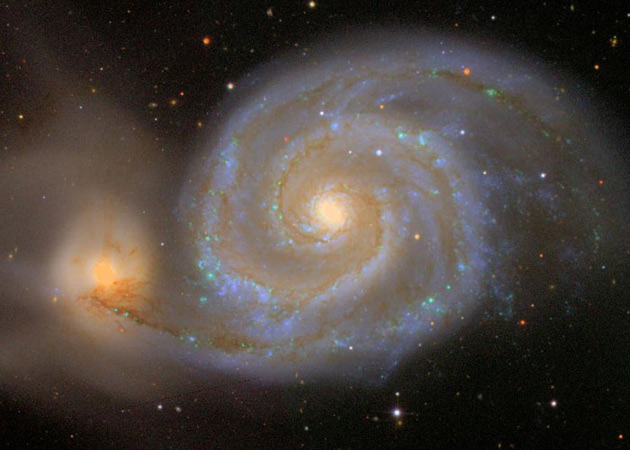
The Conversation: Robert Scherrer on dark energy
Explainer: the mysterious dark energy that speeds the universe’s rate of expansion Read MoreApr 24, 2015
-
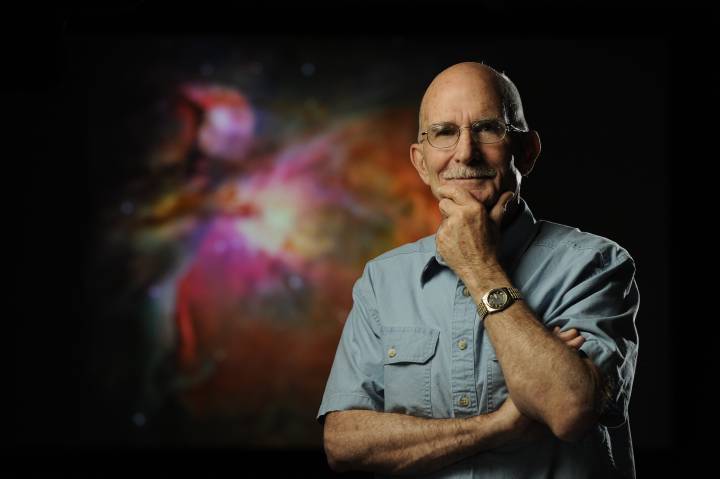
The Conversation: Hubble Space Telescope’s chief scientist on what it took to get the project off the ground
Bob O'Dell reflects on the challenges of building the Hubble Space Telescope, launched 25 years ago. Read MoreApr 22, 2015
-

Op-ed: Is your religion ready to meet E.T.?
"No matter which (a)theistic background informs your theology, you may have to wrestle with the data astronomers will be bringing to houses of worship in the very near future," writes astronomy professor David Weintraub for The Conversation. Read MoreDec 2, 2014
-
VUCast: E.T. phone God?
In the latest VUCast: A Vanderbilt astronomer looks at how different religions may handle alien life; why early Earth may not have been as “hellish” as first thought; and check out the national baseball championship bling! Watch now. Read MoreSep 29, 2014
-
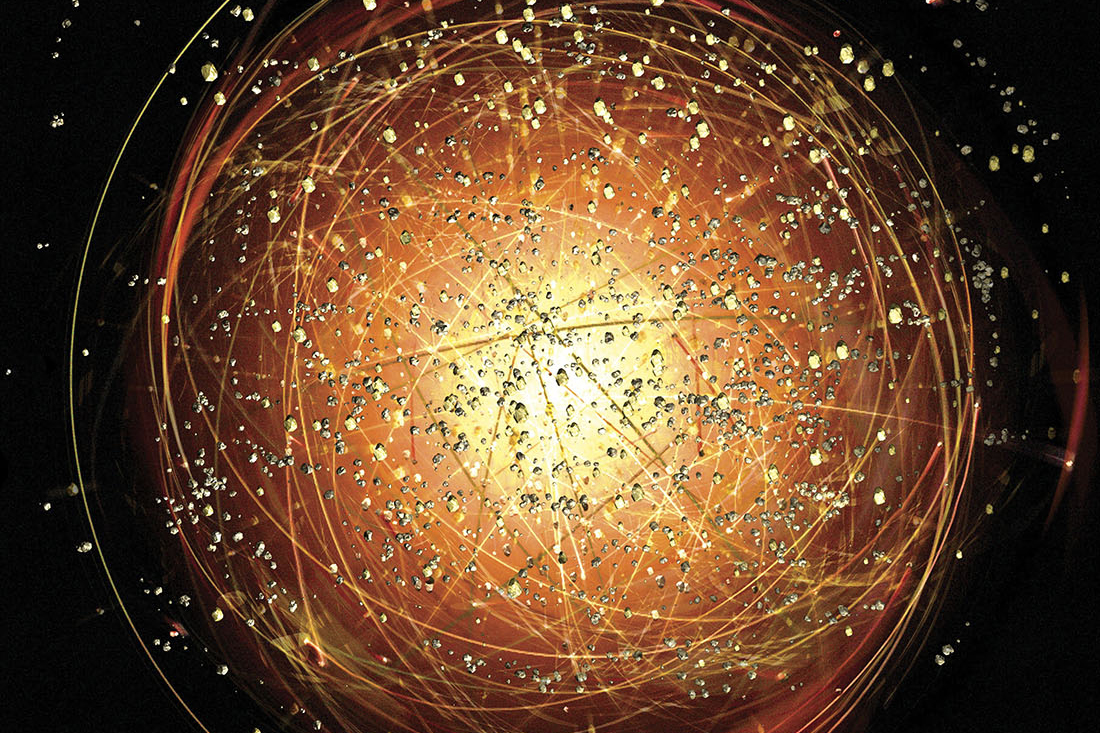
The Search for Earth-Like Planets
Researchers have developed a model that estimates the effect that a star's diet has on its chemical composition. This model will add substantially to astronomers’ understanding of the process of planet formation as well as assist in the ongoing search for Earth-like exoplanets. Read MoreSep 26, 2014
-
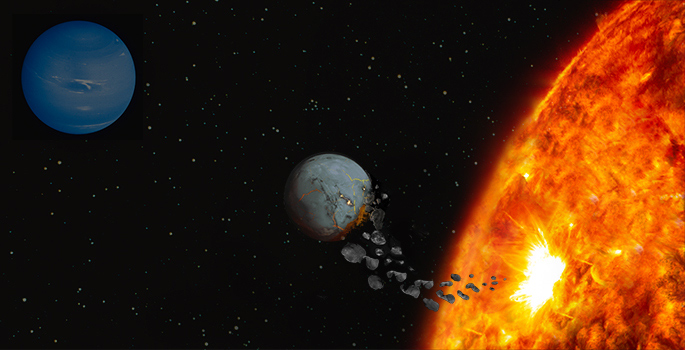
Astronomers identify signature of Earth-eating stars
Vanderbilt astronomers have developed a model that predicts the effect that ingesting earth-like planets has on the chemical composition of stars like the Sun -- a capability that can aid in efforts to find Earth-like exoplanets. Read MoreMay 16, 2014
-

VUCast: Autism communication breakthrough
In the latest VUCast: What people with autism see may not match what they hear; how “supersizing” could help you lose weight; and hear what earned a Vanderbilt astronomer a Grammy nomination. Watch now. Read MoreJan 14, 2014
-
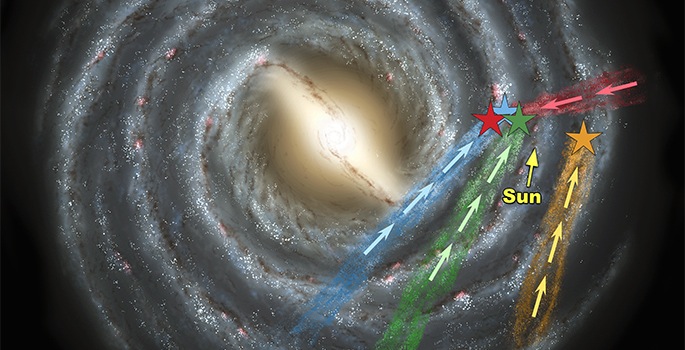
Surprising new class of “hypervelocity stars” discovered escaping the galaxy
Two Vanderbilt astronomers are among an international team that has discovered a surprising new class of “hypervelocity stars” – solitary stars moving fast enough to escape the gravitational grasp of the Milky Way galaxy. Read MoreJan 9, 2014
-
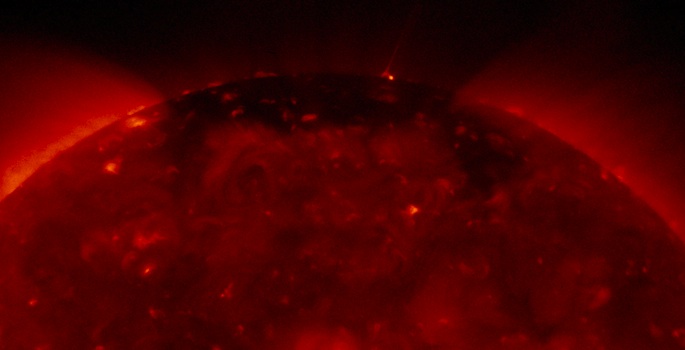
NASA: NASA astrophysicist and Vanderbilt graduate student confirm existence of giant convection cells on sun
A NASA astrophysicist and Vanderbilt graduate student Lisa Upton have confirmed the existence of giant convection cells flowing slowly on the sun, lending further insight into the transport of heat from its core and the origin of cycles of sunspot activity that affect essential satellite-based communications such as cell phones and TV broadcasting. Read MoreDec 6, 2013
-
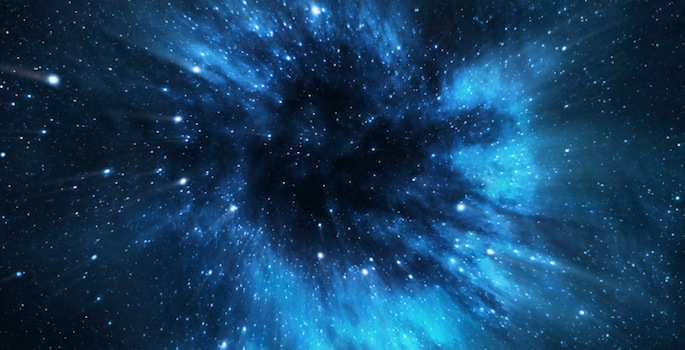
A revolution in astronomy: How we came to know what we know
Science has progressed from wild speculation about Earth’s planetary neighbors—including how they formed and whether they are inhabited—to a better understanding of our celestial neighborhood, David Weintraub, professor of astronomy, writes in "Scientific American." Read MoreOct 14, 2013
-

A brighter method for measuring the surface gravity of distant stars
Astronomers have found a clever new way to slice and dice the flickering light from a distant star in a way that reveals the strength of gravity on its surface. Read MoreAug 21, 2013