Research
-
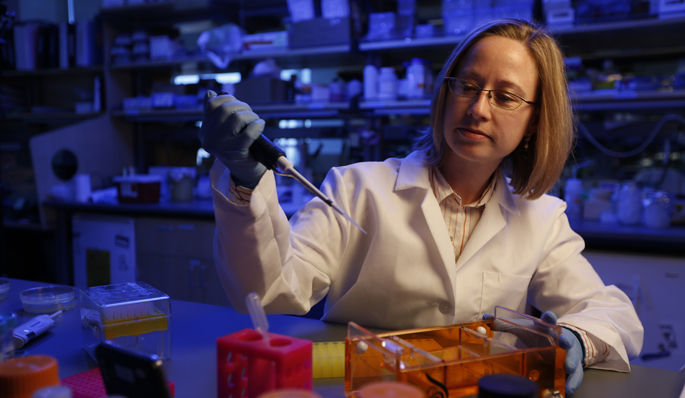
Science Magazine: How long can the U.S. stay on top?
In an era of stagnating government support for academic science, officials at many top research universities are looking to private philanthropy and increased efficiencies to maintain their elite status. Chancellor Nicholas S. Zeppos is quoted. Read MoreJun 28, 2013
-

Constitutional law expert comments on controversial Supreme Court Voting Rights Act decision
Suzanna Sherry's op-ed about the deeply divided Supreme Court decision to strike down what was considered the government’s strongest legal tool to stop voting discrimination appeared on the Washington Post website on June 25. Read MoreJun 28, 2013
-

End of Judicial Nominating Commission won’t delay Holder’s replacement
The end of the state Judicial Nominating Commission won't interfere with the selection of a replacement for Supreme Court Justice Janice Holder, who has announced her intention to retire. Brian Fitzpatrick of Vanderbilt Law School says that an alternative system is in place pending voter's approval of a permanent solution. Read MoreJun 27, 2013
-

Sleep Center helps barge pilots stay on course
At the helm of a towboat navigating more than 20,000 tons of cargo down ever-shifting river channels, feeling sleepy is not an option for pilot Darrell Koontz. Read MoreJun 27, 2013
-

Constitutional law expert’s opinion on Supreme Court’s same-sex marriage decisions
Windsor v. United States makes history – in more ways than one – but it doesn’t make new law, says Vanderbilt constitutional law scholar Suzanna Sherry in an op-ed for the Washington Post. Read MoreJun 26, 2013
-

Vanderbilt legal, education experts: Not the end of affirmative action
Law and education experts from Vanderbilt comment on the long-awaited Supreme Court affirmative action decision. Read MoreJun 26, 2013
-

Insights on glaucoma gene mutations
Glaucoma-causing mutations in the gene for myocilin reduce secretion of the protein into the aqueous humor, suggesting a new option for treatment. Read MoreJun 26, 2013
-

Wall Street Journal: Rail safety and the value of life
W. Kip Viscusi, University Distinguished Professor of Law, Economics, and Management, is quoted on an age-old regulatory predicament—namely, whether or not spending to make one thing safe steers money away from addressing a more serious threat elsewhere. Read MoreJun 25, 2013
-

New York Times: As season drags on, batters chase more bad pitches
According to a study by Scott Kutscher, assistant professor of neurology, the further the major league baseball season progresses, the more often batters swing at bad pitches. Read MoreJun 25, 2013
-

Predicting cancer’s response to therapy
Researchers are developing imaging methods to predict patient outcome early in the course of chemotherapy for breast cancer – to allow clinicians to adjust therapy for patients who are not responding. Read MoreJun 24, 2013
-

Rhythm response tied to gene variant
A genetic variant that increases risk for atrial fibrillation also impacts the response to a common therapy for the heart rhythm disorder. Read MoreJun 21, 2013
-
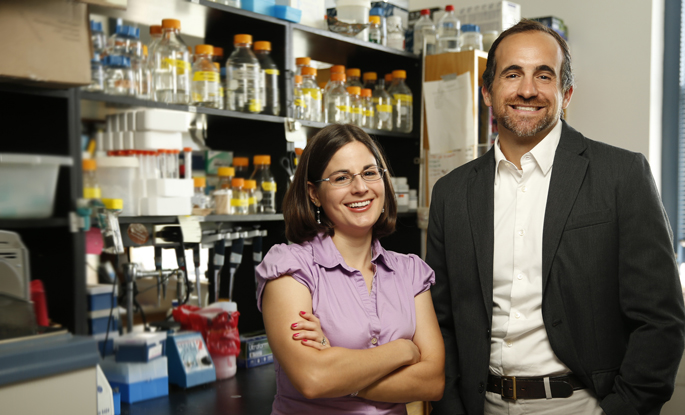
Studies outline new model for staph bone infections
Osteomyelitis, a debilitating bone infection most frequently caused by Staphylococcus aureus (“staph”) bacteria, is particularly challenging to treat. Read MoreJun 20, 2013
-

Disease linked to cell traffic jams
Diseases associated with mutations and changes in expression of the protein caveolin may result from faulty trafficking of the protein to the cell surface. Read MoreJun 20, 2013
-
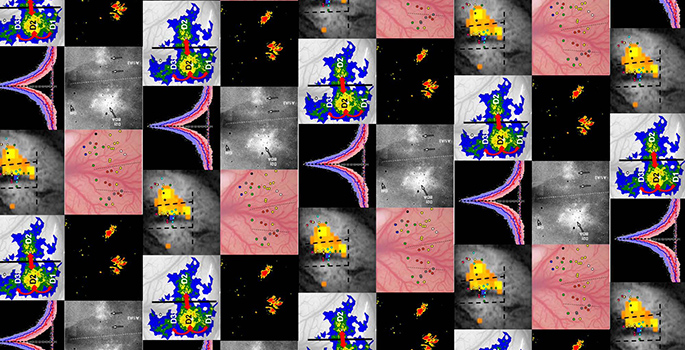
Validating maps of the brain’s resting state
A team of Vanderbilt researchers has provided important validation of maps of the brain at rest that may offer insights into changes in the brain that occur in neurological and psychiatric diseases. Read MoreJun 19, 2013
-

Immigration debate heats up: Vanderbilt experts available
Congress is taking up the debate over comprehensive immigration reform yet again. Vanderbilt has a diverse array of experts researching various aspects of the immigration debate. Read MoreJun 12, 2013
-

Antacids: risky for premature babies
Antacids that block a certain enzyme pose a risk for a common cardiac problem in premature infants. Read MoreJun 12, 2013
-

New, simple theory may explain mysterious dark matter
The reason dark matter, which makes up 85 percent of all the matter in the universe, is invisible could be because it possesses a rare, donut-shaped type of electromagnetism instead of the more exotic forces that have been proposed, according to an analysis of a pair of Vanderbilt theoretical physicists. Read MoreJun 10, 2013
-

Factor’s yin-yang tumor effects
A factor produced by most malignant cells can both promote and inhibit tumor growth – an insight that is critical to using cancer drugs developed to block this factor. Read MoreJun 10, 2013
-

Autism speeds motion perception
Children with autism spectrum disorder are better at perceiving the motion of certain objects than are typically developing children their age. Read MoreJun 7, 2013
-
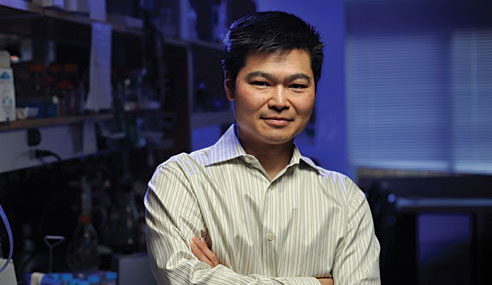
Leukemia & Lymphoma Society honors Ohi’s research
Puck Ohi, Ph.D., assistant professor of Cell and Developmental Biology, has received the Leukemia & Lymphoma Society SCHOLAR award for his research on the role of enzymes that affect cell division, which has implications for treating cancer and blood disorders like leukemia and lymphoma. Read MoreJun 6, 2013