Physics And Astronomy
-

Simons Foundation awards $8 million grant to uncover secrets of black holes and strong gravity
Over the next four years, Assistant Professor of Physics and Astronomy Alex Lupsasca will lead a Vanderbilt team in a multidisciplinary, multi-institutional collaboration funded by an $8 million grant from the Simons Foundation with a focus on black holes and strong gravity. Read MoreSep 4, 2025
-
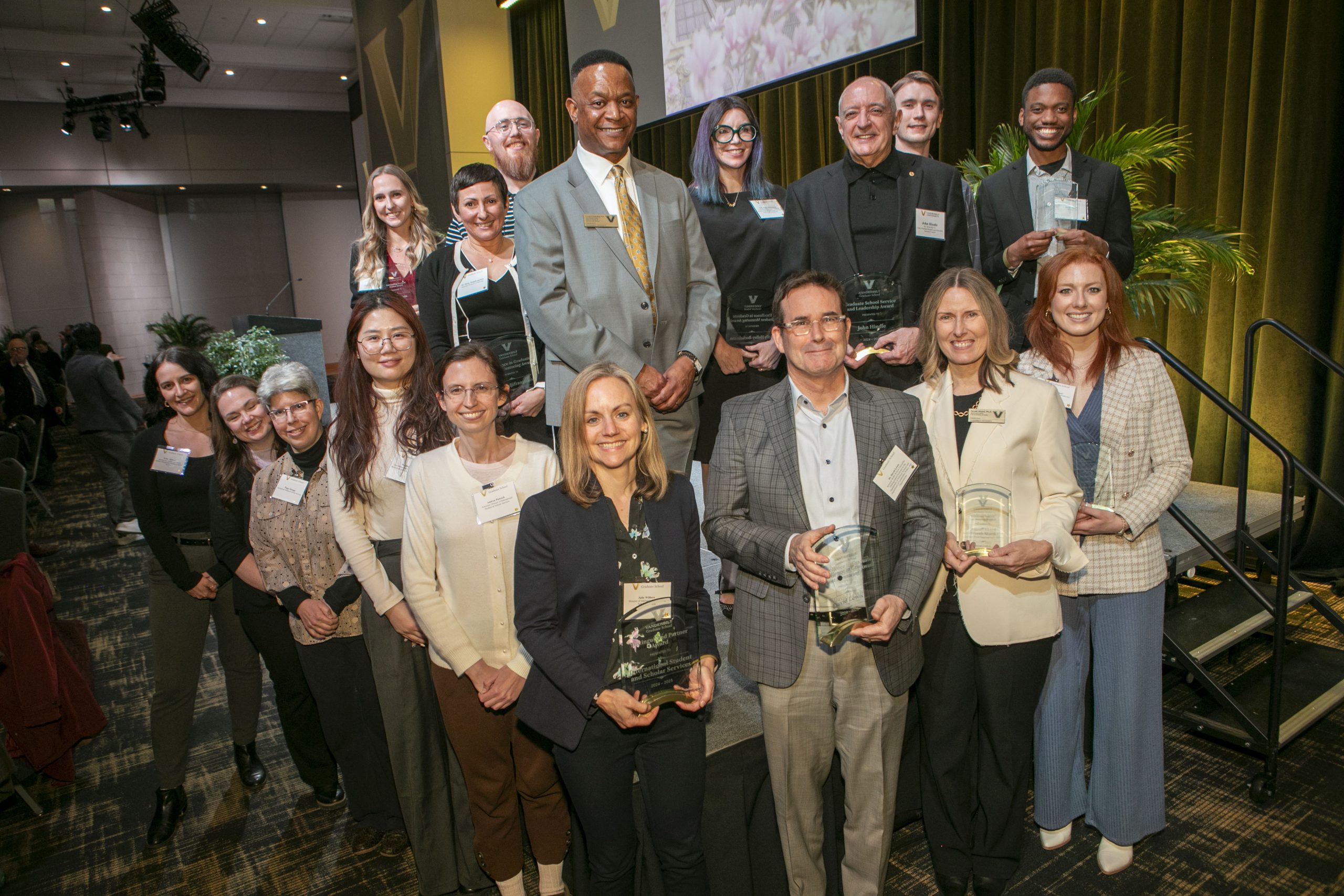
Graduate School recognizes excellence among students, faculty at Honors Banquet
The third annual Honors Banquet commemorated excellence in academics, leadership and innovation among Graduate School students and faculty. On March 20, the banquet was held to honor and reflect on remarkable achievements in research and creative expression from the more than 50 graduate programs and departments represented in the Graduate School. Read MoreApr 14, 2025
-

Stephen Taylor appointed to NASA’s Laser Interferometer Space Antenna mission
Taylor is one of only six scientists nationwide appointed to the LISA team, a joint mission between the European Space Agency and NASA. LISA is a space-based gravitational wave detector constructed of three spacecraft separated by millions of miles in a triangle shape as big as the sun. Read MoreSep 19, 2024
-
From Scaling Success to NSF: Vanderbilt, Fisk create winning formula in multi-messenger astronomy
The Fisk-Vanderbilt Master’s-to-Ph.D. Bridge Program, emphasizing multi-messenger astronomy, utilized strategic funding from a Scaling Success Internal Award to secure a $1.7 million NSF grant. This collaborative journey, focusing on inclusive STEM education and innovative training approaches, highlights the power of adaptability and vision in research endeavors. Read MoreOct 12, 2023
-
International collaboration including Vanderbilt astrophysicists discover ‘forbidden planet’
Aging stars expand and eventually destroy planets in their inner systems. Or do they? A team of researchers that includes Keivan Stassun finds evidence of a planet that survived its star’s transformation, and that is reshaping our understanding of planetary and stellar evolution. Read MoreJul 17, 2023
-
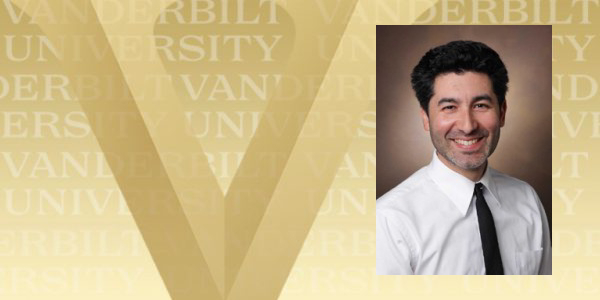
Keivan Stassun appointed to National Science Board by President Joe Biden
Keivan Stassun, Stevenson Professor of Physics and Astronomy and director of the Frist Center for Autism and Innovation at Vanderbilt University, has been appointed to the National Science Board by President Joe Biden. Read MoreJan 26, 2023
-
Esteemed astrophysics professor Keivan Stassun co-authors study for NASA on increasing diversity and inclusion in space mission leadership
Keivan Stassun, Stevenson Professor of Physics and Astronomy and director of the Frist Center for Autism and Innovation, is a co-author of the study “Increasing Diversity and Inclusion in the Leadership of Competed Space Missions.” The report will be published by the National Academies of Sciences, Engineering and Medicine on May 18. Read MoreMay 18, 2022
-

Vanderbilt and Australian researchers collaborate to solve decades-long debate about decision-making
Psychology researchers develop new methodologies and representations of how people react to incoming information to better understand complex decision-making. Read MoreOct 1, 2020
-
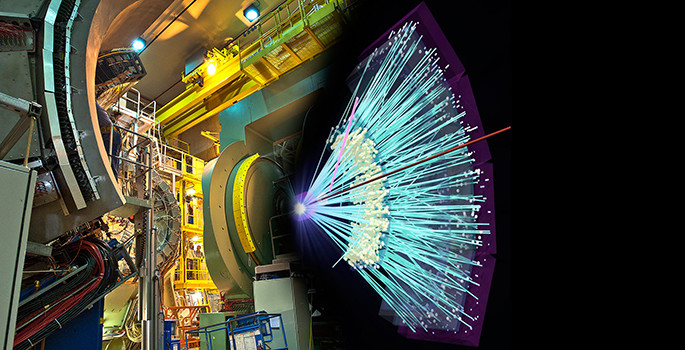
Primordial cosmic soup easier to create than previously thought
In subatomic collisions, physicists have found the signature of primordial cosmic soup, from which all the stuff in the universe formed, at lower energies and in smaller volume than ever before. Read MoreOct 3, 2017
-

Vanderbilt graduate research assistant receives national defense fellowship
Matthew Feldman, a graduate research assistant in physics and astronomy, is one of only 195 students nationwide who have been awarded a National Defense Science and Engineering Graduate (NDSEG) Fellow Read MoreSep 22, 2017
-
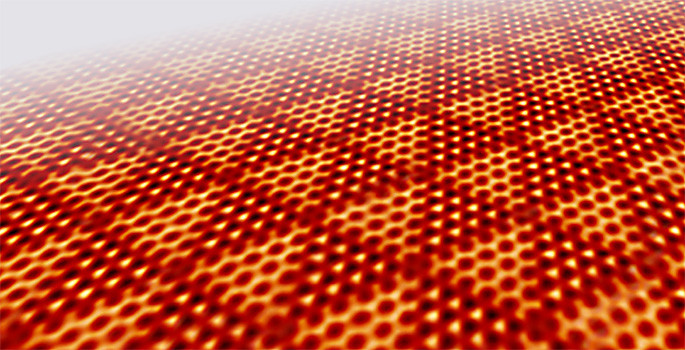
Multitasking monolayers
Scientists have discovered a natural process that makes patterned monolayers suitable for creating a wide variety of novel materials with dual optical, magnetic, catalytic or sensing capabilities. Read MoreJul 21, 2017
-
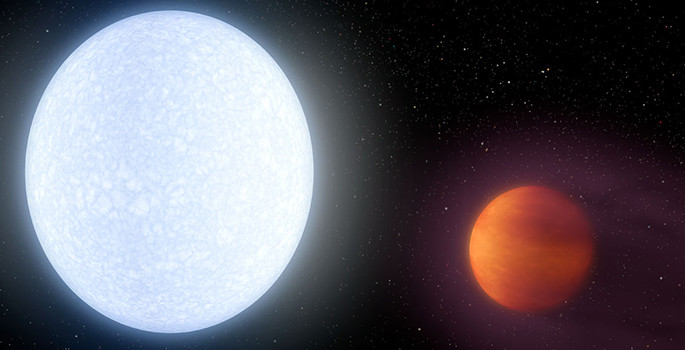
Astronomers discover exoplanet hotter than most stars
Astronomers at Vanderbilt and Ohio State have discovered a planet like Jupiter zipping around its host star every day, boiling at temperatures hotter than most stars with a giant cometary tail. Read MoreJun 5, 2017
-
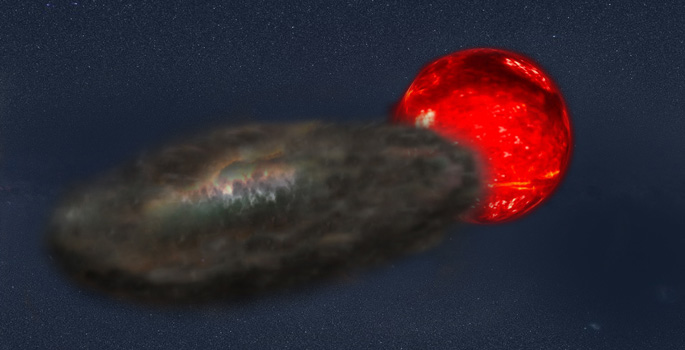
Longest-lasting stellar eclipse discovered
Astronomers have discovered an unnamed pair of stars that sets a new record for both the longest duration stellar eclipse (3.5 years) and longest period between eclipses (69 years) in a binary system. Read MoreFeb 17, 2016
-
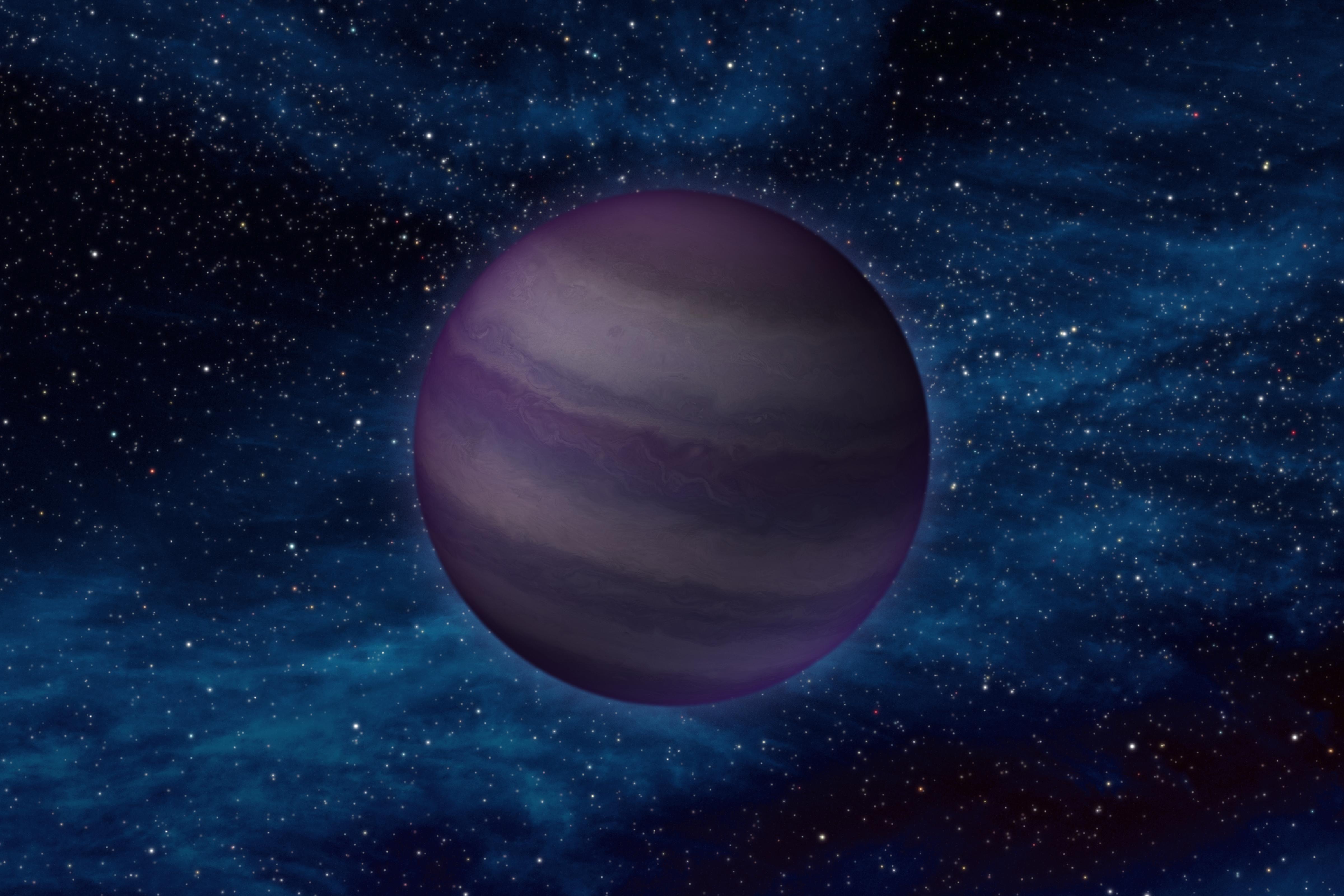
Vanderbilt’s links to the solar neighborhood
Astronomer Davy Kirkpatrick (Courtesy of Davy Kirkpatrick) If Davy Kirkpatrick’s calculations stand up, then Vanderbilt will have solid connections to two of the Sun’s nearest stellar neighbors. One link is long standing. Barnard’s star, which is six light years away from the Sun and its second-closest… Read MoreSep 15, 2011