Law, Business And Politics
-

Political divide: Why health care is the issue on which Americans may never agree
Of all the issues being debated by politicians, lawmakers and voters, funding health care may be the issue on which no one can agree. Read MoreApr 10, 2012
-

Conflicting expert witnesses can give inaccurate view of science
Vanderbilt researcher Rebecca Haw gives suggestions on how to improve how expert testimony is presented in the courtroom so scientific consensus is more accurately portrayed. Read MoreApr 9, 2012
-

No way home: Vijay Padmanabhan helps tread the line between detainees’ safety and human rights
Former State Department adviser Vijay Padmanabhan says there is no quick and easy answer when contemplating what to do about detainees. Read MoreMar 29, 2012
-

Vanderbilt expert: Don’t ignore warning signs of hedge-fund fraud
A Japanese hedge fund company some are calling the Japanese “Bernard Madoff” seems to be reaffirming the maxim that if returns are too good to be true, there probably is something wrong. Read MoreFeb 28, 2012
-

Vanderbilt Poll: Santorum leading Republican candidate in Tennessee
Rick Santorum is the favored candidate in Tennessee as the state approaches its Super Tuesday primary election March 6, according to a new poll from the Center for the Study of Democratic Institutions at Vanderbilt University. Read MoreFeb 26, 2012
-

Vanderbilt political scientists say Bush legacy will likely improve
George W. Bush can probably look forward to an upswing in popularity as time goes by, say two Vanderbilt political scientists. A poll by CBS News and The New York Times near the end of Bush’s 2001-2009 presidency showed his approval rating at 22 percent, making him one of the most unpopular departing presidents in history. Read MoreFeb 20, 2012
-

Negative ads may not be Gingrich’s problem
The conventional wisdom about Newt Gingrich's troubles at the Iowa caucuses may be mistaken, says John Geer of Vanderbilt University. Blaming a barrage of attack ads aimed at the former House speaker for his decline in the polls may be inaccurate, Geer believes. Read MoreJan 3, 2012
-

Groundbreaking legal research shows potentially serious failures in the Model Penal Code
Groundbreaking new legal research from a team of Vanderbilt University and other researchers suggests that juror confusion over how to apply the Model Penal Code in criminal trials could cause major, unnoticed and life-altering sentencing errors. Read MoreDec 1, 2011
-

Researcher: Republicans are fumbling the immigration issue
When the Republican presidential candidates ramp up anti-immigrant rhetoric this campaign season, they are likely to alienate conservative-leaning Latinos. Read MoreNov 28, 2011
-

Six ways we kill innovation without even trying
Management professor David Owens of the Vanderbilt Owen Graduate School of Management says that business and other leaders need to understand exactly which of the constraints are working against them to help create conditions that foster innovation instead of killing it. Read MoreNov 21, 2011
-

Innovative Vanderbilt joint degree combines neuroscience and law
Applications are being accepted for the second class of Vanderbilt University’s innovative Ph.D/J.D. program combining the study of law and neuroscience. Vanderbilt launched the first such program in the country in 2010 when it enrolled Bowdoin College alumnus Matthew Ginther to be the first to take on the challenging curriculum that alternates classes at Vanderbilt Law School and the university’s graduate program in neuroscience. Read MoreNov 17, 2011
-

Workers receive higher pay for the risk of sexual harassment on the job
Economist Joni Hersch has calculated the first measures of sexual harassment risks at work by industry, age group, and sex. Hersch finds that female workers are six times more likely than male workers to experience sexual harassment on the job. Read MoreNov 17, 2011
-

Why customer loyalty doesn’t always pay
New research by Vanderbilt Owen Graduate School of Management professor Bruce Cooil and his coauthors finds that for all the attention companies pay to achieving high satisfaction levels among their customers, what matters most is how well a company ranks in comparison to rivals. No matter how much a customer likes a company or product, if they don’t like it more than the competition, they don’t always put their money where their mouth is. Read MoreOct 17, 2011
-

Results instead of revenge: A new plan for juvenile justice
The struggle against juvenile crime may come down to one simple question, says a Vanderbilt University researcher: Do we want revenge or do we want results? If we want results, says legal expert Christopher Slobogin, we should dramatically reform the system to stress community-based treatment over incarceration. Read MoreOct 13, 2011
-

Political scientist looks at elections and why they matter
Larry Bartels, arguably the most influential political scientist of his generation, researches a mix of psychology and democracy for a holistic understanding of the political process. Read MoreOct 12, 2011
-

Marketing radically new products requires a dose of familiarity
Consumers adopt innovation only when the costs—and risks—are low, says Vanderbilt marketing professor Steve Hoeffler. Read MoreOct 4, 2011
-

Religious bias still hurdle for presidential candidates, study shows
Research by Vanderbilt and Claremont political scientists show a significant number of American voters remain biased against Mormons and other religious minorities. Read MoreJun 2, 2011
-
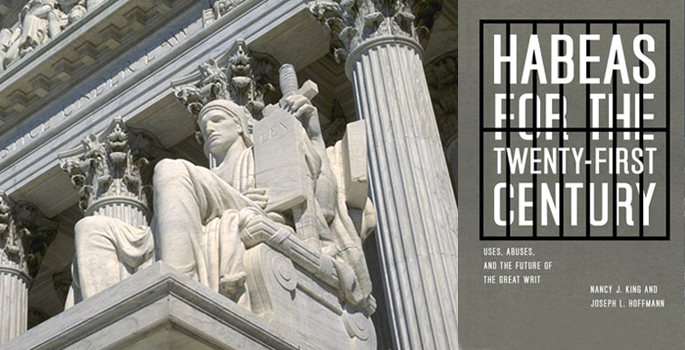
An expensive abuse of justice? Why current habeas corpus must be reformed
The legal safeguard habeas corpus is being used in ways it was never intended, resulting in a costly waste of scarce legal resources and taxpayer dollars, according to two researchers who have studied thousands of habeas cases. Read MoreMay 31, 2011
-

Why VW scored at the Super Bowl
The reason Volkswagen’s Star Wars-themed Super Bowl ad featuring a lovable little Darth Vader worked so well may lie in its narrative complexity, says Vanderbilt marketing professor Jennifer Escalas. Read MoreMay 18, 2011
-
OpEd: Justice: Too much and too expensive
Legal experts Nancy J. King and Joseph Hoffmann propose a new approach to habeas corpus cases, in this op-ed which ran in the April 17, 2011, New York Times. Read MoreApr 18, 2011