Education And Psychology
-
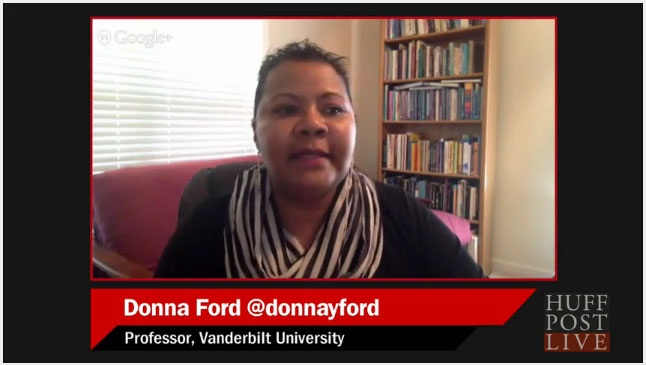
HuffPost Live: ‘Are there racial imbalances in special ed?’
Donna Y. Ford discusses a new report that challenges the long-held notion that minorities are overrepresented in special education. Read MoreJul 27, 2015
-

Results of large-scale HUD housing study to be announced July 8
The briefing will take place at the Brookdale-Mondale Auditorium at the HUD headquarters in Washington, D.C., and will be webcast live. Read MoreJun 29, 2015
-

Grant significantly expands Vanderbilt’s autism training for Tennessee educators
The Tennessee Department of Education (TDOE) has awarded a five-year, $10 million training grant to Vanderbilt Kennedy Center’s Treatment and Research Institute for Autism Spectrum Disorders (TRIAD), continuing a 16-year partnership to provide education and training opportunities for school personnel throughout the state. Read MoreJun 17, 2015
-

Op-ed: Why do so few black males go into STEM areas?
Low expectations, peer pressure, lack of role models and lack of opportunity to pursue advanced study keep black males who are good at math out of STEM fields when they grow up, writes Ebony O. McGee in The Conversation. Read MoreMay 1, 2015
-

Vanderbilt Peabody researchers featured at AERA April 16-20
Peabody faculty and graduate students will present on the topics of value-added, teacher effectiveness, minorities in STEM, connected learning, disabilities and more. Read MoreApr 8, 2015
-

Common Core math should include ‘pattern abstraction’
Exposing preschoolers to patterning activities builds the foundation for early math skills. Read MoreMar 18, 2015
-

Mobility in TN Achievement School District focus of new study
Student and teacher mobility rates have improved since the ASD takeover, researchers say. Read MoreMar 4, 2015
-
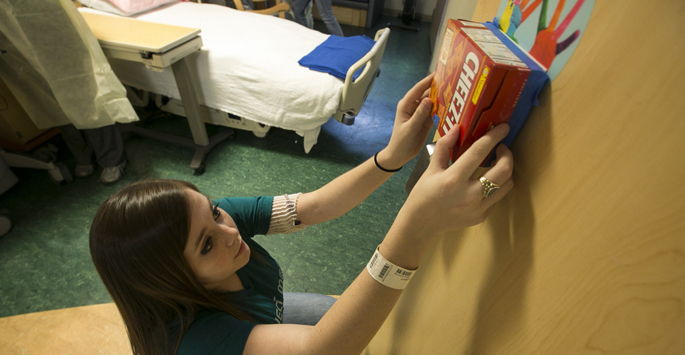
Mobile ‘Makerspace’ provides patients tools to create, inspire
At first glance, the mobile Makerspace at Monroe Carell Jr. Children’s Hospital at Vanderbilt looks like an ordinary computer cart with a printer and storage bins. Read MoreFeb 5, 2015
-
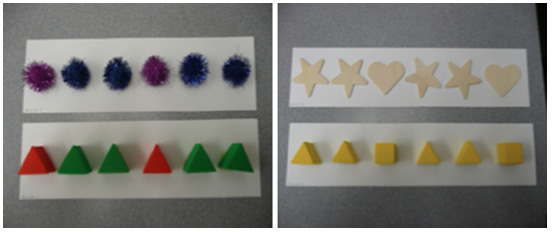
Abstract language may help preschoolers grasp early math concepts
Minor differences in language can have a large effect on how children think about learning materials, including the objects that make up a pattern. Read MoreFeb 3, 2015
-

When teachers get bonuses, do test scores rise?
A new Vanderbilt study examined a national pay-for-performance program in Texas. Read MoreJan 27, 2015
-

Brain study sheds light on how children with autism process social play
Brain scans confirm significant differences in play behavior, brain activation patterns and stress levels in children with autism spectrum disorder (ASD) as compared with typically developing children. In a first-of-its-kind study, researchers at Vanderbilt University examined social play exchanges on multiple levels, revealing associations among brain… Read MoreJan 26, 2015
-

Electrical stimulation ‘tunes’ visual attention using long-term memory
Picking a needle out of a haystack might seem like the stuff of fairytales, but our brains can be electrically “tuned” to enable us to do a much better job of finding what we’re looking for. Read MoreJan 7, 2015
-

New K-12 curriculum prepares youths for digital world
Peabody's Melissa Gresalfi is co-author of a four-book series that provides a K-12 curricular toolkit for supporting systems thinking in the digital age. Read MoreDec 12, 2014
-

Mental Illness is the wrong scapegoat after mass shootings
An extensive new study by two Vanderbilt University researchers challenges common assumptions about gun violence and mental illness that often emerge in the aftermath of mass shootings. Read MoreDec 11, 2014
-

Vanderbilt lands $15M in grants for special education teacher training
Vanderbilt has received $15 million in funding from the U.S. Department of Education to support the development of special education programs and a national center. Read MoreOct 30, 2014
-

Researchers explore links between grammar, rhythm
A child’s ability to distinguish musical rhythm is related to his or her capacity for understanding grammar, according to a recent study from a researcher at the Vanderbilt Kennedy Center. Read MoreOct 30, 2014
-

‘White matter’ behaves differently in children with dyslexia
Trans-institutional neuroimaging research at Vanderbilt finds that the brain may be structured differently in children with dyslexia. Read MoreOct 29, 2014
-

Survey: Majority of Tennessee teachers oppose Common Core
Support for Common Core has declined among Tennessee teachers over the past year, according to the results of a new Vanderbilt study. Read MoreSep 24, 2014
-

VU receives grant renewal from Autism Speaks
Autism Speaks is renewing Vanderbilt University as an Autism Treatment Network (ATN) site with a three-year, $420,000 grant. Read MoreAug 28, 2014
-

Combined drugs and therapy most effective for severe nonchronic depression
The odds that a person who suffers from severe, nonchronic depression will recover improve substantially when treated by drugs and therapy. Read MoreAug 20, 2014