Astronomy
-
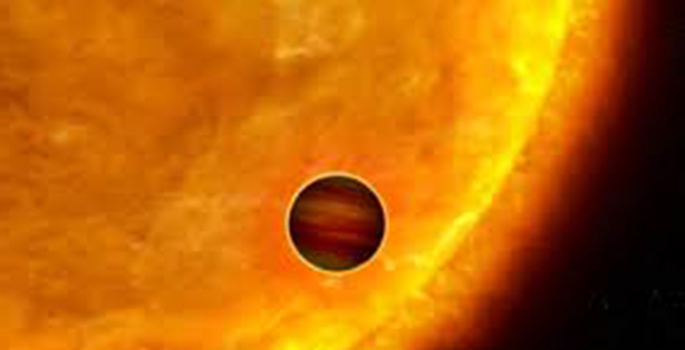
Vanderbilt’s role in new planet-finding space mission
A team of Vanderbilt astronomers will play a key role in the planet-seeking space telescope that NASA has just approved and scheduled for launch in 2017. Read MoreMay 1, 2013
-
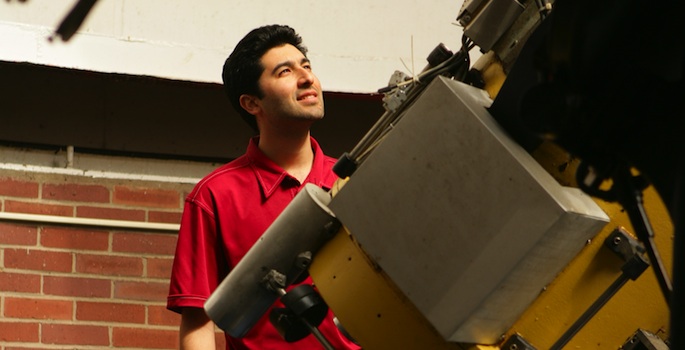
The New Face of Science: How Vanderbilt became a top producer of minority Ph.D.s in STEM
This year the Fisk–Vanderbilt Master’s-to-Ph.D. Bridge program, directed by Keivan Stassun, professor of astronomy, will become the nation’s No. 1 producer of minority Ph.D. recipients in physics, astronomy and materials science. Read MoreApr 16, 2013
-
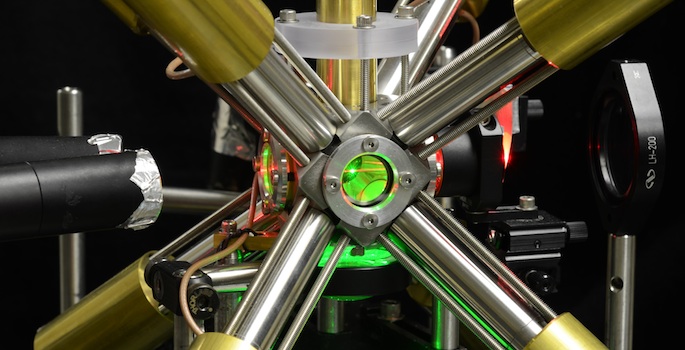
Tabletop plasma generator brings Jupiter’s core to the lab
A Vanderbilt engineering graduate student has created a small-scale, efficient way to produce high-energy density plasma--the state of matter found in the center of stars and gas giants like Jupiter--with a tabletop device. Read MoreApr 9, 2013
-
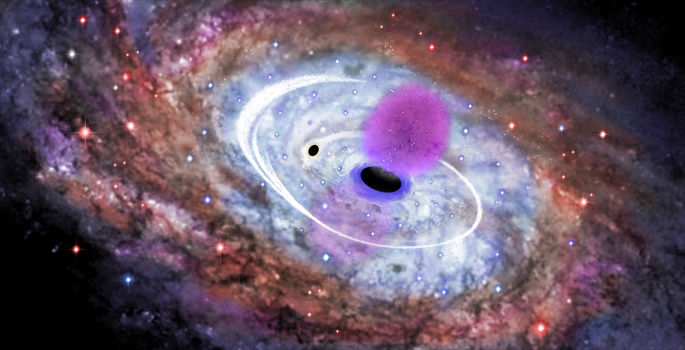
CSI: Milky Way
Two astronomers from Vanderbilt and Georgia Tech, sharing a car after a snowstorm canceled their flights home from a conference, put together everything they had learned at the conference during that snowy drive and worked out that a collision between two black holes could explain most of what is known of a violent episode in the Milky Way's past. Read MoreMar 6, 2013
-

Your Universe Today podcast: Supermassive Black Holes (Part 3)
Kelly Holley-Bockelmann, assistant professor of astronomy and physics, wraps up this three-part podcast series with an interview about her specialty, supermassive black holes. Read MoreFeb 27, 2013
-
Your Universe Today podcast: How stars die and black holes form (Part 2)
Kelly Holley-Bockelmann, assistant professor of astronomy, continues her discussion of black holes in the second part of this interview for Red Orbit. Read MoreJan 28, 2013
-
Your Universe Today podcast: How stars die and black holes form (Part 1)
Kelly Holley-Bockelmann, assistant professor of astronomy, talks about what sets black holes apart from other objects in the universe and explains how the laws of space, time and gravity bend and even break down to create the most destructive force in the cosmos. Read MoreJan 24, 2013
-

Stassun on Producing Minority Ph.D. Recipients
Not long after he arrived at Vanderbilt nine years ago, Keivan Stassun, professor of astronomy, began building on a newly forged alliance with Fisk University, a historically black college just two miles from the Vanderbilt campus, in an effort to increase the number of African Americans, Latinos, Native Americans and other minorities earning Ph.D. degrees in science. Read MoreJan 14, 2013
-

VUCast: Star Power?
This Week on VUCast, Vanderbilt’s online newscast: Star Power? Why ignorance is bliss when it comes to a star’s selling power. Football Fan Frenzy! We’re anchoring down with the Dores! VUCast takes you to the field Space Odyssey– How you can go on a… Read MoreAug 31, 2012
-

Engineer, astronomer and geologist receive NSF Faculty Early Career Development awards
An electrical engineer who is attempting to make wireless communications more reliable, an astronomer who studies the evolution of the cosmos by creating large numbers of virtual universes and a geologist who is studying the origins of super-eruptions have received the National Science Foundation’s Faculty Early Career Development awards. Read MoreAug 9, 2012
-

Newborn star’s spots confirm stellar growth theory
The latest observations of a newly born star have found that it has a pair of spots on its surface that are heated to more than one million degrees. The presence of these spots confirms a theory for how stellar infants grow advanced by Professor of Astronomy David Weintraub and a colleague. Read MoreJul 10, 2012
-
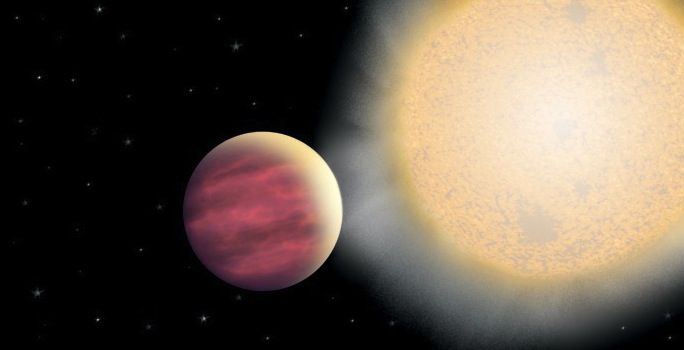
“Extremely little” telescope discovers pair of odd planets
A small telescope with a lens no more powerful than a high-end digital camera has discovered the existence of two very unusual exoplanets. Read MoreJun 13, 2012
-
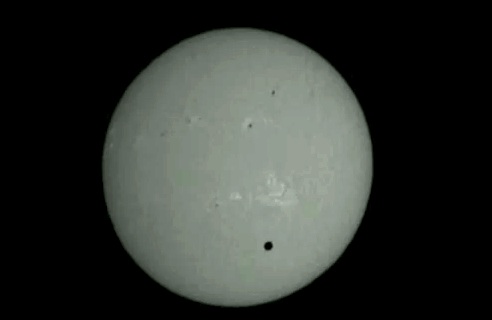
Updated: Help identify unknown object detected during Venus transit
The Dyer Observatory is calling all science sleuths to help identify an unknown object spotted on June 5. Read MoreJun 8, 2012
-
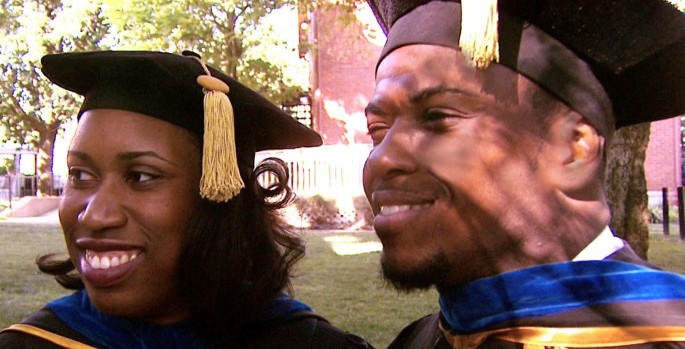
VUCast Extra: Bridging the Gap in the Sciences
Vanderbilt is on track this year to become the number one producer of minority Ph.D. recipients in physics, astronomy and materials science, an area where minorities are grossly underrepresented. Watch the emotional journey of the latest doctoral graduates from the Fisk-Vanderbilt-Master’s-to-Ph.D. Bridge Program. [vucastblurb]… Read MoreJun 8, 2012
-
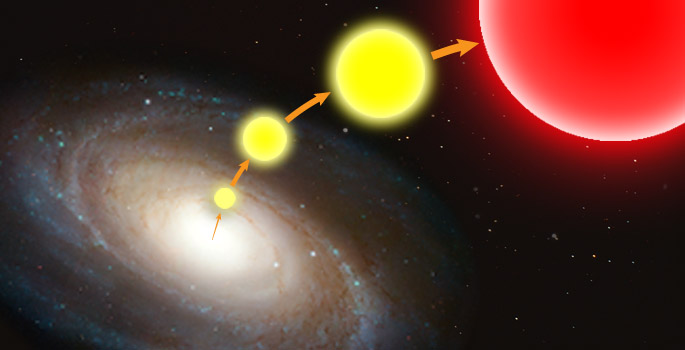
Rogue stars ejected from the galaxy found in intergalactic space
Astronomers have identified nearly 700 rogue stars that appear to have been ejected from the Milky Way galaxy. Read MoreApr 30, 2012
-
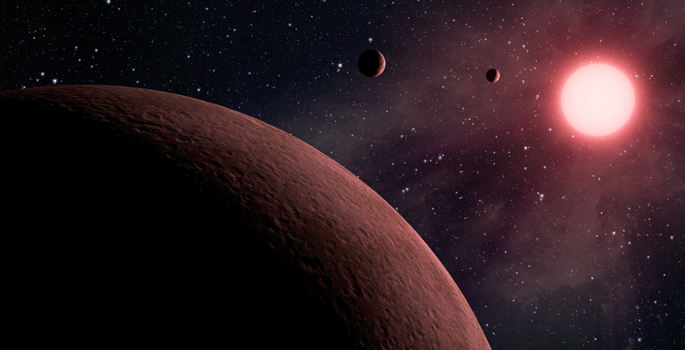
Discovery of the smallest exoplanets: The Barnard’s star connection
The smallest exoplanets yet discovered orbit a dwarf star almost identical to Barnard’s star, one of the Sun’s nearest neighbors. The similarity helped the astronomers calculate the size of the distant planets. Read MoreJan 11, 2012
-
Vicki Greene: “Newton’s Unfinished Business”
Watch video from the November 2 Thinking Out of the Lunchbox event. Vicki Greene, professor of Physics and Astronomy, spoke on “Newton’s Unfinished Business.” What is the universe really made of? From Newton onward, the concept of mass, or inertia, has been central to our understanding of the nature of… Read MoreNov 3, 2011
-
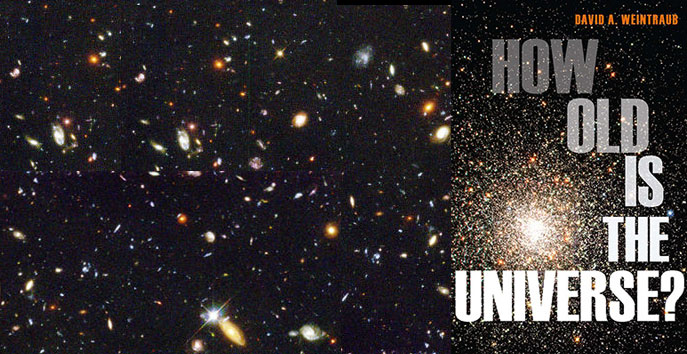
Listen: Making astronomy meaningful
Professor of Astronomy David Weintraub wanted his students to remember more of what they learned in his introductory class than the answers to typical questions on a quiz show. That was a strong impetus for his book How Old Is The Universe? It strives to make astronomy understandable… Read MoreOct 25, 2011
-
Taking introductory astronomy beyond Jeopardy and Trivial Pursuit
Astronomer David Weintraub has given introductory astronomy a “CSI” format by following the scientific evidence that gives us the age of the universe and has put this in a popular science book. Read MoreOct 7, 2011
-
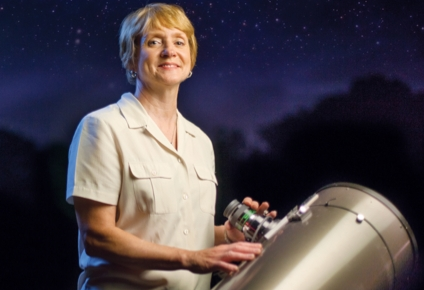
Looking up: VU pediatrician is top amateur astronomer
There is a list, famous among astronomers, of 110 faint objects in the night sky, first cataloged by French astronomer Charles Messier in the 18th century. A “Messier marathon” is when astronomers begin at dusk and work until dawn, hoping to locate every single one, searching amid the field of… Read MoreSep 2, 2011