David Salisbury
-
When events conspire
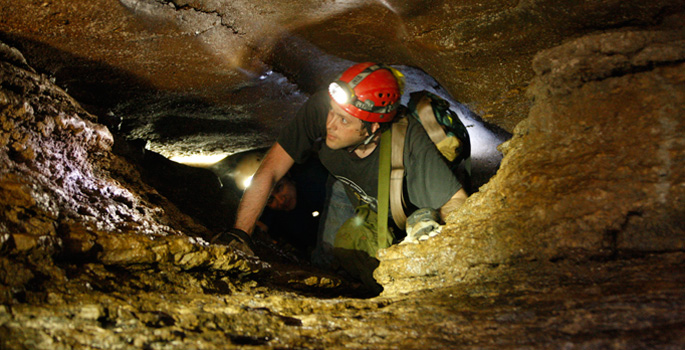
Caving expert John Hickman, who accompanies Bachmann on his underground expeditions, rappels down to the entrance of the Snail Shell Cave near Murfreesboro, Tenn Have you ever had the feeling that events beyond your control are working in your favor? That certainly seems to have been the case in the… Read MoreFeb 1, 2011
-
Going underground in search of new drugs
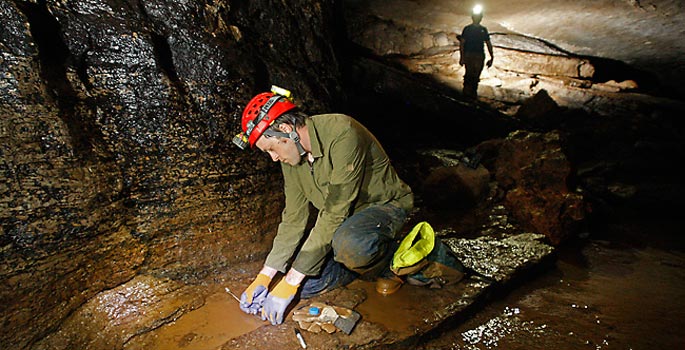
Every few months, chemist Brian Bachmann sheds his white lab coat, collects his flashlight, helmet, surgical gloves and knotted rope, puts on old clothes and hiking boots and heads to a nearby cave. Bachmann, an assistant professor of chemistry at Vanderbilt, has combined his industrial experience in… Read MoreFeb 1, 2011
-
Tuning graphene film so it sheds water
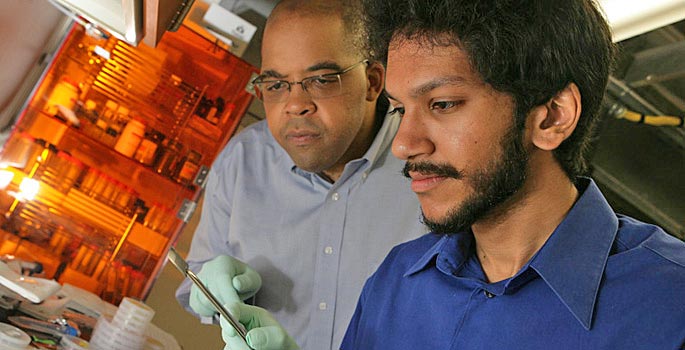
Physicist James Dickerson, left, and graduate student Saad Hasan (Photo by Daniel Dubois) Windshields that shed water so effectively that they don’t need wipers. Ship hulls so slippery that they glide through the water more efficiently than ordinary hulls. These are some of the potential applications for graphene, one of… Read MoreFeb 1, 2011
-

Trillion, trillion everywhere
The number trillion has popped up in the news several times in recent weeks. On January 11, for example, the Sloan Digital Sky Survey-III – a scientific consortium that includes Vanderbilt – announced that it had created the largest digital image of the sky and is releasing it to… Read MoreJan 20, 2011
-

Vanderbilt’s role in largest digital sky image
The Sloan Digital Sky Survey-III collaboration, which includes Vanderbilt University, has resulted in a picture of the sky so big that it would take 500,000 high-definition TVs to view it at full resolution. The color image contains more than a trillion pixels and covers about one-third of the entire sky. Read MoreJan 13, 2011
-
Tackling the erosion of a special river island
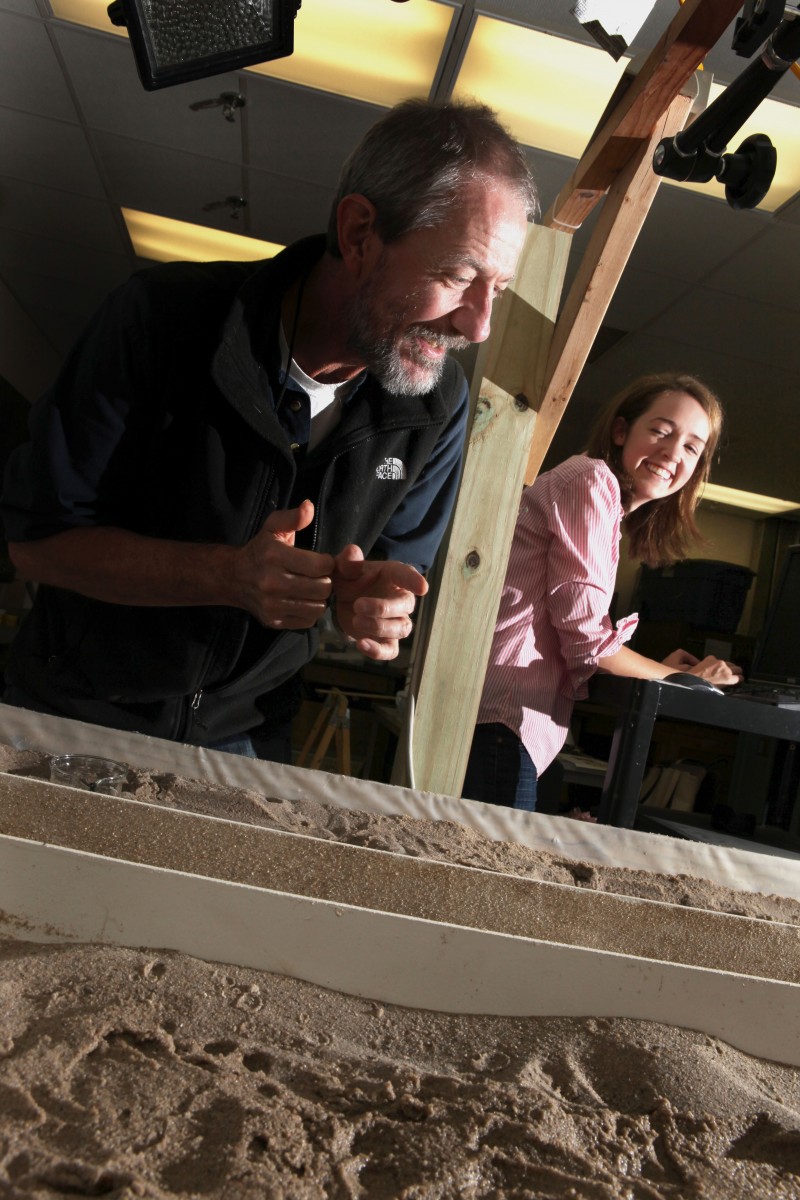
E&ES Professor David Furbish and students Grace Loy and John Rosenberry study the dynamics of the Columbia River around Locke Island, an island sacred to Native Americans endangered by erosion, in order to help determine how best to preserve the site. Read MoreDec 14, 2010
-

Developing robots for the hospital emergency room
(Photo credit: iStock photo) Are you ready for robots in the ER? A group of computer engineers at Vanderbilt University is convinced that the basic technology is now available to create robot assistants that can perform effectively in the often-chaotic environment of the emergency room. The specialists in emergency medicine… Read MoreDec 6, 2010
-
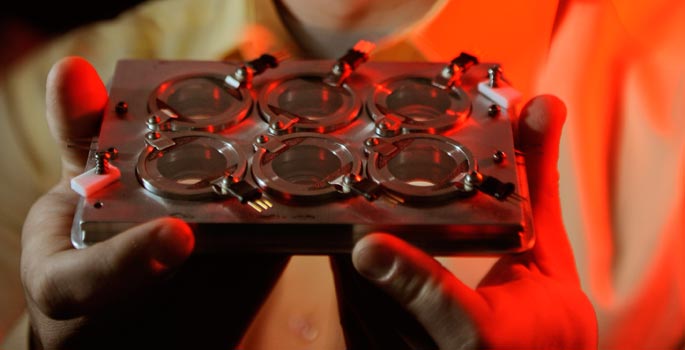
Babies’ biological clocks dramatically affected by birth light cycle
Graduate student Chris Ciarleglio who performed the study in the McMahon Lab that found the circadian clock in mammals is imprinted by the day/night cycle when an individual is born. The finding may help explain why people born in the winter at high latitudes are at greater risk for seasonal… Read MoreDec 6, 2010
-

New initiative to develop a system that controls prosthetic limbs naturally
Anita Mahadevan-Jansen, Duco Jansen and Peter Konrad Using beams of light to allow amputees not only to control but also to feel the movement of prosthetic limbs is the ambitious goal of a new $5.6 million Department of Defense initiative. The Defense Advanced Research Projects Agency is tapping the… Read MoreNov 17, 2010
-
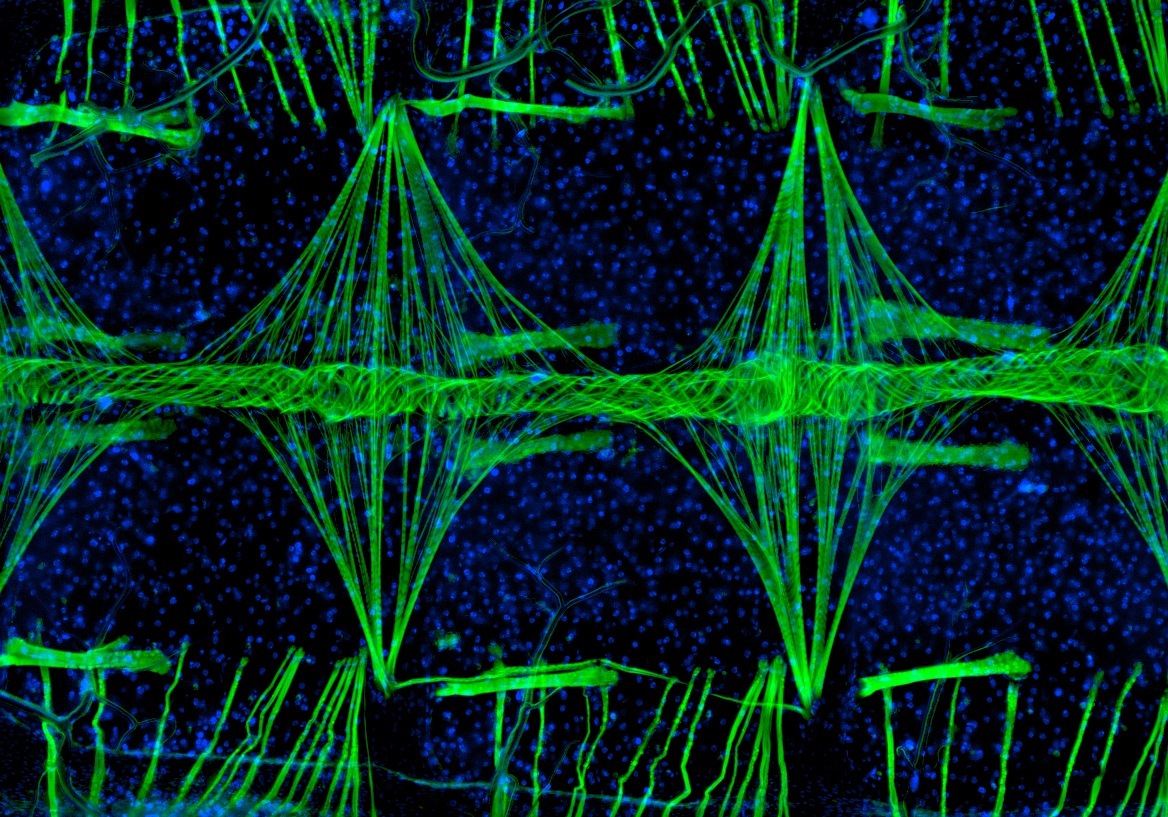
Image of mosquito’s heart wins first place in Nikon’s ‘Small World’ photomicrography competition
Jonas King, a member of the research group of Julián Hillyer, assistant professor of biological sciences, captured the image as part of the group's research on the circulatory system of Anopheles gambiae, a mosquito that spreads malaria. Read MoreOct 15, 2010
-
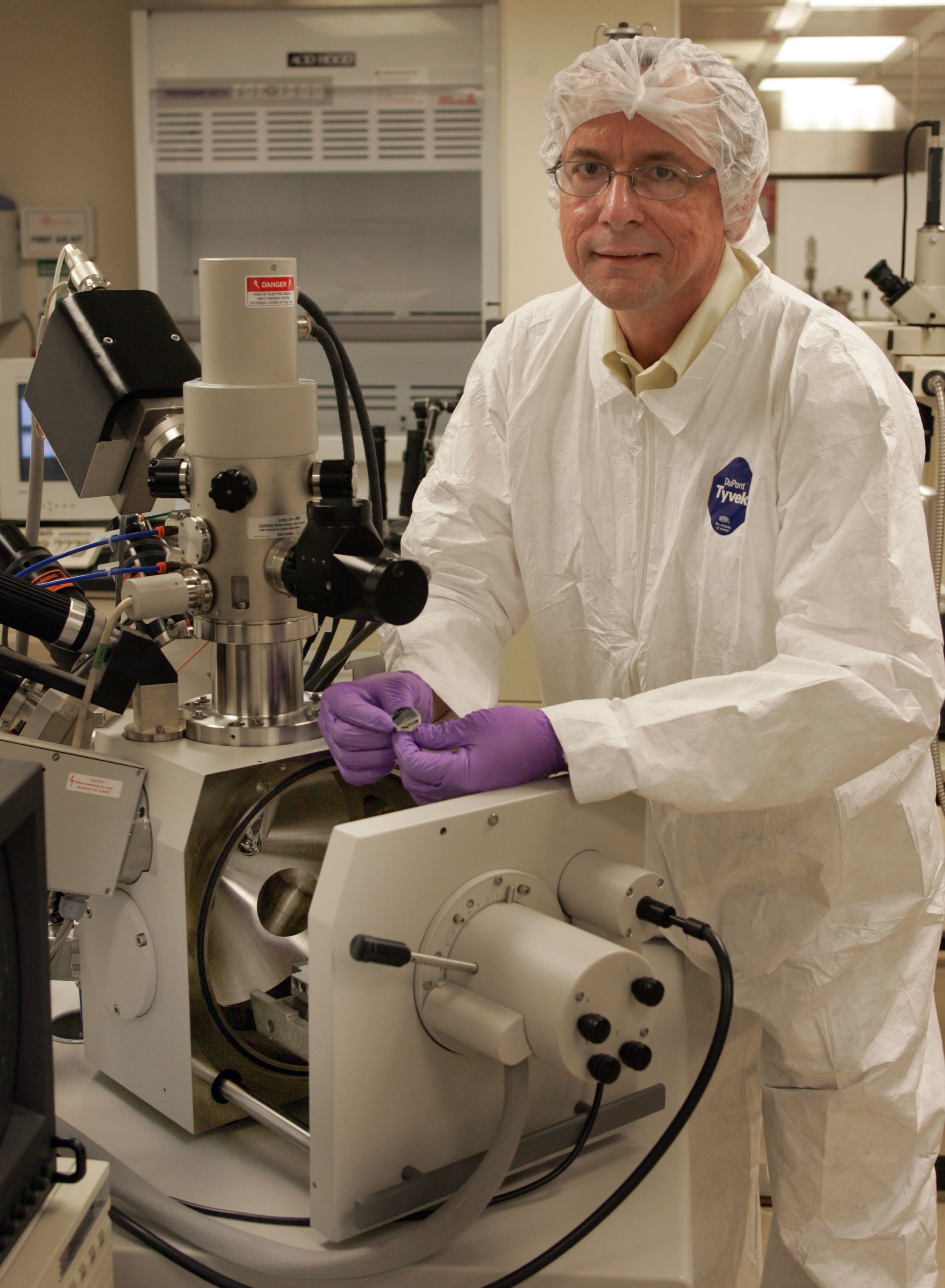
ARRA grant allows update of nanoscience institute’s air-handling equipment
If there is one thing that nanoscientists need above all else to study the behavior of materials and create devices at the scale of individual atoms, it is an ultra-clean environment. The fresh air that we breathe contains something like one million microscopic particles in a cubic foot,… Read MoreOct 13, 2010
-
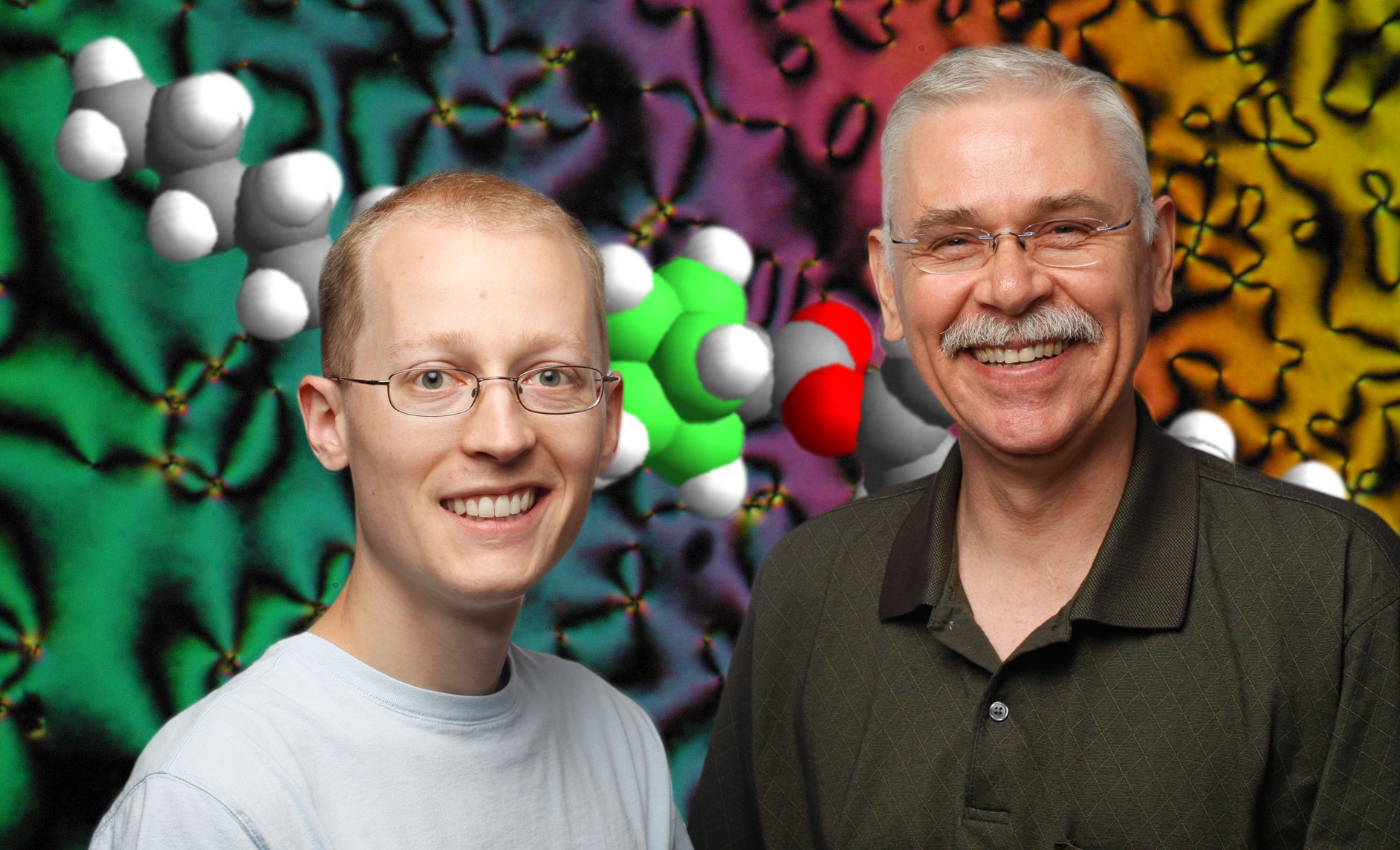
New type of liquid crystal promises to improve performance of digital displays
Bryan Ringstrand (left) and Piotr Kaszynski [Note: A multimedia version of this story is available on Exploration, Vanderbilt’s online research magazine.] Chemists at Vanderbilt University have created a new class of liquid crystals with unique electrical properties that could improve the performance of digital displays used on everything from… Read MoreOct 5, 2010
-
Newly discovered DNA repair mechanism
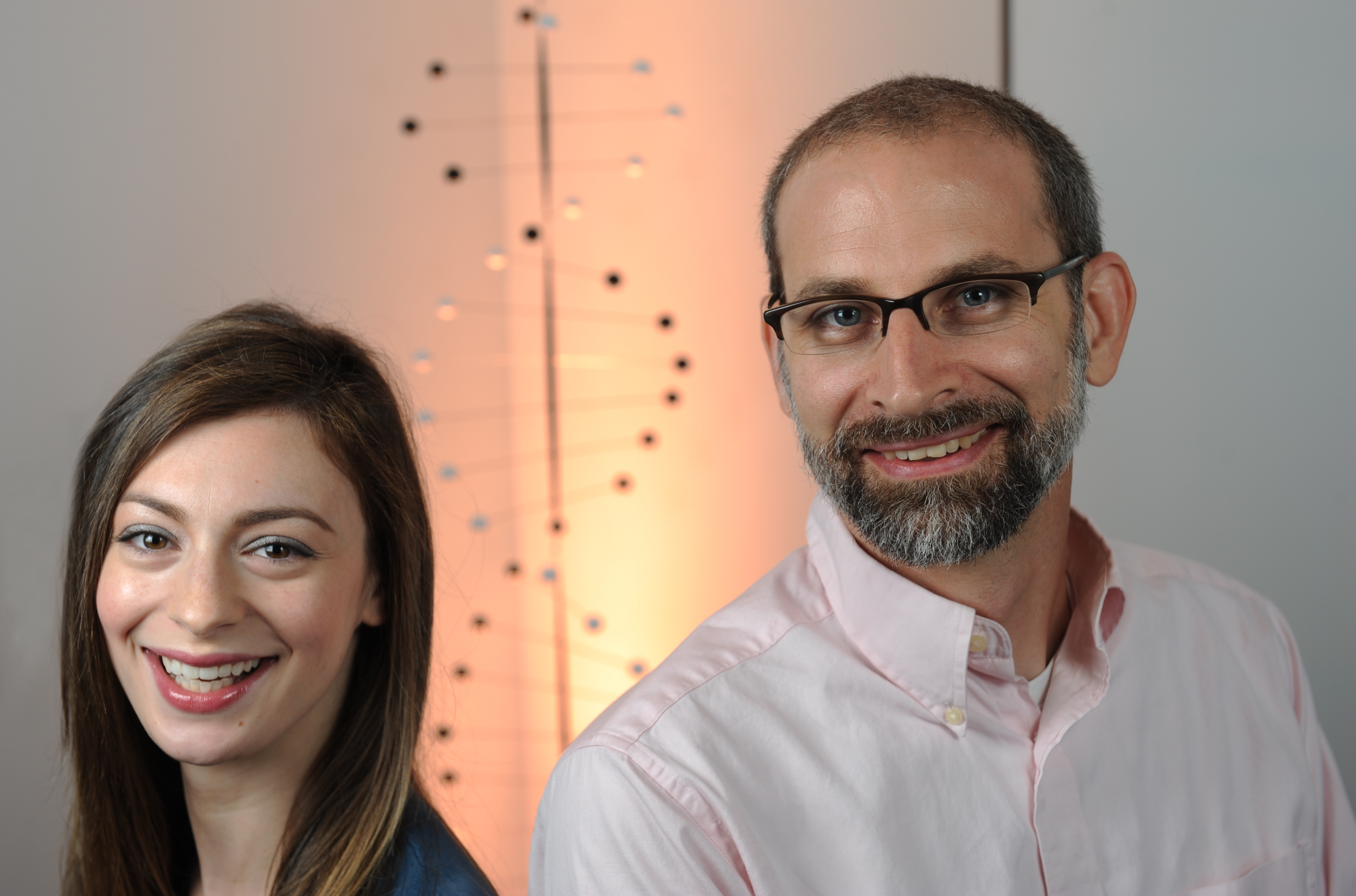
Brandt Eichman and Emily Rubinson Tucked within its double-helix structure, DNA contains the chemical blueprint that guides all the processes that take place within the cell and are essential for life. Therefore, repairing damage and maintaining the integrity of its DNA is one of the cell’s highest priorities. Researchers… Read MoreOct 4, 2010
-

Vanderbilt plays key role in $20 million federal grant designed to strengthen Tennessee’s R&D infrastructure
Five years from now, high school and college students throughout Tennessee should have more and better opportunities to learn about and pursue careers in alternative energy science and technology. Read MoreSep 9, 2010
-
Mosquitoes use several different kinds of odor sensors to track human prey
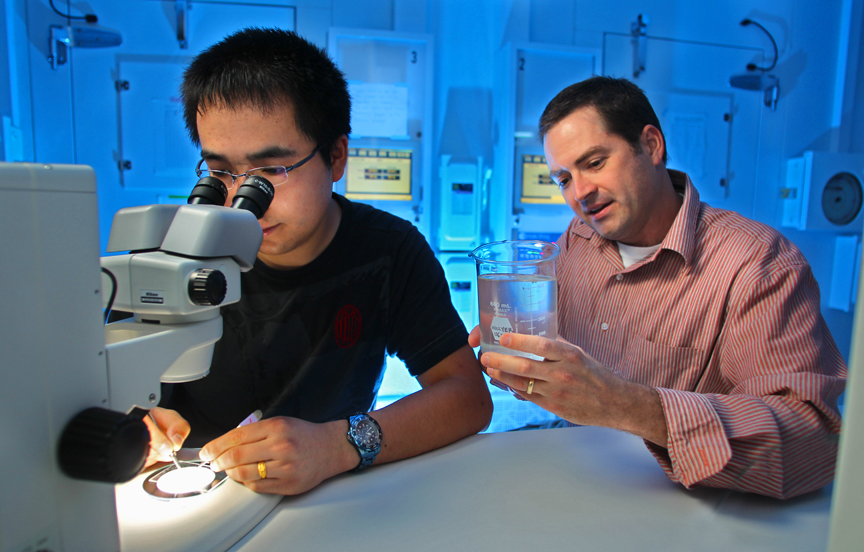
Graduate students Chao Liu and R. Jason Pitts Origin of DEET’s repellent effect confirmed It now appears that the malaria mosquito needs more than one family of odor sensors to sniff out its human prey. That is the implication of new research into the mosquito’s sense of smell published… Read MoreAug 31, 2010
-

New graphics processor cluster gives Vanderbilt supercomputer a major boost
What do an astrophysicist studying how black holes merge, a chemist predicting the biological characteristics of novel proteins, a psychologist investigating decision-making and a mechanical engineer studying how nanotubes transport heat have in common? They all need tremendous amounts of computer power to conduct their research and they… Read MoreJul 29, 2010
-

MEDIA ADVISORY: Gifted high school students learn about the power of the extremely small in Vanderbilt summer camp
Eighteen gifted and talented high school students are spending the week on the Vanderbilt campus learning how nanoscience – the science of the very small – is impacting everything from the formulation of concrete to drug delivery systems. The nanoscience camp is one of a number of different camps being… Read MoreJun 29, 2010
-
Novel method of peptide synthesis promises to lower cost, increase availability of new drugs based on natural compounds
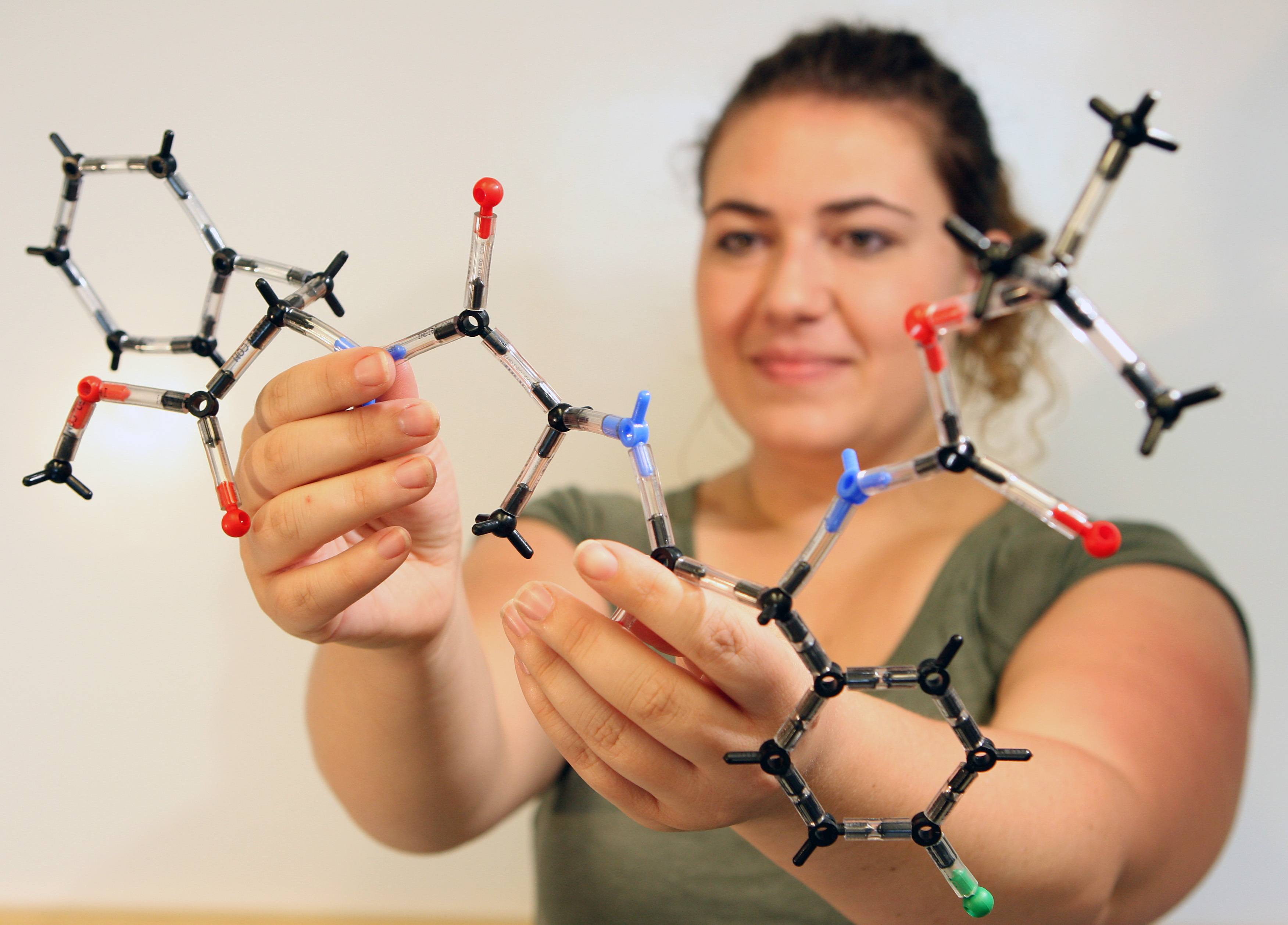
Graduate student Dawn Makley holds a model of a peptide molecule created using a new synthesis method developed in the laboratory of Prof. Jeff Johnston. Photo credit: Steve Green A team of Vanderbilt chemists has developed a novel method for chemically synthesizing peptides that promises to lower… Read MoreJun 23, 2010
-
Nanosponge drug delivery system more effective than direct injection
When loaded with an anticancer drug, a delivery system based on a novel material called nanosponge is three to five times more effective at reducing tumor growth than direct injection. Read MoreJun 1, 2010
-
Vanderbilt professor offers key factors in recruiting minorities, women to critical science, engineering careers
Identification of students with unrealized potential, continuous tracking of individual performance and intensive, one-on-one mentoring are key factors in successfully recruiting underrepresented minorities and women into the critical professions of science, technology, engineering and mathematics (STEM). Read MoreMar 16, 2010