David Salisbury
-
Jumping genes make the funny pages
Every so often a piece of research makes it into the popular culture. That is the case with the discovery of Vanderbilt biologists Antonis Rokas and Jason Slot that entire gene clusters have jumped between unrelated species of mold millions of years… Read MoreJun 24, 2011
-
Glowing gland can reduce endocrine surgery risk
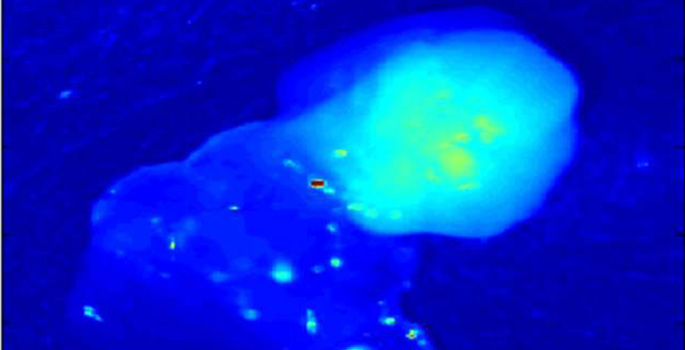
Vanderbilt researchers have discovered that parathyroid glands have a natural fluorescence that can be used during surgery to identify these tiny organs, which are hard to find with the naked eye. Read MoreJun 20, 2011
-

Cell phone bee mortality link: sensationalism not science
Vanderbilt graduate student Cassidy Cobbs has investigated recent news reports linking cell phone emissions with bee mortality and found that there is no scientific basis for the claims. Read MoreJun 14, 2011
-
Bad buzz about blue-eyed cicadas
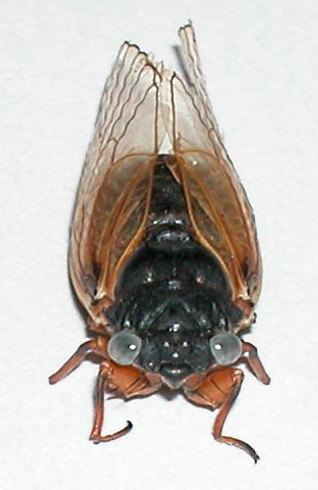
Photo of a true blue-eyed cicada (Matt Weiss, Cicada Mania) Have you heard the latest buzz going round that scientists at Vanderbilt are paying as much as $3,000 for specimens of the rare blue-eyed cicada? If you have, I hope you haven’t spent a lot of time… Read MoreJun 2, 2011
-
Stamping out low cost nanodevices
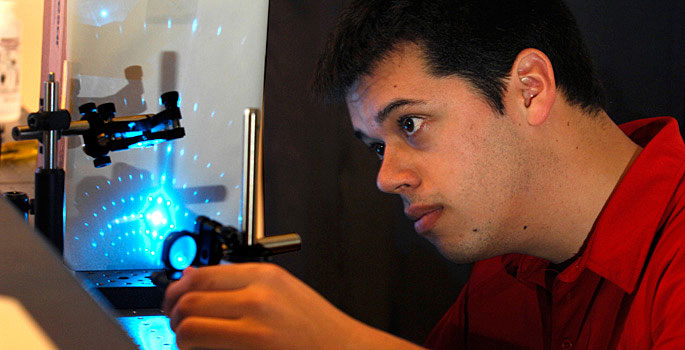
A team of Vanderbilt engineers have developed a rapid and low-cost imprinting process that can stamp out a variety of devices that have unique optical, electrical, chemical and mechanical properties. Read MoreMay 31, 2011
-
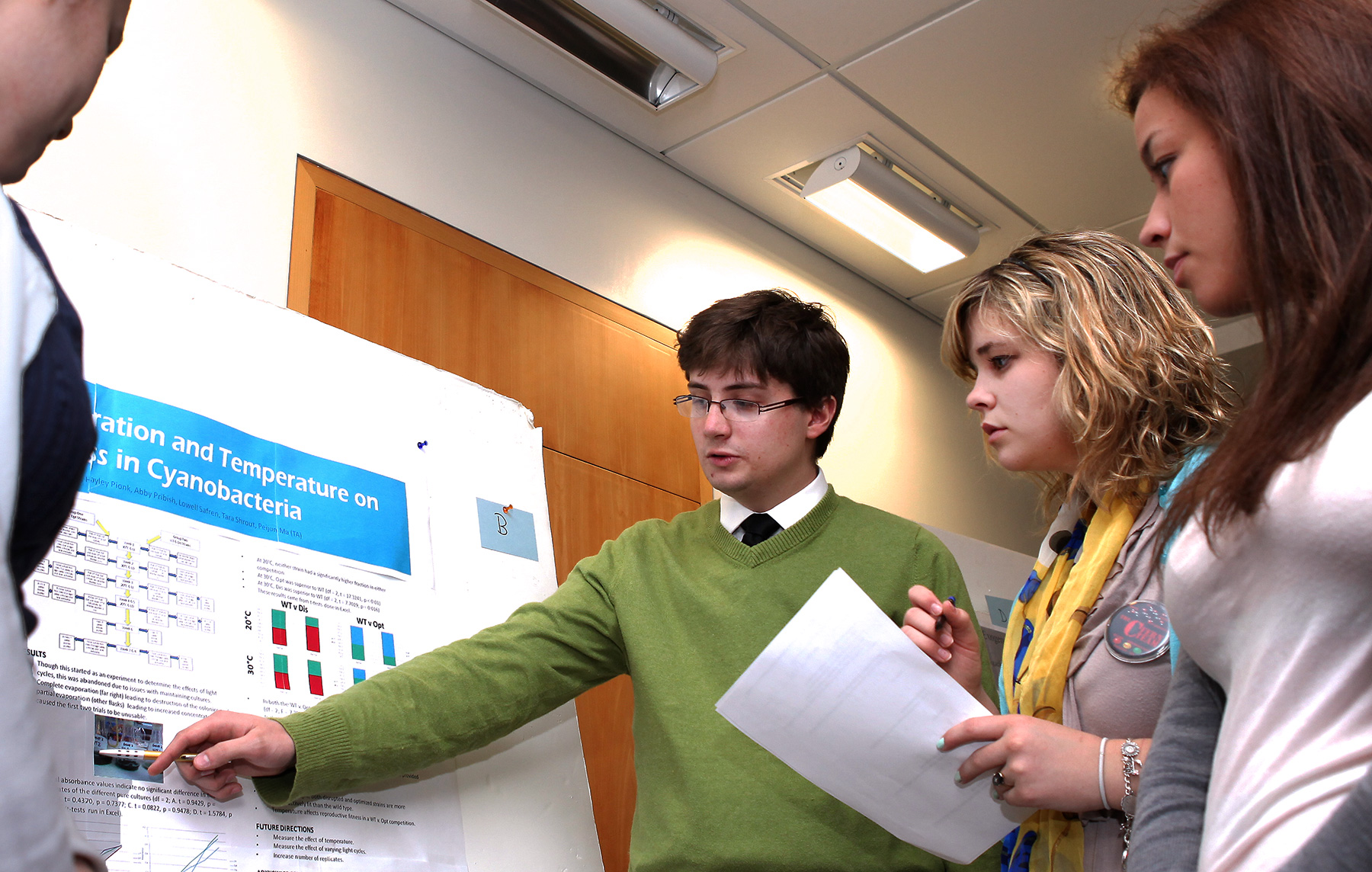
Laboratory throws away cookbooks in pursuit of discovery
Students at BSC111c poster session discussing project that determined the phylogenetic relationship of a number of common insects (Susan Urmy / Vanderbilt) In an educational environment increasingly characterized by canned and virtual science experiments that always come out right, Vanderbilt’s alternative introductory biology laboratory (BSC 111c) stands… Read MoreMay 20, 2011
-
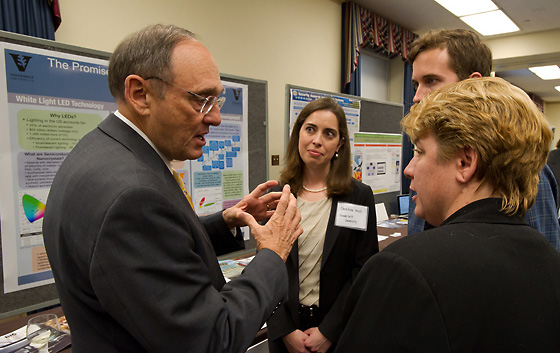
Prof. Rosenthal goes to Washington
Representative Phil Roe (R-TN) chatting with Prof. Sandra Rosenthal, front, graduate student Scott Niezgoda and Christina West, assistant vice chancellor of federal relations, in Washington D.C. at the 17th annual CNSF Exhibition & Reception. (David Scavone) Last Wednesday, Sandra Rosenthal and Scott Niezgoda accepted the invitation… Read MoreMay 13, 2011
-
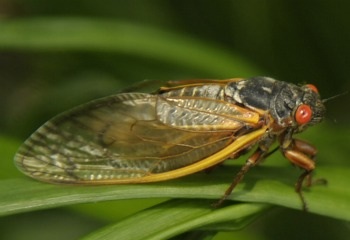
Cicadas 101: All buzz, no bite
An adult cicada (John Russell / Vanderbilt) Vanderbilt commencement speakers may have some unusual competition this year: Nashville’s largest brood of cicadas are predicted to emerge in May and hang around for about five or six weeks. Besides their practice of appearing in 13- or 17-year… Read MoreMay 12, 2011
-
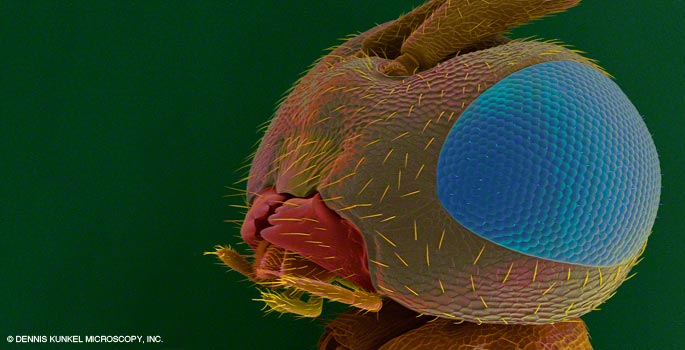
Could bacterial hitchhikers influence formation of new host species?
Vanderbilt researchers are exploring what role, if any, bacteria play in environmental diversity, with the aim of answering one of biology's most fundamental questions. Read MoreMay 5, 2011
-
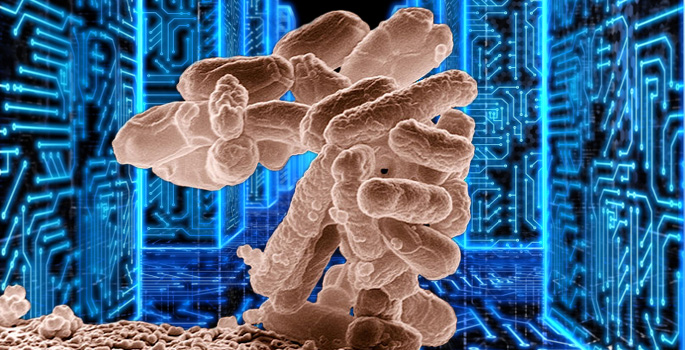
Nanotechnologists take lessons from nature
Accepting and understanding natural variability is the key for engineers seeking to make nanoscale devices that are as efficient as living microorganisms. Read MoreApr 28, 2011
-
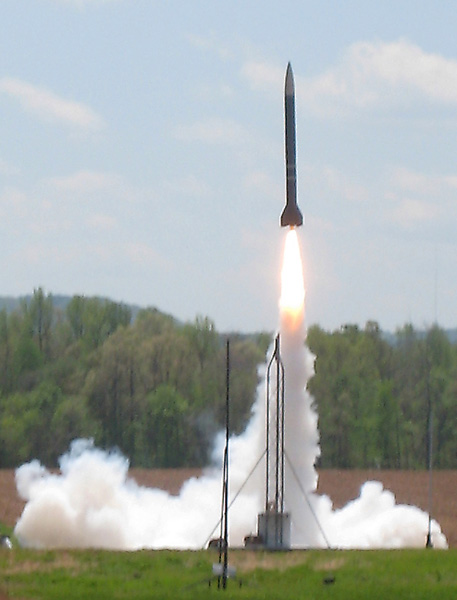
Vandy rocketeers strike again
Last Sunday, Vanderbilt’s Aerospace Club participated in a major NASA rocket competition at Huntsville, Alabama and came away with a first place award for their payload design. This is the fourth year that the Vanderbilt group has been invited to the NASA Student Launch Projects rocketry challenge and… Read MoreApr 22, 2011
-
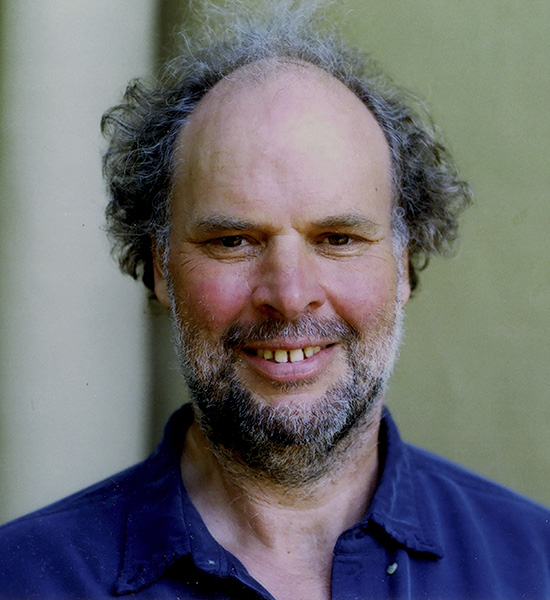
Beyond knot theory
I’ve always been fascinated, and occasionally frustrated, by the tendency of string, yarn, rope and wire – any thing that is long, thin and flexible – to knot and tangle. Fields Medal winner Vaughan F.R. Jones Clearly, I’m not the only one. Mathematicians have been studying knots… Read MoreApr 14, 2011
-
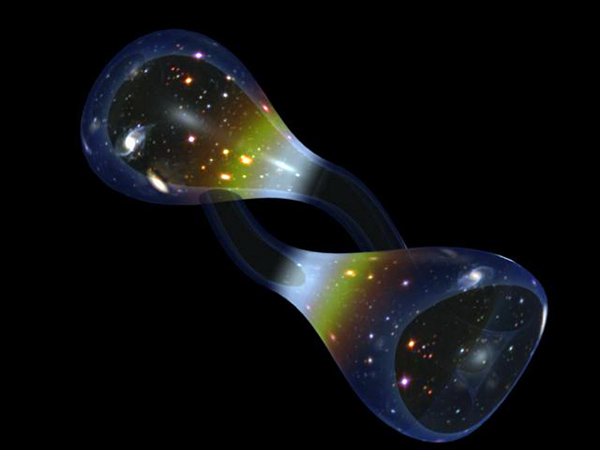
Big Bang or Big Bounce?
There is a new dark-horse entry in the cosmological sweepstakes. Cosmologists Alan Guth, left, and Paul Steinhardt In the last 50 years, the Big Bang theory has gradually become the standard scientific model for how the universe began and has been written into the grade school science… Read MoreApr 5, 2011
-
Nuclear remediation veteran comments on accident at Japanese nuclear power plant
Frank Parker, who has studied Nagasaki, Chernobyl and Three Mile Island, comments on the accident at the Fukushima Daiichi nuclear power plant in Japan. Read MoreMar 23, 2011
-
“Multiverse” subject of public lecture at Vanderbilt
Well-known MIT cosmologist Alan Guth gives an invited lecture on the possibility that our universe is a multiverse that consists of a series of pocket universes each with different physical properties. Read MoreMar 17, 2011
-
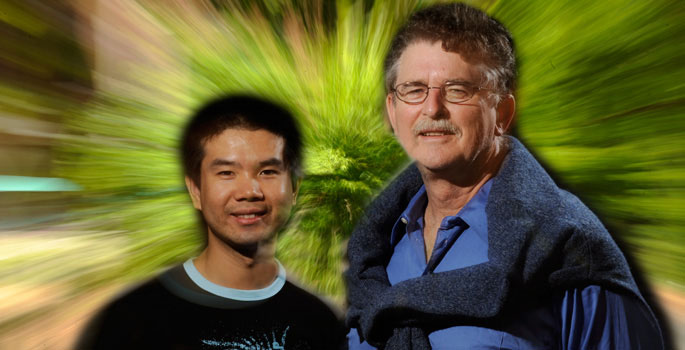
Large Hadron Collider could be world’s first time machine
Prof. Thomas Weiler, right, and graduate fellow Chui Man Ho (John Russell / Vanderbilt) If the latest theory of Tom Weiler and Chui Man Ho is right, the Large Hadron Collider – the world’s largest atom smasher that started regular operation last year – could be… Read MoreMar 15, 2011
-
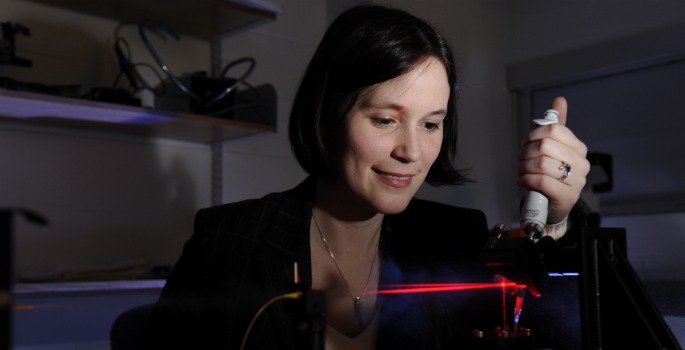
New laser technique opens doors for drug discovery
A new laser technique can measure interactions between proteins tangled in a cell's membrane and a variety of other biological molecules: extremely difficult measurements that can aid the process of drug discovery. Read MoreMar 14, 2011
-
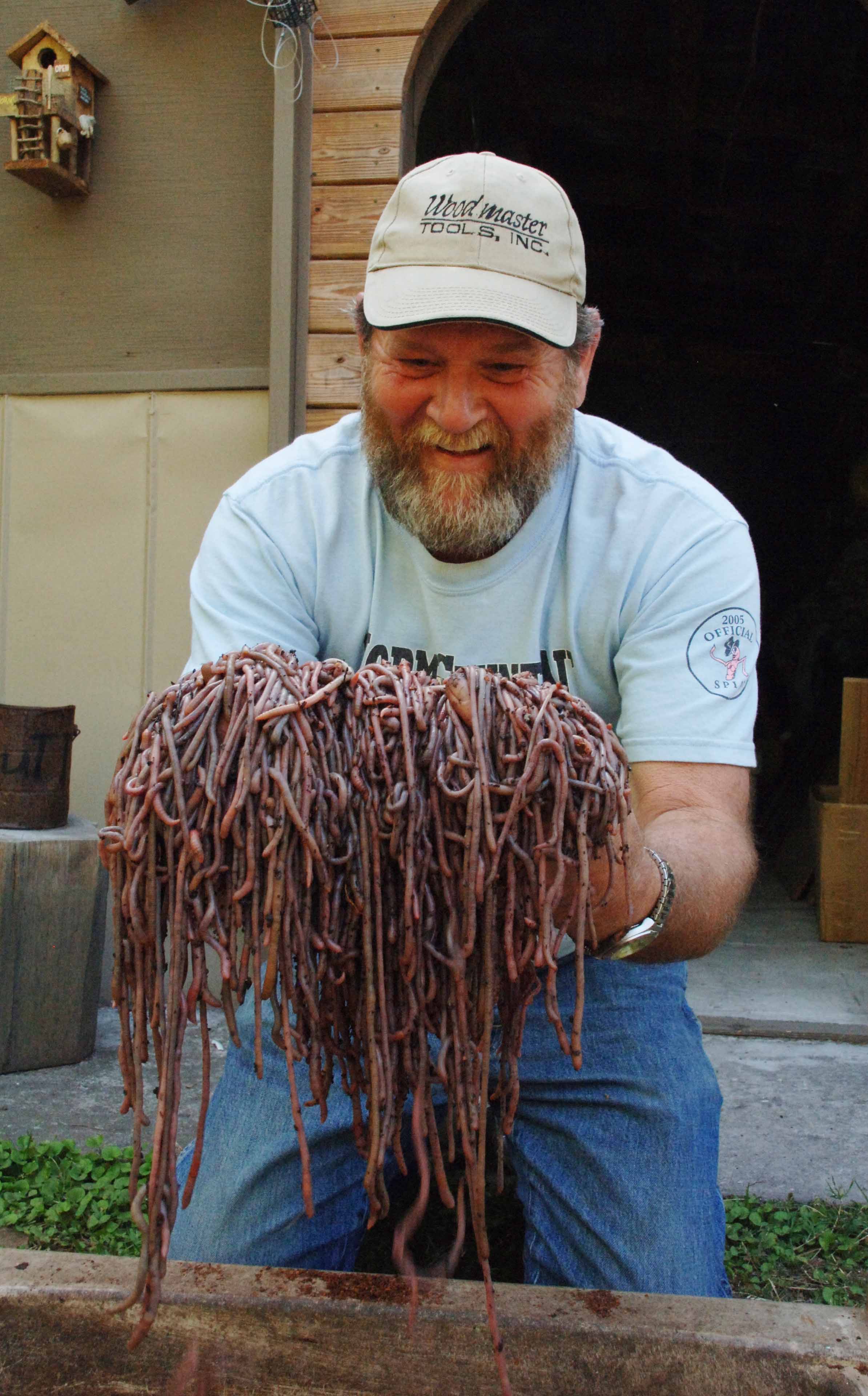
Worm grunting on NPR
Gary Revell shows some of the worms he has collected using worm grunting (Ken Catania) “What is worm grunting?” That is one of the questions that moderator Richard Sher asked panelists last weekend in a rerun of a pre-recorded edition of “Says You!” – the popular… Read MoreMar 11, 2011
-
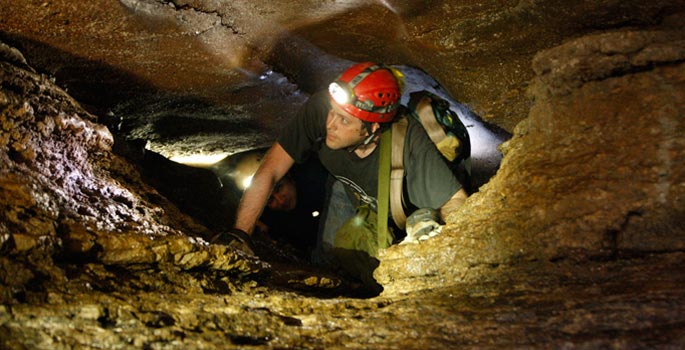
Going underground in search of new drugs
Every few months, chemist Brian Bachmann sheds his white lab coat, collects his flashlight, helmet, surgical gloves and knotted rope, puts on old clothes and hiking boots and heads to a nearby cave. Bachmann, an assistant professor of chemistry at Vanderbilt, has combined his industrial experience in natural… Read MoreMar 10, 2011
-
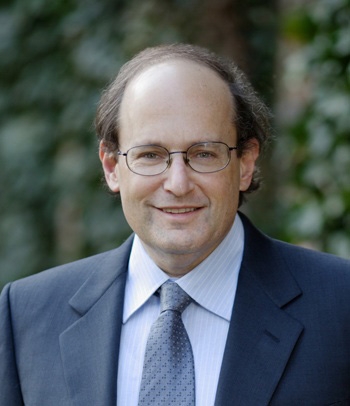
Inflationary universe subject of public lecture
Cosmologist Paul Steinhardt (Photo courtesy of Paul Steinhardt) Today, the idea that the universe expanded dramatically for a period of time after its birth in the Big Bang is one of the cornerstones of modern cosmology. However, Paul Steinhardt, the Albert Einstein Professor of Science at Princeton University,… Read MoreMar 4, 2011