Research
-

New Study: Black women face higher maternal mortality rates than previously determined
Evelyn J. Patterson The effects of racism and sexism lead to higher maternal mortality rates among Black women in the U.S. than previously realized, according to new research from Associate Professor of Sociology and Law Evelyn J. Patterson at Vanderbilt University. Even after controlling… Read MoreApr 18, 2022
-

Tata receives NSF Early CAREER Award to identify network vulnerabilities and failures
Ahmad F. Tata, associate professor of civil and environmental engineering, has received a prestigious NSF CAREER Award for fundamental research in new approaches to network sensors and controllers scheduling. His CAREER project, “Scheduling Driving Sensing and Control Nodes in Nonlinear Networks with Applications to Fuel-Free Energy Systems,” offers a novel framework for the exploration of... Read MoreApr 15, 2022
-
Braun receives NSF Early CAREER Award to create next-gen robots to assist humans
David Braun, assistant professor of mechanical engineering, has received a prestigious NSF CAREER Award for foundational research in mechanically adaptive robotics. His CAREER project, “Mechanically Adaptive, Energetically Passive Robotics,” will enable the creation of new-generation industrial robots, transportation systems, and devices that can assist and augment humans. The five-year, $600,000 grant will support work on robot... Read MoreApr 13, 2022
-
International collaboration reveals how the human brain evolved to harness abstract thought
By Marissa Shapiro THE IDEA The human brain is organized in functional networks—connected brain regions that communicate with each other through dedicated pathways. That is how we perceive our senses, how the body moves, how we are able to remember the past and plan for the future. The “default mode” network is the part of... Read MoreApr 12, 2022
-
International collaboration reveals how the human brain evolved to harness abstract thought
By Marissa Shapiro THE IDEA The human brain is organized in functional networks—connected brain regions that communicate with each other through dedicated pathways. That is how we perceive our senses, how the body moves, how we are able to remember the past and plan for the future. The “default mode” network is the part of... Read MoreApr 12, 2022
-
Karl Zelick is inaugural awardee of a Scaling Success Grant
Karl Zelik, associate professor of mechanical engineering, is one of three inaugural awardees for the February 2022 cycle of the Scaling Success Grant, which is the first cycle of this internal funding opportunity. Yuankai Huo, assistant professor of computer science and computer engineering, is co-PI on a SSG grant. Read MoreApr 11, 2022
-
Study finds 10-second videos predict blood cancer relapse
Biomedical engineering prof says study raises the prospect of a new application of diagnostic optical biopsy by Paul Govern In a new study from Vanderbilt University Medical Center, 10-second videos of white blood cell motion in the skin’s microvasculature greatly improved the prediction of which stem cell and bone marrow transplant patients would have a relapse... Read MoreApr 4, 2022
-
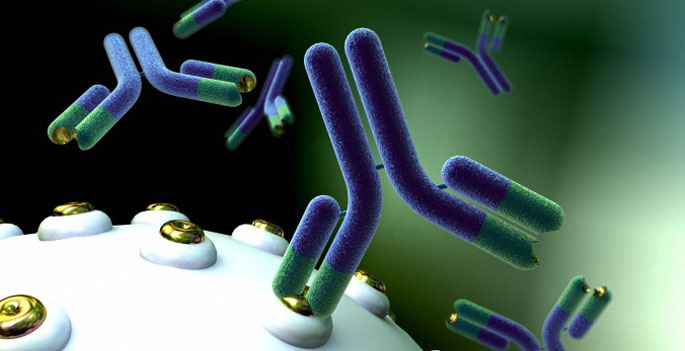
Crowe receives national award for COVID antibody research
Vanderbilt's James Crowe Jr., MD, and Michel Nussenzweig, MD, PhD, of The Rockefeller University, have been jointly awarded the 2022 Harrington Prize for Innovation in Medicine for “groundbreaking work” that enabled the use of human antibodies to treat COVID-19. Read MoreMar 31, 2022
-
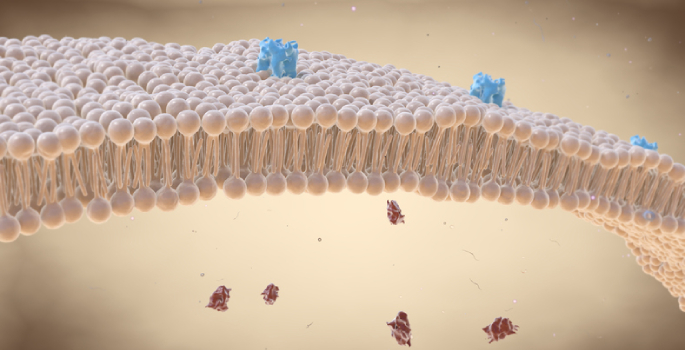
Research Snapshot: Biochemical technique for finding small molecules discovered by Vanderbilt and University of Virginia researchers
A team including the Sanders lab developed a new methodology for finding small molecules associated with lipid rafts, an essential part of cell structure and regulation. Read MoreMar 28, 2022
-

Well-being implications of LGBTQ+ rights issues in Texas, the U.S. South and beyond
Experts from the Vanderbilt LGBT Policy Lab a discussion about the state of research regarding LGBTQ+ rights and policy and the effects of pro- and anti- queer policies on health, education, economic outcomes and overall well-being Read MoreMar 28, 2022
-
Vanderbilt engineering researchers use artificial intelligence to help basketball players improve their shots
To shoot a basketball with precision requires countless hours of practice. Usually, this happens under the watchful eye of a coach, who can provide guidance on the right mechanics of each shot. Now, though, thanks to new research from Vanderbilt University, players may soon be able to use artificial intelligence technology to work on those... Read MoreMar 24, 2022
-

High blood pressure genes improve heart surgery survival in children
Vanderbilt researchers have found that children with a genetic makeup that predicts high blood pressure as adults are more likely to survive congenital heart defect repair surgery. Read MoreMar 24, 2022
-

Coaching Through Technology: Vanderbilt researchers use artificial intelligence to help basketball players improve their shots
To shoot a basketball with precision requires countless hours of practice, usually under the watchful eye of a coach providing guidance on the right mechanics of each shot. Now, thanks to new research from Vanderbilt University, players may soon be able to use artificial intelligence technology to work on those same principles on their own. Read MoreMar 24, 2022
-

Research Snapshot: Hunger signals, including those from cannabinoids, mapped in the brain
Body-made cannabinoids that fine tune hunger signals in the brain have been mapped, with implications for helping those with deadly feeding-related illnesses Read MoreMar 23, 2022
-
Rubinov awarded $1.1M to study molecular underpinnings of human brain networks on a large scale
Mikail Rubinov, assistant professor of biomedical engineering, computer science, psychiatry and psychology, has been awarded a four-year, $1.1 million grant from the National Institute of Mental Health to better understand the development and organization of brain networks, as well as their change in development and aging. Rubinov and his collaborators will link aspects of gene expression and... Read MoreMar 17, 2022
-
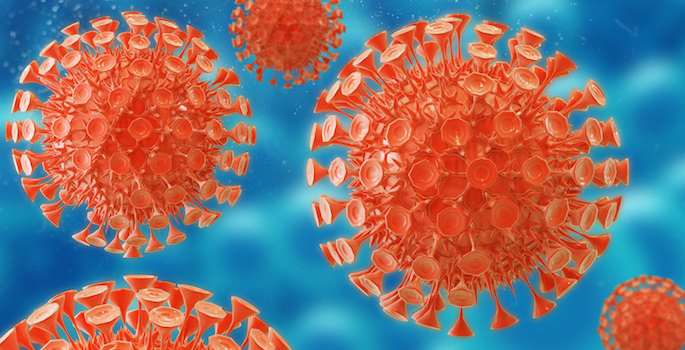
Blood test figures in cancer risk for people with HIV
A Vanderbilt study found that, among adult patients with HIV, those who have lower counts of certain types of blood cells have a markedly higher risk of developing cancer. Read MoreMar 17, 2022
-

Vanderbilt-Metro partnership created to advance collaboration on connected, data-driven services
Vanderbilt University and the Metropolitan Government of Nashville and Davidson County have expanded their working relationship by creating a framework to increase collaboration on projects focused on intelligent and connected urban infrastructure and services. Read MoreMar 14, 2022
-

How to ease your child’s anxiety about the war in Russia-Ukraine
Concerns about strife in a country far from home are adding worries to a generation already on edge from navigating changes in everyday life due to the COVID-19 pandemic. Here are some ideas for how to help. Read MoreMar 11, 2022
-
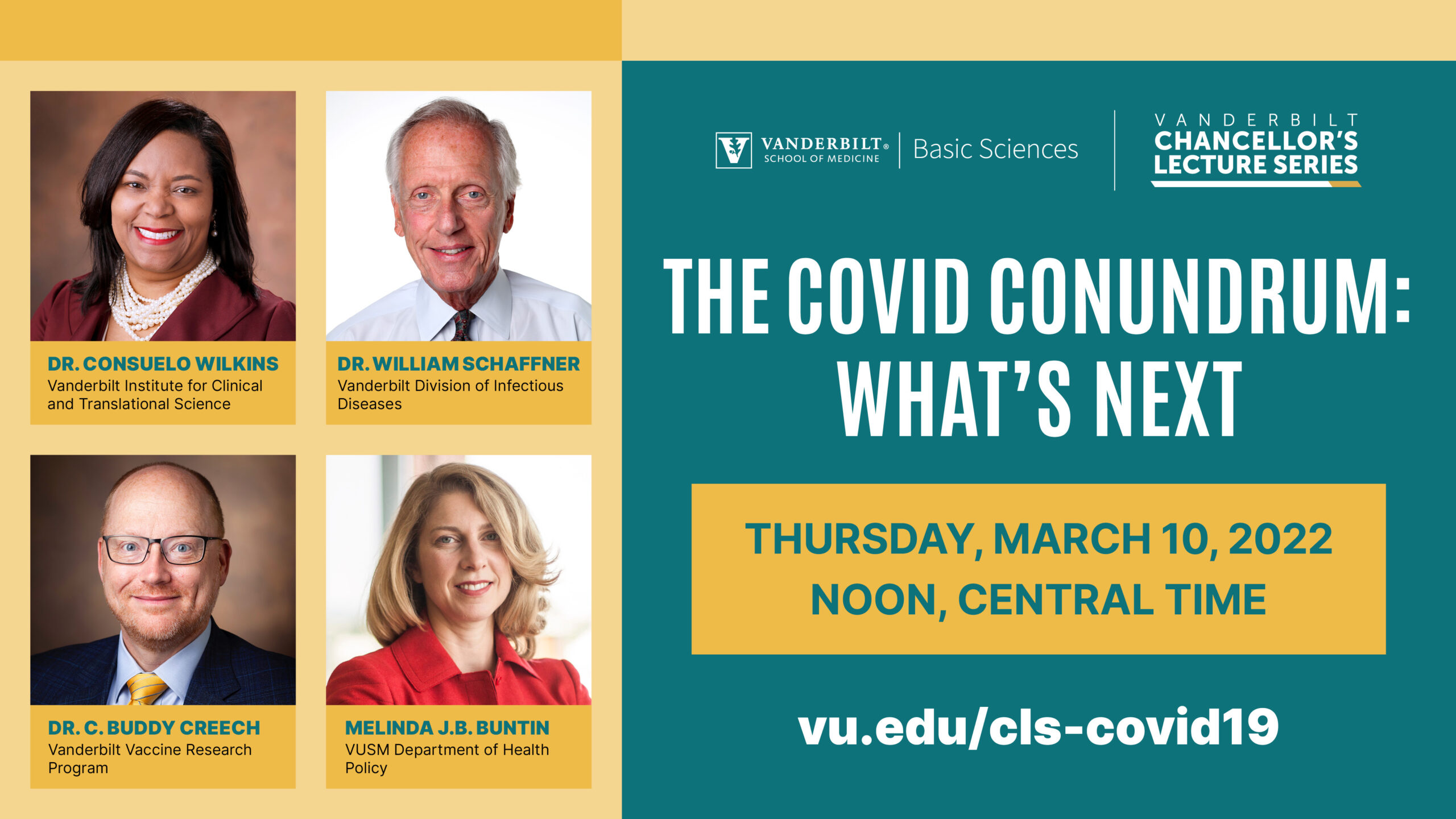
WATCH: Experts discuss what’s next in the COVID-19 pandemic
Some of Vanderbilt University’s leading experts on vaccines, infectious disease and public health came together for a special panel discussion on March 10 to talk about the future of the COVID-19 pandemic. The virtual event, “The COVID Conundrum: What’s Next,” was hosted by the Chancellor’s Lecture Series in partnership with the Vanderbilt School of Medicine Basic Sciences. Read MoreMar 11, 2022
-
Wikswo, VIIBRE team on track to build third-generation ‘self-driving lab’ with $1M from NSF
John Wikswo, founder and director of the Vanderbilt Institute for Integrative Biosystems Research and Education and Gordon A. Cain University Professor, is the principal investigator of a $1 million award from the National Science Foundation. The object is to build a pathbreaking “robot scientist”—a fully automated microfluidic system for parallel, independent, long-duration, machine-guided experiments. The... Read MoreMar 5, 2022