Psychology
-

‘White matter’ behaves differently in children with dyslexia
Trans-institutional neuroimaging research at Vanderbilt finds that the brain may be structured differently in children with dyslexia. Read MoreOct 29, 2014
-

Metzl on Mental Illness and Gun Violence
After the horrific mass murder at Sandy Hook Elementary School in 2011, a conservative commentator claimed that “guns don’t kill people—the mentally ill do.” Metzl believes this attitude is based on misconceptions about mental illness and violence that obscure larger issues about gun violence in America. Read MoreSep 26, 2014
-

Combined drugs and therapy most effective for severe nonchronic depression
The odds that a person who suffers from severe, nonchronic depression will recover improve substantially when treated by drugs and therapy. Read MoreAug 20, 2014
-

Fault trumps gruesome evidence when it comes to meting out punishment
A new brain study has identified the brain mechanisms that underlie our judgment of how severely a person who has harmed another should be punished. Read MoreAug 3, 2014
-
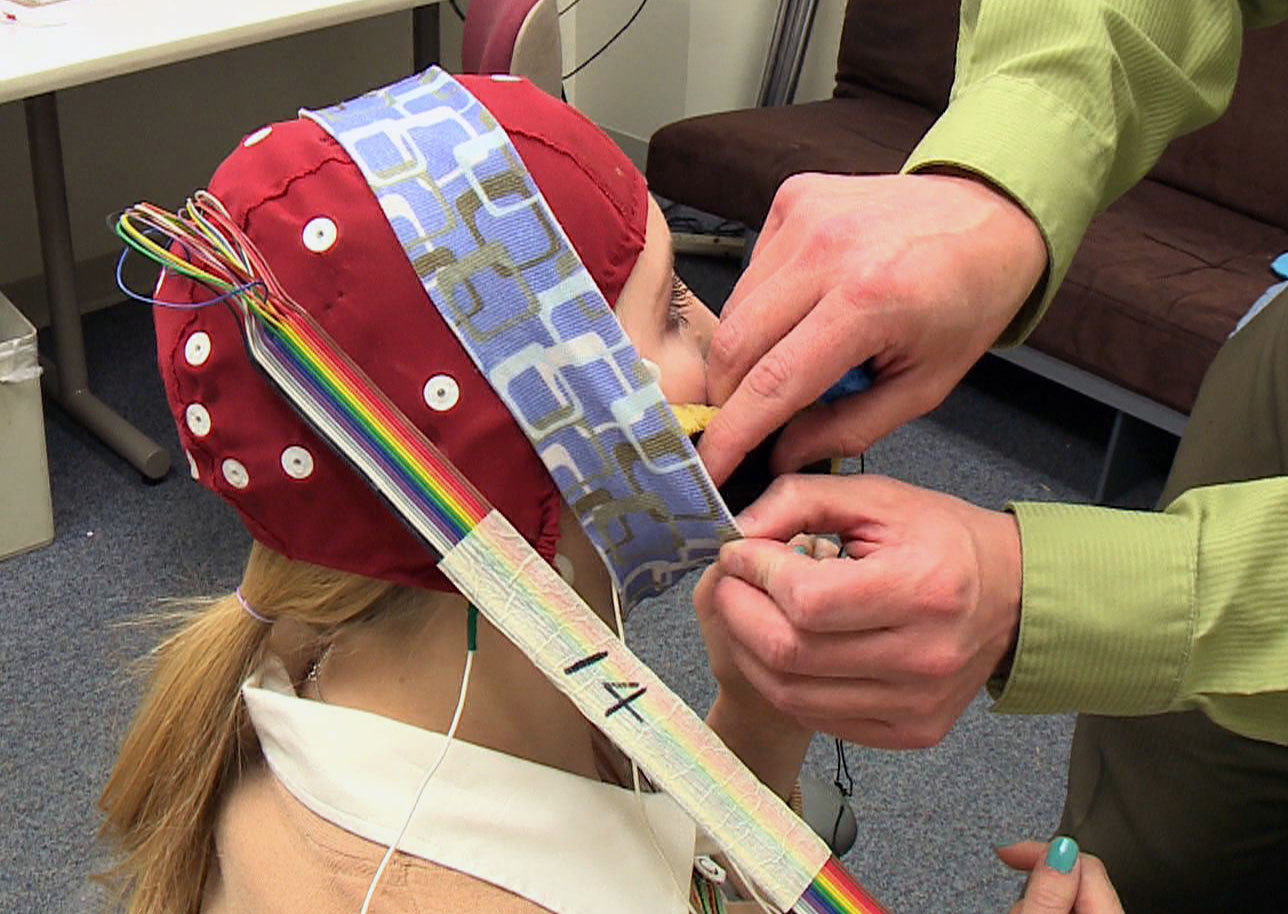
Electric “thinking cap” controls learning speed
In a new study published in the Journal of Neuroscience, Vanderbilt psychologists Robert Reinhart, a Ph.D. candidate, and Geoffrey Woodman, assistant professor of psychology, show that it is possible to selectively manipulate our ability to learn through the application of a mild electrical current to the brain, and that this… Read MoreApr 11, 2014
-

Vanderbilt expert: Mental illness is often not to blame in mass shootings
When a mass shooting occurs there are often two camps of thought: those who feel the country needs stronger gun laws and those who blame the horrific act on mental illness. Read MoreApr 8, 2014
-

America the Beautiful: See an international student’s prize-winning video of the United States
In the latest VUCast: See how an international student is showcasing the United States in a beautiful way; discover how a "thinking cap" could help you learn; and watch a unique forest grow in just one weekend. All this and more in the latest VUCast, Vanderbilt's online newscast. Watch now. Read MoreApr 4, 2014
-
Electric “thinking cap” controls learning speed
Vanderbilt psychologists show it is possible to selectively manipulate our ability to learn through the application of a mild electrical current to the brain, and that this effect can be enhanced or depressed depending on the direction of the current. Read MoreMar 21, 2014
-

Brain mapping confirms patients with schizophrenia have impaired ability to imitate
A brain-mapping study of patients with schizophrenia has found that areas associated with the ability to imitate are impaired, providing new support for the theory that deficits in this basic cognitive skill may underlie the profound difficulty with social interactions that characterize the disorder. Read MoreMar 14, 2014
-

Thesis documenting discovery of famous psychological effect donated to Vanderbilt
The original thesis of John Ridley Stroop, who discovered one of the most famous tasks in cognitive psychology while studying for his doctoral degree at Peabody College, was donated to Vanderbilt by his son Fred. Read MoreMar 3, 2014
-

In the brain, the number of neurons in a network may not matter
A study has found that the time it takes neural networks in the brain to make decisions is remarkably stable regardless of size: a finding that could make it easier to achieve the goal of the President's BRAIN Initiative established last spring. Read MoreFeb 3, 2014
-

Study gives new meaning to ‘let your fingers do the walking’
A new study has found that skilled typists can’t identify the positions of many of the keys on the QWERTY keyboard and that novice typists don’t appear to learn key locations in the first place. Read MoreDec 4, 2013
-

Even in the dark, brain “sees” its own body’s movement
With the help of computerized eye trackers, new research finds that at least 50 percent of people can see the movement of their own hand even in the absence of all light. Read MoreOct 30, 2013
-

VUCast: A wireless capsule and hallucinating without drugs
See how a wireless capsule could help during minimally invasive surgeries Why magnesium and vitamin D are a match made in heaven And do you really see the S in the USA network logo? Watch this QuickVU roundup of research stories. [vucastblurb]… Read MoreOct 30, 2013
-

Live Science: Conservatives and liberals equally smug, study finds
New research by postdoctoral fellow Kaitlin Toner suggests liberals and conservatives are about equally convinced of the correctness of their views, but extremists are more likely than moderates to feel their views are superior. Read MoreOct 9, 2013
-

Finding the place where the brain creates illusory shapes and surfaces
Neuroscientists have identified the location in the brain's visual cortex responsible for generating a common perceptual illusion: seeing shapes and surfaces that don't really exist when viewing a fragmented background. Read MoreSep 30, 2013
-

Validating maps of the brain’s resting state
A team of Vanderbilt researchers has provided important validation of maps of the brain at rest that may offer insights into changes in the brain that occur in neurological and psychiatric diseases. Read MoreJun 19, 2013
-

National Geographic: The mystery of risk
What exactly pushed Christopher Columbus to embark on a voyage across the Atlantic, or Edward Jenner to test his theory for an early smallpox vaccine on a child, or Henry Ford to bet that automobiles could replace horses? David Zald, professor of psychology, studies risk-taking and is quoted. Read MoreMay 16, 2013
-

The Atlantic: The touch-screen generation
Young children—even toddlers—are spending more and more time with digital technology. What will it mean for their development? Georgene Troseth, associate professor of psychology, has studied how toddlers interact with screens and is quoted. Read MoreMar 29, 2013
-
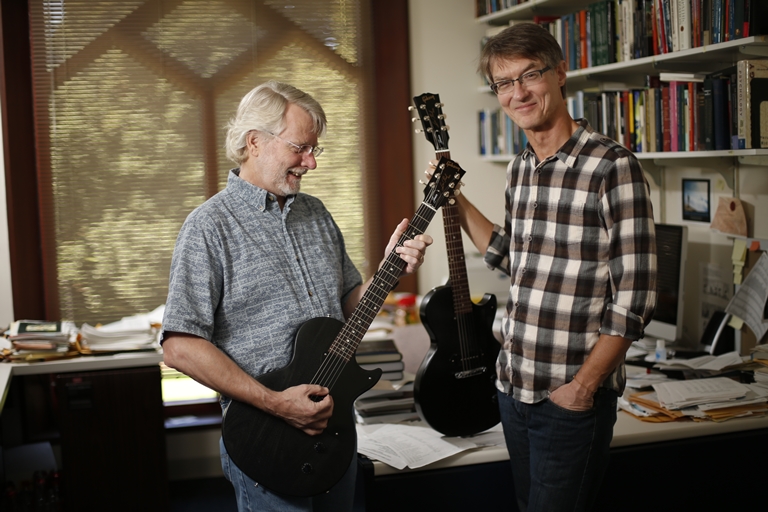
Why learning guitar is different from learning other instruments
Through a set of experiments, Gordon Logan, Nashville musician Jerry Kimbrough and Matthew Crump (now of Brooklyn College-CUNY) have illustrated that guitarists – and players of other related instruments like mandolin, banjo and bass – tend to acquire their skills differently than most other musicians. Read MoreNov 13, 2012