Featured Research
-

Training program meets ‘critical need’ for earlier autism identification
A three-year study that evaluated the effectiveness of a training program designed to enhance autism spectrum disorder identification and assessment within community pediatric settings was released this week in the journal Autism. Read MoreJul 11, 2013
-

Supreme Court wrap up: Constitutional expert explains why the Court ‘got the law right’
One of the nation’s top scholars on constitutional law, Vanderbilt law school professor Suzanna Sherry, the Herman O. Loewenstein Professor of Law, explains why she thinks the Supreme Court successfully followed the law. Read MoreJul 1, 2013
-
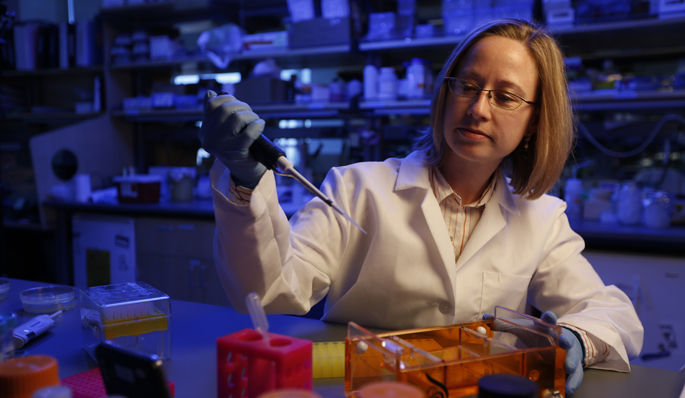
Science Magazine: How long can the U.S. stay on top?
In an era of stagnating government support for academic science, officials at many top research universities are looking to private philanthropy and increased efficiencies to maintain their elite status. Chancellor Nicholas S. Zeppos is quoted. Read MoreJun 28, 2013
-

End of Judicial Nominating Commission won’t delay Holder’s replacement
The end of the state Judicial Nominating Commission won't interfere with the selection of a replacement for Supreme Court Justice Janice Holder, who has announced her intention to retire. Brian Fitzpatrick of Vanderbilt Law School says that an alternative system is in place pending voter's approval of a permanent solution. Read MoreJun 27, 2013
-

Wall Street Journal: Rail safety and the value of life
W. Kip Viscusi, University Distinguished Professor of Law, Economics, and Management, is quoted on an age-old regulatory predicament—namely, whether or not spending to make one thing safe steers money away from addressing a more serious threat elsewhere. Read MoreJun 25, 2013
-

Validating maps of the brain’s resting state
A team of Vanderbilt researchers has provided important validation of maps of the brain at rest that may offer insights into changes in the brain that occur in neurological and psychiatric diseases. Read MoreJun 19, 2013
-

New, simple theory may explain mysterious dark matter
The reason dark matter, which makes up 85 percent of all the matter in the universe, is invisible could be because it possesses a rare, donut-shaped type of electromagnetism instead of the more exotic forces that have been proposed, according to an analysis of a pair of Vanderbilt theoretical physicists. Read MoreJun 10, 2013
-

Little telescope discovers metal-poor cousin of famous planet
A scientific team led by University of Louisville doctoral student Karen Collins has discovered a hot Saturn-like planet in another solar system 700 light years away. The discovery was made using inexpensive ground-based telescopes, including one specially designed to detect exoplanets and jointly operated by astronomers at Ohio State University and Vanderbilt University. Read MoreJun 5, 2013
-

Experts predict “unbanked” will face challenges getting health insurance
Vanderbilt health policy expert John Graves co-authored a report that shows as many as a quarter of people eligible for subsidized health insurance under the Affordable Care Act may be shut out because they don’t have a bank account. Read MoreJun 3, 2013
-

Astronomers determine the classic Ring Nebula’s true shape
A team of researchers, headed by Vanderbilt astronomer C. Robert O’Dell, has combined images from NASA’s Hubble Space Telescope with images from ground-based telescopes to reconstruct the three-dimensional shape of the iconic nebula with unprecedented precision. In the process, they determined that it is considerably different than previously thought. Read MoreMay 24, 2013
-
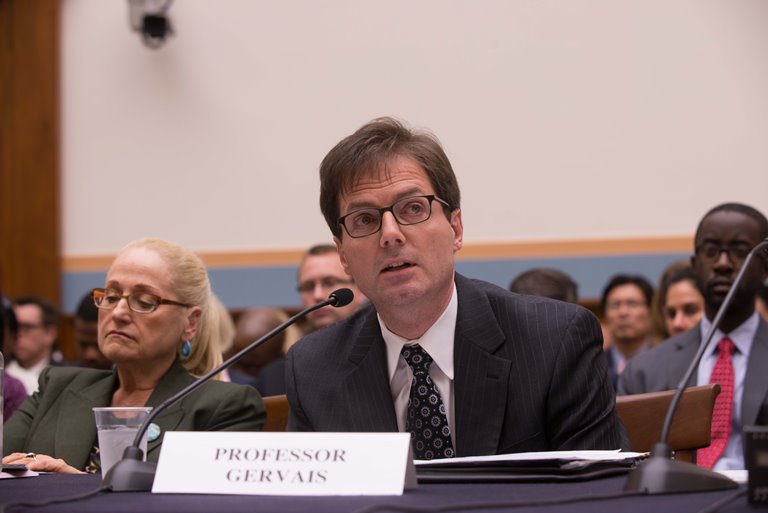
Copyright Act needs updating, Vanderbilt law professor testifies before Congress
Daniel Gervais of Vanderbilt Law School told Congress that the copyright system of the United States requires “a comprehensive review and modernization" during testimony May 16. Read MoreMay 16, 2013
-

World’s smallest droplets
Scientists at the Large Hadron Collider, the world's most powerful particle accelerator, may have created the smallest drops of liquid made in the lab. Read MoreMay 16, 2013
-

National Geographic: The mystery of risk
What exactly pushed Christopher Columbus to embark on a voyage across the Atlantic, or Edward Jenner to test his theory for an early smallpox vaccine on a child, or Henry Ford to bet that automobiles could replace horses? David Zald, professor of psychology, studies risk-taking and is quoted. Read MoreMay 16, 2013
-

Most math being taught in kindergarten is old news to students
Kindergarten teachers report spending much of their math instructional time teaching students basic counting skills and how to recognize geometric shapes—skills the students have already mastered before ever setting foot in the kindergarten classroom, new research finds. Read MoreMay 16, 2013
-

Untangling the tree of life
Vanderbilt phylogeneticists examined the reasons why large-scale tree-of-life studies are producing contradictory results and have proposed a suite of novel techniques to resolve the contradictions. Read MoreMay 15, 2013
-

John Wikswo at TEDx Nashville: The Homunculi and I
John Wikswo, Gordon A. Cain University Professor of biomedical engineering and A. B. Learned Professor of Living Physics, presented "Homunculi and I: Lessons from building organs on chips" at TedX Nashville April 6, 2013. Read MoreMay 6, 2013
-
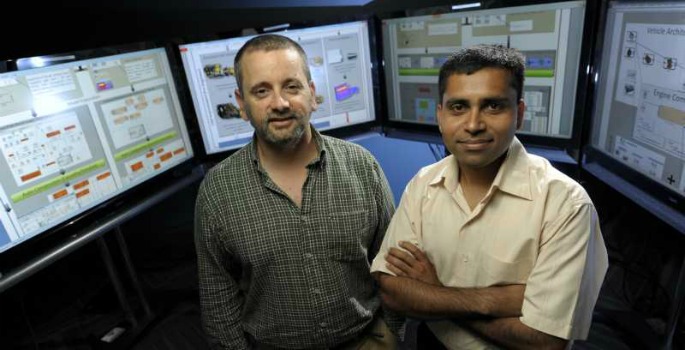
Vanderbilt wins $9.3M DARPA contract to evolve tools for military vehicle design
Vanderbilt University engineers in the Institute for Software Integrated Systems have been awarded a $9.3 million contract over two years to continue their work to mature META tools that are part of a flagship Defense Advanced Research Projects Agency Adaptive Vehicle Make (AVM) program. Read MoreMay 1, 2013
-

Vanderbilt’s role in new planet-finding space mission
A team of Vanderbilt astronomers will play a key role in the planet-seeking space telescope that NASA has just approved and scheduled for launch in 2017. Read MoreMay 1, 2013
-

Consumer taste for high altitude beans shifts opportunity to small farmers
Economic prospects improved for small mountain farmers in Guatemala when consumers developed a taste for coffee brewed with beans grown at high altitude, according to a new study from the Vanderbilt Institute for Coffee Studies. Read MoreApr 29, 2013
-
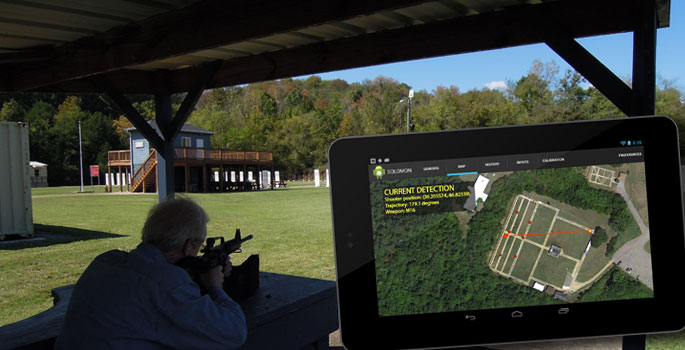
Tracking gunfire with a smartphone
A team of computer engineers from Vanderbilt University’s Institute of Software Integrated Systems has developed an inexpensive hardware module and related software that can transform an Android smartphone into a simple shooter location system. Read MoreApr 25, 2013