Research
-
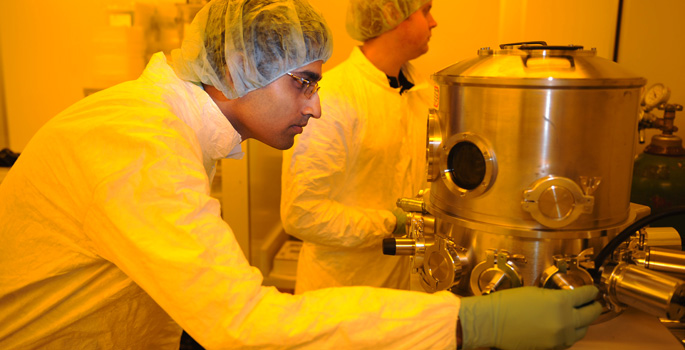
Designing diamond circuits for extreme environments
There is a new way to design computer chips and electronic circuitry for extreme environments: make them out of diamond. Read MoreAug 4, 2011
-
Investigator’s work leads to simpler latent TB therapy
New research on tuberculosis offers an important development in preventing the centuries-old disease. Read MoreJul 29, 2011
-

Study examining new vaccine for avian flu
Vanderbilt researchers are seeking healthy adults ages 18-49 for a study testing a new vaccine against H5N1 influenza, a strain which has the potential to be the next pandemic flu virus. Read MoreJul 29, 2011
-

Deciding who’s who in heart valves
Identification of a gene that is involved in the development of heart valves offers new insights into congenital heart valve disease. Read MoreJul 29, 2011
-

Connecting the dots in schizophrenia
Abnormalities of the hippocampus, a seahorse-shaped brain region involved in learning and memory, may play a role in the psychotic symptoms and cognitive deficits of schizophrenia. Read MoreJul 29, 2011
-

New tool to i.d. support needed by children with intellectual disabilities
Determining what children with intellectual disabilities need to thrive by building on their strengths and interests is the aim of a new federally funded project in the Department of Special Education. Read MoreJul 28, 2011
-

Students try to hack ‘Bank of Vanderbilt’ in network security class
Yuan Xue is among the Vanderbilt engineering faculty training computer science leaders of the future to build and maintain more secure networks through innovative teaching methods. Read MoreJul 22, 2011
-

Vanderbilt Peabody education experts available for back-to-school stories
Education experts from the Vanderbilt Peabody College of education and human development are available for back-to-school interviews. Read MoreJul 22, 2011
-

Stress circuitry key to drug relapse
Brain systems involved in the body’s stress response may drive drug relapse. Read MoreJul 22, 2011
-

In-state tuition for undocumented students not a partisan issue
New research from Vanderbilt University’s Peabody College finds ideology and partisanship do not play a significant role in whether a state considers extending in-state college tuition to undocumented immigrants. Read MoreJul 21, 2011
-

Give me some skin
A new understanding of the biochemical pathway that builds our skin barrier could lead to treatments for skin diseases. Read MoreJul 21, 2011
-

Dad’s diet influences birth timing
It may be possible to prevent preterm birth by modifying the father’s diet before a baby's conception. Read MoreJul 20, 2011
-

Memories may skew visual perception
New research from Vanderbilt University indicates images held in our working memory may skew perception of current events. (iStock) Taking a trip down memory lane while you are driving could land you in a roadside ditch, new research indicates. Vanderbilt University psychologists have found that our visual perception… Read MoreJul 19, 2011
-
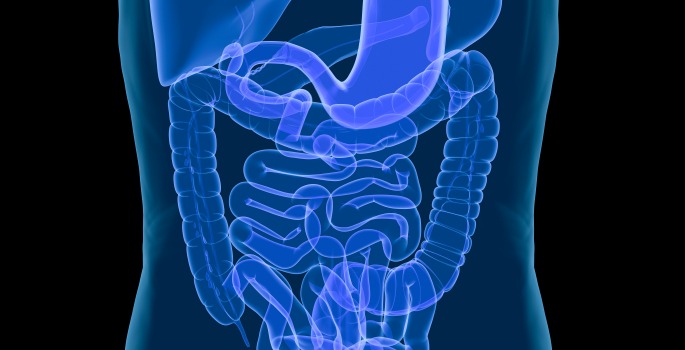
Protein loss sets up pro-tumor state
Loss of the protein p120 in the intestinal lining sets the stage for tumor formation. Read MoreJul 19, 2011
-

‘Little difference’ in principals’ leadership practices across school types
New research from Vanderbilt University’s Peabody College reveals little difference among school leaders across public, private and choice schools. Read MoreJul 15, 2011
-

The virtue in virtuality – enhancing learning with technology
Groundbreaking education technology platforms under development in labs across the Vanderbilt Peabody campus are allowing cutting-edge researchers to harness what Pratim Sengupta, innovator of the technology described, calls “the virtue in virtuality.” Read MoreJul 11, 2011
-

Grants bolster eye research at Vanderbilt
Research to Prevent Blindness has awarded a grant of $100,000 to Vanderbilt’s Department of Ophthalmology and Visual Sciences to support research into the causes, treatment and prevention of blinding diseases. Read MoreJul 5, 2011
-

Eye Institute, Russian university to collaborate
The Vanderbilt Eye Institute has signed an agreement with Russia’s St. Petersburg State I.P. Pavlov Medical University to allow collaboration between the two entities on clinical and basic science research efforts. Read MoreJul 5, 2011
-

Stomach bugs impact nutrient levels
Helicobacter pylori, a bacterium that infects half of the world’s population and increases the risk for stomach cancer, appears to impair nutrient absorption. Read MoreJun 30, 2011
-

Protecting brainpower during radiation
Blocking a certain protein during radiation to treat brain cancers could protect the brain’s thinking powers. Read MoreJun 29, 2011