Research
-

Overweight women lose in the labor market: Vanderbilt study
Overweight women are more likely to work in lower-paying and more physically demanding jobs; less likely to get higher-wage, public-facing positions; and make less money compared to men and average-size women. Read MoreOct 21, 2014
-

Staph ‘gangs’ share nutrients during infection: study
Antibiotic-resistant bacteria can share resources to cause chronic infections, Vanderbilt investigators have discovered. The findings shed light on a long-standing question in infectious diseases and may inform new treatment strategies. Read MoreOct 16, 2014
-

VUSN study seeks to improve lymphedema care
A new Vanderbilt University School of Nursing (VUSN) study may lead to earlier detection and better outcomes for the 20-30 percent of breast cancer patients with lymphedema, the painful and stigmatizing arm swelling that often results from treatment. Read MoreOct 16, 2014
-

Lymphocyte study reveals obesity clues
Vanderbilt University researchers are closer to understanding the link between obesity, chronic inflammation and type 2 diabetes. Read MoreOct 16, 2014
-

Top class-action law firms are worth hiring, study shows
Top-five plaintiffs’ law firms achieve the best results for shareholders in mergers and acquisitions’ litigation because they aggressively litigate their cases, instead of adopting more passive strategies favored by less well-known firms. Read MoreOct 15, 2014
-
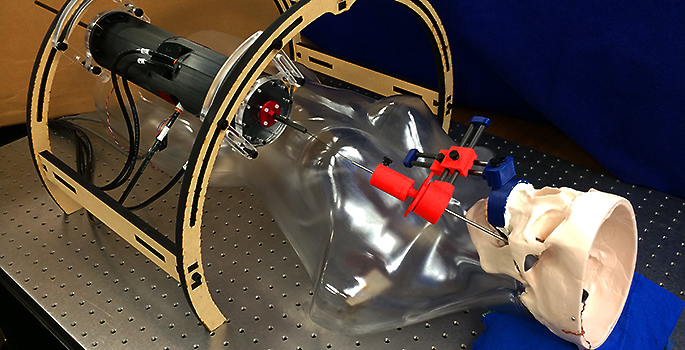
Brain surgery through the cheek
Vanderbilt engineers have developed a surgical robot designed to perform brain surgery by entering through the cheek instead of the skull. Read MoreOct 15, 2014
-

Antibiotics, fetal vessel defect linked
Certain antibiotics increase the risk of a congenital heart disorder called patency of the ductus arteriosis. Read MoreOct 15, 2014
-

Neuronal culprit in genetic disease
A particular neuronal cell population is involved in the pathogenesis of a rare neurological disorder, Vanderbilt researchers have discovered. Read MoreOct 14, 2014
-

Aspirin and allergies
Drugs such as aspirin and indomethacin may increase sensitivity to airborne allergens by suppressing production of the signaling molecule PGI2, which in turn may offer a new treatment for allergies. Read MoreOct 10, 2014
-

The new ‘double disadvantage’
In the United States, your nationality has some effect on your likelihood to be employed--but being married matters more. For women, it matters a lot more. Read MoreOct 9, 2014
-

Neuert receives New Innovator Award from NIH
Vanderbilt University biophysicist Gregor Neuert, Ph.D., M.Eng., is among 50 recipients of the 2014 National Institutes of Health (NIH) Director’s New Innovator Award. Each award provides up to $1.5 million in direct research support over five years. Read MoreOct 9, 2014
-

Study finds college athletes more likely to harbor MRSA
College athletes who play contact sports are more than twice as likely to carry the deadly superbug methicillin-resistant Staphylocuccus aureus (MRSA) than peers who play non-contact sports, according to a Vanderbilt study released at IDWeek 2014. Read MoreOct 9, 2014
-

Immune cells that guard against ingested pathogens discovered
Vanderbilt investigators have discovered a new type of immune cell residing in the intestinal epithelium that may function as a first line of defense against ingested pathogens. Read MoreOct 9, 2014
-

Long-range signaling to stem cells
The potential for long-range signaling factors – such as those identified in the current study – to regulate stem cell behaviors has implications in tumor progression and metastasis. Read MoreOct 9, 2014
-

Feeling lucky? Many loyal consumers do, despite the facts
Consumers who perceive themselves as loyal customers to a particular company often believe that they have better than average odds to win contests and sweepstakes that are entirely random. Read MoreOct 8, 2014
-

Calvin Miller: Eyewitnessing an Icelandic eruption
Last month volcano expert Calvin Miller had the good fortune to witness the major volcanic eruption taking place in Iceland. Read MoreOct 7, 2014
-

New facility devoted to multiscale modeling opens on Music Row
Vanderbilt University School of Engineering has established a unique research facility focusing on Multiscale Modeling and Simulation. MuMS is home to four faculty members and their research groups. Read MoreOct 2, 2014
-

Women face dishonesty more often than men during negotiations
New research shows that women in negotiations face deception more often than men. Read MoreOct 2, 2014
-

Low-dose aspirin’s protective effect in cancer explained
For years, scientists have known that regular aspirin use may reduce the risk of cancer. Read MoreOct 2, 2014
-

Traditional healers contribute to HIV care delays: study
If you’re a native of rural Mozambique who contracts HIV and becomes symptomatic, before seeking clinical testing and treatment, you’ll likely consult a traditional healer. Read MoreOct 2, 2014