How do smartphones affect the brains of teenagers? That question is at the core of a new grant awarded to the School for Science and Math at Vanderbilt (SSMV) by the Dana Foundation, which works to advance neuroscience in alignment with community values and societal priorities.

Menton Deweese, director of the SSMV, and Pamela Popp, an SSMV instructor and postdoctoral research scholar, received the award to fund a curriculum they created called Students are Scientists. The coursework empowers high schoolers in the SSMV to contribute to neuroscience and education policy by designing, implementing and analyzing studies on the impacts of smartphones in the classroom. Specifically, ninth and tenth graders will explore the cognitive functions of attention, learning and memory in relation to smartphone use.
“This is Peabody College’s first Dana Foundation grant,” said Deweese. “We are very excited and proud of this. Our aim is to develop curriculum that goes beyond lecture-style instruction and engages students in hands-on, experiential learning opportunities.”

A key goal of the curriculum unit, which was piloted over six weeks this fall at the SSMV, is to develop a comprehensive high school neuroscience curriculum that will be widely accessible. “We hope our curriculum materials will enable productive discussion and science learning in other classrooms as well,” said Popp. The SSMV will host lesson plans, slides, guest presentations and student work samples on its website and will publish its experiments in open-source format so that anyone with a computer can use them.
The SSMV, a program of the Collaborative for STEM Education and Outreach, is a partnership between Vanderbilt Peabody College of education and human development and Metro Nashville Public Schools that engages local students participating in the program in research-centered, experiential learning one day per week throughout high school. Students work collaboratively with Vanderbilt professors and field experts, finishing with seven advanced elective credits.
STUDENT ENGAGEMENT
“I’m surprised that there are such differences in test scores when phones are close to you or further away from you. That information almost made me want to leave my phone at home whenever I go to school,” said one SSMV student after attending a talk with Peabody researcher Golnaz Arastoopour Irgens, assistant professor of human-centered learning technologies.
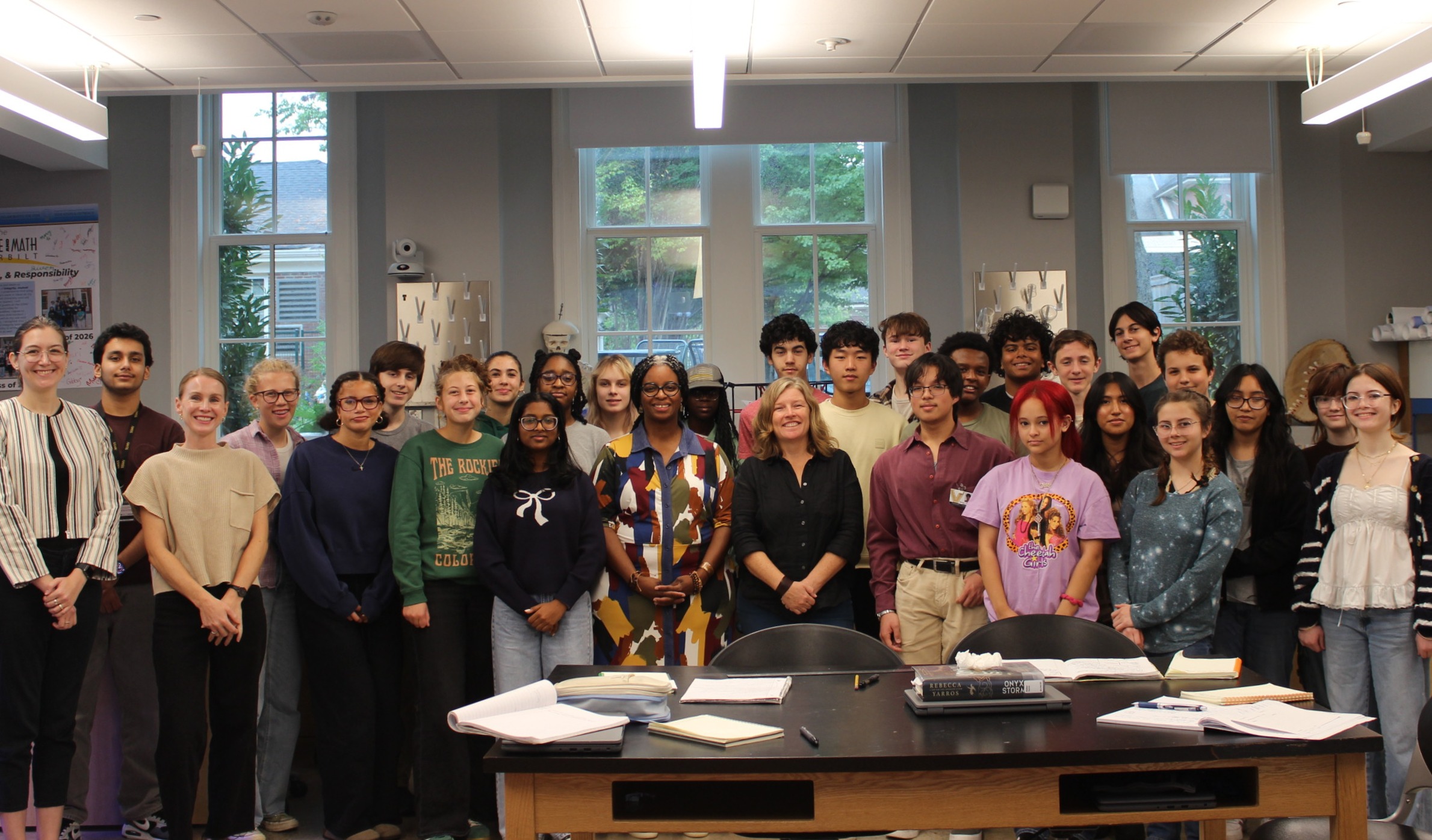
Arastoopour Irgens was among a handful of guest speakers from Vanderbilt University and the Nashville community who, as part of the curriculum, spoke interactively with students about the role of smartphones and laptops in classrooms.
The young scholars also had an opportunity to meet in October with MNPS Board of Education members Freda Player and Erin O’Hara Block, who explained how the district’s approach to smartphones has changed following policy updates. With a few exceptions, a new Tennessee state law essentially prohibits students from using a wireless communication device during instructional time.
“I thought what the school board members talked about was really interesting, and it helped show what thought process they employed in designing the cellphone policy,” said one student. “I also thought it was great how responsive they were to hearing about problems and immediately saying that they would work on fixing it.”
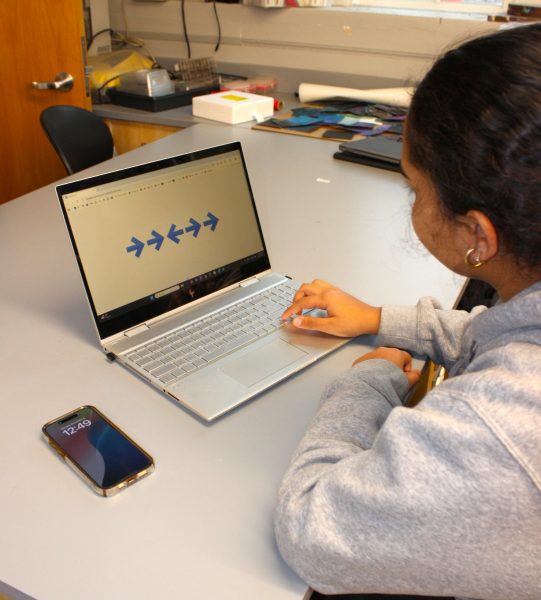
In addition to chatting with field experts, the students designed and implemented behavioral experiments to assess the effects of smartphones on learning and attention. They used two classic experimental paradigms in psychology that examine attention, known as the Stroop task and Flanker task, and manipulated smartphone presence/proximity during the tasks. They recruited classmates as participants, collected and analyzed data, and then presented their findings. A few sophomore students will lead an in-depth follow-up experiment this spring incorporating electroencephalography (recording the brain’s electrical activity), the results of which will be presented to MNPS leadership and the Vanderbilt community.
“High school students will finish the unit able to speak about their work and its importance to a range of audiences, including policymakers.” – Kathleen Roina
The Dana Foundation’s Education program, under which this project is funded, supports interactive learning initiatives that go beyond teaching basic science concepts to exploring the real-world applications of neuroscience. “What we found compelling about Students are Scientists is the combination of hands-on research experience and intentional development of science communication skills,” said Kathleen Roina, Dana Education program director. “High school students will finish the unit able to speak about their work and its importance to a range of audiences, including policymakers.”
As schools across the United States grapple with smartphone use, the exploration done by SSMV students offers data with real-world implications while inviting peers to become inquisitive about how technology influences their learning and cognition.