Space
-

Listening to the cosmos: Dual federal wins propel Vanderbilt’s lunar science and workforce vision
When humans return to the lunar surface in the coming decade, the tools they carry to listen to the earliest echoes of deep space will bear the distinct imprint of Vanderbilt University research and design. Karan Jani, assistant professor of physics and astronomy and of electrical and computer engineering, and founding director of the Vanderbilt Lunar Labs Initiative, is the principal investigator on two new federal awards that will fuel development of the Laser Interferometer Lunar Antenna, a gravitational-wave observatory program for the moon. Read MoreSep 28, 2026
-

Vanderbilt researchers awarded grants to address key challenges in future space missions
Two research groups connected with the Vanderbilt School of Engineering have been awarded multimillion-dollar grants from the U.S. Department of Energy and NASA to work on solving some of the toughest problems in space exploration: protecting electronics from radiation and stabilizing energy generation and delivery systems. These issues are mission-critical as NASA plans missions to the moon and Mars. Read MoreMay 15, 2026
-

Vanderbilt University’s Ralf Bennartz to lead NASA mission to study ice clouds
Vanderbilt University, led by Professor Ralf Bennartz, will lead a NASA satellite mission investigating Earth's high-altitude ice clouds, backed by a robust grant of $37 million. This endeavor, leveraging the university's climate research expertise, will provide opportunities for student involvement and bolsters Vanderbilt's position in global climate research. Read MoreJan 14, 2025
-
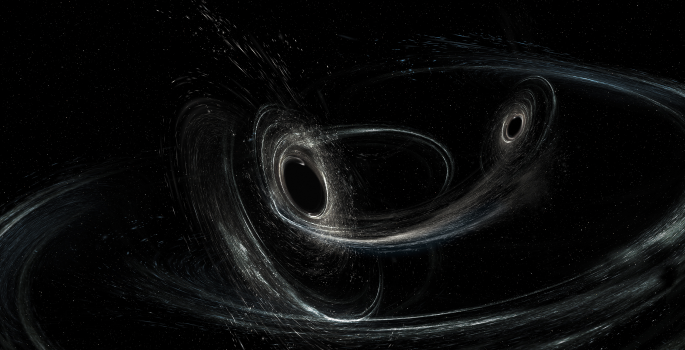
How many stars eventually collide as black holes? The universe has a budget for that.
A promising new study developed by one Vanderbilt astrophysicist may give us a method for finding the number of available stars in the history of the universe that collide as binary black holes. Read MoreJan 31, 2020
-
National Academies committee including Vanderbilt astrophysicist publishes review of latest NASA Science Plan
An astrophysicist at Vanderbilt is part of the committee behind a review of NASA’s updated Science Plan, a five-year strategic roadmap for NASA’s Science Mission Directorate. Read MoreOct 18, 2019
-
Rare study of Earth-sized planet uses technique pioneered by Vanderbilt professor
A groundbreaking study, using data from NASA and a technique pioneered by a Vanderbilt professor, is giving humankind a glimpse at a distant exoplanet with a size similar to Earth and a surface which may resemble Mercury or Earth’s Moon. Located nearly 49 light-years from Earth, the planet known… Read MoreAug 19, 2019
-
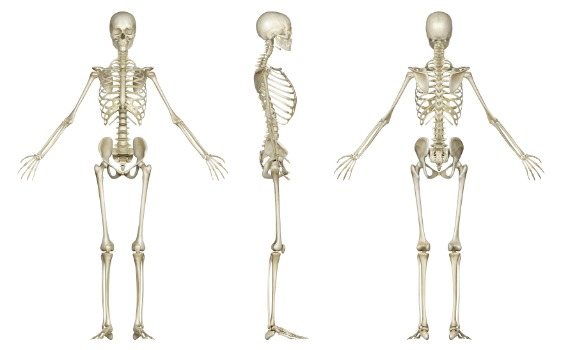
Inner ear keeps bones strong
Alterations of the vestibular system - the part of our inner ear that controls balance - may contribute to bone loss related to both aging and space travel. Read MoreJan 14, 2015
-
VUCast: E.T. phone God?
In the latest VUCast: A Vanderbilt astronomer looks at how different religions may handle alien life; why early Earth may not have been as “hellish” as first thought; and check out the national baseball championship bling! Watch now. Read MoreSep 29, 2014
-

Weiss participates in NSF advocacy day
As part of Vanderbilt’s ongoing federal advocacy efforts in support of federal funding for research and education at the National Science Foundation, Sharon Weiss, associate professor of electrical engineering and physics, traveled to Washington, D.C., for the Coalition for National Science Funding’s (CNSF) advocacy day and Capitol Hill reception on May 7. Read MoreMay 10, 2013
-

Simulated Mars mission reveals body’s sodium rhythms
Clinical pharmacologist Jens Titze, M.D., and colleagues have discovered that – in contrast to the prevailing dogma – human sodium levels fluctuate rhythmically with 7-day and monthly cycles. Read MoreJan 10, 2013
-
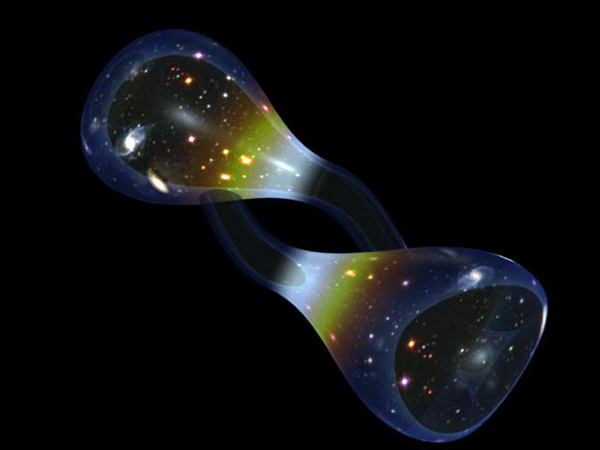
Big Bang or Big Bounce?
There is a new dark-horse entry in the cosmological sweepstakes. Cosmologists Alan Guth, left, and Paul Steinhardt In the last 50 years, the Big Bang theory has gradually become the standard scientific model for how the universe began and has been written into the grade school science… Read MoreApr 5, 2011