Research
-

Caldwell collaboration wins prestigious Office of Naval Research MURI grant
Joshua Caldwell (Vanderbilt University) Josh Caldwell, director of the Interdisciplinary Material Sciences program and professor of mechanical engineering, has been awarded a grant from the Office of Naval Research’s Multidisciplinary University Research Initiative. The five-year grant, which provides up to $1.5 million in funding annually, will be shared among Vanderbilt University, the University of Iowa,... Read MoreApr 20, 2023
-

Study details RNA editing in virus-infected cancer cells
Vanderbilt researchers detail the landscape of RNA editing — a form of RNA modification — in primary effusion lymphoma cells during Kaposi’s sarcoma-associated herpesvirus infection and identify an edited viral microRNA that is critical for infection. Read MoreApr 20, 2023
-
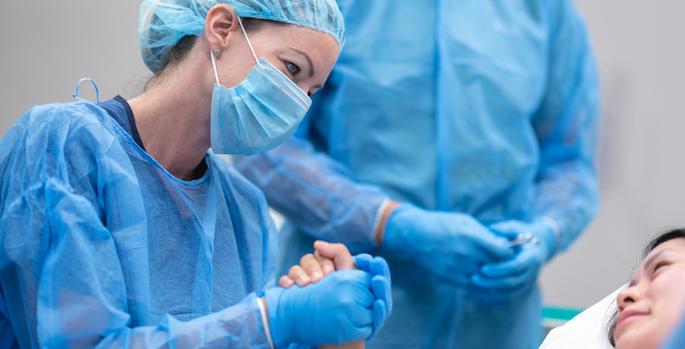
Low-professionalism residents later draw higher patient complaints: study
A Vanderbilt study finds a strong association between lower ratings for interpersonal communication skills among medical residents in their last year of training and greater likelihood of unsolicited patient complaints among doctors during their first year of employment after training. Read MoreApr 13, 2023
-
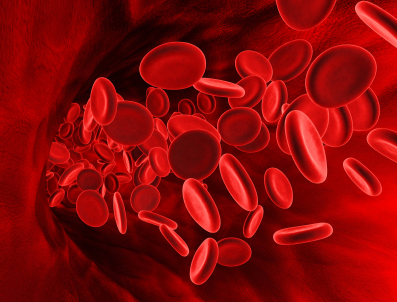
Research identifies new target that may prevent blood cancer
An international coalition of biomedical researchers co-led by Vanderbilt's Alexander Bick, MD, PhD, has determined a new way to measure the growth rate of precancerous clones of blood stem cells that one day could help doctors lower their patients’ risk of blood cancer. Read MoreApr 12, 2023
-
COVID on Twitter: town vs. country
by Paul Govern Reported in the Journal of Medical Internet Research, a statistical analysis of sentiments expressed online by U.S. Twitter users captures the rural-urban divide regarding COVID-19. Google software engineer Yongtai Liu, PhD’22 in computer science; Bradley Malin, professor of biomedical informatics and computer science, and colleagues created a natural language processing system backed by artificial intelligence to... Read MoreApr 11, 2023
-

VUMC-led trial shows two investigational drugs are ineffective for treating severe COVID-19
A Vanderbilt-led study evaluating two investigational drugs to treat severe COVID-19 demonstrated that neither drug was effective. Read MoreApr 11, 2023
-
Vanderbilt’s Shihong Lin wins Walter L. Huber Civil Engineering Research Prize
Shihong Lin, associate professor of civil and environmental engineering, has been awarded a Walter L. Huber Civil Engineering Research Prize by the American Society of Civil Engineers. Lin was honored alongside three other researchers. Shihong Lin (Vanderbilt University) The Huber Prize, named after former ASCE president Walter L. Huber, is given to researchers based on... Read MoreApr 7, 2023
-
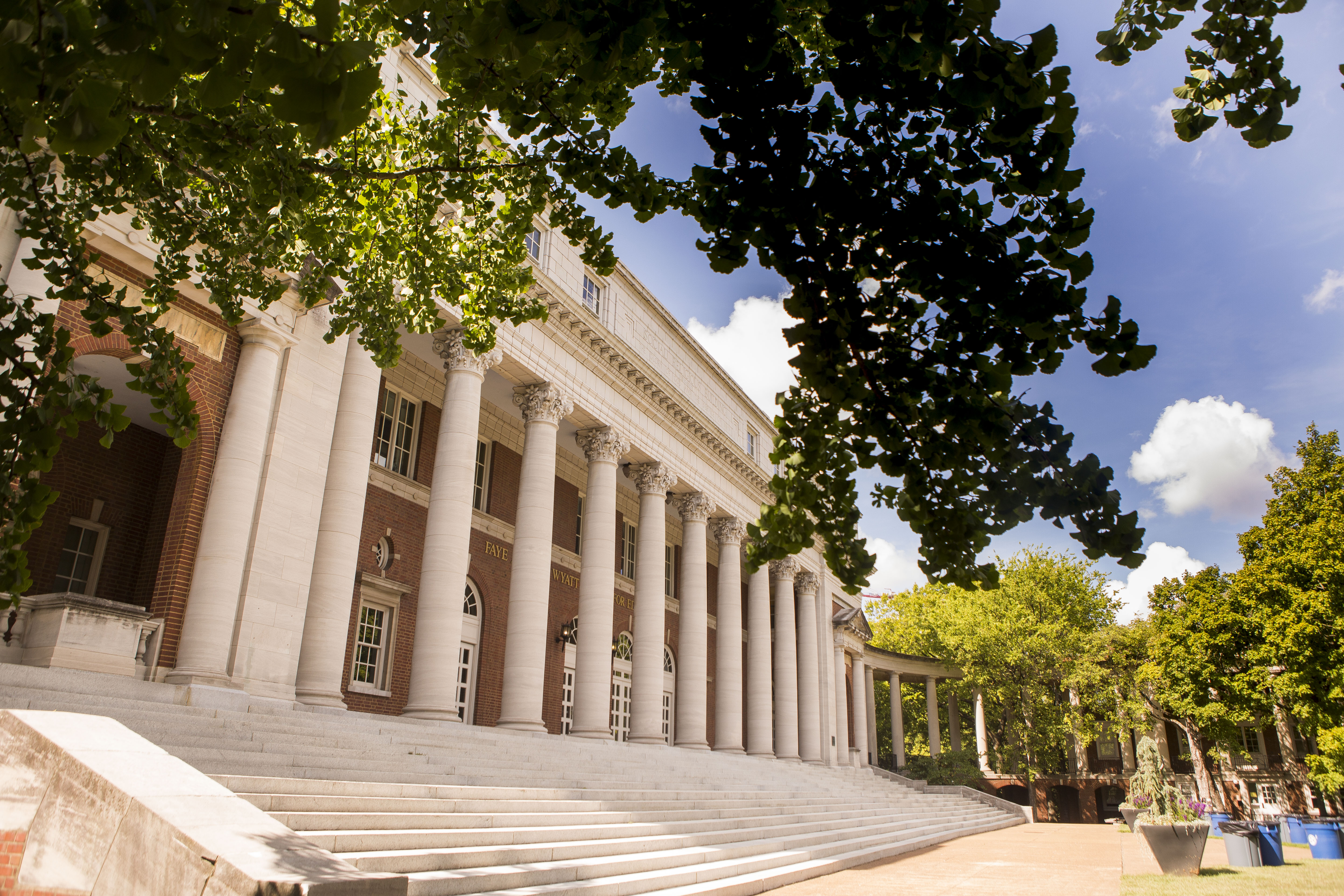
Welsh’s study reveals school-level factors may be key to reducing exclusionary discipline
By Jenna Somers Richard Welsh Racial inequality in school discipline is a major problem across the United States. Black students experience disproportional office disciplinary referrals and out-of-school suspensions, which lead to greater losses in instructional time. Reducing the use of exclusionary discipline is critical for improving academic achievement and educational… Read MoreApr 5, 2023
-
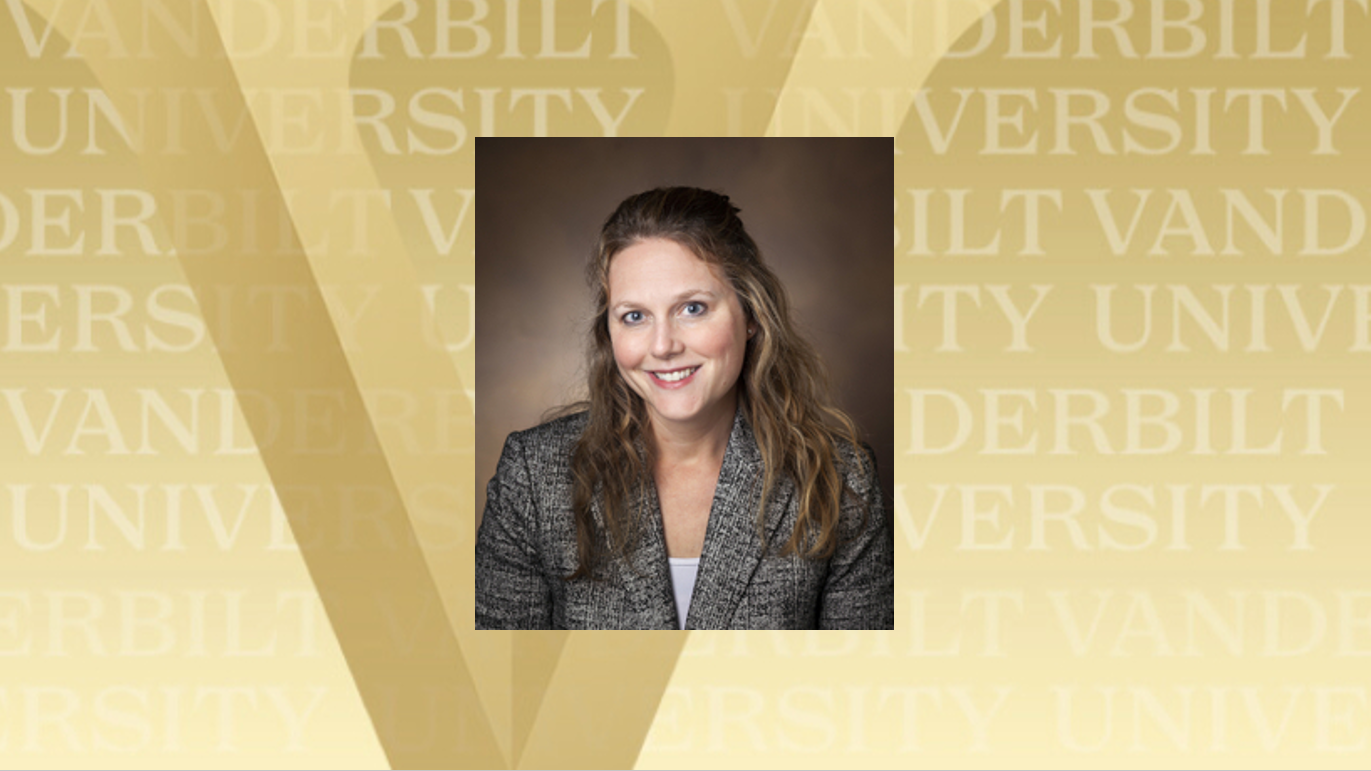
Kujawa receives Award for Distinguished Early Career Contributions to Psychophysiology
Autumn Kujawa, assistant professor of psychology and human development at Vanderbilt Peabody College, has won the 2023 Award for Distinguished Early Career Contributions to Psychophysiology from the Society for Psychophysiological Research. Read MoreApr 4, 2023
-

Phillips Galloway and Çermikli Ayvaz partner with multilingual and multicultural teacher training program in Turkey
By Jenna Somers Phillips-Galloway When doctoral student Basak Çermikli Ayvaz saw an opportunity to secure funding to partner with educators in Turkey to support multilingual and multicultural education, she discussed it with her advisor, Emily Phillips Galloway, assistant professor of literacy education. This led the researchers, both in the… Read MoreApr 4, 2023
-

Peabody study offers framework for supporting career and technical education with state funding
From left to right: Adela Soliz, Cara DeLoach, Hidahis Mesa By Jenna Somers Community and technical colleges are essential for expanding access to post-secondary education and preparing students to enter the workforce, particularly within their local communities. Unfortunately, these institutions often have limited financial resources to respond to both industry… Read MoreApr 4, 2023
-
Abkowitz leads campus research project on pedestrian safety; volunteers with smart watches needed
In partnership with design firm Gresham Smith, a team of Vanderbilt researchers from the university and medical center are deploying groundbreaking technology to increase pedestrian safety and comfort on campus. Mark Abkowitz, distinguished professor of civil and environmental engineering, is leading the project. “ This is being accomplished using smart watches that record an individual’s heart... Read MoreApr 3, 2023
-
International collaboration yields breakthrough that could revolutionize computing technologies
Researchers from Vanderbilt University and University of the Chinese Academy of Sciences have made a significant advancement in understanding the correlation of the vibrational patterns of atoms at the level of chemical bonds in conducting materials silicon and graphene. Vibrational spectroscopy of substitutional Si impurities in graphene with different bonding configurations. (Image by UCAS) Atomic... Read MoreMar 28, 2023
-
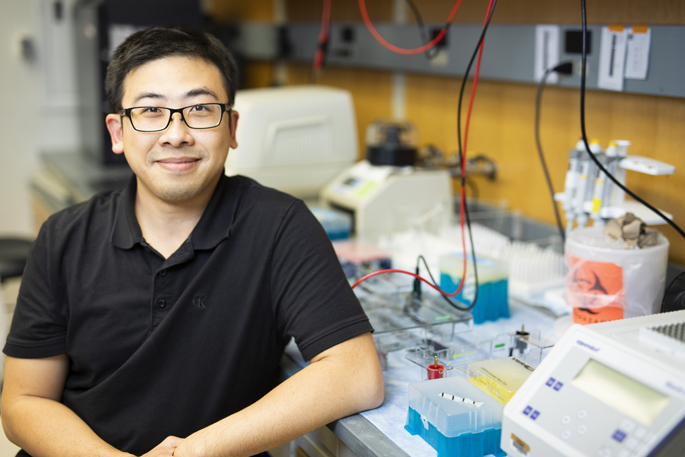
Mathers Foundation award supports study of bacterial physiology
Vanderbilt's Wenhan Zhu, PhD, has received a three-year award from the G. Harold and Leila Y. Mathers Foundation to support his research that aims to answer a fundamental question about bacterial physiology and engineer probiotics to improve gut inflammatory diseases. Read MoreMar 23, 2023
-
Adams accepts invitation to join Springer Nature U.S. Research Advisory Council to advise on future of research and research communication
Douglas Adams, vice dean of the Vanderbilt School of Engineering and associate provost in the Office of Research and Innovation, has been named a member of the Springer Nature U.S. Research Advisory Council. Springer Nature is an academic publishing company that includes leading publications such as the Nature portfolio journals and Scientific American. Adams will... Read MoreMar 20, 2023
-
Adams accepts invitation to join Springer Nature U.S. Research Advisory Council to advise on future of research and research communication
Douglas Adams, vice dean of the Vanderbilt School of Engineering and associate provost in the Office of Research and Innovation, has been named a member of the Springer Nature U.S. Research Advisory Council. Springer Nature is an academic publishing company that includes leading publications such as the Nature portfolio journals and Scientific American. Adams will... Read MoreMar 20, 2023
-

Scientists resurrect a ‘dead’ antibody to study protein
Vanderbilt was part of a multi-center team that resurrected a “dead antibody” to reveal the mysteries of cytochrome c, a versatile protein that is an essential part of the cell’s energy-generating capacity, and of life itself. Read MoreMar 16, 2023
-
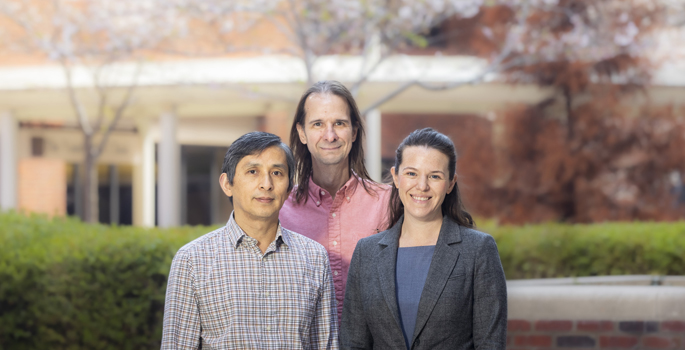
Study evaluates polygenic risk score for prostate cancer risk prediction
A Vanderbilt study found that prostate cancer polygenic risk score has limited utility for enhancing prostate cancer screening. Read MoreMar 16, 2023
-
Automated tool can link brain scans to cognitive deficits in people with neurofibromatosis 1
By Leah Mann Laurie Cutting Researchers in the labs of Laurie Cutting, Patricia and Rodes Hart Professor and professor of special education at the Peabody College of education and human development, and Bennett Landman, professor and chair of the Department of Electrical and Computer Engineering at the School of Engineering, recently published a study in... Read MoreMar 15, 2023
-
Vanderbilt computer scientist wins $3M grant to expand toolkit that tracks fetal growth during pregnancy
One way to monitor a healthy pregnancy is tracking placental growth because a healthy placenta is crucial for a healthy baby. However, there are no practical tools to monitor placental development—to ensure proper fetal growth—into clinical care. Vanderbilt University computer scientist and grant PI Ipek Oguz aims to expand a medical image analysis tool she... Read MoreMar 13, 2023