Physics
-

Listening to the cosmos: Dual federal wins propel Vanderbilt’s lunar science and workforce vision
When humans return to the lunar surface in the coming decade, the tools they carry to listen to the earliest echoes of deep space will bear the distinct imprint of Vanderbilt University research and design. Karan Jani, assistant professor of physics and astronomy and of electrical and computer engineering, and founding director of the Vanderbilt Lunar Labs Initiative, is the principal investigator on two new federal awards that will fuel development of the Laser Interferometer Lunar Antenna, a gravitational-wave observatory program for the moon. Read MoreSep 28, 2026
-

Norman Tolk, physicist who built interdisciplinary collaborations on campus, has died
Norman Henry Tolk, professor emeritus of physics and scientific entrepreneur who fostered interdisciplinary collaboration while elevating physics research at Vanderbilt, died on June 19, 2026. Tolk was 88 years old and lived in Brentwood, Tenn. Read MoreSep 8, 2026
-

From wrestling to physics: Oem Trivedi’s path to immortalizing his ideas
When physics and astronomy Ph.D. candidate Oem Trivedi was growing up in India, he had big dreams: becoming a wrestler in the World Wrestling Entertainment industry. Then, in the sixth grade, he watched an Albert Einstein documentary. And everything changed. Read MoreApr 9, 2026
-

What would a small black hole do to the human body? Robert Scherrer aims to answer that
Some people may worry about being bitten by a snake or spider, but have you ever considered what would happen if a small black hole tried to pass through your body? An article by Professor of Physics Robert Scherrer in the International Journal of Modern Physics D poses and answers that very question. Scherrer set out to find what the gravitational effects would be if a primordial black hole passed through the human body, helping scientists better understand the properties of dark matter. Read MoreNov 20, 2025
-
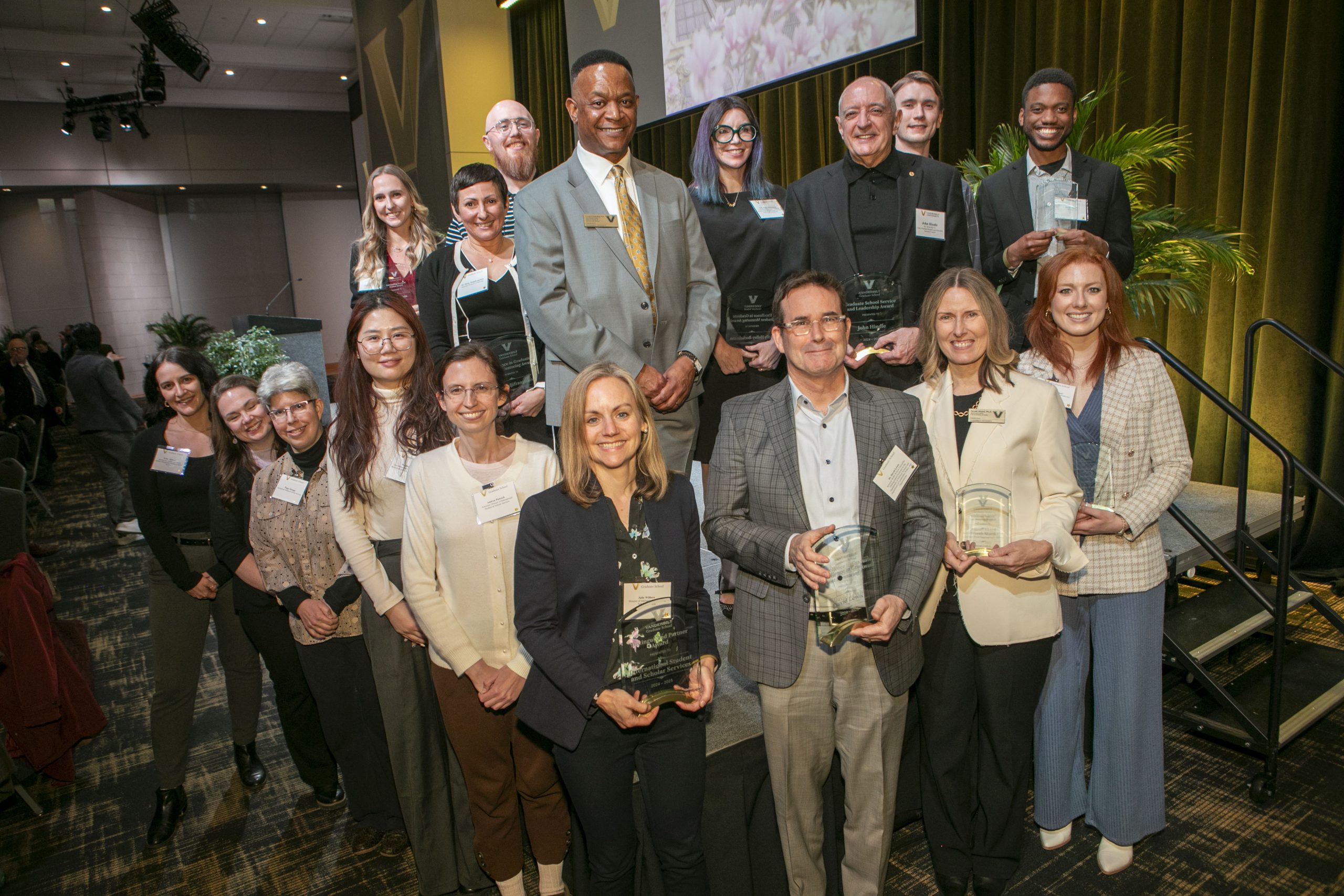
Graduate School recognizes excellence among students, faculty at Honors Banquet
The third annual Honors Banquet commemorated excellence in academics, leadership and innovation among Graduate School students and faculty. On March 20, the banquet was held to honor and reflect on remarkable achievements in research and creative expression from the more than 50 graduate programs and departments represented in the Graduate School. Read MoreApr 14, 2025
-

Julia Velkovska: Solving the world’s minuscule mysteries
As Cornelius Vanderbilt Professor of Physics and chair of the Department of Physics and Astronomy, Julia Velkovska studies the tiny particles that form our universe. She focuses on how nuclear matter behaves when confronted with extreme density and temperatures (think trillions of degrees)—similar to the conditions existing microseconds after the big bang, right as the universe was starting to take shape. Just this year, Velkovska and her team of physicists were awarded the 2025 Breakthrough Prize in Fundamental Physics, along with 13,508 colleagues across four landmark CERN experiments. The prize honors decades of work expanding our understanding of the physical universe. Read MoreApr 7, 2025
-
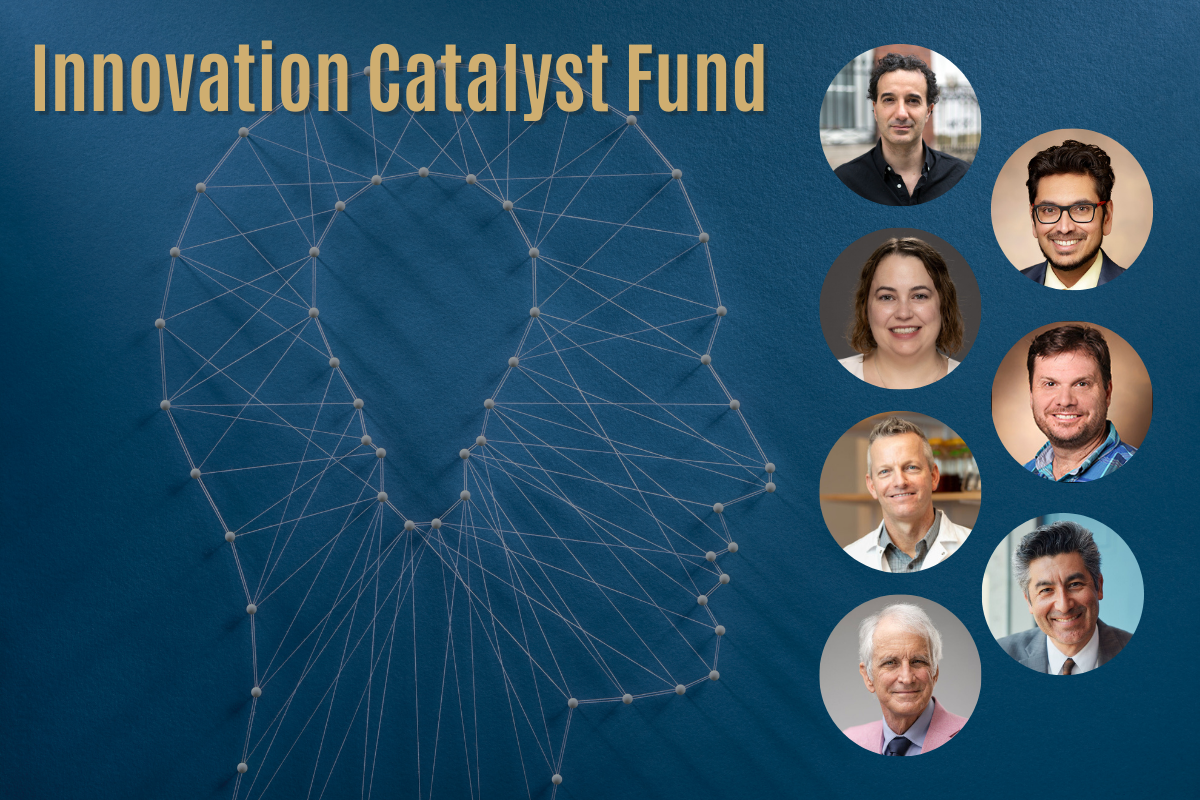
Seven Vanderbilt faculty research projects get innovation catalyst funding
Vanderbilt’s Innovation Catalyst Fund has awarded seven new faculty-led projects, advancing translational research and innovation in health care, engineering and AI-driven solutions. Read MoreFeb 17, 2025
-
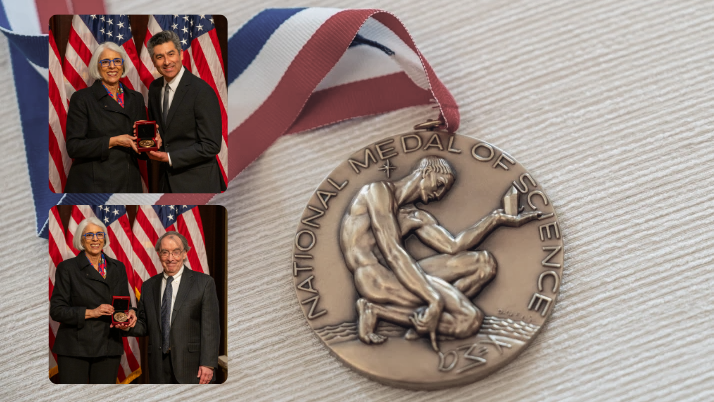
White House awards Bartels and Stassun 2024 National Medal of Science
Larry Bartels and Keivan Stassun were among the 23 recipients of 2024 National Medal of Science and the National Medal of Technology and Innovation—the nation’s highest honors for exemplary achievement and leadership in science and technology. Both received their medals from President Joe Biden during a White House ceremony on Jan. 3. Read MoreJan 8, 2025
-

Boundary-Spanning Genius
For John Jumper, BS’07, the road to winning the Nobel Prize in chemistry began with an interdisciplinary education at Vanderbilt. Read MoreOct 30, 2024
-
John M. Jumper, DeepMind researcher and Vanderbilt alumnus, shares 2024 Nobel Prize in chemistry
John M. Jumper, BS’07, is one of three scientists awarded the Nobel Prize in chemistry by the Royal Swedish Academy of Sciences on Oct. 9. Jumper currently is a senior staff research scientist for DeepMind, a London-based company that made a huge leap forward in solving the protein folding problem using artificial intelligence. He is the third Vanderbilt alumnus to win a Nobel Prize. Read MoreOct 10, 2024
-

The physicist who wants to build a telescope bigger than Earth
Vanderbilt professor Alex Lupsasca plans to extend Earth's largest telescope network beyond the atmosphere with a space-based dish. It could spot part of a black hole we've never seen before – and perhaps discover new physics. Read MoreJul 17, 2024
-
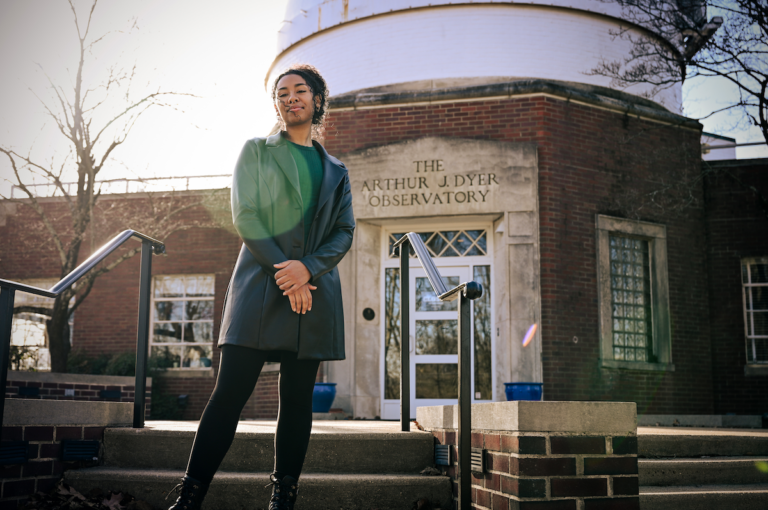
Bridging the gap: Combining music and astrophysics to improve representation in science
Vanderbilt graduate student Shaniya Jarrett created a community outreach project that introduces Black girls to astronomy by incorporating music. AstroBeats: Sounds of the Cosmos brings together local middle-school Black girls to translate NASA data into unique musical compositions, teaching the importance of thinking creatively about how to interpret scientific data. Read MoreFeb 29, 2024
-

Daniel Fleetwood named distinguished National Academy of Inventors Fellow
Daniel M. Fleetwood, Olin H. Landreth Professor of Engineering, has been named a National Academy of Inventors Fellow, the highest professional distinction awarded solely to academic inventors. Read MoreDec 12, 2023
-

Nanoscale origami: Smallest-ever, atomically precise structures set stage for quantum breakthroughs
New technique for manipulating graphene opens the door to new breakthroughs in quantum technology. Read MoreSep 6, 2019
-

Rare study of Earth-sized planet uses technique pioneered by Vanderbilt professor
A groundbreaking study, using data from NASA and a technique pioneered by a Vanderbilt professor, is giving humankind a glimpse at a distant exoplanet with a size similar to Earth and a surface which may resemble Mercury or Earth’s Moon. Located nearly 49 light-years from Earth, the planet known… Read MoreAug 19, 2019
-
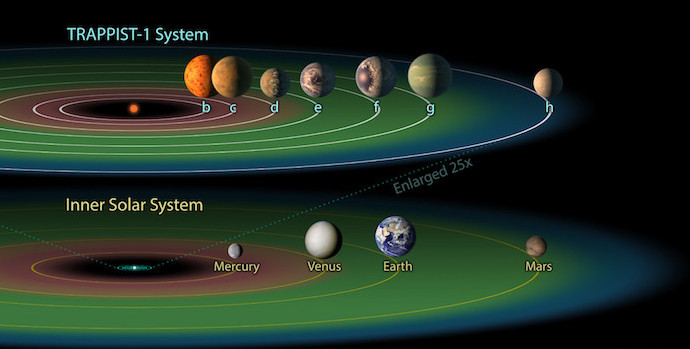
Planets orbiting TRAPPIST-1 star provide clues to the nature of habitable worlds
The newly discovered planets appear to have too much water to sustain life but provide hints at what sorts of planets might do so. Read MoreMar 20, 2018
-
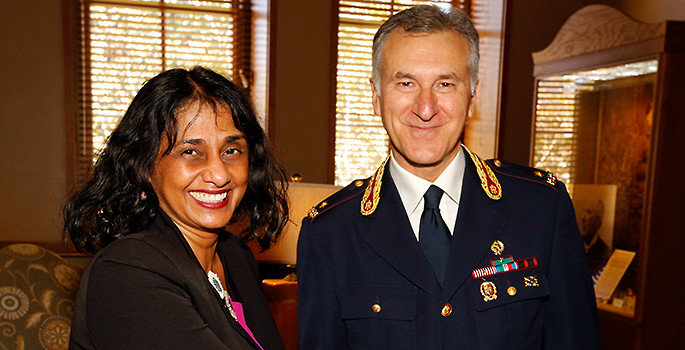
Forensic science comes to Vanderbilt
Vanderbilt scientists have teamed up with the Italian Scientific Police to apply nanoscience techniques to improve the accuracy of forensic investigations. Read MoreNov 13, 2017
-
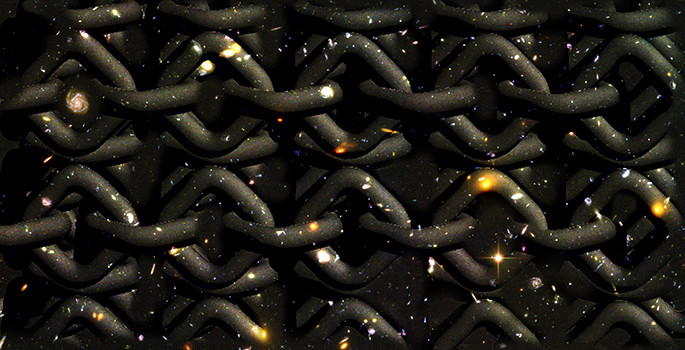
Filling the early universe with knots can explain why the world is three-dimensional
Filling the universe with knots shortly after it popped into existence 13.8 billion years ago provides a neat explanation for why we inhabit a three-dimensional world. That is the basic idea advanced by an out-of-the-box theory developed by an international team of physicists. Read MoreOct 13, 2017
-

Cell signals that trigger wound healing are surprisingly complex
Vanderbilt scientists have taken an important step toward understanding the way in which injured cells trigger wound healing, an insight essential for improving treatments of all types of wounds. Read MoreOct 3, 2017
-
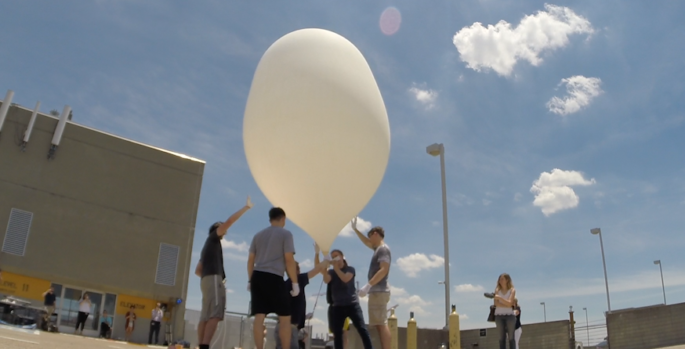
Racing the eclipse, School of Engineering weather balloon sends striking video
A high-altitude weather balloon rose yesterday from a Vanderbilt garage rooftop to the edge of space to live-stream the eclipse from above Nashville and record the temporary atmospheric changes it caused. Read MoreAug 24, 2017