Featured Research
-

FoxNews.com: Researchers work to secure military smartphones
Soldiers in Afghanistan are experimenting with smartphones engineered to better protect operational data designed by scientists at Vanderbilt University’s Institute for Software Integrated Systems. Douglas Schmidt, professor of computer science, is quoted. Read MoreFeb 13, 2014
-

PRI’s The World: Does the West have a monopoly on romantic love?
Some scholars still believe that romantic love was invented by European troubadours in the Middle Ages, and that people outside of the western tradition don’t really experience it. Ted Fischer, professor of anthropology, decided to test that theory. The verdict? Everybody loves. Read MoreFeb 13, 2014
-

Bound for life: The Aztec blood link to the gods begins at birth
When an Aztec child was born, soothsayers would consult the birth almanacs contained in codices to determine the most auspicious date to initiate the child into the Aztec community. Read MoreFeb 10, 2014
-

Mosquito sperm have a sense of smell
Vanderbilt biologists have discovered that mosquito sperm have a “sense of smell” and that some of same chemicals that the mosquito can smell cause the sperm to swim harder. Read MoreFeb 3, 2014
-

In the brain, the number of neurons in a network may not matter
A study has found that the time it takes neural networks in the brain to make decisions is remarkably stable regardless of size: a finding that could make it easier to achieve the goal of the President's BRAIN Initiative established last spring. Read MoreFeb 3, 2014
-

Study tracks pet therapy’s impact on young patients
A Vanderbilt study is investigating whether therapy dogs can have a positive effect on children undergoing chemotherapy. Read MoreJan 30, 2014
-

Is healthy obesity possible?
It might be possible to generate a “metabolically healthy” state of obesity by targeting signaling pathways that improve insulin sensitivity. Read MoreJan 29, 2014
-

‘Spear phishers’ proving hard to neutralize
It may take repeated and varied exposure to anti-spear phishing messages before employees get the message, according to research. Read MoreJan 28, 2014
-

American economics Ph.D.s on decline; One way to keep them — office space
A Vanderbilt economist turned his expertise back onto his own discipline and has published a 15-year analysis of graduate economics education in the United States. Read MoreJan 23, 2014
-
VUSM moves into top 10 in NIH funding
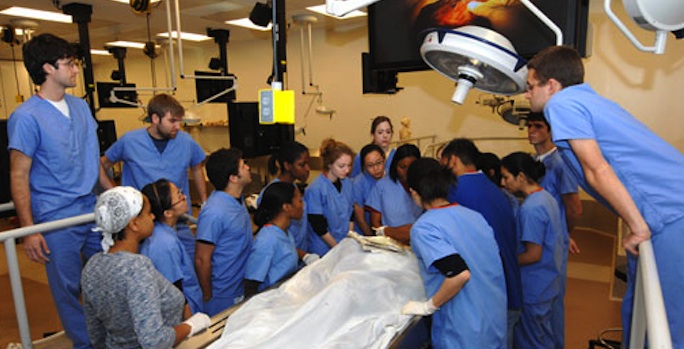
According to annual figures available through the National Institutes of Health (NIH), Vanderbilt University School of Medicine (VUSM) is now ranked ninth in the nation among U.S. medical schools in total grant support provided through the nation’s medical research agency. Read MoreJan 23, 2014
-
Waning political tolerance in some Latin American nations points to weakened democratic culture
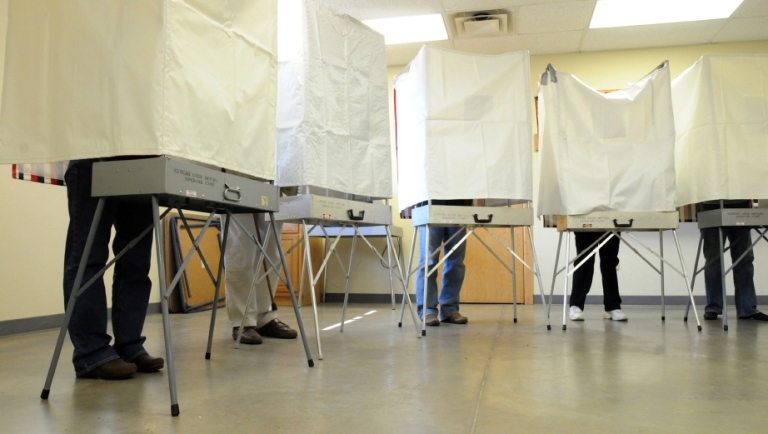
Support for political tolerance remains strong in many Latin American and Caribbean nations, but in others a move in the opposite direction “represents alarming news,” concludes a study by Vanderbilt University’s Latin American Public Opinion Project. Read MoreJan 22, 2014
-
Vanderbilt “rocket cam” to capture landing hazards during NASA contest
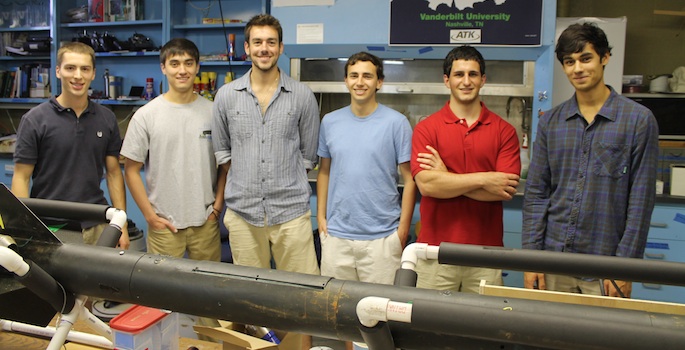
The Vanderbilt Aerospace Club will outfit its NASA Student Launch Project rocket with a modified camera to capture landing hazards. Read MoreJan 17, 2014
-

Vanderbilt research featured in Science News’ top science story of 2013
The popular science magazine Science News has chosen a story featuring research by Vanderbilt's Seth Bordenstein and Robert Brucker as its top science story for the year. Read MoreJan 17, 2014
-

Obama appointments studied for patronage
Vanderbilt researchers studied 1,307 appointments made by the Obama administration in its first six months, seeking data about the appointees’ education, work history and political involvement. Read MoreJan 17, 2014
-

New approach may halt glioblastoma’s ability to grow
Vanderbilt University researchers have discovered a “backdoor” approach to blocking an enzyme that fuels the growth of glioblastoma, the most common and most fatal form of brain cancer. Read MoreJan 16, 2014
-

Graduate student lead author of study of electron particles that can zap technology
A paper first-authored by Vanderbilt graduate engineering student Michael King concludes that electronics designed to operate with ultra-low power likely will exhibit high sensitivity to electron-induced single-event upsets due to interference from solar flares, cosmic rays and the like. Read MoreJan 15, 2014
-

Vanderbilt study reveals senses of sight and sound separated in children with autism
Children with autism spectrum disorders have trouble integrating simultaneous information from their eyes and their ears--as if they experience the world like a badly-dubbed movie. Read MoreJan 14, 2014
-

Gizmodo: How Vanderbilt’s secret software lab is saving America
On a quiet street just off of Nashville's historic Music Row, a dedicated team of more than 100 researchers are developing software systems that may very well revolutionize the modern world. Read MoreJan 14, 2014
-

Employment may lead to improvement in autism symptoms
More independent work environments may lead to reductions in autism symptoms and improve daily living in adults with the disorder, according to a Vanderbilt study released in the Journal of Autism and Developmental Disorders. Read MoreJan 9, 2014
-

Surprising new class of “hypervelocity stars” discovered escaping the galaxy
Two Vanderbilt astronomers are among an international team that has discovered a surprising new class of “hypervelocity stars” – solitary stars moving fast enough to escape the gravitational grasp of the Milky Way galaxy. Read MoreJan 9, 2014