Research
-

BME, CS grad students receive DoD science and engineering graduate fellowships
Two engineering doctoral students have received 2021 National Defense Science and Engineering Graduate Fellowships. Sponsored and funded by the U.S. Department of Defense, the NDSEG Fellowship is a highly competitive fellowship awarded to U.S. citizens and nationals who intend to pursue a doctoral degree in one of 15 supported disciplines. Fellowship selections are made by the... Read MoreJul 8, 2021
-

21st Annual Nanoscience & Nanotechnology Forum NanoDay! 11/19/21 – Keynote Speaker Teri Odom
Teri W. Odom, an expert in designing structured nanoscale materials, will be the keynote speaker of the 21st Annual Nanoscience & Nanotechnology Forum on Nov. 19. Read MoreJul 8, 2021
-
Vanderbilt graduate students address legislators to advocate for NSF funding
By Collier Roberts Members of the Vanderbilt community meet with a staff member from the Office of Rep. Steve Cohen (D-TN09). (Office of Federal Relations) Two graduate students from Vanderbilt’s School of Engineering and one from the School of Medicine recently addressed legislators in Washington, D.C., virtually, sharing stories about the important role funding from... Read MoreJun 30, 2021
-
Vanderbilt graduate students address legislators to advocate for NSF funding
Two graduate students from Vanderbilt’s School of Engineering and one from the School of Medicine Basic Sciences recently addressed legislators in Washington, D.C., virtually, sharing stories about the important role funding from the National Science Foundation has played in their research and training. Read MoreJun 30, 2021
-
$2.5 million NASA project will develop and test safety management for ‘air taxis’
Multi-university team tackles safety systems for autonomous eVTOLs Vanderbilt engineers are part of a NASA-funded, multi-institution effort to develop safety systems for a mode of transportation that doesn’t exist yet—small, commercial, autonomous planes that move people by air between locations in large, crowded cities. The task is a formidable one with machine learning at its... Read MoreJun 28, 2021
-
$2.5 million NASA project will develop and test safety management for ‘air taxis’
Multi-university team tackles safety systems for autonomous eVTOLs Vanderbilt engineers are part of a NASA-funded, multi-institution effort to develop safety systems for a mode of transportation that doesn’t exist yet—small, commercial, autonomous planes that move people by air between locations in large, crowded cities. The task is a formidable one with machine learning at its... Read MoreJun 28, 2021
-
Grad student adds drone imagery to toolbox for post-disaster recovery
A new online gallery of photos taken in the days, weeks and months following the March 2020 regional tornados is the work of an engineering graduate student who wants to make disaster recovery more equitable. Daniel Perrucci, a Ph.D. candidate in civil engineering, used bird’s eye imagery from drones as well as street-level photography... Read MoreJun 24, 2021
-
Engineering grad student co-leads effort to repurpose approved medications
Global repositioning campaign targets needs of children and pregnant women Anup Challa, BE ’21, MS ’21, has been tapped to co-lead a team of researchers and patient advocates to identify areas across the world in need of health care for pregnant women and infants. He is the new chair of the Special Populations Coordinating Committee... Read MoreJun 14, 2021
-
Engineering grad student co-leads effort to repurpose approved medications
Global repositioning campaign targets needs of children and pregnant women Anup Challa, BE ’21, MS ’21, has been tapped to co-lead a team of researchers and patient advocates to identify areas across the world in need of health care for pregnant women and infants. He is the new chair of the Special Populations Coordinating Committee... Read MoreJun 14, 2021
-

Vanderbilt researcher finds that Supreme Court ban on race-conscious college admissions would restrict the pipeline of future leaders
Affirmative action admissions policies admit diverse students, who are then recruited to elite professions and C-suite leadership, according to new research by law and economics professor Joni Hersch. Read MoreJun 10, 2021
-

VUMC team discovers new genetic disease
Researchers at Vanderbilt University Medical Center have discovered a new genetic disease that causes a severe form of neurogenic orthostatic hypotension, a rapid drop in blood pressure upon standing that can cause fainting. Read MoreJun 3, 2021
-

Predictive model identifies patients for genetic testing
Patients who, perhaps unbeknownst to their health care providers, are in need of genetic testing for rare undiagnosed diseases can be identified en masse based on routine information in electronic health records (EHRs), a research team reported June 3. Read MoreJun 3, 2021
-
Gore tapped for prestigious lecture named for MRI co-inventor Lauterbur
The relatively brief history of medical MRI is riddled with failed predictions, according to University Professor John Gore, founding director of the Vanderbilt University Institute of Imaging Science. Bold statements about the optimal magnetic field and the limits of magnet strength were way off. In 1982 one researcher concluded MRI was useful for imaging the... Read MoreJun 1, 2021
-
Gore tapped for prestigious lecture named for MRI co-inventor Lauterbur
The relatively brief history of medical MRI is riddled with failed predictions, according to University Professor John Gore, founding director of the Vanderbilt University Institute of Imaging Science. Bold statements about the optimal magnetic field and the limits of magnet strength were way off. In 1982 one researcher concluded MRI was useful for imaging the... Read MoreJun 1, 2021
-
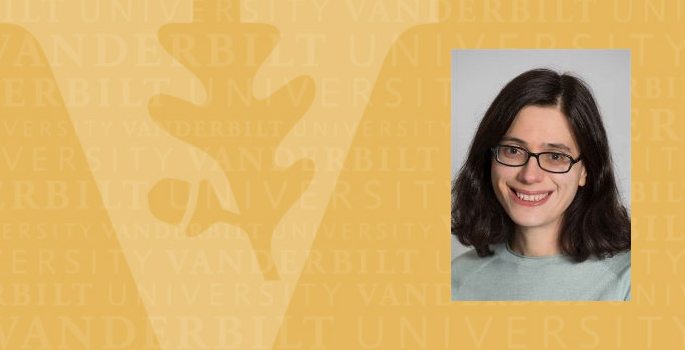
Regev receives Vanderbilt Prize in Biomedical Science
Aviv Regev, PhD, an internationally known computational biologist and executive vice president of Genentech Research and Early Development (gRED), is the recipient of the 2021 Vanderbilt Prize in Biomedical Science, officials at Vanderbilt University Medical Center announced this week. Read MoreMay 29, 2021
-
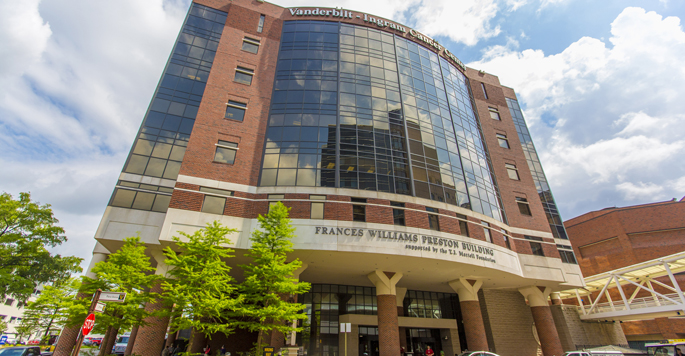
Vanderbilt researchers present new data on clinical trials at ASCO 2021
Vanderbilt-Ingram Cancer Center researchers will present data on clinical trials involving targeted therapies, immunotherapies and drug combination synergies at the 2021 American Society of Clinical Oncology Annual Meeting, June 4-8. The meeting is a virtual event this year. Read MoreMay 26, 2021
-
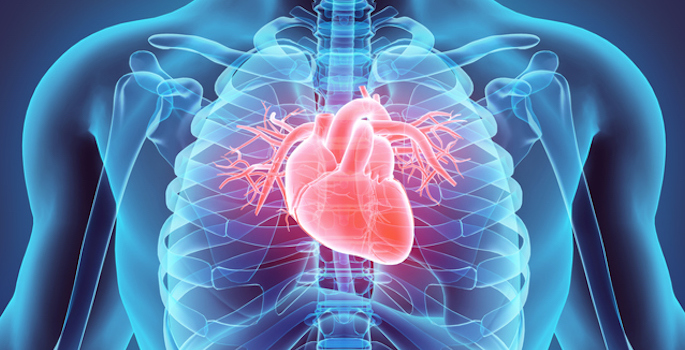
Heat for hypertension in autonomic failure
Heat therapy could offer a novel nonpharmacologic approach for treating the overnight hypertension that affects patients with autonomic failure. Read MoreMay 25, 2021
-
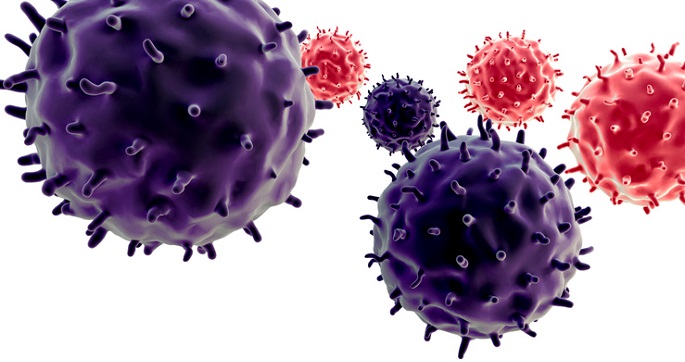
Analysis reveals macrophages associated with kidney cancer recurrence
A white blood cell, the TREM2/APOE/C1Q-positive macrophage, has been identified as a potential biomarker to predict recurrence of the most common type of kidney cancer and as a possible target for drug development. Read MoreMay 24, 2021
-
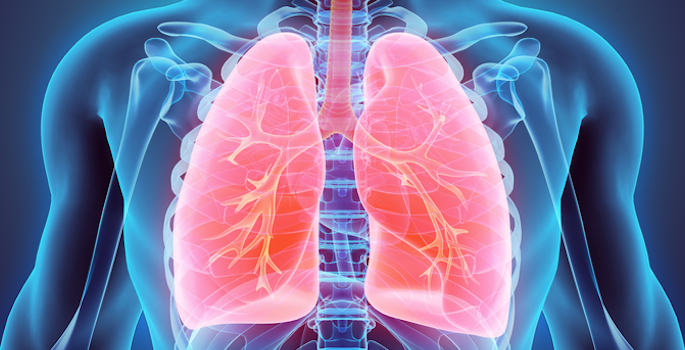
New clue to lung scarring
Vanderbilt neonatology team pinpoints signaling pathways involved in the progressive lung fibrosis that occurs in rare genetic diseases. Read MoreMay 20, 2021
-

Beta cell regeneration
Vanderbilt researchers dissected the complex microenvironment of the pancreatic islet to discover the signals that drive beta cell regeneration — as a possible treatment for diabetes. Read MoreMay 20, 2021