Research
-

VUSN’s new Leadership Lecture Series kicks off with renowned researcher Peter Buerhaus
Peter Buerhaus, PhD, FAAN, FAANP(h), a renowned researcher who studies the health care workforce and economy will share his expertise on the future of nursing, health equity and the relationship balance between nurses, leadership and educators. He will be the inaugural speaker in a new Leadership Lecture Series presented by the Vanderbilt University School of... Read MoreMar 21, 2022
-

School of Nursing to hold innovative informatics conference for nurse educators
Nursing educators challenged with incorporating nursing informatics into their curriculum in accordance with the new AACN Core Competencies for Professional Nursing Education can get a jump start at a three-day conference offered by Vanderbilt University School of Nursing this summer. The Vanderbilt Informatics Summer Teaching Academy (VISTA) will be July 20-22, 2022, at Vanderbilt’s park-like... Read MoreMar 21, 2022
-

Rubinov awarded $1.1M to study molecular underpinnings of human brain networks on a large scale
Mikail Rubinov, assistant professor of biomedical engineering, computer science, psychiatry and psychology, has been awarded a four-year, $1.1 million grant from the National Institute of Mental Health to better understand the development and organization of brain networks, as well as their change in development and aging. Rubinov and his collaborators will link aspects of gene expression and... Read MoreMar 17, 2022
-
Blood test figures in cancer risk for people with HIV
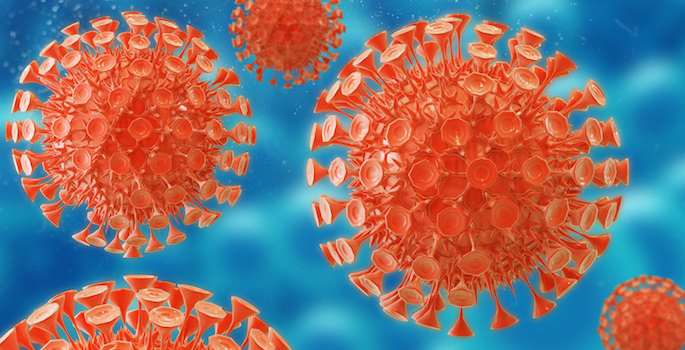
A Vanderbilt study found that, among adult patients with HIV, those who have lower counts of certain types of blood cells have a markedly higher risk of developing cancer. Read MoreMar 17, 2022
-

Vanderbilt-Metro partnership created to advance collaboration on connected, data-driven services
Vanderbilt University and the Metropolitan Government of Nashville and Davidson County have expanded their working relationship by creating a framework to increase collaboration on projects focused on intelligent and connected urban infrastructure and services. Read MoreMar 14, 2022
-

How to ease your child’s anxiety about the war in Russia-Ukraine
Concerns about strife in a country far from home are adding worries to a generation already on edge from navigating changes in everyday life due to the COVID-19 pandemic. Here are some ideas for how to help. Read MoreMar 11, 2022
-
WATCH: Experts discuss what’s next in the COVID-19 pandemic
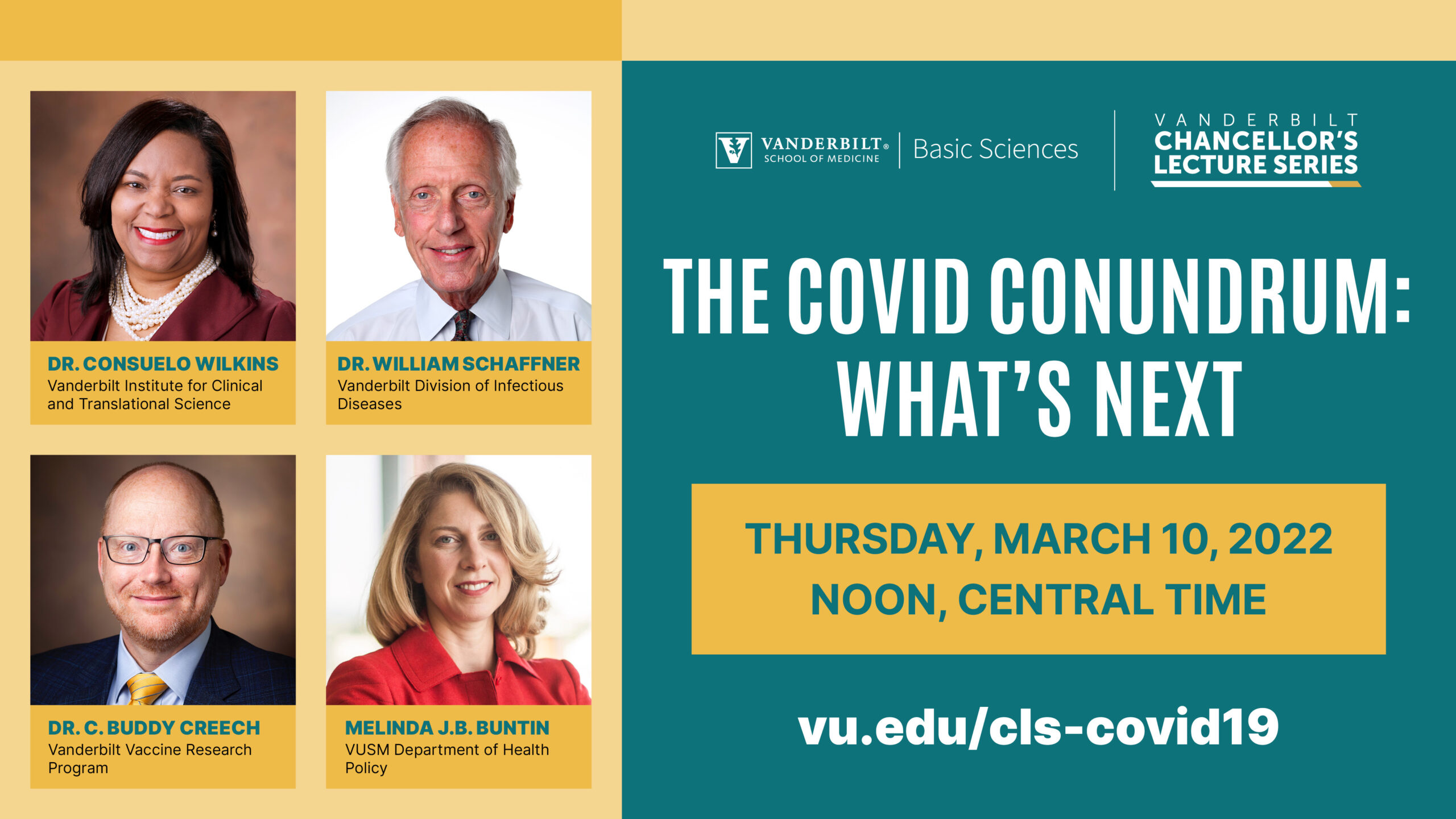
Some of Vanderbilt University’s leading experts on vaccines, infectious disease and public health came together for a special panel discussion on March 10 to talk about the future of the COVID-19 pandemic. The virtual event, “The COVID Conundrum: What’s Next,” was hosted by the Chancellor’s Lecture Series in partnership with the Vanderbilt School of Medicine Basic Sciences. Read MoreMar 11, 2022
-

Chancellor Diermeier shares new research with multidisciplinary faculty group
Chancellor Daniel Diermeier recently shared the manuscript for his forthcoming book on corporate reputation with a small group of faculty whose diverse areas of expertise reflect the cross-disciplinary approach of his academic research. Read MoreMar 10, 2022
-

Portrait series honors contributions of six women pivotal to Vanderbilt
Six women who have helped shape the university and its history are being honored as part of a new Women at Vanderbilt Portrait Project at the Margaret Cuninggim Women’s Center. The portraits, commemorating women from the 19th century through today, will be unveiled at an event on March 14. Read MoreMar 7, 2022
-
Wikswo, VIIBRE team on track to build third-generation ‘self-driving lab’ with $1M from NSF
John Wikswo, founder and director of the Vanderbilt Institute for Integrative Biosystems Research and Education and Gordon A. Cain University Professor, is the principal investigator of a $1 million award from the National Science Foundation. The object is to build a pathbreaking “robot scientist”—a fully automated microfluidic system for parallel, independent, long-duration, machine-guided experiments. The... Read MoreMar 5, 2022
-
Wikswo, VIIBRE team on track to build third-generation ‘self-driving lab’ with $1M from NSF
John Wikswo, founder and director of the Vanderbilt Institute for Integrative Biosystems Research and Education and Gordon A. Cain University Professor, is the principal investigator of a $1 million award from the National Science Foundation. The object is to build a pathbreaking “robot scientist”—a fully automated microfluidic system for parallel, independent, long-duration, machine-guided experiments. The... Read MoreMar 5, 2022
-

COVID-19 Sheds Light on the Overlooked Importance of Non-Essential Care Providers
New research from Vanderbilt Business highlights the importance of families, social workers, and chaplains to patient care. Read MoreMar 3, 2022
-

Max Adler Student Investment Fund is about More than the Money
This student-run equity investment fund honors Max Adler and is an opportunity for real-world experience with real-world payoffs. Read MoreMar 3, 2022
-

Vanderbilt Business Student-Team Takes Second Place at the 2022 UNC Real Estate Development Challenge
A team of 3 Vanderbilt MBA students won $5,000 based on recommendations for DC-area development at the UNC Development Challenge. Read MoreMar 3, 2022
-
International research collaboration reveals new possibilities in nanophotonics
Joshua Caldwell, Flowers Family Chancellor’s Faculty Fellow in Engineering and associate professor of mechanical engineering, and Joseph Matson, a graduate student in Caldwell’s lab, have contributed to an international study that has discovered a new type of light-matter coupling. The work has long-term implications for how optical components can be even further miniaturized, a discovery... Read MoreMar 3, 2022
-

International research collaboration reveals new possibilities in nanophotonics
Josh Caldwell and graduate student Joseph Matson are part of a team that has discovered how asymmetric light-matter interactions may enable new ways to guide and process optical signals on chips and design compact infrared optical components. Read MoreMar 3, 2022
-

Research Snapshot: Vanderbilt team discovers potential explanation for treatment resistance in skin cancer
Melanoma is the fifth most-common type of cancer in the U.S., and according to the American Cancer Society, about half of patients with malignant melanoma have mutations of the BRAF gene. Identification of potential tumor biomarkers such as SOX10 can help physicians better predict outcomes for their patients. Read MoreFeb 28, 2022
-

Literature researchers identify attitudes toward genetics across 100 years of film and television
Science’s influence on pop culture is undeniable, and the reverse is equally important. Research led by Jay Clayton, the first literature professor to ever receive funding from the NIH, shows that films portray genetic science as risky far more often than television shows. Read MoreFeb 28, 2022
-
Researchers test and validate platform for potential PPE tracking across U.S. hospitals
A multidisciplinary team that includes a Vanderbilt computer science professor has established the foundation for an automated, up-to-date assessment of personal protective equipment across U.S. hospitals—work that got its start before the COVID-19 pandemic but took on greater urgency. Significantly, the team developed a secure, third-party system to operate independent of federal and state governments... Read MoreFeb 25, 2022
-
Multicenter team seeks to create at-home artificial lung system
Vanderbilt team to focus on engineering, testing the device by Matt Batcheldor Vanderbilt University Medical Center will share in an $8.7 million federal grant to create an artificial lung system that patients with incurable lung disease can use at home. The Department of Defense Congressionally Directed Medical Research Program (CDMRP) grant will fund research to create... Read MoreFeb 24, 2022