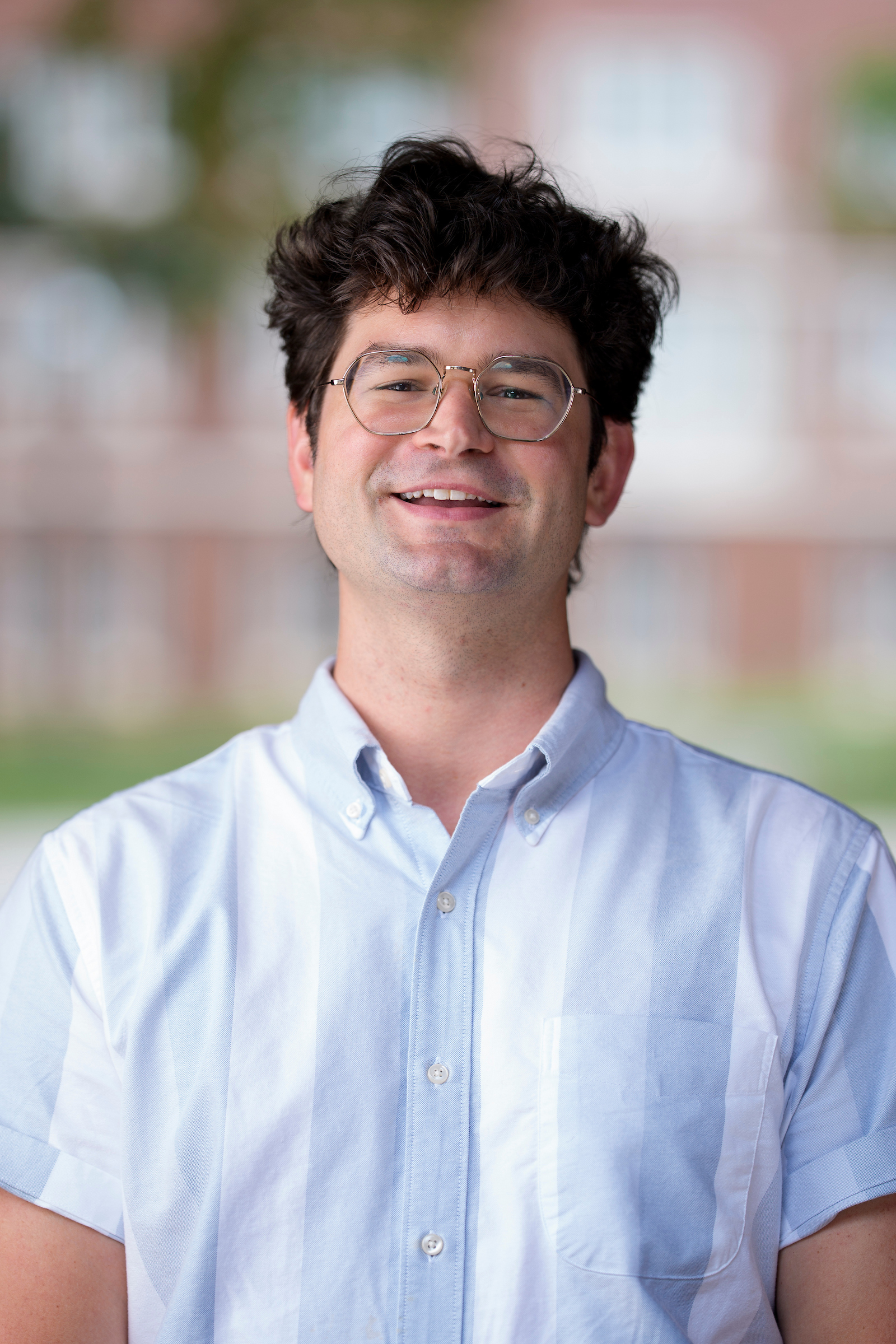
Warren Lowell joined the faculty at Vanderbilt Peabody College of education and human development as an assistant professor in fall 2025. He is an urban sociologist, population scientist and public policy scholar whose work focuses on housing, internal migration and child well-being. He studies the social factors within neighborhoods and housing markets that influence whether and how families move, and, in turn, how these moves shape life chances for children.
In this Q&A, Lowell discusses issues related to housing affordability and the hopes he has for his research to inform private and public sector policies and practices to help more families afford stable housing.
Please summarize the aims of your research.
It is undeniable that there is a national housing affordability problem. In my role as a social scientist and a sociologist, I provide social facts and actionable findings to a variety of stakeholders to try to help fix that problem.
One of the things we have studied for a long time in the field of demography is how families end up being in the homes they are in. We call this household formation. I ask questions about the tradeoffs and compromises that families make in establishing and maintaining households. That’s one aim of the work, to understand how families make those decisions, when they make decisions to leave, what are the circumstances under which they’re making those decisions to leave, et cetera.
Another aim of the work is to understand the tools that governments, at a variety of levels, use to serve families and to help with this crisis, either on the supply side, by trying to build more affordable units—or build more units, period—or to provide subsidies on the demand side that support families in establishing homes and households that are healthy and help them thrive. Another element: what are the tools that governments use to manipulate the decisions that families make about tradeoffs and compromises?
I am also starting to study supply-side actors, the people who make decisions in the private market. What are they building, how do they make decisions about what they build, and what are the economic exchanges between them and buyers? How do buyers decide whether something is affordable and where they buy land and property?
How would you like to see your work influence communities, policies and housing markets?
I would love to have the greatest influence on the tools that we use to serve the most vulnerable or lowest-income families in the country. It’s no overstatement to say that we’re failing many of them. Some of that is due to lack of information on how we should prioritize our funds, and some of that is due to not having a lot of information about new levers we’re using, both of which I’m interested in.
We make a lot of decisions about how to distribute funds based on measures thought to represent housing insecurity. You can read about this in my paper, “When are they insecure?…” recently published in Social Forces. We’ve established some baseline measures that are mainly used because they’re easy to capture, like a ratio of housing costs to income or a ratio of people to rooms. If you’re paying more than 30 percent of your income on rent, you’re considered to be cost burdened. But we haven’t done a great job of asking whether that’s true or for whom. Is it the case that paying more than 30 percent of your income really matters for your ability to stay in your home?
You could ask a similar question regarding overcrowding and the ratio of people to rooms. More than one person per room is considered overcrowded. One and a half is severely overcrowded. But we don’t have a good sense of whether that means families in these situations are actually experiencing insecurity.
Despite that, we are distributing public resources, like the Emergency Rental Assistance Program, based on these measures. During the COVID-19 pandemic, decisions about where those funds went and how much was based, in part, on the proportion of overcrowded households in a given county. So, we made that decision, but we don’t know whether that was the right one, because we don’t know whether overcrowded families are more likely to experience insecurity.
In my paper, I argue that these aren’t great measures. Sometimes when families are in poverty, and they are cost burdened, yes, they are more likely to experience housing insecurity. They’re more likely to move multiple times quickly, one after another—which is an indicator of insecurity—and they’re more likely to say that their most recent move was out of their own control.
But families above the poverty line who are paying greater than 30 percent of their income on housing don’t appear to be insecure. So, if we’re making decisions to distribute funds based on that measure, maybe there’s something better.
Now my work is moving in this direction of asking what those better things might be. The U.S. Department of Housing and Urban Development is also really invested in asking this question.
I’m partnering with the Panel Study of Income Dynamics. They sampled families in 1968 and have followed them and their kids to today. There are about five generations of people who have been in this data set. The researchers are interested in adding a module that asks these families questions about housing insecurity. In addition to asking how many people are in your home and how many rooms are there, they are interested in adding questions that more directly align with these concepts that we’re trying to use to measure housing insecurity, such as, “How comfortable do you feel with the personal space you have in your home?” and “How worried are you about falling behind on housing costs?”
So, one of the things that I hope to improve is the measures that we use to make decisions about distributing federal dollars that are meant to support families experiencing hardship.
What brought you to this line of research?
After undergrad, I was a community-based social worker for several years in Boston, Massachusetts. I would do therapeutic sessions with children in their homes, in their schools, in the car, driving them from their schools to their homes, to the doctor’s office and to community centers. I saw firsthand what families living in poverty go through.
Moving can be a huge disturbance to their lives. I worked with kids who had to move very quickly because they were informally evicted by their landlord. I lost contact with one of them, and that family lost a social network that was vital to them. It took weeks to try to find them and get the child’s supports back up and running.
On the flip side, I supported families in wonderful, positive moves. I helped reintegrate a mother of a child into the family. The child had been staying with their grandmother for a long time, and eventually that child moved back in with his mom, and that was everyone’s goal.
I also supported families that moved into subsidized housing facilities in Boston, where, suddenly, a kid who faced a lot of issues like violence and bullying in his neighborhood now had a community center where he eventually got his first part-time job.
Through doing all that work, I came to understand that where and how people live really matters for how these kids do in school, in their lives and in their futures. So, I went to graduate school to study public policy and then got my Ph.D. to further research these issues.
What are the most relevant or important findings from your research thus far?
There has been a lot of research on public housing demolitions, which drastically transformed neighborhoods. There were mixed findings on how kids ended up after their public housing units were demolished, but we stopped doing demolitions following public outcry and moved to a model where we are renovating public housing much more. This is called the Rental Assistance Demonstration Program (RAD). Implementation of this program looks like it is much better at retaining people. If the units continue to exist, people continue to live in them for the most part.
But we didn’t know a lot about its effects on neighborhoods. In one of my first papers, I found that this program appeared to gentrify neighborhoods, increase housing costs, and increase people from higher income neighborhoods moving into neighborhoods surrounding public housing. Sometimes these improvements have spillover effects that are unanticipated or unconsidered, but we might want to consider the housing stability of public housing’s neighbors when planning redevelopment.
How does your research intersect with housing-related arguments that Ezra Klein and Derek Thompson make in Abundance?
This book came out the week I submitted my dissertation and defended it, so I didn’t have time to read it then. But I looked through it recently, and from what I gather about the supply-side argument, there’s lots of local regulation on housing construction, what can be built where, et cetera, that increases costs. I totally agree.
I did a bunch of interviews with real estate investors for my dissertation. By and large, they would say it was difficult to do projects, and they were really limited in what they could do because many of the cities where I was studying had really complex building rules. In fact, many of these cities made changes to their zoning regulations to address this issue during my study.
All three of the cities I focused on passed laws that said you could add multiple homes on a lot where an unsalvageable larger home was demolished. That is a net benefit given that the alternative would be just one larger, more expensive home. The downside is that it takes much more time for supply to catch up to demand. In the meantime, many of our lowest-income families will continue to struggle. If we think zoning reform is a panacea, then we’re not thinking about our poorest families who are going to continue to struggle to afford housing.
In one of the more interesting findings from my interviews, I learned more about the public engagement process when developers want to build something that’s not already legally allowed to be built on that land. Many developers I talked to either said, “I did it once, and I’ll never do it again,” or “I have a friend who did it, and he told me how hard it was, so I don’t do it.”
There is a specter of NIMBYism that goes beyond the question, “Is everyone going to oppose it?” It’s that, “I’m not even going to propose it, because it will face so much opposition.”
What are you planning to study next?
Three-quarters of families who would qualify for a government housing subsidy don’t get it because of budget shortfalls. We don’t fund these programs enough.
The main way that we subsidize housing these days is not through public housing, but through what we call housing choice vouchers, which used to be called Section 8. Vouchers perform a similar function to public housing. They limit families’ housing costs to 30 percent of their income. Those families can “take them anywhere,” but you have to find landlords who accept them.
Most families who are low income and struggling to pay for their housing, are in the private market. Many of them live in what we call naturally occurring affordable housing, or NOAH. This is another supply-side option that I think many cities are tinkering with and that I am starting to study.
NOAH is unsubsidized affordable housing due to low market values. These are often lower quality properties that are aging. Many of them are now on the cusp of serious structural unit failure and are being—what housing market people call—recapitalized, meaning, they’re being purchased by a new investor, who makes improvements to the housing, but in the process, many families, we think, are displaced from those properties.
In my research, I will be trying to understand what happens to families who are living in these properties when they get sold to new owners, and how cities are trying to minimize housing instability resulting from recapitalization by redeveloping properties themselves. Many cities are aware of this problem and are creating funds, such as Nashville’s Barnes Housing Trust Fund, to redevelop properties in a way that allows all families living in those properties to stay there.
Is your work focused on a particular part of the country?
Some of my work is at the national level, but an arm of it focuses on the American South, with the motivation that many cities in the American South or in the Sun Belt are growing rapidly. Those demographic trends are different than many cities in the Midwest, in the North, and even in the West.
Questions about development and the ways that I’m thinking about those questions are ripest in the South, where a higher proportion of the land, for example, is zoned single-family in many cities—for all sorts of different reasons.
Cities are moving quickly to tweak their zoning laws. Researching these changes in the context of areas with deep histories of racial segregation is interesting, timely and important. Additionally, thriving, historically Black neighborhoods, with HBCUs around them, exist in these cities and are facing threat to their continued survival.
What excites you about working at Vanderbilt Peabody College?
Peabody is such an exciting place to launch my career as an assistant professor because of its strong focus on interdisciplinarity and research impact. The ethos of the school is to do work that matters and improves the human condition, and this is perfectly aligned with my own orientation to research. As a policy scholar, I’m often in the same room as scholars and practitioners with a wide variety of disciplinary orientations, organizational experiences, and sources of expertise. Peabody is a place that values these connections and fostering collaborations to do good in the world, and that excites me more than anything else!