Imported-post
-
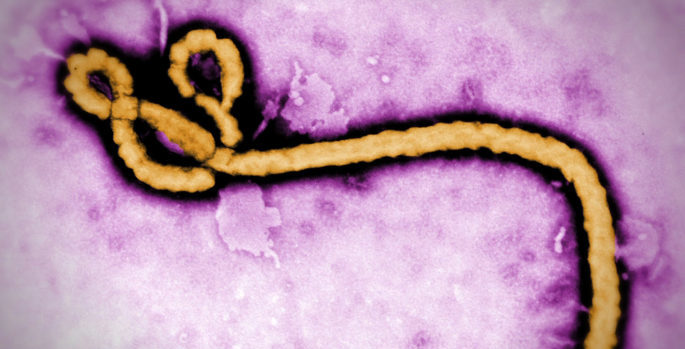
VUMC researchers a step closer to broad ebolavirus protection
A combination of two broadly acting monoclonal antibodies isolated by researchers at Vanderbilt University Medical Center protected non-human primates from ebolavirus disease, which causes severe and often-fatal hemorrhagic fever in humans. Read MoreNov 10, 2021
-

Spotlight Publication: “High contrast cleavage detection for enhancing porous silicon sensor sensitivity” published in Optics Express
“High contrast cleavage detection for enhancing porous silicon sensor sensitivity” published in Optics Express has been selected as a VINSE spotlight publication. Read MoreNov 3, 2021
-
Vanderbilt to lead $5 million Air Force center of excellence in radiation effects research on electronics
Center aims to advance the understanding of physical mechanisms responsible for radiation-induced effects on emerging technologies The Institute for Space and Defense Electronics at Vanderbilt University has been selected as the Center of Excellence in Radiation Effects by the U.S. Air Force Office of Scientific Research and the Air Force Research Lab. The $5 million, five-year program will be... Read MoreOct 29, 2021
-
Vanderbilt to lead $5 million Air Force center of excellence in radiation effects research on electronics
Center aims to advance the understanding of physical mechanisms responsible for radiation-induced effects on emerging technologies The Institute for Space and Defense Electronics at Vanderbilt University has been selected as the Center of Excellence in Radiation Effects by the U.S. Air Force Office of Scientific Research and the Air Force Research Lab. The $5 million, five-year program will be... Read MoreOct 29, 2021
-
Researchers to test wearable tech to detect problem behaviors in children with disabilities and offer intervention strategies
Vanderbilt researchers have won a National Science Foundation grant to use wearable technologies to detect problem behaviors in children and adolescents with intellectual and developmental disabilities and offer strategies to protect them from potential harm. Children with intellectual and developmental disabilities (IDD) are at increased risk of showing problem behavior that expose them to being... Read MoreOct 27, 2021
-
Researchers to test wearable tech to detect problem behaviors in children with disabilities and offer intervention strategies
Vanderbilt researchers have won a National Science Foundation grant to use wearable technologies to detect problem behaviors in children and adolescents with intellectual and developmental disabilities and offer strategies to protect them from potential harm. Children with intellectual and developmental disabilities (IDD) are at increased risk of showing problem behavior that expose them to being... Read MoreOct 27, 2021
-
Novel advanced light design and fabrication process could revolutionize sensing technologies
Vanderbilt and Penn State engineers have developed a novel approach to design and fabricate thin-film infrared light sources with near-arbitrary spectral output driven by heat, along with a machine learning methodology called inverse design that reduced the optimization time for these devices from weeks or months on a multi-core computer to a few minutes on... Read MoreOct 21, 2021
-
New drug targets vascular inflammation, drastically improves vascular procedures’ long-term effectiveness
By Aran Sullivan THE IDEA Cardiovascular procedures like bypass grafting and vessel stenting are some of the most common surgeries performed in the United States, but about half of them will require additional corrective measures, according to Craig Duvall, Cornelius Vanderbilt Chair and undergraduate director of biomedical engineering. The need for follow-up procedures is often... Read MoreOct 12, 2021
-
Chang receives $1.1 million grant to investigate brain-body connections, advance understanding of how brains age
An assistant professor of electrical and computer engineering has received a $1.1 million NIH grant to investigate brain-body connections and advance understanding of aging in normal and pathological brains. Catie Chang, assistant professor of electrical and computer engineering, leads the research team, which will focus on developing machine learning methods that can automatically reconstruct physiological... Read MoreOct 11, 2021
-
Spotlight Publication: “Kupffer cell release of platelet activating factor drives dose limiting toxicities of nucleic acid nanocarriers” published in Biomaterials
“Kupffer cell release of platelet activating factor drives dose limiting toxicities of nucleic acid nanocarriers” published in Biomaterials has been selected as a VINSE spotlight publication. Read MoreOct 7, 2021
-
Vanderbilt and University of Tennessee-Knoxville win NSF Sustainable Regional Systems Research Network grant
Jonathan Gilligan, associate professor of Earth and environmental sciences, and Janey Camp, research associate professor of civil and environmental engineering, have won a Sustainable Regional Systems Research Network grant from the National Science Foundation. Jonathan M. Gilligan (Vanderbilt University) Janey Camp (Vanderbilt University) With a grant of nearly $150,000, they and researchers from the University... Read MoreSep 30, 2021
-
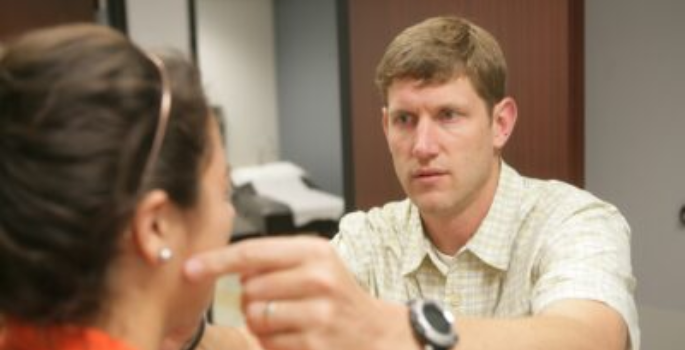
Study explores concussion recovery by race
Vanderbilt researchers are exploring the outcomes and experiences of Black and White athletes following a sports-related concussion. Read MoreSep 23, 2021
-
Vanderbilt-led team selected by NSF Convergence Accelerator to continue developing predictive technology against biothreats
Professor Janos Sztipanovits’ “Computing the Biome” convergent research team has been awarded a $5 million cooperative agreement to advance to phase 2 of the National Science Foundation’s 2020 Convergence Accelerator program. His team is developing technology to detect biological threats and predict disease outbreaks in major U.S. cities. Janos Sztipanovits (Daniel Dubois) “The Computing the... Read MoreSep 23, 2021
-
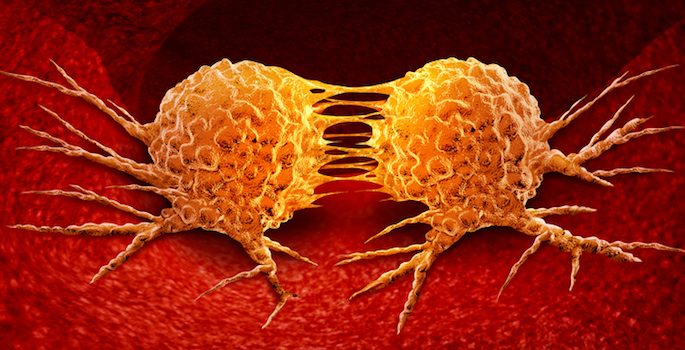
The role of polarity in early cancer
Mutations in the protein epiregulin, an EGF receptor ligand, affect larger epithelial cell reorganization and may contribute to early cancer development, Vanderbilt researchers discovered. Read MoreSep 21, 2021
-

Brain circuits in schizophrenia
Vanderbilt psychiatrists are probing brain circuit hyperactivity implicated in schizophrenia, with the idea that normalizing the hyperactivity may improve cognitive processes. Read MoreSep 20, 2021
-
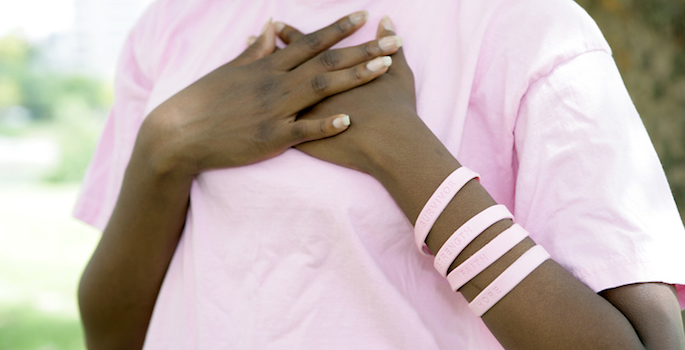
Structural variants in breast cancer risk genes
Vanderbilt epidemiologists conducted in-depth whole genome sequencing of breast cancer risk genes in Black women, who die at higher rates and have more aggressive disease, to discover mutations that may improve testing and treatment selection. Read MoreSep 16, 2021
-
‘Pre-conditioning’ restores immune tolerance
A treatment targeting T-cell metabolism could reinvigorate immune tolerance mechanisms to combat autoimmune disease and transplant rejection, Vanderbilt researchers discovered. Read MoreSep 16, 2021
-
Technologies can help drivers maintain the two-second rule to improve road safety and traffic flow
By Marissa Shapiro The two-second rule, taught in driver’s ed classes across the country, is a rule of thumb that helps drivers maintain a safe distance from the car ahead at any speed. Adhering to the two-second rule can be difficult. A team of engineers led by Dan Work, associate professor of civil and environmental... Read MoreSep 16, 2021
-
Team awarded $2.3 million NIH grant to evaluate new, more accurate ultrasound methods
New acquisition and reconstruction solutions for ultrasound imaging developed by a Vanderbilt team aim to fundamentally improve the ability to obtain high quality, clinically relevant images, especially in cases of heart disease. With a new, $2.3 million National Institutes of Health grant, the researchers will evaluate their advances on a specific subset of cardiac imaging... Read MoreSep 9, 2021
-
$1.9 million NIH project to investigate effects of shear stress on cancer cells
A biomedical engineering professor has received a $1.9 million NIH grant to investigate the effects of mechanical stimuli such as shear stress on the behavior of cancer cells in blood flow. J. Lawrence Wilson Professor Mike King and his research group will develop the devices for the study as well as new cell lines to... Read MoreSep 9, 2021