Research
-
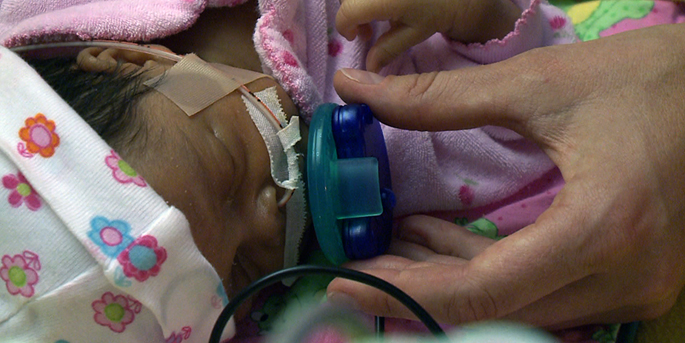
Vanderbilt study shows mother’s voice improves hospitalization and feeding in preemies
Premature babies who receive an interventional therapy combining their mother’s voice and a pacifier-activated music player learn to eat more efficiently and have their feeding tubes removed sooner than other preemies, according to a Monroe Carell Jr. Children’s Hospital at Vanderbilt study published today in… Read MoreFeb 17, 2014
-

FoxNews.com: Researchers work to secure military smartphones
Soldiers in Afghanistan are experimenting with smartphones engineered to better protect operational data designed by scientists at Vanderbilt University’s Institute for Software Integrated Systems. Douglas Schmidt, professor of computer science, is quoted. Read MoreFeb 13, 2014
-

PRI’s The World: Does the West have a monopoly on romantic love?
Some scholars still believe that romantic love was invented by European troubadours in the Middle Ages, and that people outside of the western tradition don’t really experience it. Ted Fischer, professor of anthropology, decided to test that theory. The verdict? Everybody loves. Read MoreFeb 13, 2014
-

Major grant creates clinical research network
Vanderbilt University Medical Center has received an 18-month, $6.9 million award to set up a Clinical Data Research Network (CDRN) that can reach millions of patients and speed the translation of research findings into clinical practice. Read MoreFeb 13, 2014
-

VUMC’s Ho honored with presidential research award
Vanderbilt University Medical Center’s Richard Ho, M.D., MSCI, has received a presidential honor for his innovative studies of mechanisms by which drug transporter proteins mediate the absorption, distribution and elimination of chemotherapeutic agents. Read MoreFeb 13, 2014
-
Otolaryngology society lauds Wanna’s research efforts
George Wanna, M.D., assistant professor of Otolaryngology-Head and Neck Surgery, has been named to receive the Harris P. Mosher Award from the American Laryngological, Rhinological and Otological Society Inc., also known as the Triological Society. Read MoreFeb 13, 2014
-
Gore honored by Zhejiang University
John Gore, Ph.D., director of the Vanderbilt University Institute for Imaging Science, was named an honorary professor of Zhejiang University, China, during his recent visit to Zhejiang University School of Biomedical Engineering and Instrument Science. Read MoreFeb 13, 2014
-

Ozier to direct human research protection efforts
Julie Ozier, MHL, has been named director of Vanderbilt’s Human Research Protection Program (HRPP) and Institutional Review Board (IRB). Ozier has worked with the HRPP and IRB for 11 years, has been associate director since 2007, and at Vanderbilt since 1996. Read MoreFeb 13, 2014
-

Obesity sends immune cells to the brain
Obesity causes peripheral immune cells to move to the brain, where they may contribute to inflammation and the pathophysiology of obesity. Read MoreFeb 12, 2014
-

A science fiction short story by Bob Scherrer is podcast
The UK audio science fiction magazine Starship Sofa has published a podcast of "Descartes' Stepchildren," a short story by Robert Scherrer, professor and chair of the Vanderbilt's department of physics and astronomy. Read MoreFeb 10, 2014
-

Bound for life: The Aztec blood link to the gods begins at birth
When an Aztec child was born, soothsayers would consult the birth almanacs contained in codices to determine the most auspicious date to initiate the child into the Aztec community. Read MoreFeb 10, 2014
-

Keeping the beat after heart surgery
Variation in the gene for the beta-1 adrenergic receptor increases the risk that a patient will have an abnormal heart rhythm after cardiac surgery. Read MoreFeb 10, 2014
-

New direction for treating lung cancer
Targeting the production of molecules that promote tumor blood vessel development offers a new path for treating lung cancer. Read MoreFeb 7, 2014
-

Discovery Lecture sheds light on properties of motion
Ron Vale, Ph.D., co-discoverer of the molecular “motor” kinesin, spent the first 10 minutes of his Flexner Discovery Lecture last week talking not about science, but about science communication. Read MoreFeb 6, 2014
-
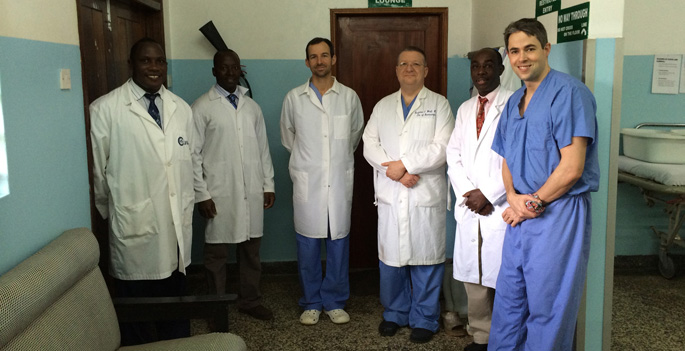
Hydrocephalus treatment study began in Uganda
Rob Naftel, M.D., traveled more than 8,000 miles to learn a new surgical technique to treat hydrocephalus, the buildup of cerebrospinal fluid in the brain. Read MoreFeb 6, 2014
-

Antioxidants promising for rare disorder
The antioxidant vitamin E prevented the buildup of toxic products in a model of a rare genetic disorder, suggesting new strategies for therapeutic development. Read MoreFeb 6, 2014
-

Discovery may pave way for RSV vaccine
Vanderbilt University scientists have contributed to a major finding, reported this week in the journal Nature, which could lead to the first effective vaccine against respiratory syncytial virus (RSV), a significant cause of infant mortality. Read MoreFeb 5, 2014
-
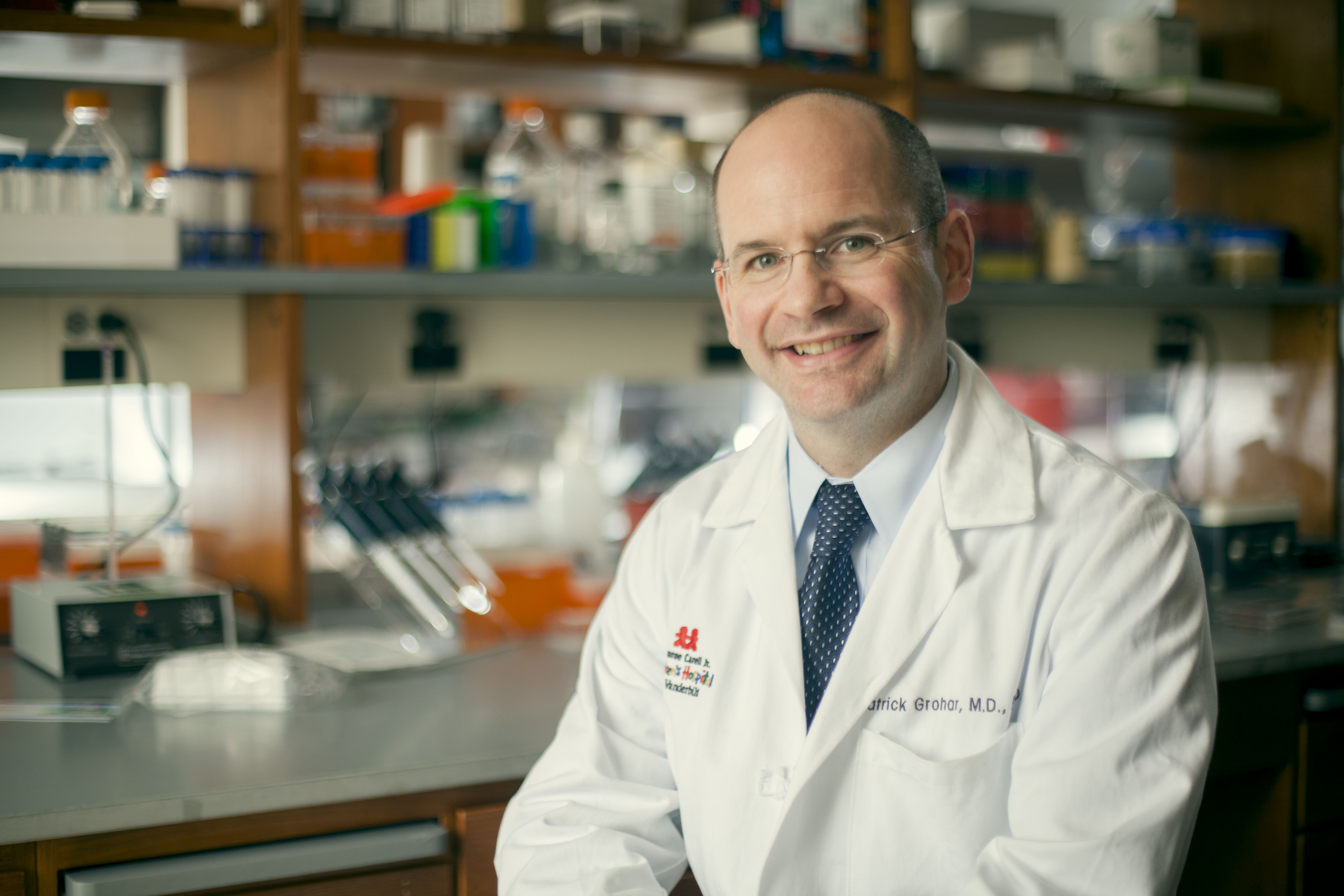
Childhood cancer researcher awarded $250,000 ‘Lemonade Stand’ grant
Patrick Grohar, M.D., Ph.D. (Photo by Daniel Dubois/Vanderbilt) Patrick Grohar, M.D., Ph.D., assistant professor of Pediatric Hematology at Monroe Carell Jr. Children’s Hospital at Vanderbilt, has been awarded a $250,000 Reach Award from Alex’s Lemonade Stand Foundation to support Ewing sarcoma research. In addition… Read MoreFeb 5, 2014
-

Mosquito sperm have a sense of smell
Vanderbilt biologists have discovered that mosquito sperm have a “sense of smell” and that some of same chemicals that the mosquito can smell cause the sperm to swim harder. Read MoreFeb 3, 2014
-

In the brain, the number of neurons in a network may not matter
A study has found that the time it takes neural networks in the brain to make decisions is remarkably stable regardless of size: a finding that could make it easier to achieve the goal of the President's BRAIN Initiative established last spring. Read MoreFeb 3, 2014