Research
-

Vanderbilt among founding members of Southeast Regional SI Computing Consortium
Vanderbilt University is among the founding members of the Southeast Regional Superintelligence Computing Consortium, announced Oct. 8 by the White House at the Science: A New Golden Age Summit. Read MoreOct 15, 2026
-
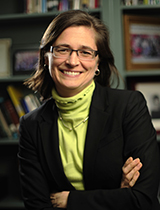
Brooke Ackerly awarded Volkswagen Foundation’s prestigious Transatlantic Bridge Professorship at University of Hamburg
Brooke Ackerly, professor of political science, has received a Volkswagen Foundation Transatlantic Bridge Professorship at the University of Hamburg for the next three years. She is the first Vanderbilt faculty member to receive this award. Read MoreOct 13, 2026
-

A window into the hidden world of immunity inside human bone
A hidden world inside human bone marrow is coming into focus thanks to a breakthrough collaboration between Krishnendu Roy, Bruce and Bridgitt Evans Dean of Engineering and University Distinguished Professor, and Ankur Singh, Carl Ring Family Professor at Georgia Tech. Using a sophisticated bone marrow-on-a-chip system, researchers directly observed the antibody-producing plasma cells that help vaccines provide long-lasting protection. The study revealed that these cells actively seek specialized survival niches rather than remaining stationary. The discovery could reshape understanding of immunity, aging, autoimmune disease, cancer and vaccine durability while opening new avenues for therapeutic research. Read MoreOct 13, 2026
-
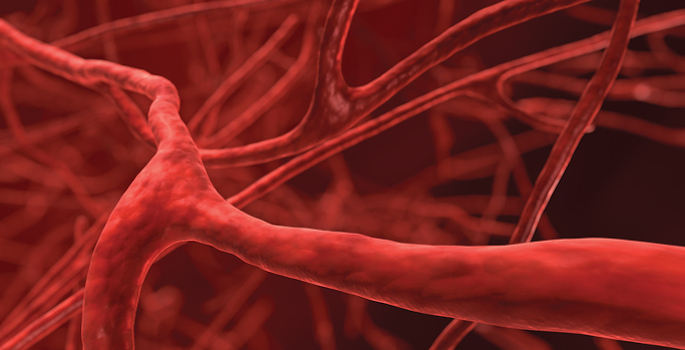
Vanderbilt researchers achieve key step toward engineering resistance vessels
Researchers at Vanderbilt University have discovered how to get human smooth muscle cells to organize themselves into the tiny vascular structures that help regulate blood flow throughout the body. Led by graduate student Victoria Vest and Associate Professor of Mechanical Engineering and Biomedical Engineering Leon Bellan, the team's work could lead to better models of cardiovascular disease, new avenues for drug discovery and perhaps one day even to engineered tissues that could be implanted and work much like the body's own microvascular networks. Read MoreOct 13, 2026
-

Vanderbilt communities in Nashville and NYC break bread and share ideas at The Longest Table
WATCH how The Longest Table events brought the Vanderbilt community together to share healthy discussions across differences. Read MoreOct 8, 2026
-
Limited Submission Opportunity: FY27 Susan G Komen Inflammatory Breast Cancer Research Grant
Vanderbilt University may submit one letter of intent to the Susan G Komen Inflammatory Breast Cancer (IBC) Research Grant: Biological Underpinnings of IBC opportunity. Read MoreOct 8, 2026
-

Chancellor Faculty Fellows Success Stories: Leading transformative research centers
Learn about some breakthrough research centers led by Chancellor Faculty Fellows. Read MoreOct 8, 2026
-

Annual research security training campaign launches Oct. 19
Between Oct. 15 and Nov. 15, 2026, faculty, staff and postdoctoral fellows who are engaged in sponsored research must complete the updated Research Security for VU Faculty and Staff course in CITI Program. Read MoreOct 8, 2026
-

Rafael Arrojo e Drigo wins prestigious 2027 Laureate Award from the international Endocrine Society
Rafael Arrojo e Drigo, an assistant professor of molecular physiology and biophysics, has won a prestigious 2027 Laureate Award from the international Endocrine Society for innovative research that “has transformed our understanding of thyroid hormone biology, diabetes, and the biology of aging.” Read MoreOct 7, 2026
-

Vanderbilt researchers reimagine early autism intervention for Spanish-speaking families
By Jennifer Kiilerich Studies show that autism is now diagnosed more often among Latino children than their white counterparts. Yet few Spanish-speaking, autistic toddlers receive linguistically appropriate communication and language interventions. In general, the Latino population is more likely to miss out on crucial… Read MoreOct 6, 2026
-

New leadership program trains scholars to move special education research into action
How can research guide policymakers in selecting effective models of service delivery in early intervention? How can essential special education knowledge and best practices be integrated into juvenile court systems? And how can we better support the educational and developmental experiences of children and youth in foster care as they… Read MoreOct 5, 2026
-

When dysfunction makes you live longer
Research into an aging paradox reveals details on why certain dysfunctions in mitochondria can lead animals to live longer lives. Read MoreSep 29, 2026
-

New battery chemistry could help lithium-sulfur batteries store more energy
Vanderbilt researcher De-en Jiang and collaborators demonstrate a new way to get more energy from sulfur, a low-cost and abundant battery material. Read MoreSep 29, 2026
-

New AmericasBarometer report finds modest but widespread recovery in support for democracy across the Americas
After more than a decade of erosion, support for democracy has stopped falling and begun a modest but widespread recovery across the Americas. The findings are detailed in the 2026 Pulse of Democracy, released today by Vanderbilt University’s Center for Global Democracy and the Kellogg Institute, part of the University of Notre Dame’s Keough School of Global Affairs. Read MoreSep 29, 2026
-

Listening to the cosmos: Dual federal wins propel Vanderbilt’s lunar science and workforce vision
When humans return to the lunar surface in the coming decade, the tools they carry to listen to the earliest echoes of deep space will bear the distinct imprint of Vanderbilt University research and design. Karan Jani, assistant professor of physics and astronomy and of electrical and computer engineering, and founding director of the Vanderbilt Lunar Labs Initiative, is the principal investigator on two new federal awards that will fuel development of the Laser Interferometer Lunar Antenna, a gravitational-wave observatory program for the moon. Read MoreSep 28, 2026
-

New faculty expand Peabody’s research strength
Vanderbilt Peabody College of education and human development has long been at the forefront of human-centered innovations. The college continues that legacy with three faculty appointments for the 2026-27 academic year. Through their notable research, Conrad Borchers, Ryan Louie and Cynthia Rayner are tackling pressing issues… Read MoreSep 21, 2026
-

At Vanderbilt, Marisa Flores helps young people make summer their own
By Jennifer Kiilerich Marisa Flores on Peabody’s campus. It was almost midnight when Marisa Flores, MEd’17, collected the final scholar from the Nashville airport. Flight delays and thunderstorms did not dampen her enthusiasm; she had spent months preparing for the rising high school seniors who were finally settling into Vanderbilt… Read MoreSep 17, 2026
-

AI is shaping kids. What if kids could shape AI, too?
By Jennifer Kiilerich Vanderbilt University’s Golnaz Arastoopour Irgens, assistant professor of human-centered learning technologies at Peabody College of education and human development, partnered with Sarah K. Burriss (PhD’23, Peabody’s Department of Teaching and Learning), assistant professor of the practice at the College of Connected Computing, to rethink… Read MoreSep 16, 2026
-

Vanderbilt leaders and researchers help roll out latest international measure of student achievement
Peabody Dean Camilla Benbow moderated the PISA U.S. results webinar on September 8. Click to watch the webinar. New results of a prominent international assessment of student learning were released on September 8 with Vanderbilt University leaders and faculty experts assisting in their rollout. Vanderbilt teamed with the Organization… Read MoreSep 15, 2026
-

NEW FACULTY: Professors explain what excites them about their transformative research
Get to know some of our newest faculty as they explain what excites them about their transformative work and the positive impact it can have on society. Read MoreSep 14, 2026