Research
-

People at high genetic risk for colorectal cancer benefit more from lifestyle changes
People with a high polygenic risk score for colorectal cancer could benefit more at preventing the disease by leading healthy lifestyles than those at lower genetic risk, according to a study by Vanderbilt researchers published in the April issue of The American Journal of Clinical Nutrition. Read MoreMay 13, 2021
-
Work named 2021 Chancellor Faculty Fellow
Daniel Work, associate professor of civil and environmental engineering, has been named a Chancellor Faculty Fellow. He is one of nine highly accomplished, recently tenured faculty in the 2021 Chancellor Faculty Fellow cohort, which will meet as a group during their two-year fellowships to exchange ideas on teaching and research and engage in academic leadership... Read MoreMay 12, 2021
-
Work named 2021 Chancellor Faculty Fellow
Daniel Work, associate professor of civil and environmental engineering, has been named a Chancellor Faculty Fellow. He is one of nine highly accomplished, recently tenured faculty in the 2021 Chancellor Faculty Fellow cohort, which will meet as a group during their two-year fellowships to exchange ideas on teaching and research and engage in academic leadership... Read MoreMay 12, 2021
-
Work named 2021 Chancellor Faculty Fellow
Daniel Work, associate professor of civil and environmental engineering, has been named a Chancellor Faculty Fellow. He is one of nine highly accomplished, recently tenured faculty in the 2021 Chancellor Faculty Fellow cohort, which will meet as a group during their two-year fellowships to exchange ideas on teaching and research and engage in academic leadership... Read MoreMay 12, 2021
-

Vanderbilt Divinity School to host screening of ‘Far East Deep South’
Vanderbilt Divinity School will host the third part of a series exploring the realities of the Asian and Asian American diaspora on May 12 the with a 6 p.m. CT film screening and talkback about the documentary film "Far East Deep South." Read MoreMay 12, 2021
-

Personalized Structural Biology aids cancer treatment decisions
Cancer specialists at Vanderbilt University Medical Center, in partnership with biochemists and structural biologists across the Vanderbilt University campus, are taking “personalized” cancer therapy to a new level. Read MoreMay 8, 2021
-
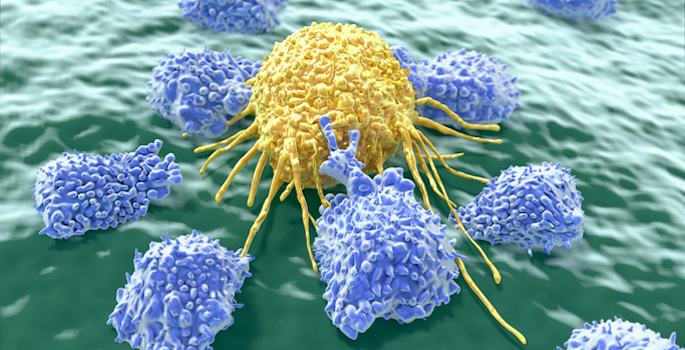
Study revises understanding of cancer metabolism
Tumors consume glucose at high rates, but a team of Vanderbilt researchers has discovered that cancer cells themselves are not the culprit, upending models of cancer metabolism that have been developed and refined over the last 100 years. Read MoreMay 8, 2021
-
Soldier-Inspired Innovation Incubator team advances to finals for $500,000 xTechBOLT prize
By Jenna Somers During battle, many soldiers who become wounded find themselves at the mercy of another soldier’s medical training, hoping beyond hope that the soldier administering aid will remember their training well enough to save the wounded soldier’s life. Under such duress, recalling the details of medical training could be difficult, and the failure... Read MoreMay 7, 2021
-
Soldier-Inspired Innovation Incubator team advances to finals for $500,000 xTechBOLT prize
By Jenna Somers During battle, many soldiers who become wounded find themselves at the mercy of another soldier’s medical training, hoping beyond hope that the soldier administering aid will remember their training well enough to save the wounded soldier’s life. Under such duress, recalling the details of medical training could be difficult, and the failure... Read MoreMay 7, 2021
-

VUMC to lead national study to treat severe COVID complications
The Vanderbilt Institute for Clinical and Translational Research (VICTR) has been awarded a major federal grant to lead a national trial of treatments targeting the Renin Angiotensin Aldosterone System (RAAS) in patients hospitalized with COVID-19. Read MoreMay 6, 2021
-

Study finds that regulatory protein prevents signaling that triggers cell death
A protein implicated in neurodegenerative diseases including amyotrophic lateral sclerosis prevents the activation of an innate immune response that leads to cell death, Vanderbilt researchers have discovered. Read MoreMay 6, 2021
-
Vanderbilt graduate researcher awarded prestigious $161,000 U.S. Department of Energy grant
Irfan Ibrahim The U.S. Department of Energy’s Office of Nuclear Energy has awarded an Integrated University Program fellowship grant of $161,000 to environmental engineering graduate research assistant Irfan Ibrahim to further his work on nuclear reactor safety. The office’s awards provide 50 scholarships and 31 fellowships for nuclear scientists and engineers at 35 colleges and... Read MoreMay 5, 2021
-
Vanderbilt graduate researcher awarded prestigious $161,000 U.S. Department of Energy grant
Irfan Ibrahim The U.S. Department of Energy’s Office of Nuclear Energy has awarded an Integrated University Program fellowship grant of $161,000 to environmental engineering graduate research assistant Irfan Ibrahim to further his work on nuclear reactor safety. The office’s awards provide 50 scholarships and 31 fellowships for nuclear scientists and engineers at 35 colleges and... Read MoreMay 5, 2021
-

New strategy to treat brain bleeding
Vasorelaxing peptides could offer a promising therapeutic strategy for reducing the neurological deficits caused by subarachnoid hemorrhage-induced cerebral blood vessel constriction. Read MoreMay 4, 2021
-

Strength in numbers
Voluntary data sharing across a region’s health systems and ambulatory care practices is important for measuring and improving health care quality and safety, Vanderbilt researchers report. Read MoreMay 3, 2021
-

Inside the Data Science Institute: Women’s Rights Research
Holly McCammon, Cornelius Vanderbilt Chair and professor of law and sociology, shares how a partnership with the Data Science Institute shaped her research on court cases that consider women and the law. Read MoreApr 23, 2021
-
Engineers’ groundbreaking discovery points to a new route to create thermal superconductors
The relentless increase in heat loads imposed on devices in modern technologies is driving renewed interest among engineers and materials scientists in the area of heat transfer. A key challenge is finding approaches to enhance the materials’ capability of conducting heat. A team of engineers led by Vanderbilt mechanical engineering Professor Deyu Li and his... Read MoreApr 16, 2021
-
Engineers’ groundbreaking discovery points to a new route to create thermal superconductors
The relentless increase in heat loads imposed on devices in modern technologies is driving renewed interest among engineers and materials scientists in the area of heat transfer. A key challenge is finding approaches to enhance the materials’ capability of conducting heat. A team of engineers led by Vanderbilt mechanical engineering Professor Deyu Li and his... Read MoreApr 16, 2021
-
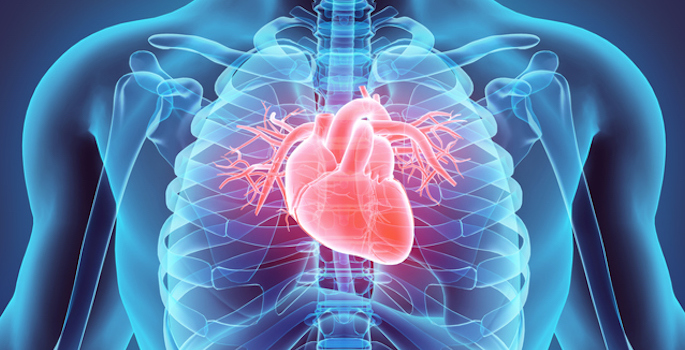
Arrhythmia culprit: supertrafficking ion channel
Charles Sanders, PhD, and colleagues show how a “supertrafficking” mutant potassium channel contributes to heart rhythm abnormalities. Read MoreApr 15, 2021
-

New research framework proposes equitable approach to preventing gun violence
A more comprehensive, equitable approach to researching gun violence can lead to better policy solutions. Read MoreApr 15, 2021