Research
-

Schizophrenia ‘switches’ discovered
Drugs developed at Vanderbilt could provide a new way to treat schizophrenia in a personalized way. Read MoreSep 12, 2014
-

Bone healing therapy for NF1 fractures
A combination treatment delivered to the site of fractures may improve bone healing in patients with the genetic disease neurofibromatosis type-1. Read MoreSep 11, 2014
-

Scientific risk assessments may result in more equitable sentences
Vanderbilt law professor Chris Slobogin says recent criticism of using scientific risk assessments during sentencing is misguided. Read MoreSep 11, 2014
-

Engelhardt lands stem cell transplant research grant
Up to 60 percent of patients who receive a stem cell transplant using cells from another donor will develop post-transplant diabetes mellitus, which can increase the rate of complications and death after the procedure. Read MoreSep 11, 2014
-

Study tracks new way to fight HIV infection in women
Vanderbilt University’s Richard Caprioli, Ph.D., is participating in a national, federally funded collaboration to develop an intravaginal ring capable of delivering antiretroviral drugs to women at risk for HIV infection. Read MoreSep 11, 2014
-

Skin cancer risks higher for soldiers serving abroad
Soldiers deployed to tropical and sunny climates are coming home with increased risk factors for a threat far from the battlefield: skin cancer. Read MoreSep 11, 2014
-

Mosquito facts and fictions
Mosquito researcher Jason Pitts collects interesting facts and stories about his research subjects, nature’s ultimate bioterrorists. Read MoreSep 9, 2014
-

Landmark book ‘Law and Neuroscience’ released
The new book 'Law and Neuroscience' is the definitive reference book on the use of neuroscientific evidence in courtrooms. Read MoreSep 5, 2014
-

When offering someone a job hurts more than it helps
Unsolicited job leads are welcome to the unemployed, but surprisingly stressful for those with jobs. Read MoreSep 5, 2014
-

VU study creates new road map for cellular activity
Human cells are constructed in large part from proteins whose activity can be altered by the incorporation of oxygen in what are known as redox modifications. Read MoreSep 4, 2014
-

Foundation grants bolster autism, dystonia research
Vanderbilt University researchers have received multi-year grants from two private foundations to investigate key signaling proteins that could lead to novel treatments for autism spectrum disorder (ASD) and dystonia, a movement disorder. Read MoreSep 4, 2014
-

Lung cancer study reveals new drug combination targets
A Vanderbilt lung cancer patient’s exceptional response to different types of therapies spurred research that suggests lung cancer patients with specific gene alterations may benefit from combination therapy that targets two different cancer pathways. Read MoreSep 4, 2014
-
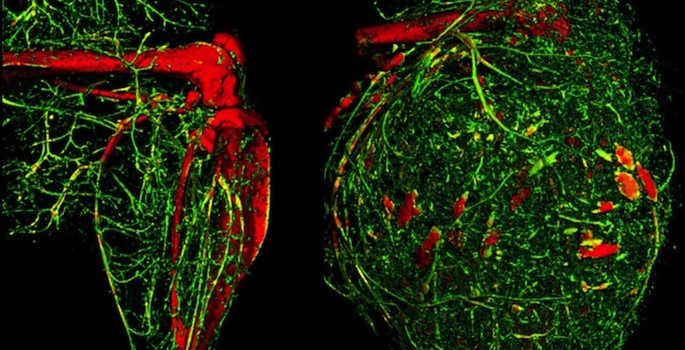
Aggressive bone cancers build more blood vessels
A subpopulation of bone cancer cells may be responsible for driving clinically aggressive behavior, suggesting new treatment options. Read MoreSep 3, 2014
-

Protein interaction protects against neurodegeneration
Two proteins interact to maintain selenium levels in the brain, and protect neurons from degeneration. Read MoreSep 2, 2014
-

Are college football coaches overpaid?
Two Vanderbilt professors compared salaries and contracts of more than 950 college football coaches to top CEOs. The research found that college football coaches are not overpaid. Read MoreSep 2, 2014
-

Skin biopsy to diagnose depression?
It may be possible to use skin cells as biomarkers to diagnose and manage depression. Read MoreAug 29, 2014
-

Limiting breast cancer metastasis
Vanderbilt researchers have identified a new target for blocking breast cancer metastasis. Read MoreAug 28, 2014
-

VU receives grant renewal from Autism Speaks
Autism Speaks is renewing Vanderbilt University as an Autism Treatment Network (ATN) site with a three-year, $420,000 grant. Read MoreAug 28, 2014
-

Ascano seeks to shed light on cellular stress response
Ebola. Chikungunya. Influenza. What’s to be done about these headline-grabbing, debilitating, often lethal viruses? Read MoreAug 28, 2014
-

Fighting bureaucracy by improving it
Everybody hates being caught up in bureaucracy. Ed Rubin at Vanderbilt Law School says things could work a lot better. Read MoreAug 26, 2014