Bill Snyder
-

Medication safety in the ICU
Facilitated reporting of medication-related events in the intensive care unit can provide opportunities for optimizing quality of care and patient safety. Read MoreSep 19, 2017
-
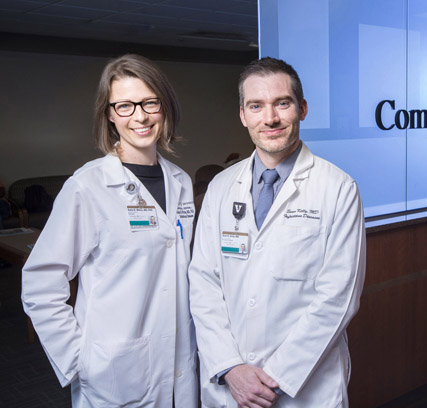
Combination therapy PrEP offers effective way to prevent HIV infection
Rates of new HIV infections in the United States are declining — except among men who have sex with men. Rates are particularly high among African-American and Hispanic men and especially in the South. Read MoreSep 7, 2017
-
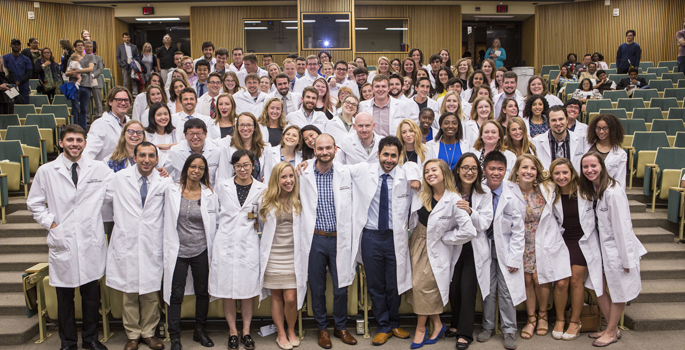
Journey of discovery starts from Simple Beginnings
Vanderbilt University welcomed 104 new doctoral students Sept. 1 during the eighth annual Simple Beginnings ceremony in a Light Hall lecture room filled with family members and other well-wishers. Read MoreSep 7, 2017
-

Program for scientists to move discoveries into clinical practice
Vanderbilt University Medical Center (VUMC) has established a new career development program for scientists in implementation research. The goal is to speed the uptake and translation of scientific discoveries into routine clinical practice. Read MoreAug 31, 2017
-

Epigenetics expert Allis set for Sept. 7 Discovery Lecture
Internationally known epigeneticist C. David Allis, Ph.D., will deliver the first Flexner Discovery Lecture of the academic year at 4 p.m. Thursday, Sept. 7, in room 208 Light Hall. Read MoreAug 31, 2017
-

Drug discovery efforts may lead to new Rett syndrome treatments
Vanderbilt University research-ers have relieved symptoms of Rett syndrome in a mouse model with a small molecule that works like the dimmer switch in an electrical circuit. Read MoreAug 24, 2017
-

Wilkins named to national committee exploring return of research results
Consuelo Wilkins, M.D., MSCI, executive director of the Meharry-Vanderbilt Alliance, has been appointed to a national committee charged with determining how best to return to research participants the results of studies of their blood and other bio-specimens. Read MoreAug 17, 2017
-
Breast Cancer Genomic Profiling Reveals Clues to Treatment Resistance
Thanks to advances in treatment, the relative five-year survival rate from all combined subtypes of breast cancer now exceeds 90 percent and yet the disease remains the third leading cause of cancer deaths in the United States after lung and colorectal cancers. Read MoreAug 9, 2017
-

Stress may switch on bone “mets”
New findings could explain the link between chronic stress and reduced survival in women diagnosed with breast cancer, and could lead to new strategies to improve treatment outcomes. Read MoreAug 9, 2017
-

Researchers study unique couples intervention in Mozambique to reduce HIV transmission
Researchers in the Vanderbilt Institute for Global Health are testing whether a unique “couples-centered” intervention developed in the southern African nation of Mozambique can reduce mother-to-child transmission of HIV. Read MoreAug 3, 2017
-

Investigators use light to kill microbial ‘vampires’
On July 24 Vanderbilt scientist Eric Skaar, Ph.D., MPH, summarized his group’s latest paper in a tweet: “If S. aureus is going to drink our blood like a vampire, let's kill it with sunlight.” Read MoreJul 27, 2017
-

Doris Duke Foundation lauds Van Driest’s research
Sara Van Driest, M.D., Ph.D., who is developing methods for precision dosing of pediatric medications at Vanderbilt University Medical Center (VUMC), has received a 2017 Clinical Scientist Development Award from the Doris Duke Charitable Foundation. Read MoreJul 27, 2017
-
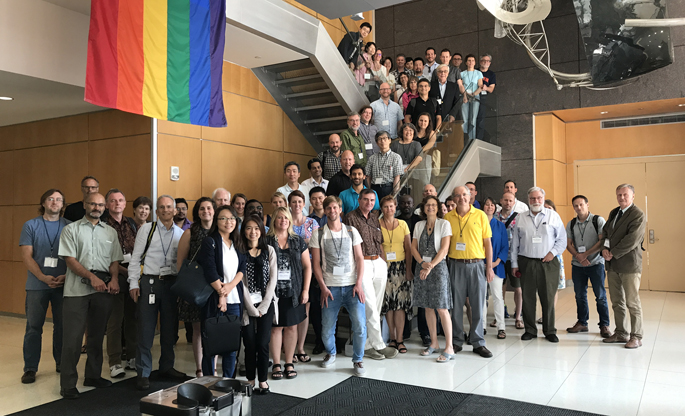
Workshop draws basement membrane experts from across globe
A workshop on the basement membrane hosted earlier this month by Vanderbilt University Medical Center attracted 75 top scientists from around the world and broke new ground in understanding molecules that make up this key biological structure. Read MoreJul 27, 2017
-
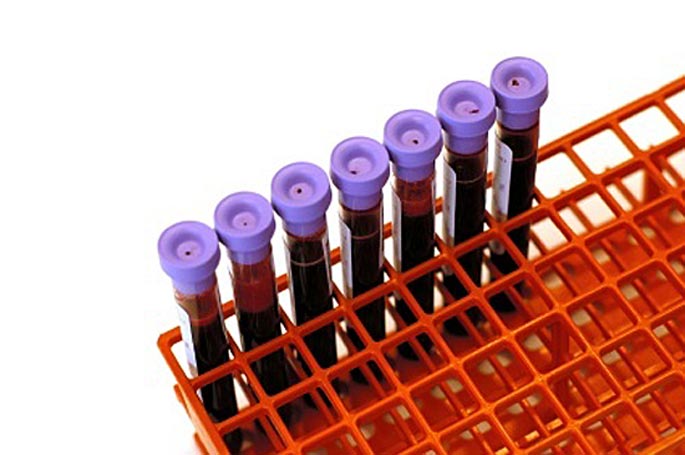
How Epo action is ‘enhanced’
The hormone erythropoietin (Epo) controls red blood cell production and synthetic forms of Epo treat multiple disorders. New Vanderbilt research details how Epo works. Read MoreJul 24, 2017
-
Study identifies protein’s role in chemotherapy resistance
Researchers at Vanderbilt University Medical Center (VUMC) have discovered a protein that may lead to a new way to prevent resistance and improve outcomes for patients whose cancers have mutations in the tumor suppressor gene BRCA2. Read MoreJul 20, 2017
-
Immune responses linked to cell’s recycling system
Autophagy is the cellular equivalent of trash pickup and recycling — it is a process by which proteins, protein aggregates and damaged cellular organelles are degraded in order to reuse nutrients and promote cellular metabolism. Read MoreJul 20, 2017
-
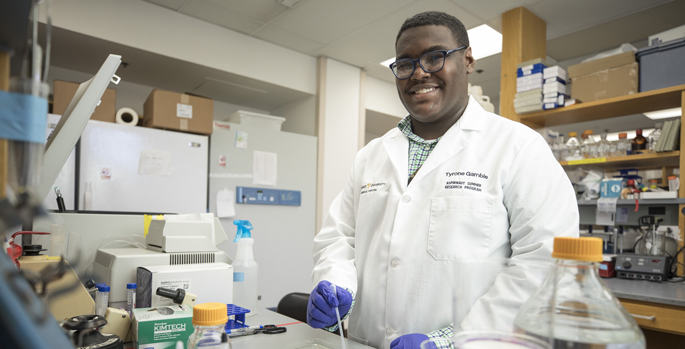
Aspirnaut program helps launch students into science
Now in its ninth year, a unique summer research program at Vanderbilt University Medical Center (VUMC) designed primarily for rural students with limited resources is proving that talent has no zip code. Read MoreJul 20, 2017
-
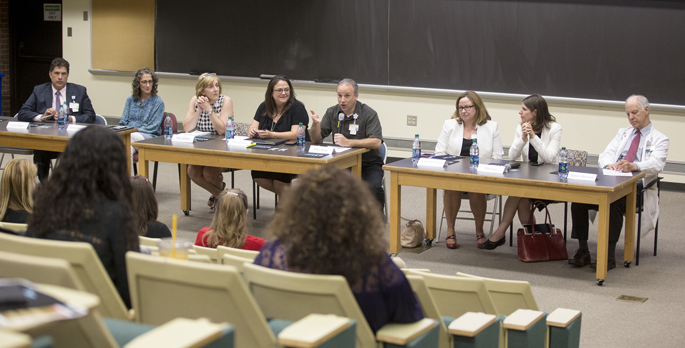
eSmart portal set to bolster clinical research enterprise
About 250 research staff members attended an EpicLeap for Research Town Hall on Monday to learn what they must do to prepare for the Nov. 2 launch of eStar, Vanderbilt University Medical Center’s version of the Epic clinical, administrative and billing software system. Read MoreJul 20, 2017
-
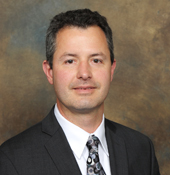
Lindsell named to key VICTR, IMPH and Biostatistics leadership roles
Christopher Lindsell, Ph.D., nationally known for building clinical, translational and emergency medicine research programs at the University of Cincinnati, has been named director of the Research Methods Program in the Vanderbilt Institute of Clinical and Translational Research (VICTR). Read MoreJul 13, 2017
-

New institute to focus on immune system
Vanderbilt University Medical Center (VUMC) is launching a new institute to coordinate initiatives among the rapidly evolving disciplines of infection biology, immunology and inflammatory diseases. Read MoreJun 29, 2017