NSF
-

Restoring surgeons’ sense of touch during minimally invasive surgeries
A team of engineers and doctors have developed a new wireless capsule that can give surgeons back their sense of touch when performing minimally invasive surgery. Read MoreOct 15, 2013
-
NSF grant helps develop next generation of STEM instructors
A national experiment to develop a new generation of college science and engineering faculty, one equipped to excel in the classroom as well as the lab, is about to shift into high gear. The Center for the Integration of Research, Teaching and Learning, of which Vanderbilt University is a member, has received a three-year, $5 million grant from the National Science Foundation. CIRTL is partnering with Vanderbilt’s Center for Teaching to offer The Blended and Online Learning Design Fellows program. Read MoreOct 2, 2013
-
For secure health care data, thwart the attacks of tomorrow – not yesterday
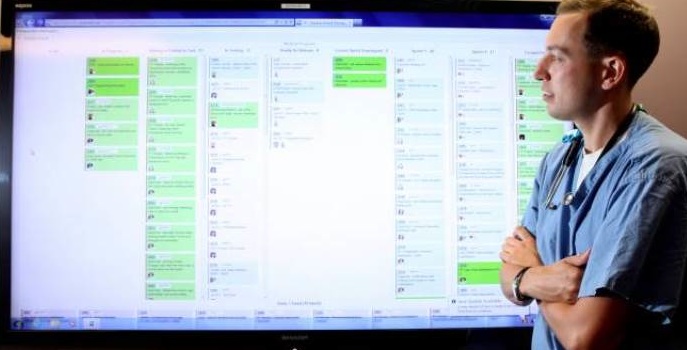
Proactive measures are the best way to stay ahead of computer hackers who threaten the security of digital health care records, says M. Eric Johnson, dean of Vanderbilt’s Owen Graduate School of Management. Read MoreSep 25, 2013
-
Eight engineering students receive NSF graduate fellowships
Meghan Bowler, Erica Curtis, Melanie Gault, Samantha Saratt and Chelsea Stowell, biomedical engineering; Kirsten Heikkinen and Richard Hendrick, mechanical engineering; and Thushara Gunda, civil and environmental engineering, have received graduate research fellowships from the National Science Foundation. Read MoreSep 4, 2013
-

A brighter method for measuring the surface gravity of distant stars
Astronomers have found a clever new way to slice and dice the flickering light from a distant star in a way that reveals the strength of gravity on its surface. Read MoreAug 21, 2013
-
Robot uses steerable needles to treat brain clots
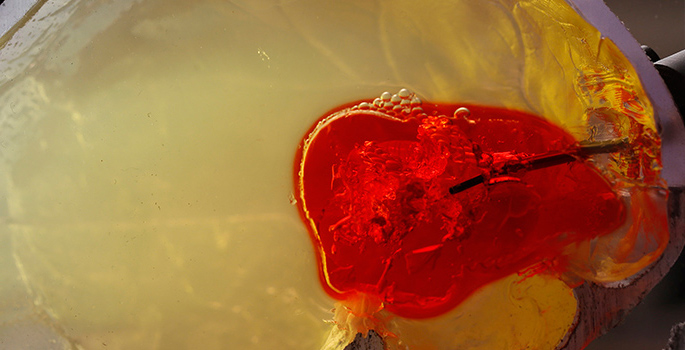
Surgery to relieve the damaging pressure caused by hemorrhaging in the brain is a perfect job for a robot. That is the basic premise of a new image-guided surgical system under development at Vanderbilt University. Read MoreAug 8, 2013
-
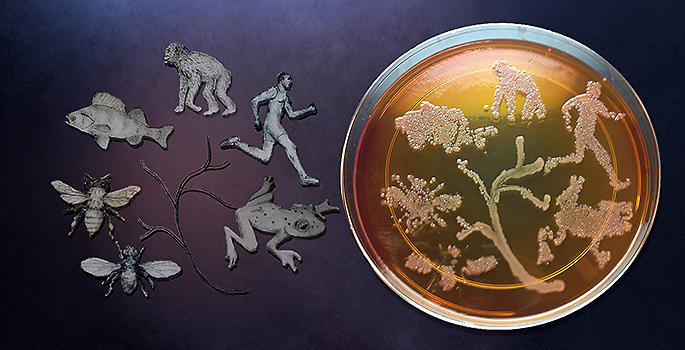
Microbes can influence evolution of their hosts
A new study provides the first direct evidence that microbes can contribute to the origin of new species by reducing the viability of hybrids produced between males and females of different species. Read MoreJul 18, 2013
-

World’s smallest droplets
Scientists at the Large Hadron Collider, the world's most powerful particle accelerator, may have created the smallest drops of liquid made in the lab. Read MoreMay 16, 2013
-

Untangling the tree of life
Vanderbilt phylogeneticists examined the reasons why large-scale tree-of-life studies are producing contradictory results and have proposed a suite of novel techniques to resolve the contradictions. Read MoreMay 15, 2013
-
Weiss participates in NSF advocacy day
As part of Vanderbilt’s ongoing federal advocacy efforts in support of federal funding for research and education at the National Science Foundation, Sharon Weiss, associate professor of electrical engineering and physics, traveled to Washington, D.C., for the Coalition for National Science Funding’s (CNSF) advocacy day and Capitol Hill reception on May 7. Read MoreMay 10, 2013
-
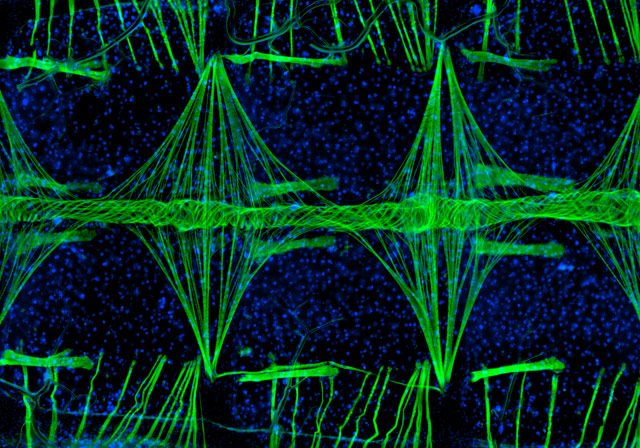
Setting mosquito hearts racing
Vanderbilt researchers have figured out how to set the mosquito's heart racing, helping them understand how the insect's immune system works and the methods that mosquito-borne parasites like those that cause malaria and yellow fever employ to circumvent it. Read MoreApr 23, 2013
-
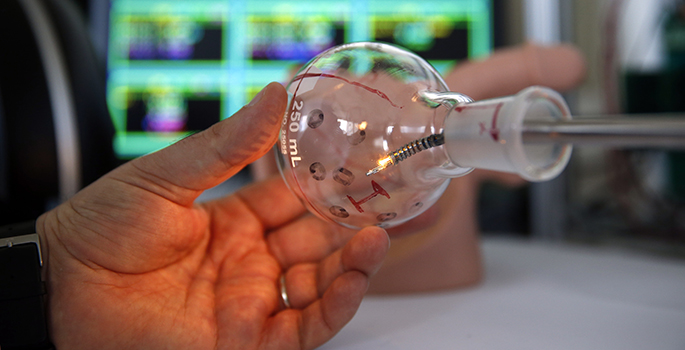
Telerobotic system designed to treat bladder cancer
An interdisciplinary collaboration of engineers and doctors at Vanderbilt and Columbia Universities has designed a robotic microsurgery system specifically designed to treat bladder cancer, the sixth most common form of cancer in the U.S. and the most expensive to treat. Read MoreApr 2, 2013
-
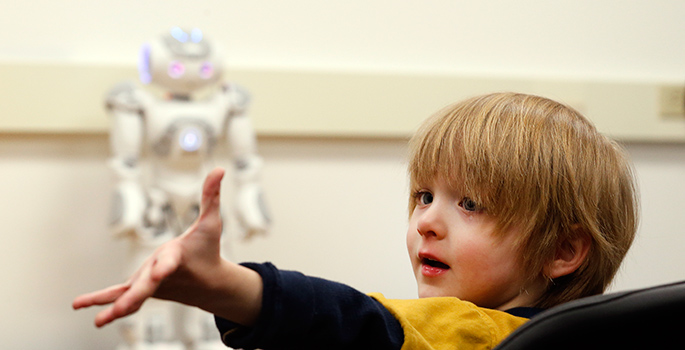
Humanoid robot helps train children with autism
An interdisciplinary team of mechanical engineers and autism experts at Vanderbilt University have developed an adaptive robotic system and used it to demonstrate that humanoid robots can be powerful tools for enhancing the basic social learning skills of children with autism. Read MoreMar 23, 2013
-

CSI: Milky Way
Two astronomers from Vanderbilt and Georgia Tech, sharing a car after a snowstorm canceled their flights home from a conference, put together everything they had learned at the conference during that snowy drive and worked out that a collision between two black holes could explain most of what is known of a violent episode in the Milky Way's past. Read MoreMar 6, 2013
-

‘Snooze button’ on biological clocks improves cell adaptability
(iStock) The circadian clocks that control and influence dozens of basic biological processes have an unexpected “snooze button” that helps cells adapt to changes in their environment. A study by Vanderbilt University researchers published online Feb. 17 by the journal Nature provides compelling new evidence that at least some species… Read MoreFeb 17, 2013
-
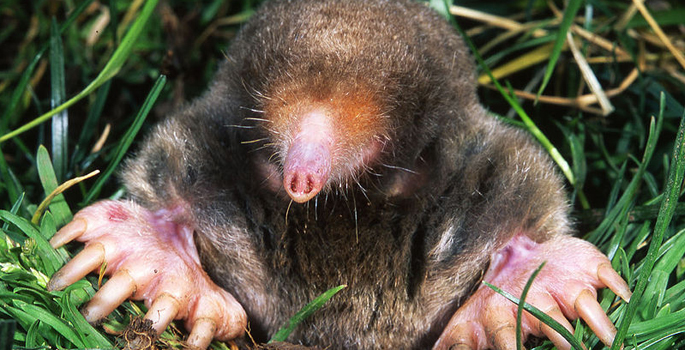
Evidence moles can smell in stereo
Neuroscientist Kenneth Catania has resolved a long-standing scientific debate by showing that the common mole can smell in stereo. Read MoreFeb 5, 2013
-
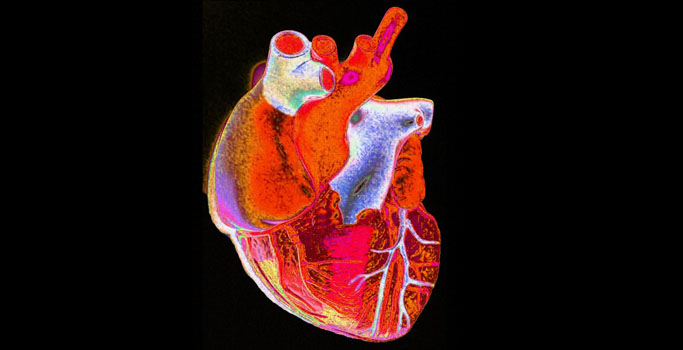
Preventing hardened heart valves
Blocking a serotonin receptor may provide a novel therapy for heart valve disease. Read MoreDec 26, 2012
-
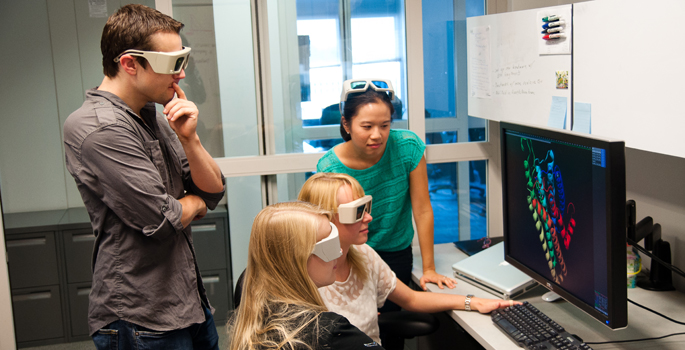
The Leipzig Connection
In the last five years a grassroots faculty collaboration with the University of Leipzig has flowered, making the historic German university one of Vanderbilt's half dozen strategic international partners. Read MoreDec 14, 2012
-
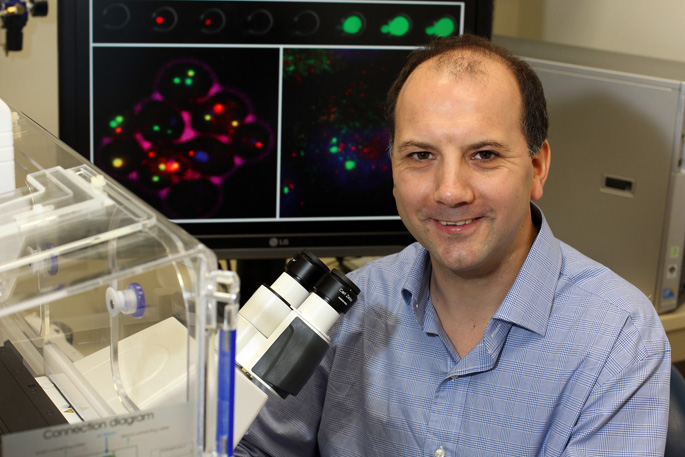
VU recruit’s work lights up genetic ‘dark matter’
They’ve been called “junk DNA” and genetic “dark matter” — the long segments of the human genome (98 percent of it) that do not encode protein. Read MoreOct 11, 2012
-
Engineer, astronomer and geologist receive NSF Faculty Early Career Development awards
An electrical engineer who is attempting to make wireless communications more reliable, an astronomer who studies the evolution of the cosmos by creating large numbers of virtual universes and a geologist who is studying the origins of super-eruptions have received the National Science Foundation’s Faculty Early Career Development awards. Read MoreAug 9, 2012