NSF
-

NSF grant supports alliance’s effort to boost AI-imaging in Middle Tennessee
Vanderbilt researchers are part of an alliance supported by the National Science Foundation that seeks to build on the use of artificial intelligence in medical imaging in Middle Tennessee. Read MoreAug 8, 2023
-

Service providers charged with keeping kids safe are cautious but see value in AI tool to track risky behavior online
As part of the National Science Foundation I-Corps program, a team of researchers led by Pamela J. Wisniewski conducted interviews with 37 social service providers across the U.S. who work with underprivileged youth to determine what online risks most concern them and if they see value in using AI as a solution for automated online risk detection. Read MoreJun 7, 2023
-

Wikswo, VIIBRE team on track to build third-generation ‘self-driving lab’ with $1M from NSF
John Wikswo, founder and director of the Vanderbilt Institute for Integrative Biosystems Research and Education and Gordon A. Cain University Professor, is the principal investigator of a $1 million award from the National Science Foundation. The object is to build a pathbreaking “robot scientist”—a fully automated microfluidic system for parallel, independent, long-duration, machine-guided experiments. The... Read MoreMar 5, 2022
-
Wikswo, VIIBRE team on track to build third-generation ‘self-driving lab’ with $1M from NSF
John Wikswo, founder and director of the Vanderbilt Institute for Integrative Biosystems Research and Education and Gordon A. Cain University Professor, is the principal investigator of a $1 million award from the National Science Foundation. The object is to build a pathbreaking “robot scientist”—a fully automated microfluidic system for parallel, independent, long-duration, machine-guided experiments. The... Read MoreMar 5, 2022
-
International research collaboration reveals new possibilities in nanophotonics
Joshua Caldwell, Flowers Family Chancellor’s Faculty Fellow in Engineering and associate professor of mechanical engineering, and Joseph Matson, a graduate student in Caldwell’s lab, have contributed to an international study that has discovered a new type of light-matter coupling. The work has long-term implications for how optical components can be even further miniaturized, a discovery... Read MoreMar 3, 2022
-
Vanderbilt and University of Tennessee-Knoxville win NSF Sustainable Regional Systems Research Network grant
Jonathan Gilligan, associate professor of Earth and environmental sciences, and Janey Camp, research associate professor of civil and environmental engineering, have won a Sustainable Regional Systems Research Network grant from the National Science Foundation. Jonathan M. Gilligan (Vanderbilt University) Janey Camp (Vanderbilt University) With a grant of nearly $150,000, they and researchers from the University... Read MoreSep 30, 2021
-
Vanderbilt-led team selected by NSF Convergence Accelerator to continue developing predictive technology against biothreats
Professor Janos Sztipanovits’ “Computing the Biome” convergent research team has been awarded a $5 million cooperative agreement to advance to phase 2 of the National Science Foundation’s 2020 Convergence Accelerator program. His team is developing technology to detect biological threats and predict disease outbreaks in major U.S. cities. Janos Sztipanovits (Daniel Dubois) “The Computing the... Read MoreSep 23, 2021
-
NSF virtual expo this week highlights 3 major projects led by VUSE faculty
Three ambitious, multidisciplinary projects led by Vanderbilt School of Engineering faculty will be featured Wednesday and Thursday, July 28 and 29, during the NSF Convergence Accelerator Expo 2021. The two-day virtual event will present 15-minute demonstrations of novel solutions that address big-scale societal challenges. The NSF-funded projects integrate disciplines and include industry partners from their... Read MoreJul 26, 2021
-
Vanderbilt graduate students address legislators to advocate for NSF funding
Two graduate students from Vanderbilt’s School of Engineering and one from the School of Medicine Basic Sciences recently addressed legislators in Washington, D.C., virtually, sharing stories about the important role funding from the National Science Foundation has played in their research and training. Read MoreJun 30, 2021
-
Vanderbilt graduate students address legislators to advocate for NSF funding
By Collier Roberts Members of the Vanderbilt community meet with a staff member from the Office of Rep. Steve Cohen (D-TN09). (Office of Federal Relations) Two graduate students from Vanderbilt’s School of Engineering and one from the School of Medicine recently addressed legislators in Washington, D.C., virtually, sharing stories about the important role funding from... Read MoreJun 30, 2021
-
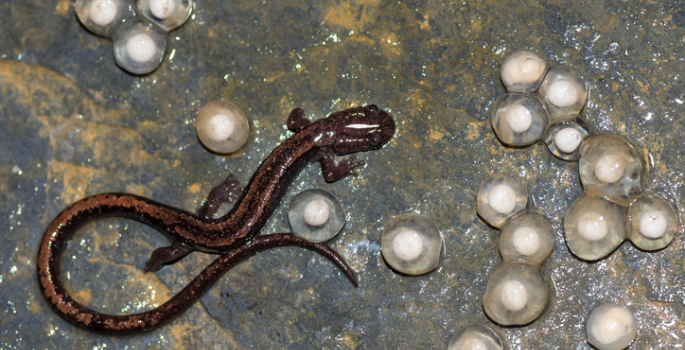
Temperature, newts, and a skin-eating fungus
The emergence of pathogenic skin fungi that cause the disease chytridiomycosis is contributing to the global loss of amphibian populations. Read MoreMar 8, 2021
-
Optical computing at sub-picosecond speeds developed at Vanderbilt
Vanderbilt researchers have developed the next generation of ultrafast data transmission that may make it possible to make already high-performance computing “on demand.” The technology unjams bottlenecks in data streams using a hybrid silicon-vanadium dioxide waveguide that can turn light on and off in less than one trillionth of a second. The article, “Sub‐Picosecond Response... Read MoreJan 19, 2021
-
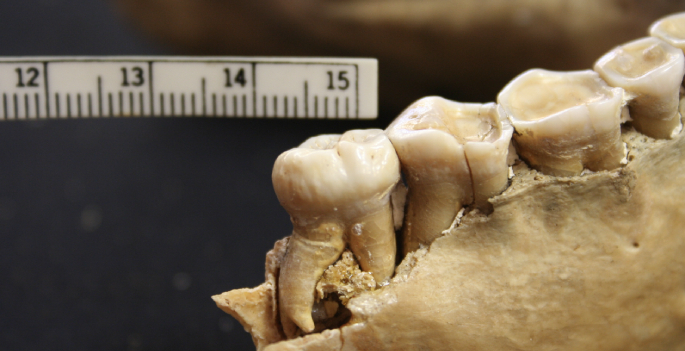
Analysis of ancient teeth reveal clues about how sociopolitical systems grow
Isotope analysis of ancient Peruvian teeth gives anthropologists a clearer image of how cooperating societies function. Read MoreDec 15, 2020
-
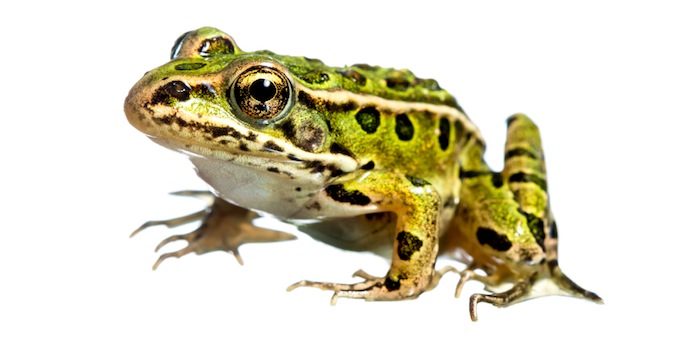
Frog peptides as anti-HIV microbicides
Peptides derived from the antimicrobial peptides secreted by frogs could function as microbicides to limit HIV transmission, while sparing protective vaginal bacteria. Read MoreNov 2, 2020
-

Depression and the brain-age gap
Older depressed adults show accelerated brain aging, according to a new study from Vanderbilt researchers, who suggest that the effects of depression may speed the decline in cognitive functions in older individuals. Read MoreOct 19, 2020
-
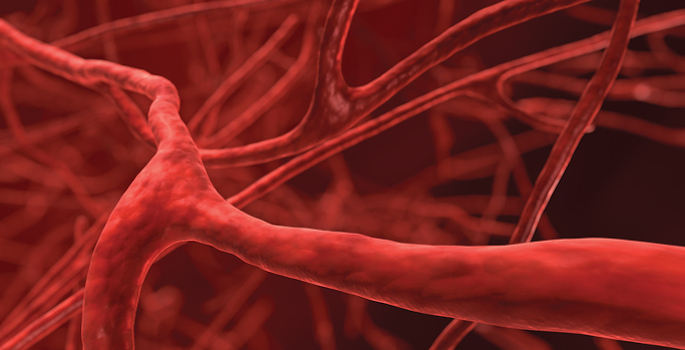
NSF seed grant supports biomanufacturing of new drug delivery technologies
Vanderbilt researchers awarded one of NSF’s 24 new projects to drive future manufacturing One of the challenges of drug delivery systems is to optimize their targeting properties so therapeutic compounds used in smaller amounts reach only a specific area of the body and result in little or no side effects. The ability to engineer the... Read MoreOct 2, 2020
-

Software suite expedites reproducible computer simulations
Science moves forward when researchers verify their and others' results. Read MoreJul 8, 2020
-

How to fake a medical record in order to mitigate privacy risks
In machine learning, generative adversarial networks (GANs) involve two artificial neural networks squaring off, one, the generator, trying to delude the other, the discriminator, into accepting synthetic data as real. Beyond their science and engineering applications, GANs can generate utterly convincing “photographs” of people who do not exist. Unrestricted use on a wide scale of... Read MoreNov 4, 2019
-

How to fake a medical record
Simulated electronic health records could avoid patient privacy risks and help speed discovery. Read MoreNov 4, 2019
-

Microscopic spines connect worm neurons
Worm neurons have microscopic “spines” — where nerve-to-nerve communication happens — that share features with mammalian neurons, supporting the use of worms to study spine genetics and biology. Read MoreOct 17, 2019