National Science Foundation
-

Soheil Kolouri receives NSF CAREER Award to enhance machine learning
Soheil Kolouri, assistant professor of computer science at Vanderbilt University, has received a National Science Foundation CAREER Award to explore ways to make machine learning more efficient and possibly impact the next generation of such methods. Despite the success of machine learning, scientists say many foundational questions and theoretical aspects remain poorly understood, posing unwanted... Read MoreJan 8, 2024
-
From Scaling Success to NSF: Vanderbilt, Fisk create winning formula in multi-messenger astronomy
The Fisk-Vanderbilt Master’s-to-Ph.D. Bridge Program, emphasizing multi-messenger astronomy, utilized strategic funding from a Scaling Success Internal Award to secure a $1.7 million NSF grant. This collaborative journey, focusing on inclusive STEM education and innovative training approaches, highlights the power of adaptability and vision in research endeavors. Read MoreOct 12, 2023
-
Computer science professor’s internal seeding grant leads to National Science Foundation recognition
Vanderbilt University’s dedication to encouraging unique and groundbreaking research through internal grants has helped David Hyde, assistant professor of computer science, receive funding from the National Science Foundation. His research has progressed thanks to a Seeding Success Grant, an internal funding award managed by Research Development and Support in the Office of the Vice Provost... Read MoreAug 18, 2023
-

Success Story: From Vanderbilt’s Seeding Success Grant to National Science Foundation recognition
The Seeding Success Grant at Vanderbilt University has helped propel ADVISER, an innovative software platform created by David Hyde, assistant professor of computer science, to earning National Science Foundation funding. ADVISER is designed to democratize access to high-end cloud computing, and the new NSF grant applies it to climate change research. Read MoreAug 15, 2023
-

NSF grant supports alliance’s effort to boost AI-imaging in Middle Tennessee
Vanderbilt researchers are part of an alliance supported by the National Science Foundation that seeks to build on the use of artificial intelligence in medical imaging in Middle Tennessee. Read MoreAug 8, 2023
-
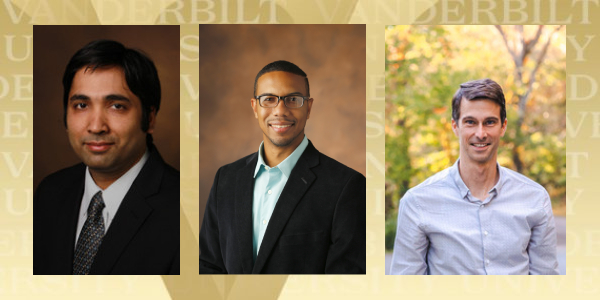
Three Vanderbilt Engineering School faculty win National Science Foundation CAREER Awards
Vanderbilt professors Abhishek Dubey, Jonathan Brunger, and Carlos Silvera Batista have won National Science Foundation CAREER Awards. The prestigious five-year award honors early career faculty who have the potential to serve as role models in research and education and lead advances in their fields. Read MoreFeb 23, 2023
-
Vanderbilt engineer receives NSF award to develop neural analysis methodology
Mikail Rubinov, assistant professor of biomedical engineering, has been awarded $600,000 from the National Science Foundation to develop new computational methods for analysis of large-scale brain activity data. The three-year project is funded by the NSF Collaborative Research in Computational Neuroscience (CRCNS). It was awarded alongside a companion project from the U.S.-Israel Binational Science Foundation... Read MoreJan 18, 2023
-

Vanderbilt researcher receives nearly $2.7 million in NSF and NIH funding to explore how augmented reality can ease loneliness in older adults
Vanderbilt researcher Nilanjan Sarkar is partnering with Lorraine Mion of the Ohio State University and two Middle Tennessee long-term care facilities to investigate how augmented reality technologies can ease loneliness among residents. Read MoreSep 13, 2022
-

Vanderbilt University, Medical Center reach $1B milestone together in research funding
Faculty at Vanderbilt University and Vanderbilt University Medical Center achieved a significant milestone in 2021: more than $1 billion in research funding awarded from external organizations. Read MoreApr 5, 2022
-

Research Snapshot: Vanderbilt engineer the first to introduce low-power dynamic manipulation of single nanoscale quantum objects
Assistant Professor of electrical engineering Justus Ndukaife is powering the quantum computing revolution with the development of the first on-demand, scalable technique to manipulate nanoscale nanodiamonds. Est. reading time: 2 mins. Read MoreJul 30, 2021
-
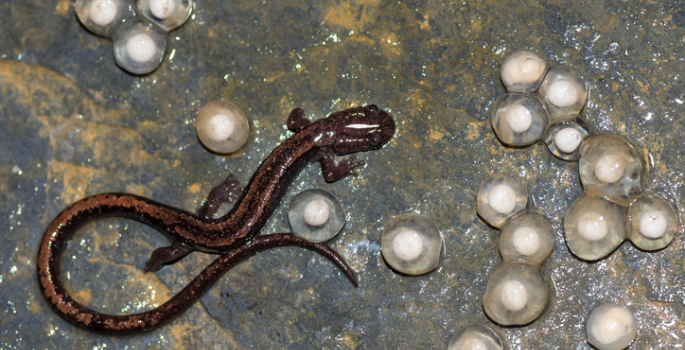
Temperature, newts, and a skin-eating fungus
The emergence of pathogenic skin fungi that cause the disease chytridiomycosis is contributing to the global loss of amphibian populations. Read MoreMar 8, 2021
-
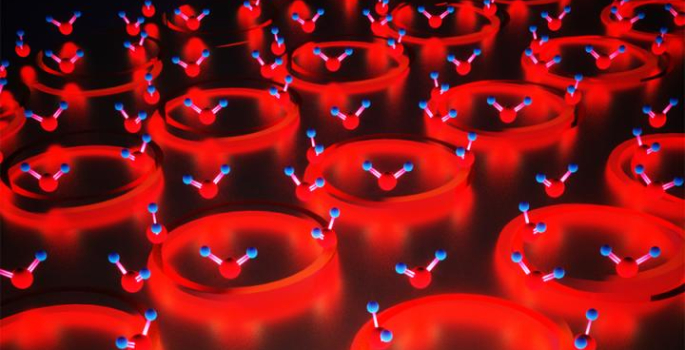
Researchers develop unique process for producing light-matter mixture
Discovery provides insight for developing next generation optoelectronic and infrared devices In groundbreaking new research, an international team that includes a Vanderbilt engineer has developed a unique process for producing a quantum state that is part light and part matter. Read MoreDec 7, 2020
-
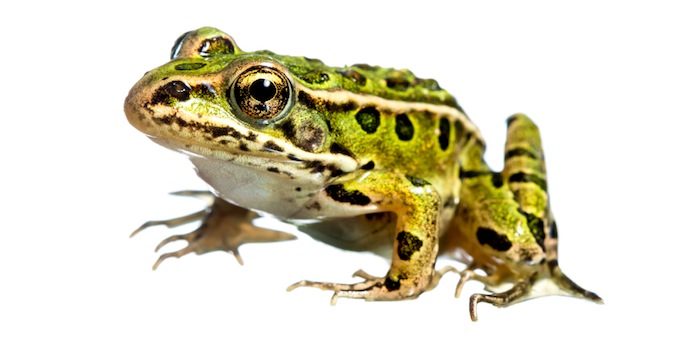
Frog peptides as anti-HIV microbicides
Peptides derived from the antimicrobial peptides secreted by frogs could function as microbicides to limit HIV transmission, while sparing protective vaginal bacteria. Read MoreNov 2, 2020
-
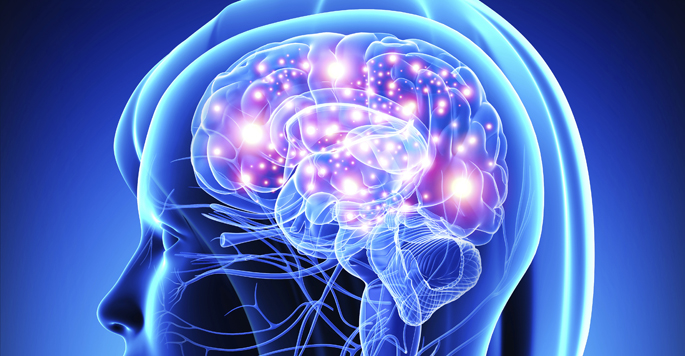
Depression and the brain-age gap
Older depressed adults show accelerated brain aging, according to a new study from Vanderbilt researchers, who suggest that the effects of depression may speed the decline in cognitive functions in older individuals. Read MoreOct 19, 2020
-

The importance of estrogen cycles
Deborah Lannigan and colleagues identify a key regulator of the estrogen receptor and suggest that its downregulation by oral contraceptives may increase oxidative stress and DNA damage, a common cause of cancer. Read MoreAug 6, 2020
-

Bangladesh collaboration offers lessons for facing rapid environmental changes
With a population of roughly 150 million people, the delta country of Bangladesh holds about half the population of the entire United States in an area the size of Louisiana, and exists under a near-constant risk of sea level rise and other dynamic climate changes. Read MoreFeb 24, 2020
-

How to fake a medical record
Simulated electronic health records could avoid patient privacy risks and help speed discovery. Read MoreNov 4, 2019
-

Microscopic spines connect worm neurons
Worm neurons have microscopic “spines” — where nerve-to-nerve communication happens — that share features with mammalian neurons, supporting the use of worms to study spine genetics and biology. Read MoreOct 17, 2019
-

Prompting people to listen to each other reduces inequality and improves group performance
Reminding people that nobody has all the answers and everyone has something to contribute can reduce racial inequality and improve outcomes in group projects, according to new research by sociologist Bianca Manago. Read MoreSep 11, 2018
-
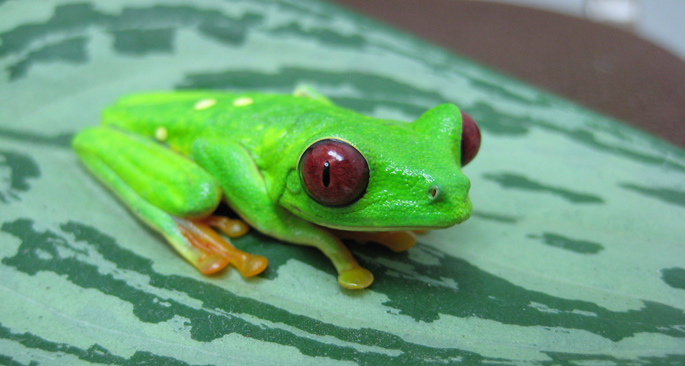
Study reveals frogs bouncing back in Panama
A new study reports that some Central American frog species are recovering from a deadly fungal epidemic, perhaps because they have better defenses against the pathogen. Read MoreApr 5, 2018