Machine Learning
-

Center for Structural Biology and Center for AI in Protein Dynamics symposium discusses the joining of structural biology and AI
The Vanderbilt University Center for Structural Biology and Center for AI in Protein Dynamics recently hosted a symposium called “Bridging Atoms and Algorithms: A Symposium on AI and Structural Biology.” The March event brought together Vanderbilt faculty, trainees, and invited speakers to explore the intersection of artificial intelligence and structural biology, share research, and foster new scientific collaborations. Read MoreMay 27, 2026
-

Vanderbilt researchers receive funding for ARPA-H UPGRADE project to protect medical devices and hospitals from cyberattacks
Cyberattacks on medical devices and health care systems can endanger patient lives. A project led by a team of Vanderbilt faculty—the Advance Risk Management and Operational Resilience for Hospitals system—is a vulnerability mitigation platform to help avert and thwart such threats. Its development got a $7 million boost from the federal ARPA-H program. Read MoreMar 12, 2026
-
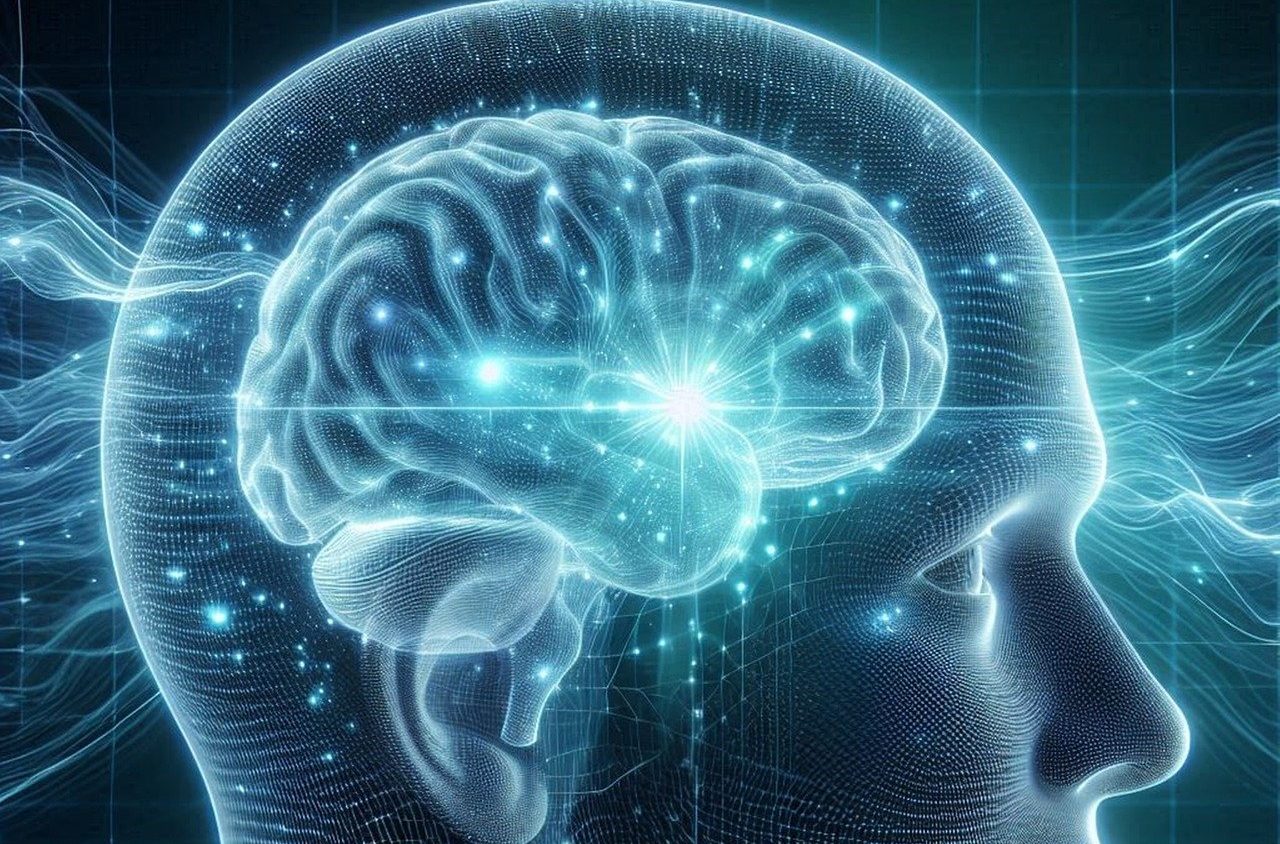
VALIANT collaborates on research using machine learning, AI to better identify brain injuries
Supported by a $1.4 million U.S. Department of Defense grant, the Vanderbilt Lab for Immersive AI Translation is collaborating on research that is using machine learning and artificial intelligence to more accurately determine if a person has a mild traumatic brain injury, or concussion. Read MoreAug 21, 2024
-
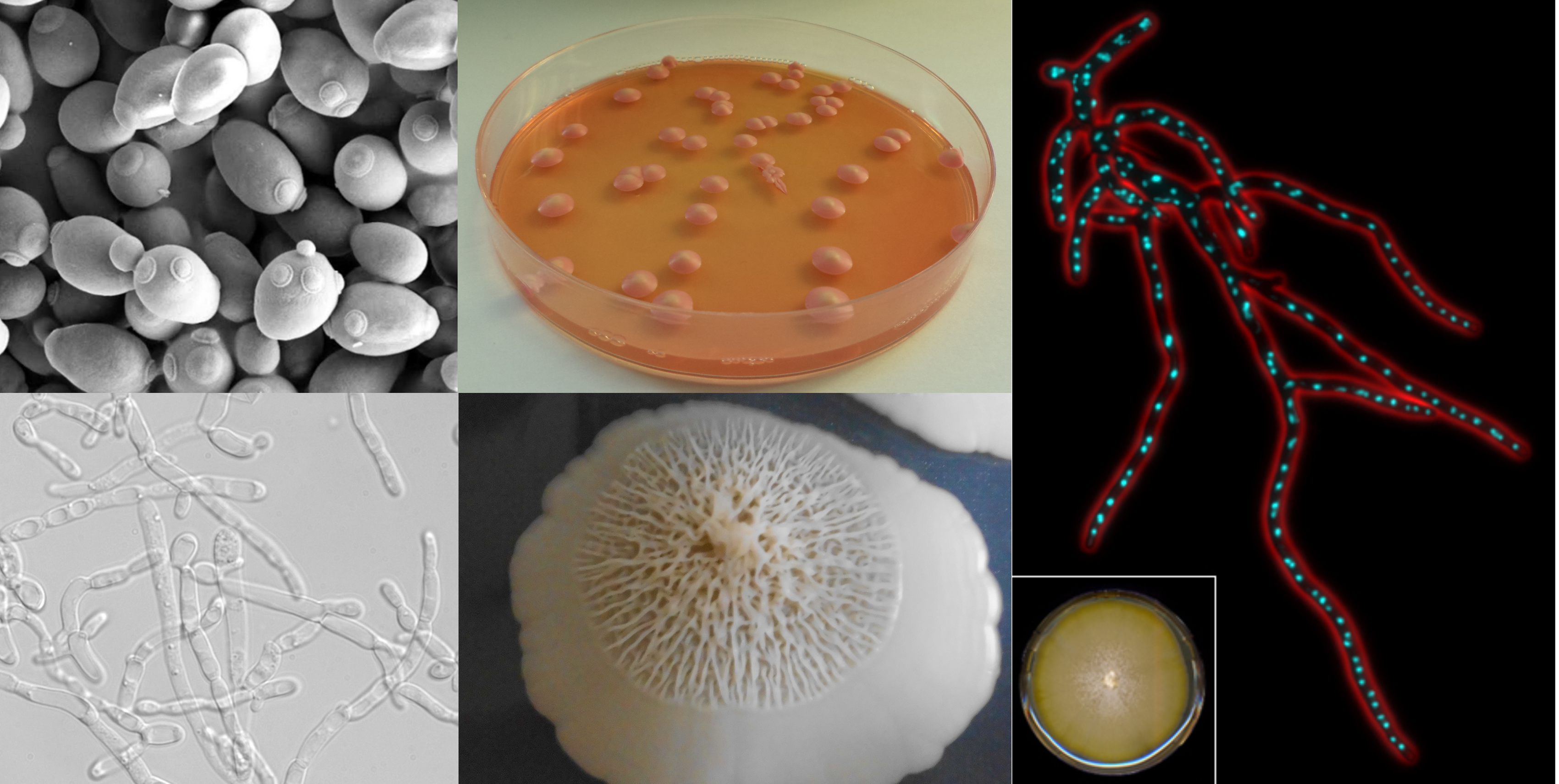
Vanderbilt researchers flip the script on yeast ecological diversity
A mere decade ago, decoding the genome of every organism in a major branch of the tree of life and deciphering their diets was a pipe dream. In a groundbreaking study, a team of researchers from Vanderbilt University, the University of Wisconsin-Madison and other institutions worldwide have done just that for the first time ever. Led by Abigail LaBella, a postdoctoral researcher in the Rokas Lab, an international research team used the genomes and diets of nearly all known species from an ancient lineage of yeasts to understand the evolution of generalists and specialists. Read MoreMay 8, 2024
-
Weimer receives NSF CAREER Award to improve safety and efficacy of machine learning, AI systems
James Weimer, assistant professor of computer science and noted medical-device entrepreneur, has received a National Science Foundation CAREER Award to improve the safety and efficacy of systems that use advanced machine learning and artificial intelligence techniques. Read MoreFeb 7, 2024
-

New NIH grant funds novel brain network approach to improve epilepsy surgery
A multidisciplinary group of investigators from Vanderbilt University Medical Center, Vanderbilt University, and the University of Pennsylvania received a $3.2 million grant to develop novel brain network-based measures to guide surgical decisions and improve outcomes in the field of epilepsy surgery. Read MoreJan 18, 2024
-
Soheil Kolouri receives NSF CAREER Award to enhance machine learning
Soheil Kolouri, assistant professor of computer science at Vanderbilt University, has received a National Science Foundation CAREER Award to explore ways to make machine learning more efficient and possibly impact the next generation of such methods. Read MoreJan 8, 2024
-
Soheil Kolouri receives NSF CAREER Award to enhance machine learning
Soheil Kolouri, assistant professor of computer science at Vanderbilt University, has received a National Science Foundation CAREER Award to explore ways to make machine learning more efficient and possibly impact the next generation of such methods. Despite the success of machine learning, scientists say many foundational questions and theoretical aspects remain poorly understood, posing unwanted... Read MoreJan 8, 2024
-
Nanostructured flat lens uses machine learning to ‘see’ more clearly, while using less power
A front-end lens, or meta-imager (see below), created at Vanderbilt University can potentially replace traditional imaging optics in machine-vision applications, producing images at higher speed and using less power. The nanostructuring of lens material into a meta-imager filter reduces the typically thick optical lens and enables front-end processing that encodes information more efficiently. The imagers... Read MoreJan 4, 2024
-

Study uses new tools, machine learning to investigate major cause of blindness in older adults
Vanderbilt researchers, in collaboration with investigators from the University of Alabama at Birmingham, the Delft University of Technology, University Hospital Bonn, and Molecular Horizon have developed new protocols to study which molecular pathways might be important in the aging retina and what might cause the formation of deposits in the eye that confer high risk for age-related macular degeneration. Read MoreJan 3, 2024
-

Predicting gene expression may speed discovery: study
Researchers at Vanderbilt University Medical Center and the University of Cambridge have developed a method of or predicting gene expression in hard-to-access tissues like the brain from more accessible tissues, including whole blood. Read MoreJul 20, 2023
-
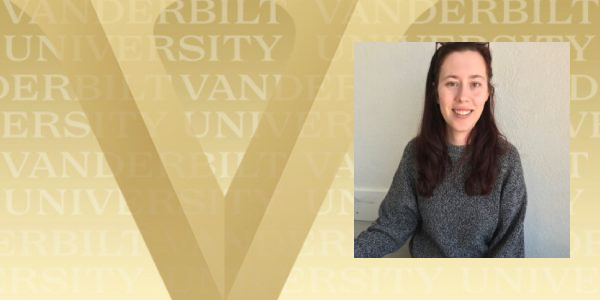
Harrison named Brighter Ventures Student Award recipient
Marie-Claire Harrison, a graduate student in the Department of Biological Sciences, has been named the 2023 recipient of the Brighter Ventures Student Award. The Brighter Ventures Student Award supports Ph.D. students interested in the application of artificial intelligence in the biomedical research field. Read MoreMay 31, 2023
-
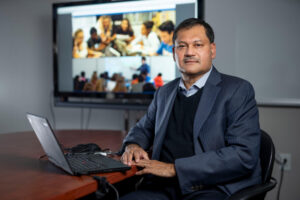
Engineering professor applies eye tracking technology and machine learning algorithms to education and training environments
Vanderbilt engineering professor Gautam Biswas partnered with the School of Nursing to bring eye tracking technology and machine learning algorithms into education and training environments. Read MoreFeb 7, 2023
-
Engineering professor applies eye tracking technology and machine learning algorithms to education and training environments
By Lena Anthony First-year nursing students, U.S. Army soldiers and a middle school science class might seem very different at first glance. But when you consider the recent work of Cornelius Vanderbilt Professor of Engineering Gautam Biswas, the similarities become clear. Each group has been a test case for Biswas’ research, which collects multimodal data... Read MoreFeb 3, 2023
-
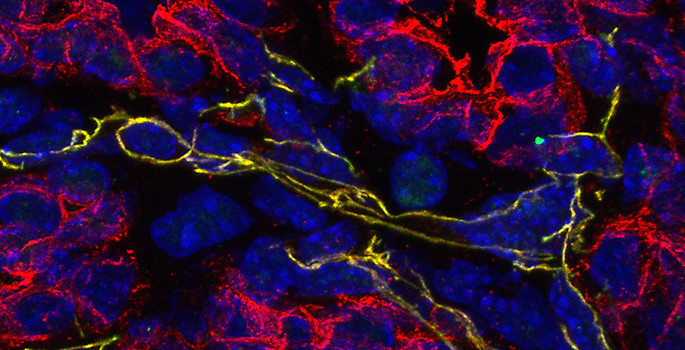
Research Snapshot: Researchers create algorithm to help predict cancer risk associated with tumor variants
Vanderbilt researchers have developed an active machine learning approach to predict the effects of tumor variants of unknown significance, or VUS, on sensitivity to chemotherapy. Characterizing VUS can maximize clinical care and precision medicine for each patient. Read MoreAug 9, 2022
-
Vanderbilt engineer leads DARPA project to enable AI machines to gain, share knowledge
Kolouri wins $1M DARPA grant to investigate AI cooperative lifelong learning A Vanderbilt engineering professor is leading part of an international initiative to create advanced artificial intelligence programs that will enable machines to learn progressively over a lifetime and share those experiences with each other. Researchers hope the technology will allow machines to reuse information,... Read MoreDec 2, 2021
-

AI predicts 24-hour hospital discharge
Vanderbilt researchers used a machine learning algorithm and data from more than 26,000 hospital stays to predict who would and would not be discharged over the next 24 hours. Read MoreNov 16, 2021
-
Researchers to test wearable tech to detect problem behaviors in children with disabilities and offer intervention strategies
Vanderbilt researchers have won a National Science Foundation grant to use wearable technologies to detect problem behaviors in children and adolescents with intellectual and developmental disabilities and offer strategies to protect them from potential harm. Children with intellectual and developmental disabilities (IDD) are at increased risk of showing problem behavior that expose them to being... Read MoreOct 27, 2021
-
Researchers to test wearable tech to detect problem behaviors in children with disabilities and offer intervention strategies
Vanderbilt researchers have won a National Science Foundation grant to use wearable technologies to detect problem behaviors in children and adolescents with intellectual and developmental disabilities and offer strategies to protect them from potential harm. Children with intellectual and developmental disabilities (IDD) are at increased risk of showing problem behavior that expose them to being... Read MoreOct 27, 2021
-
$2.5 million NASA project will develop and test safety management for ‘air taxis’
Multi-university team tackles safety systems for autonomous eVTOLs Vanderbilt engineers are part of a NASA-funded, multi-institution effort to develop safety systems for a mode of transportation that doesn’t exist yet—small, commercial, autonomous planes that move people by air between locations in large, crowded cities. The task is a formidable one with machine learning at its... Read MoreJun 28, 2021