Jason Valentine
-

Fall faculty assembly celebrates research, service awards
Vanderbilt faculty filled the Student Life Center for the 2026 Fall Faculty Assembly on Sept. 3, listening as Chancellor Daniel Diermeier and Provost C. Cybele Raver celebrated their achievements and their dedication to students. Faculty Senate Chair Jason Harris opened the assembly, encouraging the room to embrace this year’s faculty theme of “Let us serve so that all may flourish.” Read MoreSep 10, 2026
-

Researchers receive $1.2 million NSF grant to develop smart microscope system
Vanderbilt researchers have received a $1.2 million grant from the National Science Foundation to develop a smart microscope system that uses artificial intelligence to help scientists better understand how cells behave, particularly in diseases like cancer. Read MoreJul 17, 2025
-
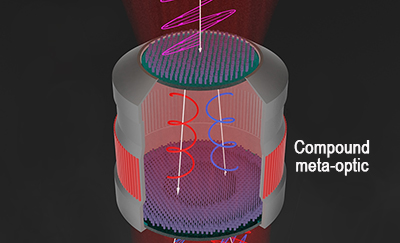
Nanostructured flat lens uses machine learning to ‘see’ more clearly, while using less power
A front-end lens, or meta-imager, created at Vanderbilt University can potentially replace traditional imaging optics in machine-vision applications, producing images at higher speed and using less power. Read MoreJan 5, 2024
-

Nanostructured flat lens uses machine learning to ‘see’ more clearly, while using less power
A front-end lens, or meta-imager (see below), created at Vanderbilt University can potentially replace traditional imaging optics in machine-vision applications, producing images at higher speed and using less power. The nanostructuring of lens material into a meta-imager filter reduces the typically thick optical lens and enables front-end processing that encodes information more efficiently. The imagers... Read MoreJan 4, 2024
-
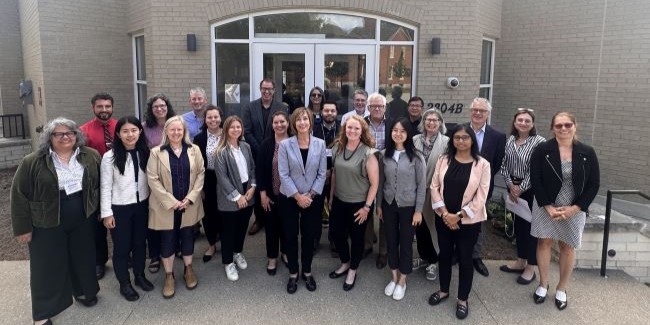
Vanderbilt welcomes ORNL researchers for collaborative climate and justice workshop
Vanderbilt University recently hosted the Vanderbilt University-Oak Ridge National Laboratory Workshop on Climate Change and Environmental Justice, aiming to deepen collaborative research on climate change and discuss potential projects. The event, which emphasized the importance of environmental justice and resilience strategies, marked the continuation of the institutions’ efforts to collaborate on addressing global challenges. Read MoreOct 20, 2023
-
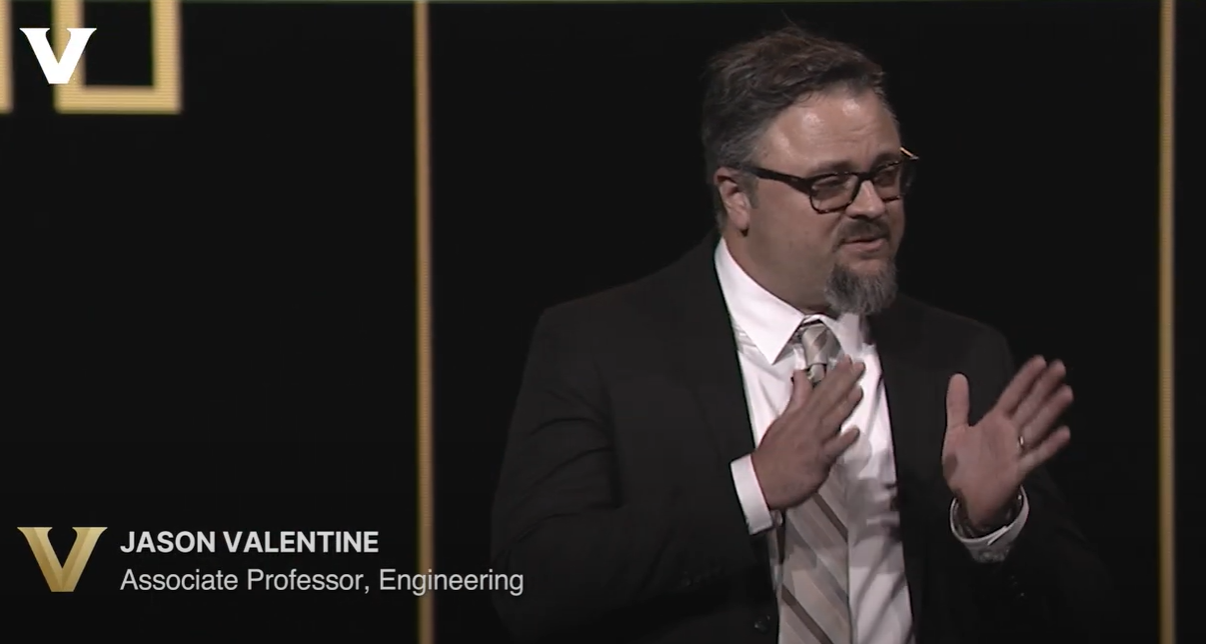
A team led by VINSE Deputy Director Jason Valentine and American soldiers have partnered to make service members invisible on the modern battlefield.
Vanderbilt engineers and American soldiers have partnered to make service members invisible on the modern battlefield. A team lead by VINSE Deputy Director, Jason Valentine, is designing innovative equipment that reduces soldiers’ detectability by thermal sensors, increasing their safety and operational effectiveness. Read MoreJul 7, 2023
-

Adams to lead TIPs-funded, soldier-inspired innovation hub
A new innovation incubator will amplify existing collaborations among researchers and soldiers, building on Vanderbilt's partnership agreement with Army Futures Command. Read MoreJun 30, 2020
-
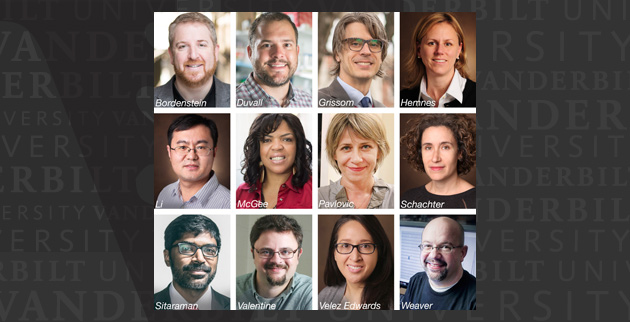
Twelve faculty members named as 2018 Chancellor Faculty Fellows
Twelve outstanding faculty members from across the university have been named to the 2018 class of Chancellor Faculty Fellows. The class comprises highly accomplished, recently tenured faculty from all corners of campus. Read MoreJan 18, 2018
-
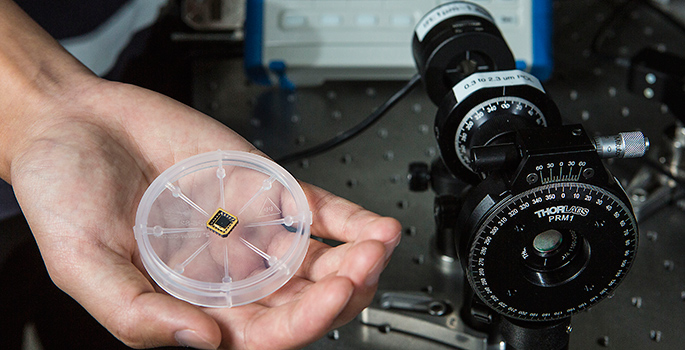
First circularly polarized light detector on a silicon chip
Invention of the first integrated circularly polarized light detector on a silicon chip opens the door for development of small, portable sensors that could expand the use of polarized light for drug screening, surveillance, etc. Read MoreSep 22, 2015
-

Valentine receives NSF Early Career award
Assistant Professor of Mechanical Engineering Jason Valentine has received a National Science Foundation Faculty Early Career Development grant. Read MoreFeb 20, 2014
-

Making waves: In the hunt for invisibility, other benefits seen
A new way of assembling things, called metamaterials, may in the not too distant future help to protect a building from earthquakes by bending seismic waves around it, the way invisibility cloaks bend light. Jason Valentine, assistant professor of mechanical engineering, is quoted. Read MoreDec 26, 2013
-
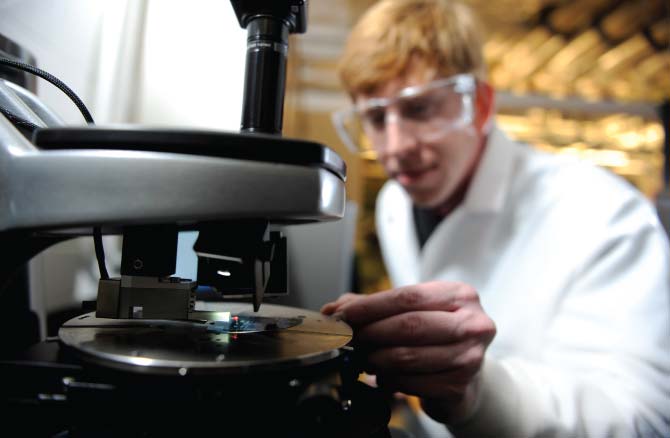
Something big from something small: The 10th anniversary of VINSE
Vanderbilt researchers working at the smallest scale celebrate a huge milestone this year. The Vanderbilt Institute of Nanoscale Science and Engineering (VINSE), seeded from a university-funded $16 million venture capital fund initiative, celebrates its 10th anniversary in December. Read MoreDec 13, 2011