Electrical Engineering And Computer Science
-

Work named 2021 Chancellor Faculty Fellow
Daniel Work, associate professor of civil and environmental engineering, has been named a Chancellor Faculty Fellow. He is one of nine highly accomplished, recently tenured faculty in the 2021 Chancellor Faculty Fellow cohort, which will meet as a group during their two-year fellowships to exchange ideas on teaching and research and engage in academic leadership... Read MoreMay 12, 2021
-
Work named 2021 Chancellor Faculty Fellow
Daniel Work, associate professor of civil and environmental engineering, has been named a Chancellor Faculty Fellow. He is one of nine highly accomplished, recently tenured faculty in the 2021 Chancellor Faculty Fellow cohort, which will meet as a group during their two-year fellowships to exchange ideas on teaching and research and engage in academic leadership... Read MoreMay 12, 2021
-
Widely used software, developed by Young Lab, tops 1,000 academic licenses
INCA enables robust metabolic tracer studies A software tool for metabolic analysis developed by a Vanderbilt chemical engineer recently passed 1,000 total academic licenses and is the most licensed software on the university’s online licensing and e-commerce platform. Additionally, it was the third highest revenue generator on the platform, VU e-Innovations, for 2020. About 20... Read MoreApr 15, 2021
-
Widely used software, developed by Young Lab, tops 1,000 academic licenses
INCA enables robust metabolic tracer studies A software tool for metabolic analysis developed by a Vanderbilt chemical engineer recently passed 1,000 total academic licenses and is the most licensed software on the university’s online licensing and e-commerce platform. Additionally, it was the third highest revenue generator on the platform, VU e-Innovations, for 2020. About 20... Read MoreApr 15, 2021
-
Student-developed machine-learning techniques make surgeries safer, easier to review
An interdisciplinary fellowship with the Data Science Institute has resulted in a promising machine-learning technology that can effectively track complex surgical activity, thus having the potential to improve patient outcomes, safety and documentation. Read MoreApr 12, 2021
-
Research Snapshot: New microscopy technique unveils feature that can shape applications of a class of quantum materials
THE IDEA A team of researchers led by Oak Ridge National Laboratory microscopist Miaofang Chi and Vanderbilt theoretical physicist Sokrates Pantelides has used a new Scanning Transmission Electron Microscope technique to image the electron distribution in ionic compounds known as electrides— especially the electrons that float loosely within pockets and appear separate from the atomic... Read MoreApr 8, 2021
-
Photonics discovery portends dramatic efficiencies in silicon chips
A team led by Vanderbilt engineers has achieved the ability to transmit two different types of optical signals across a single chip at the same time. The breakthrough heralds a potentially dramatic increase in the volume of data a silicon chip can transmit over any period of time. With this project, the research team moved... Read MoreMar 1, 2021
-
Collaboration propels advancements in personalized cochlear implant procedures
Vanderbilt University Medical Center is the busiest cochlear implant center in the U.S., performing more than 300 implant surgeries each year. A key driver is close collaboration among engineers, surgeons, audiologists, speech scientists and other experts. This interdisciplinary, trans-institutional work has enabled a truly customized approach for each patient. Research teams have developed image-guided surgery for... Read MoreFeb 26, 2021
-
New $2 million NIH grant advances less invasive procedure for TLE
A Vanderbilt research team has received a $2 million National Institutes of Health grant to further develop a needle-size robotic surgery system with real-time MRI guidance for drug resistant temporal lobe epilepsy (TLE). Such a procedure has the potential to reduce or eliminate seizures using a minimally invasive approach over the current standard of care,... Read MoreFeb 16, 2021
-
Dozens of engineering professors among world’s top 2% of working scientists
Nearly 40 School of Engineering faculty members have been named among the top 2 percent of 7 million working scientists in the world. More than 60 percent of the school’s full professors are in this elite group, based on a recent study by a Stanford University professor and his colleagues. The study combines several different... Read MoreJan 25, 2021
-
Cancer Institute grant funds new integrated approach to early lung cancer detection
Vanderbilt researchers have received a National Cancer Institute grant to develop a novel, integrative approach to detect early signs of lung cancer. The four-year project builds on a related, recent study that established the value of using three separate measures—structural imaging, a protein marker and information available from electronic health records—to predict lung cancer in... Read MoreJan 22, 2021
-
Optical computing at sub-picosecond speeds developed at Vanderbilt
Vanderbilt researchers have developed the next generation of ultrafast data transmission that may make it possible to make already high-performance computing “on demand.” The technology unjams bottlenecks in data streams using a hybrid silicon-vanadium dioxide waveguide that can turn light on and off in less than one trillionth of a second. The article, “Sub‐Picosecond Response... Read MoreJan 19, 2021
-

Computer science team wins global contest with AI model that translates English to code
IBM will use a Vanderbilt model as the end-user scripting assistant in its open-source Command Line AI Project. Read MoreDec 14, 2020
-
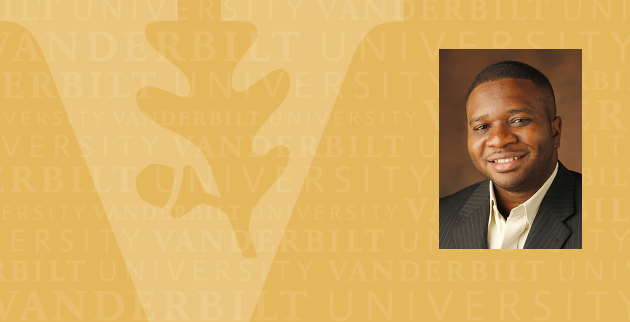
Engineering professor Ndukaife wins award in Rising Stars of Light global competition
Justus Ndukaife, assistant professor of electrical engineering, spent 20 minutes describing his optical nanotweezers to a panel of five distinguished professors from the United States, Australia, and China during a live online competition—Rising Stars of Light—that has drawn 260,000 viewers worldwide. Read MoreNov 30, 2020
-
Researchers create technique that corrects distortions in MRI images
Perfecting MRI images with deep learning, Vanderbilt and VUMC researchers have created a technique that corrects image distortions, which provides more accurate information for researchers, radiologists and neuroscientists to better interpret brain scans. The work by Bennett Landman, professor of electrical engineering and computer science and radiology and radiological sciences, and Kurt Schilling, research assistant... Read MoreNov 11, 2020
-
Wearable sensor algorithms powered by machine learning could be key to preventing runners’ injuries
A trans-institutional team of Vanderbilt engineering, data science and clinical researchers has developed a novel approach for monitoring bone stress in recreational and professional athletes, with the goal of anticipating and preventing injury. Using machine learning and biomechanical modeling techniques, the researchers built multisensory algorithms that combine data from lightweight, low-profile wearable sensors in shoes... Read MoreOct 28, 2020
-

$8.7 million DARPA grant advances AI-assisted CPS design work
A new, $8.7 million project—Design. R–AI-assisted CPS Design—involves pathbreaking work for the Defense Advanced Research Projects Agency as future cyber-physical systems will rely less on human control and more machine learning algorithms and artificial intelligence processors. Read MoreOct 4, 2020
-
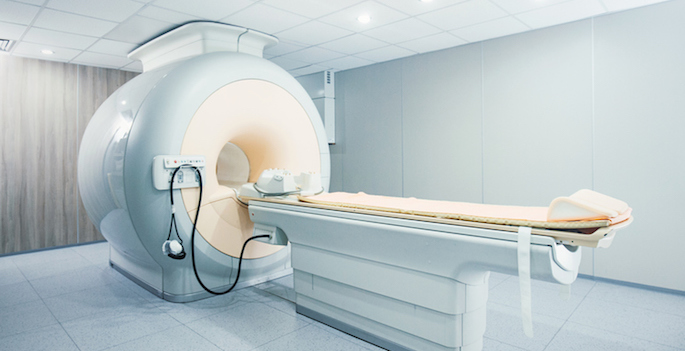
Grissom awarded $1.4 million NIH grant to develop smaller, quieter MRI system
Vanderbilt engineers have received a $1.4 million NIH grant to work toward a compact, silent, less expensive and potentially portable MRI device. Read MoreSep 1, 2020
-

Rewriting the evolution of complex software systems
All software is not created equal. At one end are apps on a smartphone and consumer-facing programs for which periodic updates to fix bugs and security issues are routine, like replacing an air conditioning filter or getting an annual flu shot. At the other end are large, complex software systems such as software used in... Read MoreAug 20, 2020
-

Does named Fellow of International Society for Magnetic Resonance in Medicine
Mark Does, professor of biomedical engineering has been selected as a Fellow of the International Society for Magnetic Resonance in Medicine. His research program focuses on developing and applying MRI methods to quantitatively characterize various properties and/or compositions of tissue. It includes developing models of nuclear magnetic resonance relaxation and water diffusion in tissue, development... Read MoreAug 11, 2020