DOE
-

Novel approach to safeguard patient data included among NSF-led National AI Research Resource Pilot
The U.S. National Science Foundation and the Department of Energy recently announced that a team comprised of Vanderbilt’s newly created ADVANCE center and VALIANT lab is among the first round of 35 projects that will be supported with computational time through the National Artificial Intelligence Research Resource Pilot. Read MoreMay 16, 2024
-

DOE renews partnership with Vanderbilt collaborator Institute for Advanced Composites Manufacturing Innovation
The Department of Energy has renewed its partnership with the Institute for Advanced Composites Manufacturing Innovation. The IACMI is a community of industry, universities, national laboratories and government agencies working together to accelerate the development and adoption of innovative manufacturing technologies. The funding connected with the renewed partnership will be used over five years to... Read MoreApr 24, 2023
-
DOE renews partnership with Vanderbilt collaborator Institute for Advanced Composites Manufacturing Innovation
The Department of Energy has renewed its partnership with the Institute for Advanced Composites Manufacturing Innovation. The IACMI is a community of industry, universities, national laboratories and government agencies working together to accelerate the development and adoption of innovative manufacturing technologies. The funding connected with the renewed partnership will be used over five years to... Read MoreApr 24, 2023
-
Team wins competitive DOE award to advance isotope production critical for U.S. science, medicine and industry
A U.S. Department of Energy $4 million initiative to advance research in isotope production includes a Vanderbilt engineering professor’s work on separation technologies and to scale up processes. The funding is part of a key federal program that produces critical isotopes otherwise unavailable or in short supply for U.S. science, medicine and industry. Piran Kidambi,... Read MoreJul 22, 2021
-
Team wins competitive DOE award to advance isotope production critical for U.S. science, medicine and industry
A U.S. Department of Energy $4 million initiative to advance research in isotope production includes a Vanderbilt engineering professor’s work on separation technologies and to scale up processes. The funding is part of a key federal program that produces critical isotopes otherwise unavailable or in short supply for U.S. science, medicine and industry. Piran Kidambi,... Read MoreJul 22, 2021
-
Vanderbilt graduate researcher awarded prestigious $161,000 U.S. Department of Energy grant
Irfan Ibrahim The U.S. Department of Energy’s Office of Nuclear Energy has awarded an Integrated University Program fellowship grant of $161,000 to environmental engineering graduate research assistant Irfan Ibrahim to further his work on nuclear reactor safety. The office’s awards provide 50 scholarships and 31 fellowships for nuclear scientists and engineers at 35 colleges and... Read MoreMay 5, 2021
-
Vanderbilt graduate researcher awarded prestigious $161,000 U.S. Department of Energy grant
Irfan Ibrahim The U.S. Department of Energy’s Office of Nuclear Energy has awarded an Integrated University Program fellowship grant of $161,000 to environmental engineering graduate research assistant Irfan Ibrahim to further his work on nuclear reactor safety. The office’s awards provide 50 scholarships and 31 fellowships for nuclear scientists and engineers at 35 colleges and... Read MoreMay 5, 2021
-

$3.3 million project aims to transform grid management with risk metrics for renewables
The goal of the project—Risk-Aware Market Clearing—is a blueprint for an end-to-end, data-driven approach that balances cost and minimizes system-level risk. Market clearing is the process that keeps the supply level to the demand with no leftover of either. Read MoreJun 17, 2020
-

Filling the early universe with knots can explain why the world is three-dimensional
Filling the universe with knots shortly after it popped into existence 13.8 billion years ago provides a neat explanation for why we inhabit a three-dimensional world. That is the basic idea advanced by an out-of-the-box theory developed by an international team of physicists. Read MoreOct 13, 2017
-
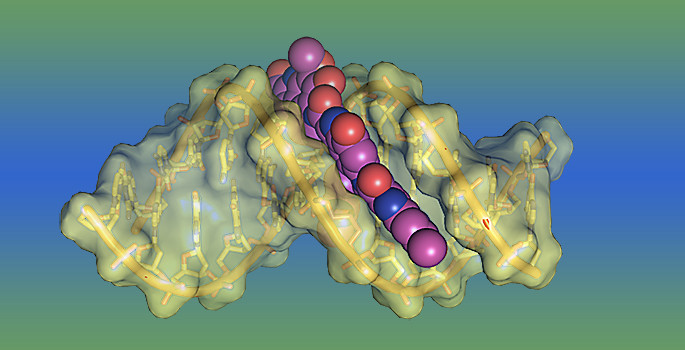
Deciphering potent DNA toxin’s secrets
Vanderbilt researchers uncover the secret of the remarkable potency of the DNA toxin yatakemycin, which could someday be harnessed to fight cancer. Read MoreAug 1, 2017
-

Vanderbilt on team to develop advanced nuclear reactors to reduce carbon emissions
Vanderbilt University is part of a new public-private partnership that has been awarded up to $40 million from the U.S. Department of Energy to explore, develop and demonstrate advanced nuclear reactor technologies to help America meet its goals for carbon emission reduction. Read MoreJan 27, 2016
-

New model of cosmic stickiness favors “Big Rip” demise of universe
A Vanderbilt team of scientists have developed a new formulation for cosmic viscosity which strongly favors the "Big Rip" end of the universe. Read MoreJun 30, 2015
-

World’s smallest spirals could guard against identity theft
Vanderbilt researchers have made the world’s smallest spirals and found they have unique optical properties that are nearly impossible to counterfeit. Read MoreJun 2, 2015
-

Research Roundup, Summer 2014
Private Property and Government Inaction | Probiotic Could Prevent Obesity | Freedom from Power Cords | Pickiness Doesn’t Always Pay Read MoreSep 26, 2014
-
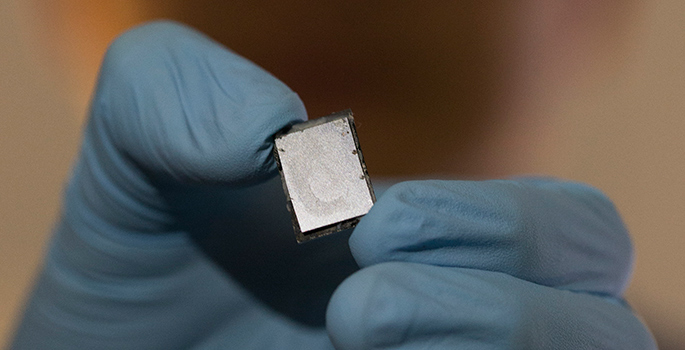
Liberating devices from their power cords
A new type of supercapacitor brings us a step closer to a day when everything from cell phones to electric vehicles will no longer need separate batteries. Read MoreMay 19, 2014
-
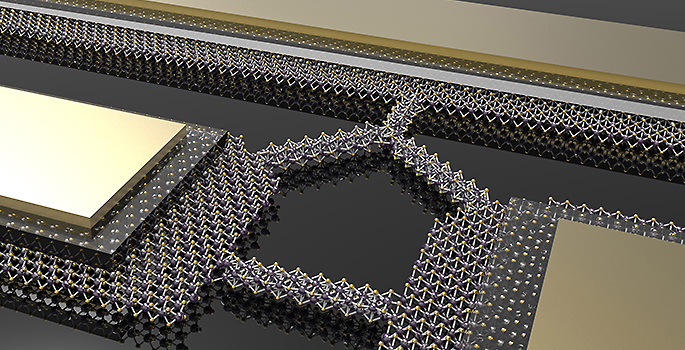
How to create nanowires only three atoms wide with an electron beam
A Vanderbilt graduate student has used a focused beam of electrons to create some of the smallest nanowires ever made, which could bring us closer to flexible, paper-thin tablets and television displays. Read MoreApr 28, 2014
-

Nanoscale optical switch breaks miniaturization barrier
An ultra-fast and ultra-small optical switch has been invented that could advance the day when photons replace electrons in the innards of consumer products ranging from cell phones to automobiles. Read MoreMar 13, 2014
-
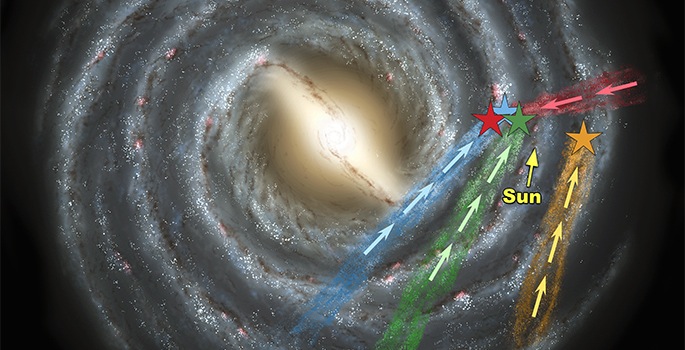
Surprising new class of “hypervelocity stars” discovered escaping the galaxy
Two Vanderbilt astronomers are among an international team that has discovered a surprising new class of “hypervelocity stars” – solitary stars moving fast enough to escape the gravitational grasp of the Milky Way galaxy. Read MoreJan 9, 2014
-

Argonne National Laboratory: Dissolving brittle stars hint at implications of ocean acidification
Scientists at Vanderbilt University and the New York Health Department say colonies of Antarctic brittle stars may be especially vulnerable to the effects of ocean acidification. Read MoreAug 20, 2013
-
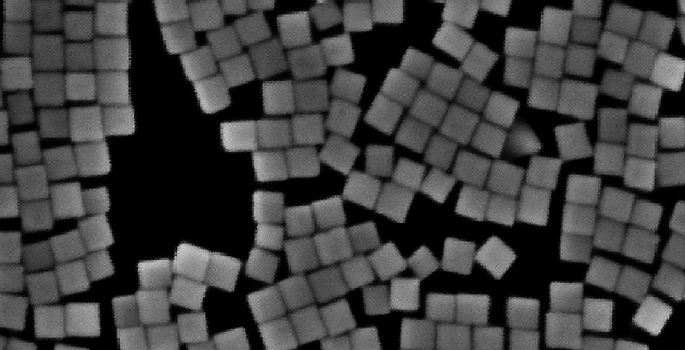
Size matters in nanocrystals’ ability to release gases
More efficient catalytic converters on autos, improved batteries and more sensitive gas sensors are some of the potential benefits of a new system that can directly measure the manner in which nanocrystals adsorb and release hydrogen and other gases. Read MoreAug 6, 2013