Department Of Energy
-
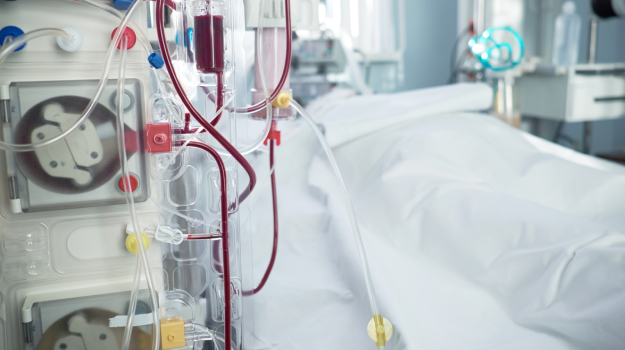
Vanderbilt team reimagines kidney dialysis by creating new paradigm for dialysis membranes
Current kidney dialysis patients endure treatment three times a week for four hours. A new discovery generated by a Vanderbilt-VUMC team may shift how dialysis patients receive care. Read MoreSep 20, 2023
-
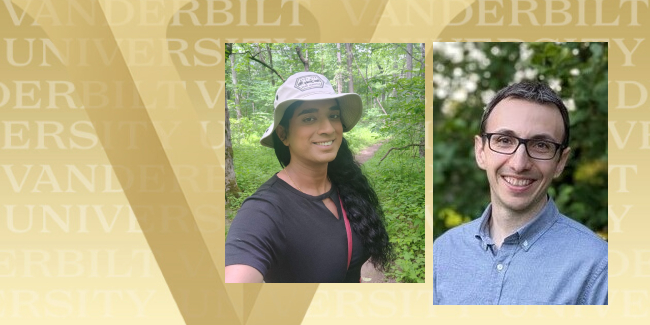
Two Vanderbilt nuclear physicists win early-career grants from U.S. Department of Energy
The U.S. Department of Energy is funding two Vanderbilt early-career nuclear physicists’ exploration of the universe’s properties and composition. Raghav Kunnawalkam Elayavalli and Jean-François Paquet, assistant professors in the Department of Physics and Astronomy and members of the multidisciplinary Vanderbilt Initiative for Gravity, Waves and Fluids, have been identified as among the nation’s most exceptional researchers. Read MoreAug 4, 2023
-

Vanderbilt grad student awarded extended DOE residency to advance scholarship in transport of subatomic materials
Graduate student Nicole Moehring has been awarded a prestigious extended residency at Savannah River National Laboratory to continue her doctoral research on atomically thin 2D materials for isotope separations and energy storage. This will allow Moehring to work with researchers at DOE national labs, use state-of-the-art equipment and network with professionals in the field. Read MoreMay 1, 2023
-
DOE renews partnership with Vanderbilt collaborator Institute for Advanced Composites Manufacturing Innovation
The Department of Energy has renewed its partnership with the Institute for Advanced Composites Manufacturing Innovation. Vanderbilt’s Laboratory for Systems Integrity and Reliability is funded by an investment from IACMI. Read MoreApr 21, 2023
-

International collaboration yields breakthrough that could revolutionize computing technologies
Scientists from Vanderbilt and UCAS made a breakthrough in single-atom vibrational spectroscopy in graphene, crucial to understanding materials’ thermal properties and nanophotonics. Read MoreMar 28, 2023
-

Fauchet urges Congress to support engineering education and research
Philippe Fauchet, the Bruce and Bridgitt Evans Dean of Engineering at Vanderbilt University, met with members of Congress last week while in Washington, D.C., to emphasize the integral role that engineering research plays in strengthening the United States’ competitiveness and security. Read MoreFeb 16, 2023
-
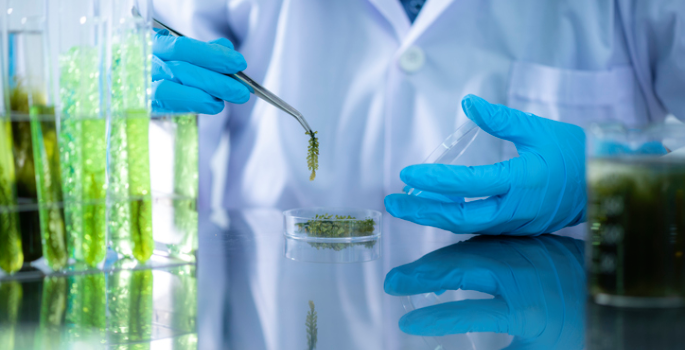
Research Snapshot: Producing green fuel, and more rapid determination of the biological consequences of gene editing
Vanderbilt researchers examine how to rapidly characterize the biological impact of genetic editing on bacteria for energy production, drug discovery and more. Est. reading time: 2.5 mins. Read MoreDec 13, 2021
-
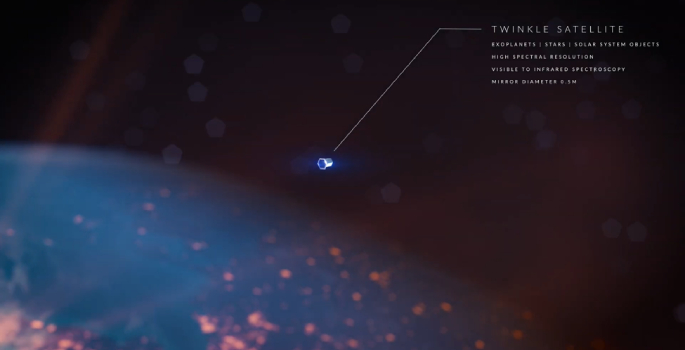
Vanderbilt astronomer co-authors seminal roadmap for the next decade of U.S. research in outer space
Keivan Stassun joins leading astronomers to write "Astro2020," a once-in-a-decade guide for astronomy research, prioritizing gargantuan telescopes on the ground and in orbit as well as increased diversity and inclusion. Read MoreNov 15, 2021
-

Technologies can help drivers maintain the two-second rule to improve road safety and traffic flow
A team of engineers led by Dan Work, associate professor of civil and environmental engineering, has developed an assistive technology to help drivers maintain "the two-second rule," taught in driver’s ed classes across the country, to smooth out traffic jams and improve safety. Read MoreSep 14, 2021
-
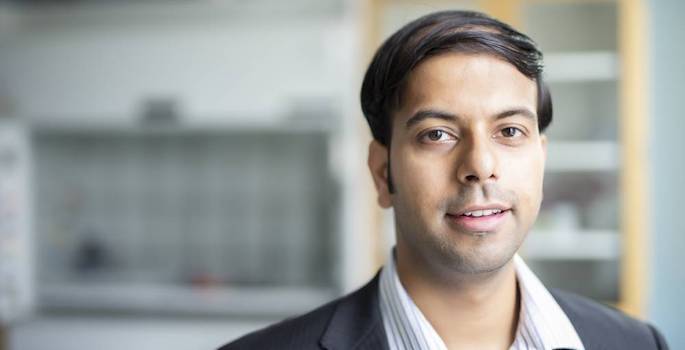
Team wins competitive DOE award to advance isotope production critical for U.S. science, medicine and industry
A U.S. Department of Energy $4 million initiative to advance research in isotope production includes Vanderbilt engineering professor Piran Kidambi's work on separation technologies and to scale up processes. Read MoreJul 22, 2021
-

Vanderbilt students selected by the Department of Energy’s Office of Science Graduate Student Research Program
Vanderbilt graduate students Luis Bichon and Brandon Tyler Blankenship have been selected for the Department of Energy’s Office of Science Graduate Student Research program and will pursue their research on high-energy nuclear physics at Los Alamos National Laboratory. Read MoreJun 1, 2021
-
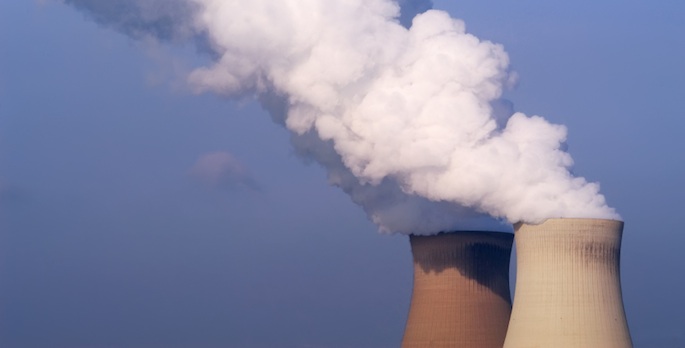
Vanderbilt graduate researcher awarded prestigious $161,000 U.S. Department of Energy grant
The U.S. Department of Energy’s Office of Nuclear Energy awards Vanderbilt researcher Irfan Ibrahim an Integrated University Program fellowship grant to pursue research on nuclear power. Read MoreMay 5, 2021
-

Research Snapshot: New microscopy technique of electron distributions and theory unveils a feature that can shape applications of a class of quantum materials
Theory and experimental data on an electride, a member of a class of exotic materials, unveil new secrets that may impact technology developments. Est. reading time: 2 mins. Read MoreApr 7, 2021
-
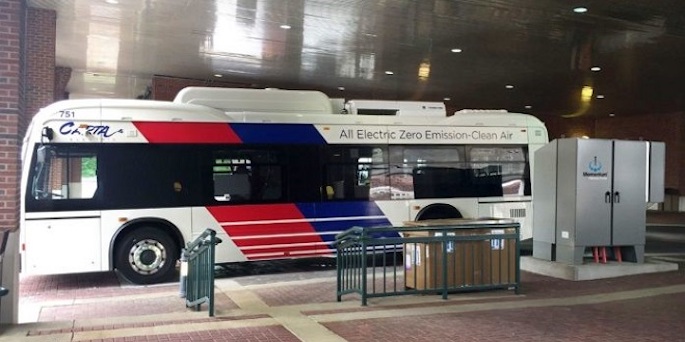
Vanderbilt researcher receives $3.9 million in grants to redesign regional transit system using artificial intelligence, community engagement
Working on multiple elements of Chattanooga’s transit system, Abhishek Dubey is reimagining the way a city moves. Read MoreSep 17, 2020
-
Department of Energy webinar on federal funding set for Sept. 26
A special webinar on federal funding from the Department of Energy is scheduled for Thursday, Sept. 26. “DOE and Biological Sciences” will cover a broad range of research areas such as fundamental genomic science, microbiome research and advances in bioimaging. Read MoreSep 18, 2019
-
Two-part Department of Energy webinar on federal funding Sept. 12, 26
A special two-part webinar series on federal funding from the Department of Energy is scheduled for Sept. 12 and Sept. 26 in the Baker Building, Room 800C. Remote viewing will be available with advanced registration. Read MoreAug 14, 2019
-
Filling the early universe with knots can explain why the world is three-dimensional
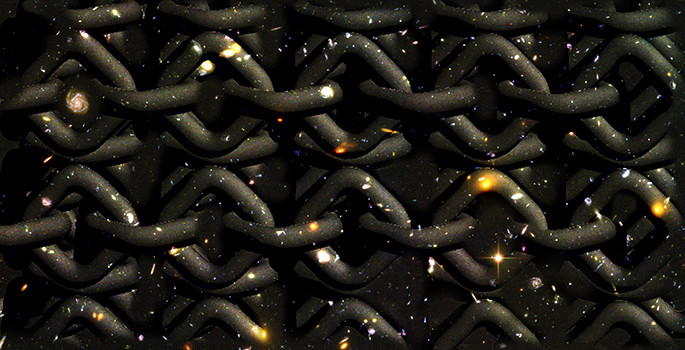
Filling the universe with knots shortly after it popped into existence 13.8 billion years ago provides a neat explanation for why we inhabit a three-dimensional world. That is the basic idea advanced by an out-of-the-box theory developed by an international team of physicists. Read MoreOct 13, 2017
-
Multitasking monolayers
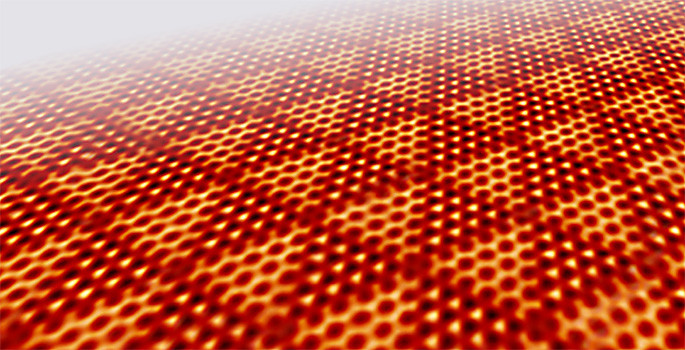
Scientists have discovered a natural process that makes patterned monolayers suitable for creating a wide variety of novel materials with dual optical, magnetic, catalytic or sensing capabilities. Read MoreJul 21, 2017
-
Using nanotechnology to give fuel cells more oomph
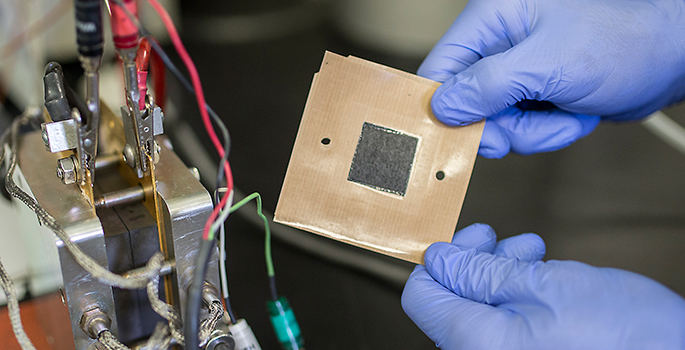
Researchers from Vanderbilt University have developed porous polymer-fiber electrodes that may make fuel cells more powerful. Read MoreAug 8, 2016
-
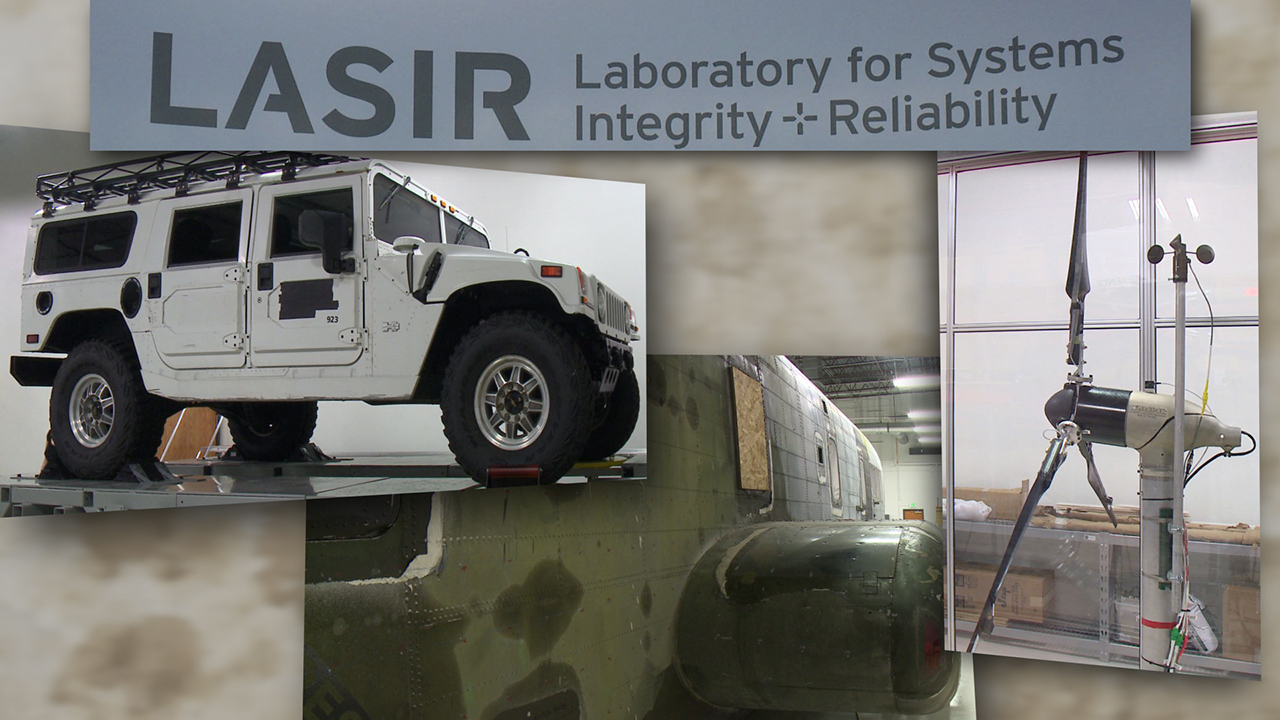
Vanderbilt research will help shape the future of American manufacturing
A cutting-edge Vanderbilt lab that studies how materials, structures and machines operate under real-world conditions will play a key part in the new multistate, $259 million Institute for Advanced Composites Manufacturing Innovation (IACMI) to be announced today by President Obama. Read MoreJan 9, 2015