Black Holes
-

What would a small black hole do to the human body? Robert Scherrer aims to answer that
Some people may worry about being bitten by a snake or spider, but have you ever considered what would happen if a small black hole tried to pass through your body? An article by Professor of Physics Robert Scherrer in the International Journal of Modern Physics D poses and answers that very question. Scherrer set out to find what the gravitational effects would be if a primordial black hole passed through the human body, helping scientists better understand the properties of dark matter. Read MoreNov 20, 2025
-

Simons Foundation awards $8 million grant to uncover secrets of black holes and strong gravity
Over the next four years, Assistant Professor of Physics and Astronomy Alex Lupsasca will lead a Vanderbilt team in a multidisciplinary, multi-institutional collaboration funded by an $8 million grant from the Simons Foundation with a focus on black holes and strong gravity. Read MoreSep 4, 2025
-

Scientists discover new evidence of intermediate-mass black holes
While we know that intermediate-mass black holes should exist, little is known about their origins or characteristics—they are considered the rare “missing links” in black hole evolution. However, four new studies have shed new light on the mystery. The research was led by a team in the lab of Assistant Professor of Physics and Astronomy Karan Jani, who also serves as the founding director of the Vanderbilt Lunar Labs Initiative. Read MoreJun 12, 2025
-
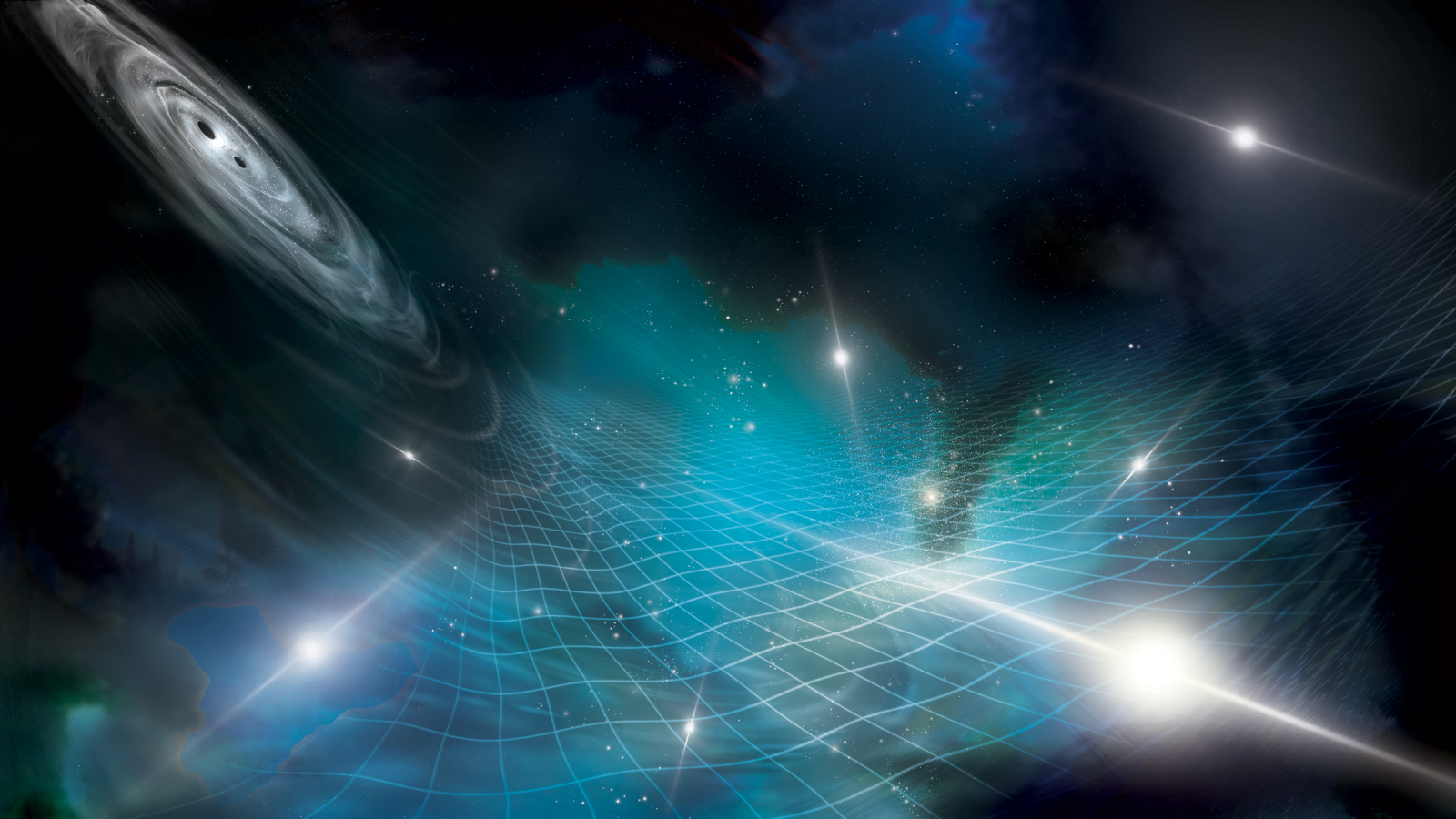
Vanderbilt’s AI for New Messengers fellowship drives breakthrough in black hole detection
Hunting for black holes sounds like the premise of a new Hollywood blockbuster, but at Vanderbilt University, Assistant Professor of Physics and Astronomy Karan Jani works with students in a lab to do exactly that. Last year, Jani’s group at the Department of Physics and Astronomy, along with the university’s Data Science Institute, jointly launched the AI for New Messengers postdoctoral fellowship. The fellowship, one of the first of its kind in the U.S., seeks to apply AI techniques to analyze data from cosmic events (such as black hole collisions) using information from the Nobel Prize–winning Laser Interferometer Gravitational-Wave Observatory (LIGO) experiment. Read MoreSep 25, 2024
-
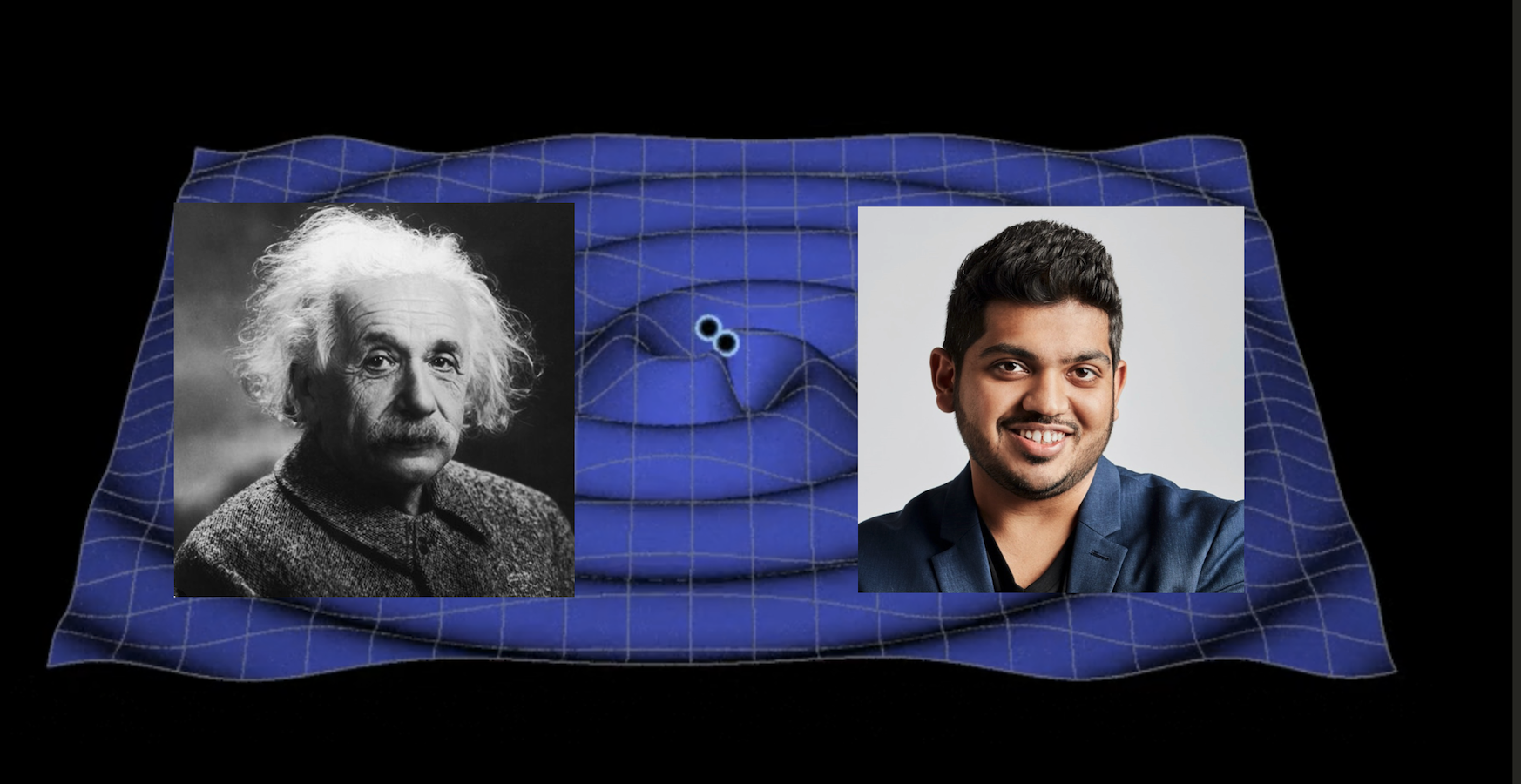
Scientist who helped prove Einstein theory opens doors to black holes for students with diverse majors
Vanderbilt astrophysicist Karan Jani helped prove Einstein's theory of relativity as it relates to black holes and gravitational waves. Learn how he's using his expertise to teach undergrads with diverse majors who are eager to learn about space. Read MoreJun 26, 2023
-
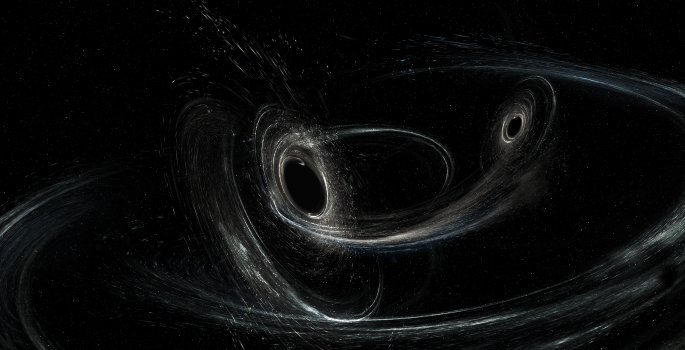
How many stars eventually collide as black holes? The universe has a budget for that.
A promising new study developed by one Vanderbilt astrophysicist may give us a method for finding the number of available stars in the history of the universe that collide as binary black holes. Read MoreJan 31, 2020
-
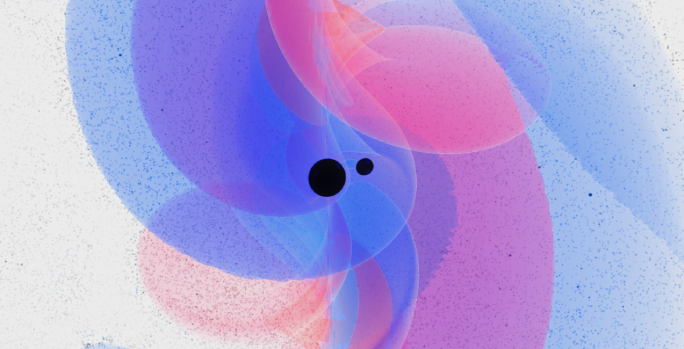
Here’s how a Vanderbilt astrophysicist plans to observe a black hole ‘symphony’ using gravitational wave astronomy
New research led by Vanderbilt astrophysicist Karan Jani presents a compelling roadmap for capturing intermediate-mass black hole activity. Read MoreNov 18, 2019
-
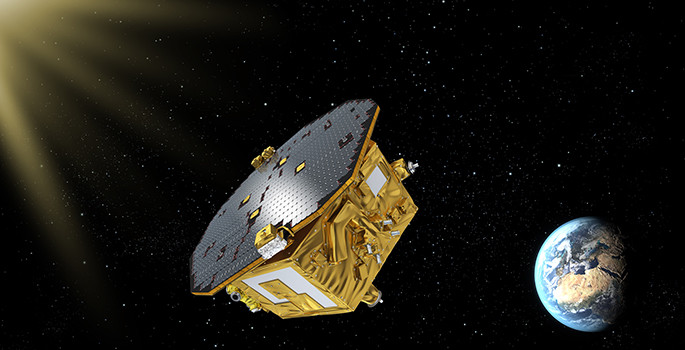
VU astronomer heads U.S. study team for space-based gravitational wave detector
A Vanderbilt astrophysicist has been elected chair of a scientific study team that will advise NASA on science issues related to the international Laser Interferometer Space Antenna program. Read MoreNov 3, 2017
-
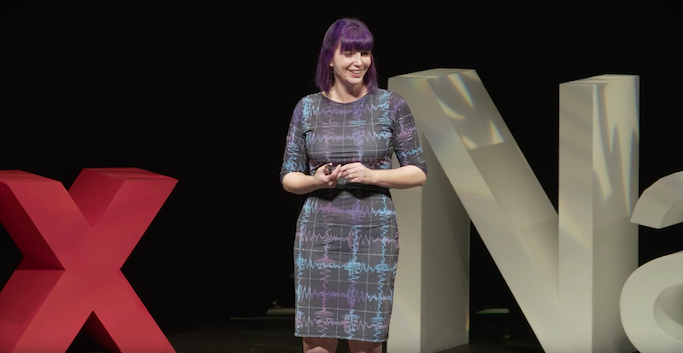
Astrophysicist explains meaning of the discovery of gravitational waves
Vanderbilt Associate Professor of Physics and Astronomy Kelly Holley-Bockelmann explains the meaning of the first discovery of gravitational waves at TEDx Nashville. Read MoreJun 17, 2016
-
Your Universe Today podcast: Supermassive Black Holes (Part 3)
Kelly Holley-Bockelmann, assistant professor of astronomy and physics, wraps up this three-part podcast series with an interview about her specialty, supermassive black holes. Read MoreFeb 27, 2013
-
Your Universe Today podcast: How stars die and black holes form (Part 2)
Kelly Holley-Bockelmann, assistant professor of astronomy, continues her discussion of black holes in the second part of this interview for Red Orbit. Read MoreJan 28, 2013
-
Your Universe Today podcast: How stars die and black holes form (Part 1)
Kelly Holley-Bockelmann, assistant professor of astronomy, talks about what sets black holes apart from other objects in the universe and explains how the laws of space, time and gravity bend and even break down to create the most destructive force in the cosmos. Read MoreJan 24, 2013