Engineering And Technology
-
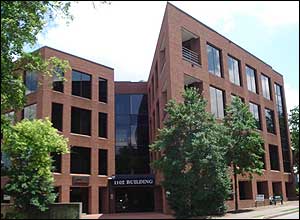
New facility devoted to multiscale modeling opens on Music Row
Vanderbilt University School of Engineering has established a unique research facility focusing on Multiscale Modeling and Simulation. MuMS is home to four faculty members and their research groups. Read MoreOct 2, 2014
-
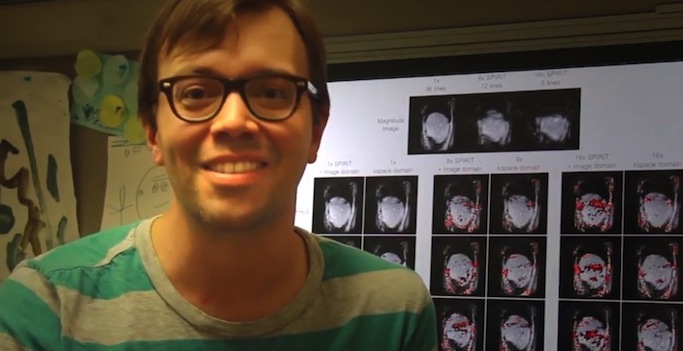
Will Grissom makes problem-solving nerds look cool
“I live for the problems we get to solve,” says Will Grissom, assistant professor of biomedical engineering, radiology and electrical engineering. Read MoreSep 26, 2014
-

Fox News: Professor touts faster, cheaper way to test for explosives
Sharon Weiss has modified white gold leaf paper so that its surface provides signal amplification of 100 million times – so that a laser and detector to identify the chemical molecules of whatever it has been applied to. Read MoreJul 31, 2014
-
Two Vanderbilt projects showcased at SmartAmerica Challenge EXPO
Two Vanderbilt engineers participated in the SmartAmerica Challenge EXPO in Washington D.C. Read MoreJun 12, 2014
-
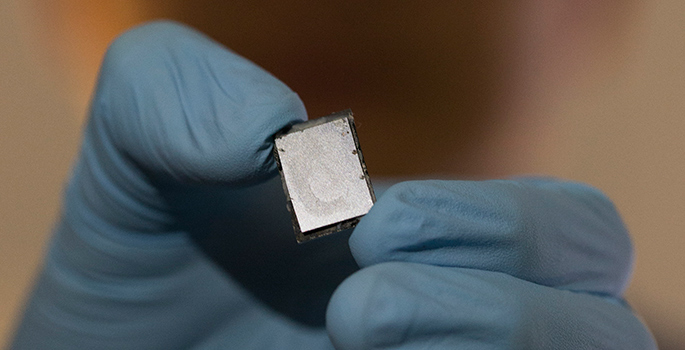
Liberating devices from their power cords
A new type of supercapacitor brings us a step closer to a day when everything from cell phones to electric vehicles will no longer need separate batteries. Read MoreMay 19, 2014
-
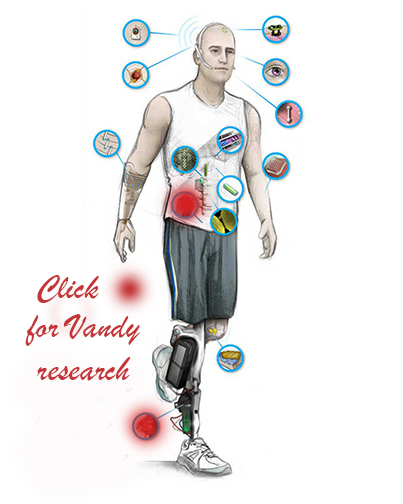
Two Vanderbilt projects featured in new NIBIB “Bionic Man” web tool
The prosthetics research of Michael Goldfarb is featured in "The NBIB Bionic Man," an interactive web tool that helps students and the public learn about innovative federally-funded biomedical research. Read MoreMay 6, 2014
-

Grissom receives foundation’s first 2014 external research award
Will Grissom, assistant professor of biomedical engineering, has been awarded the first External Research Award of 2014 from the Focused Ultrasound Foundation for his project titled “MR Temperature Imaging Toolbox for Focused Ultrasound Neurosurgery.” Read MoreApr 30, 2014
-

Giant helicopter arrives: First step for engineering lab
The recent delivery of a giant military helicopter is the first step in creating a unique full-scale Vanderbilt engineering lab. Read MoreMar 18, 2014
-

Nanoscale optical switch breaks miniaturization barrier
An ultra-fast and ultra-small optical switch has been invented that could advance the day when photons replace electrons in the innards of consumer products ranging from cell phones to automobiles. Read MoreMar 13, 2014
-

Engineering professors edit journal’s special issue on augmented reality
Vanderbilt engineering professors Jules White and Doug Schmidt, and University of Illinois professor Mani Golparvar-Fard, are guest editors of the February issue of "Proceedings of the IEEE," the most highly-cited general interest journal in electrical engineering and computer science. Read MoreMar 6, 2014
-
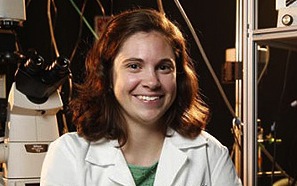
Engineering graduate student selected to attend Lindau Meeting of Nobel Laureates
School of Engineering graduate student Alex Walsh has been selected to attend the 64th Lindau Meeting of Nobel Laureates in Lindau, Germany, this summer. Read MoreMar 5, 2014
-
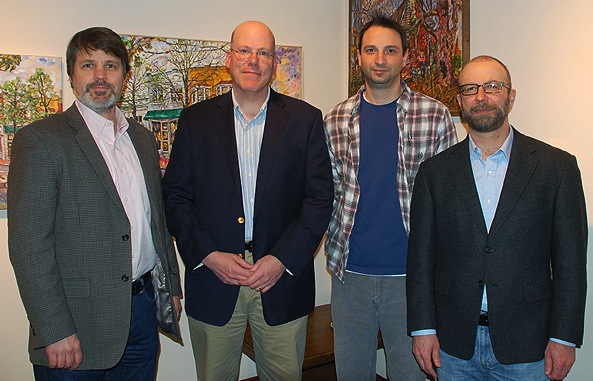
Four professors elected into AIMBE’s College of Fellows
Four biomedical engineering professors in Vanderbilt’s School of Engineering have been elected into the American Institute for Medical and Biological Engineering’s (AIMBE) College of Fellows. Read MoreFeb 26, 2014
-
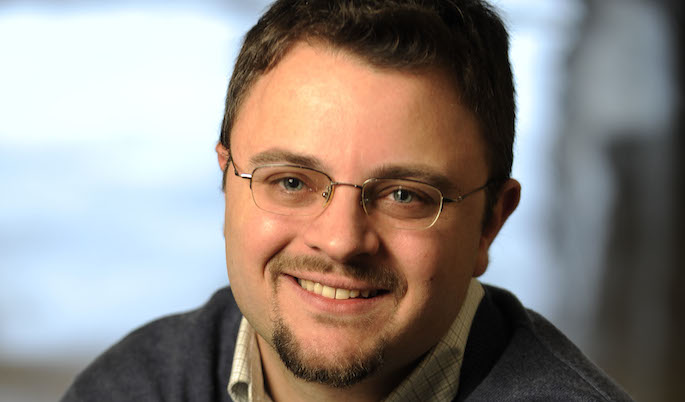
Valentine receives NSF Early Career award
Assistant Professor of Mechanical Engineering Jason Valentine has received a National Science Foundation Faculty Early Career Development grant. Read MoreFeb 20, 2014
-

FoxNews.com: Researchers work to secure military smartphones
Soldiers in Afghanistan are experimenting with smartphones engineered to better protect operational data designed by scientists at Vanderbilt University’s Institute for Software Integrated Systems. Douglas Schmidt, professor of computer science, is quoted. Read MoreFeb 13, 2014
-
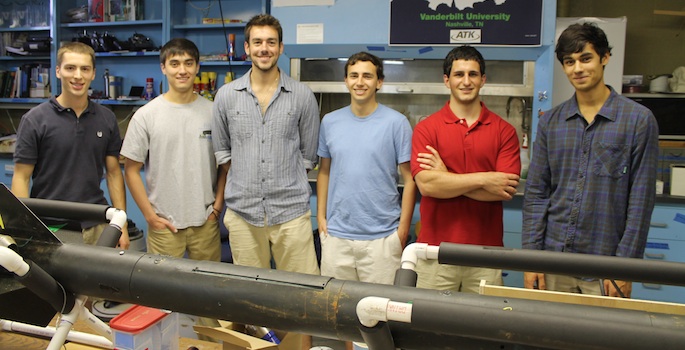
Vanderbilt “rocket cam” to capture landing hazards during NASA contest
The Vanderbilt Aerospace Club will outfit its NASA Student Launch Project rocket with a modified camera to capture landing hazards. Read MoreJan 17, 2014
-

Graduate student lead author of study of electron particles that can zap technology
A paper first-authored by Vanderbilt graduate engineering student Michael King concludes that electronics designed to operate with ultra-low power likely will exhibit high sensitivity to electron-induced single-event upsets due to interference from solar flares, cosmic rays and the like. Read MoreJan 15, 2014
-

Gizmodo: How Vanderbilt’s secret software lab is saving America
On a quiet street just off of Nashville's historic Music Row, a dedicated team of more than 100 researchers are developing software systems that may very well revolutionize the modern world. Read MoreJan 14, 2014
-

Making waves: In the hunt for invisibility, other benefits seen
A new way of assembling things, called metamaterials, may in the not too distant future help to protect a building from earthquakes by bending seismic waves around it, the way invisibility cloaks bend light. Jason Valentine, assistant professor of mechanical engineering, is quoted. Read MoreDec 26, 2013
-
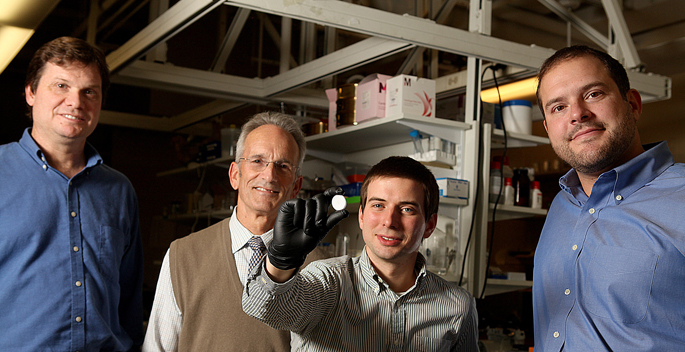
Biodegradable scaffold may spur wound healing
Biomedical and chemical engineers at Vanderbilt University, working with a pathologist, have constructed a sponge-like, biodegradable tissue “scaffold” that releases an enzyme-blocking molecule to indirectly activate endogenous pathways and enhance tissue regeneration and wound healing. Read MoreDec 19, 2013
-
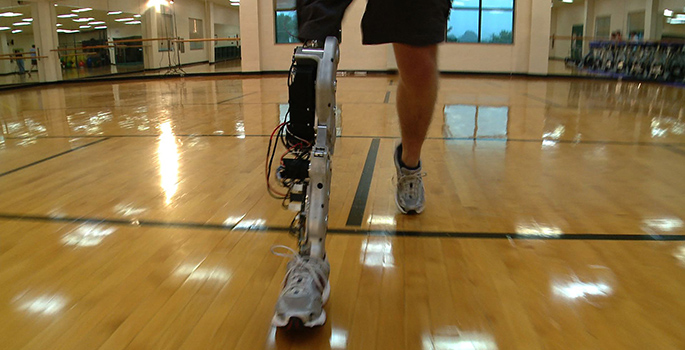
Robotic advances promise artificial legs that emulate healthy limbs
Recent advances in robotics technology make it possible to create prosthetics that can duplicate the natural movement of human legs which promises to dramatically improve the mobility of lower-limb amputees. Read MoreNov 7, 2013