Engineering And Technology
-
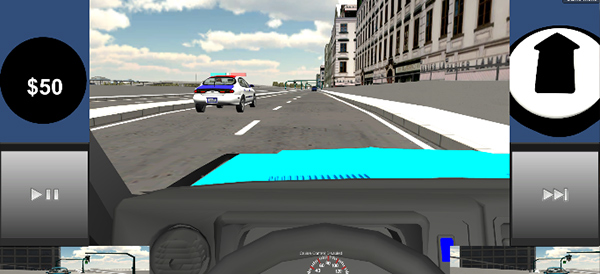
Using virtual reality to help teenagers with autism learn how to drive
A team of engineers and psychologists have developed a virtual reality driving simulator designed to help teenagers with autism spectrum disorder learn to drive, a key skill in allowing them to live independent and productive lives. Read MoreJul 21, 2016
-
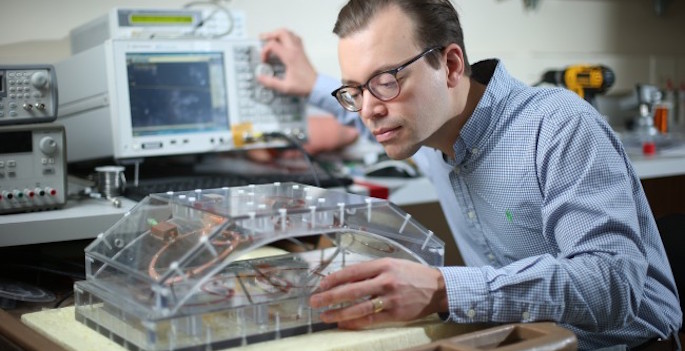
Open-source instructions for focused ultrasound provide cancer research boost
Vanderbilt University’s William Grissom and Charles Caskey are throwing open doors with a do-it-yourself, open-source software and hardware guide to enabling existing imaging machines with focused ultrasound technology. Read MoreJun 30, 2016
-
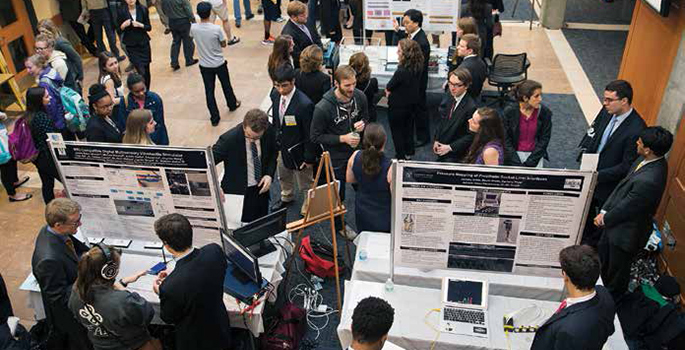
MEDIA ADVISORY: Zero-energy home and zero-emission microbrewery designs part of Vanderbilt engineering school’s Design Day
A number of exciting projects are among the 74 design projects featured at the School of Engineering’s annual Design Day, including zero-energy home designs and a solar-powered desalination system. Read MoreApr 21, 2016
-
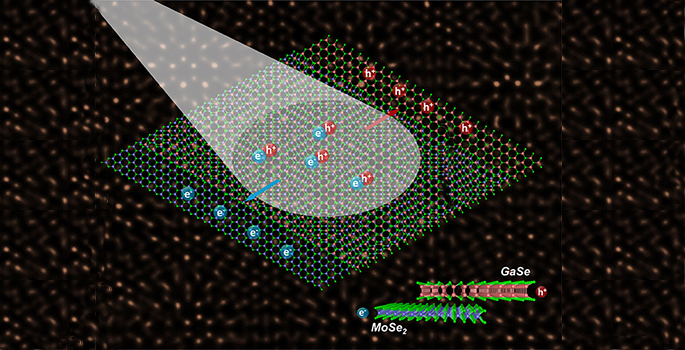
Advance in creating atomically thin electronic and optical devices
A future generation of atomically thin optoelectronics devices, including transistors, photodetectors and solar cells, is a step closer because of an advance in the art of epitaxy made by scientists at Oak Ridge National Laboratory (ORNL) with an assist from a pair of Vanderbilt physicists. Read MoreApr 15, 2016
-

Measuring drought impact in more than dollars and cents
A pair of Vanderbilt doctoral students has assembled a multi-disciplinary team of graduate students from around the country to conduct a multi-faceted study of how people are affected by and responding to drought conditions in the United States. Read MoreApr 13, 2016
-

Senior Design team uses lasers to cut waste in credit card production
Vanderbilt seniors have designed a new method that improves the accuracy of magnetic strip placement during the manufacture of payment cards. Read MoreApr 4, 2016
-
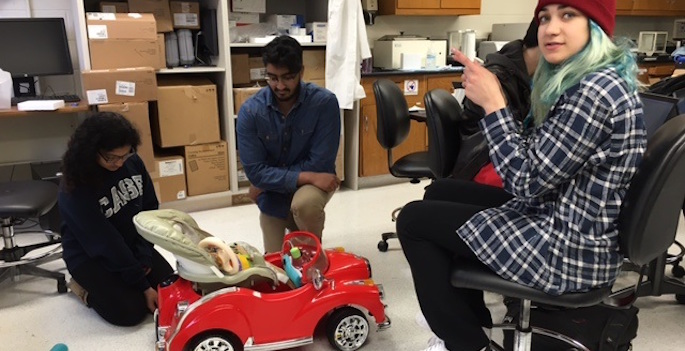
Biomedical engineering undergrads retrofit toy car for toddler’s special needs
Undergraduates taking Amanda Lowery’s Material Manipulations course have redesigned a toy car so a two-year-old with cerebral palsy can drive it. Read MoreApr 4, 2016
-
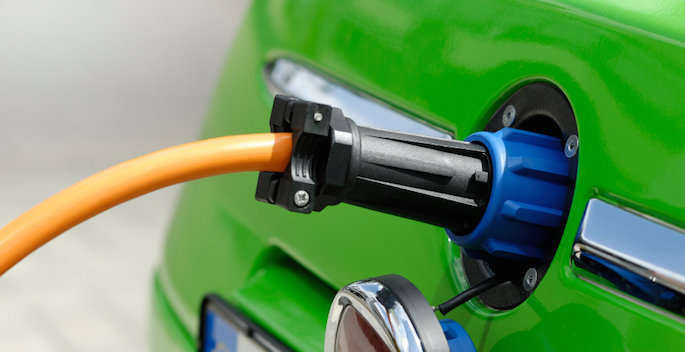
How to make electric vehicles that actually reduce carbon
Scientists from Vanderbilt and George Washington universities have worked out a way to make electric vehicles that not only are carbon neutral but carbon negative. Read MoreMar 2, 2016
-
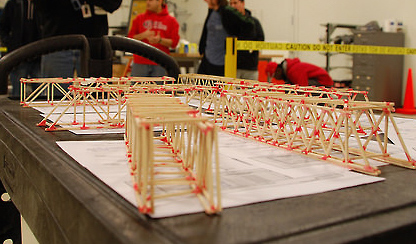
Media advisory: Local students put their bridge-building skill to the test
The American Society of Civil Engineers' Music City Bridge Building Competition is being held Saturday, Feb. 27 at Vanderbilt University's Laboratory for Systems Integrity and Reliability. Read MoreFeb 24, 2016
-

Cotton candy machines may hold key for making artificial organs
Vanderbilt engineers have modified a cotton candy machine to create complex microfluidic networks that mimic the capillary system in living tissue and have demonstrated that these networks can keep cells alive and functioning in an artificial three-dimensional matrix. Read MoreFeb 8, 2016
-

Vanderbilt on team to develop advanced nuclear reactors to reduce carbon emissions
Vanderbilt University is part of a new public-private partnership that has been awarded up to $40 million from the U.S. Department of Energy to explore, develop and demonstrate advanced nuclear reactor technologies to help America meet its goals for carbon emission reduction. Read MoreJan 27, 2016
-

Harnessing the power of computers to create a sustainable future
Harnessing the power of computers to help create an economically, environmentally and socially sustainable future – that is the purpose of a major new grant issued by the National Science Foundation. Read MoreJan 8, 2016
-
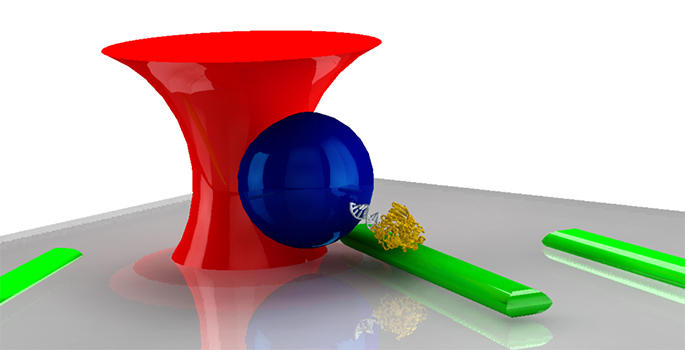
Anatomy of a microscopic wood chipper: New observations reveal how an individual cellulase enzyme operates
Biomolecular engineers at Vanderbilt University have obtained the most detailed measurements ever made of the behavior of an individual cellulase enzyme as it decomposes cellulose, the most plentiful polymer on the planet. Improved understanding of how cellulases work could be the key to producing advanced biofuels that can replace gasoline for powering vehicles. Read MoreDec 10, 2015
-
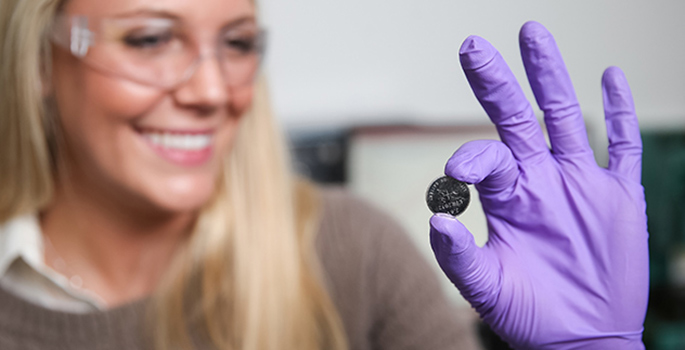
Quantum dots made from fool’s gold boost battery performance
Vanderbilt engineers have discovered that adding quantum dots made from fool's gold to the electrodes of standard lithium batteries can substantially boost their performance. Read MoreNov 11, 2015
-

Vanderbilt engineering MOOC leads talented Indian student to Nashville
A Coursera student in India’s round trip of 16,716 miles began with an invitation to spend a summer in Nashville, Tennessee, as a computer science intern at Vanderbilt University. Read MoreOct 16, 2015
-
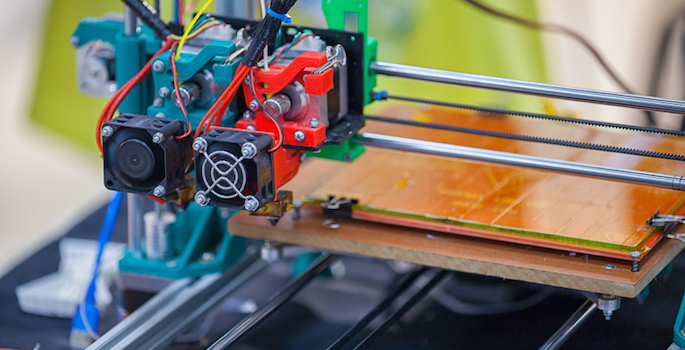
BOOM! How the Maker Movement is changing the world
Mark Hatch, CEO and co-founder of TechShop, a fast-growing chain of co-working spaces where people come to build prototypes for the products they want to sell, is giving a free public lecture on the Maker Revolution. Read MoreOct 2, 2015
-
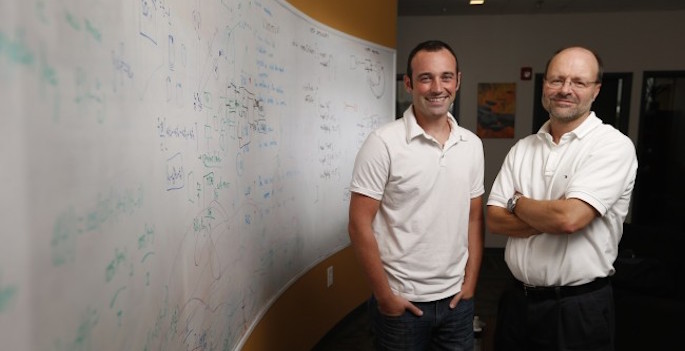
VenoStent, PinPtr edge closer to market with boost from $200K AIR-TT grants
Two innovative but very different products designed by Vanderbilt University engineers are getting a financial push onto the market, thanks to National Science Foundation Accelerating Innovation Research–Technology Translation (AIR-TT) grants of about $200,000 each. Read MoreOct 1, 2015
-
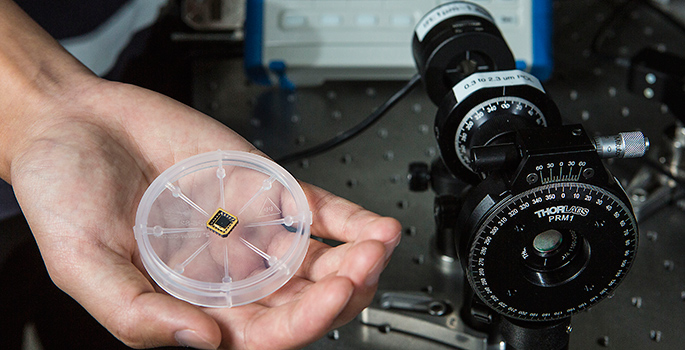
First circularly polarized light detector on a silicon chip
Invention of the first integrated circularly polarized light detector on a silicon chip opens the door for development of small, portable sensors that could expand the use of polarized light for drug screening, surveillance, etc. Read MoreSep 22, 2015
-

Leg braces created at Vanderbilt help dog walk
VIDEO» There are prosthetics for people, but what do pet owners do when their animal needs help walking? Read MoreSep 11, 2015
-
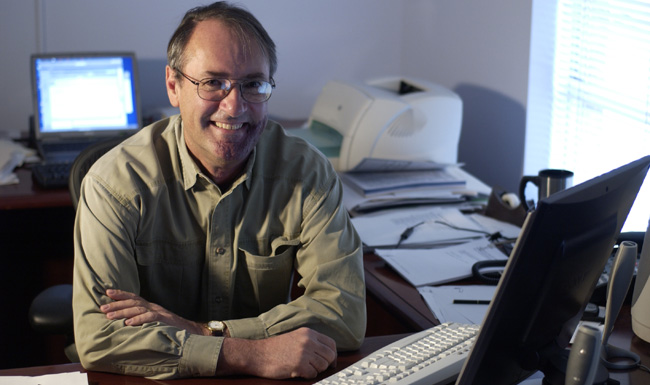
Sztipanovits builds on ‘Internet of Things’ and ‘Industrial Internet’ for the next tech revolution
Janos Sztipanovits wants to connect the whole world to the internet--and that means not just people, but clothes dryers, traffic lights and smoke detectors, too. Read MoreAug 18, 2015