External Story
-

Gates grant to fund mobile phone-based detection tool for newborn jaundice
Chetan Patil, research assistant professor of biomedical engineering, has been awarded a $100,000 grant from the Bill and Melinda Gates Foundation to test the ability of an adapted mobile phone to diagnose jaundice in newborns in developing countries. Read MoreJun 5, 2012
-

Academic Minute: Nicotine and memory
Paul Newhouse, Jim Turner Professor of Cognitive Disorders, is interviewed about his research showing that nicotine can help boost memory in people with mild cognitive impairment. Read MoreMay 30, 2012
-

Idea Guy: The Owen Graduate School of Management’s David Owens examines why some great innovations fail
There are ways to circumvent toxic group dynamics, creativity-resistant managers and even self-sabotage so that quality ideas can flourish, says Owen Graduate School of Management professor David Owens. Read MoreMay 23, 2012
-

Leading Light: Anita Mahadevan-Jansen pioneers ways to use light in medicine and biology
More than 100 years ago, the discovery of X-ray revolutionized medical care by opening a window into the human body. Today biomedical photonics—the application of light in medicine and biology—promises to be equally groundbreaking. At the forefront of the revolution is Anita Mahadevan-Jansen, the School of Engineering’s Orrin H. Ingram Professor of Engineering. Read MoreMay 23, 2012
-

Common antibiotic found to pose increased heart risk
Vanderbilt researchers have discovered a rare, but important risk posed by the antibiotic azithromycin, commonly called a “Z-pack.” The study found a 2.5-fold higher risk of death from cardiac arrhythmia in the first five days of taking azithromycin when compared with another common antibiotic or no antibiotics at all. Read MoreMay 21, 2012
-

Bright and Bold: Spurring innovation through business and research
Faculty and alumni from the Owen Graduate School of Management combine creativity and research to break down barriers in the business world. Read MoreMay 16, 2012
-

Vision study changes how we see the brain
Vanderbilt researchers have discovered that the pulvinar, a mysterious structure buried in the center of our brains, determines how we see the world — and whether we see at all. Read MoreMay 10, 2012
-

Hand surgeons scarce for emergency surgery
Wrist, hand and finger trauma are the most common injuries presenting to emergency departments nationwide, yet only 7 percent of Tennessee hospitals have a hand specialist on call 24/7 to treat these patients, according to a Vanderbilt study published online today in the Annals of Plastic Surgery. Read MoreMay 2, 2012
-

Cost study shows timing crucial in appendectomies
Removing a child’s ruptured appendix sooner rather than later significantly lowers hospital costs and charges, according to a recently published study. Read MoreApr 26, 2012
-
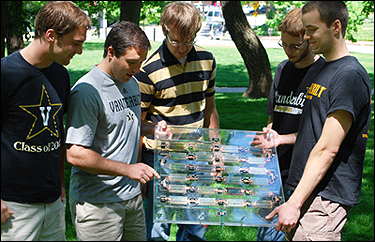
Engineering team demos spinach-powered solar cell at EPA competition
Five Vanderbilt engineering seniors will be on the National Mall in Washington, D.C., April 21-23 to demonstrate a solar panel that uses spinach to capture and convert the sun’s energy to electricity. Read MoreApr 20, 2012
-

MRSA in pregnancy may be less dangerous than previously thought
Vanderbilt pediatric infectious disease researchers studying antibiotic-resistant staph say fears that mothers carrying the germ may set their newborns up for infection are unfounded. Read MoreApr 19, 2012
-

Academic Minute: The neurology of alcohol addiction
In this Academic Minute podcast, Danny Winder, associate professor of molecular physiology and biophysics, explains why the effects of alcohol can vary widely among individuals. Read MoreApr 17, 2012
-

Vanderbilt to study deep brain stimulation as treatment for depression
Vanderbilt University Medical Center is one of approximately 20 centers in a nationwide clinical study investigating the use of deep brain stimulation (DBS) as an intervention for patients with major depression. Read MoreApr 17, 2012
-
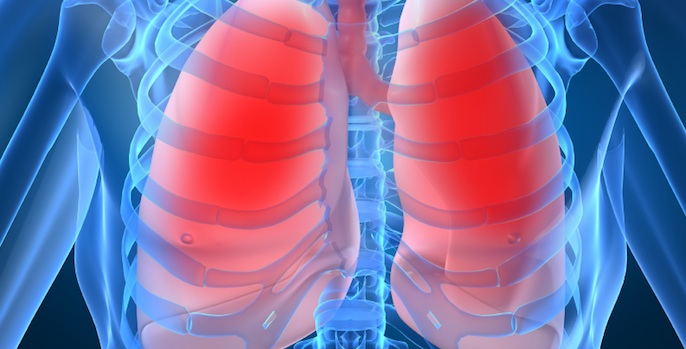
Researchers spot Achilles’ heel in respiratory virus
A new viral protein structure could jump-start vaccine development for two leading causes of lower respiratory disease in children and elderly adults. Read MoreApr 13, 2012
-

Vanderbilt research finds immune cells fan flames of obesity-related inflammation
Researchers at Vanderbilt University have discovered that an unusual set of immune cells, called invariant natural killer T cells, can exacerbate obesity-related inflammation. Read MoreApr 10, 2012
-

Common Ground: Amy-Jill Levine explores the shared heritage of Christianity and Judaism
Amy-Jill Levine explores the shared heritage of Christianity and Judaism. Read MoreApr 9, 2012
-

Vanderbilt researchers help reveal complex role of genes in autism
Mutations in hundreds of genes involved in wiring the brain may contribute to the development of autism spectrum disorders (ASD). Read MoreApr 4, 2012
-

New York Times: Study says DNA’s power to predict illness is limited
Vanderbilt University is already doing genetic analyses of patients to help in developing a shortlist of effective drugs, says Dr. William Schaffner, chairman of the department of preventive medicine at its medical school. Read MoreApr 3, 2012
-

Higher-spending hospitals have fewer deaths for emergency patients
Higher-spending hospitals have better outcomes for their emergency patients, including fewer deaths, according to a Vanderbilt study released as a working paper through the National Bureau of Economic Research. Read MoreApr 3, 2012
-

No way home: Vijay Padmanabhan helps tread the line between detainees’ safety and human rights
Former State Department adviser Vijay Padmanabhan says there is no quick and easy answer when contemplating what to do about detainees. Read MoreMar 29, 2012