Bill Snyder
-

Surprising finding by VU team sheds light on fibrotic disease
Integrins are membrane proteins made up of combinations of different “alpha” and “beta” subunits that enable cells throughout the body to interact with their surroundings. Read MoreJan 19, 2017
-

COX-2 ‘conjugate’ may slow growth of some tumors: study
More than a decade after the anti-inflammatory drugs Vioxx and Bextra were pulled from the market because of a heightened risk of heart attack and stroke in some patients, COX-2 inhibitors may be on the verge of a comeback, this time as anti-cancer agents. Read MoreJan 19, 2017
-

GRE may be poor predictor of science success: study
Since it was created in 1949, the Graduate Record Exam (GRE) has been one of the most widely used requirements for admission to U.S. graduate schools. As a predictor of performance and success in graduate school, however, the exam is not without its critics. Read MoreJan 19, 2017
-

Amount of daylight may impact serotonin programming
The duration of exposure to daylight, or the “photoperiod,” may affect development of seasonal affective disorder by programming serotonin neurons in the brain, according to Vanderbilt University researchers. Read MoreJan 19, 2017
-

A heart-brain connection
Cognitive and attention deficits observed in children following surgery before age 5 to repair congenital heart defects likely will persist into their teens and young adulthood. Read MoreJan 17, 2017
-

Lindsley’s drug discovery efforts land ASPET Award
Craig Lindsley, Ph.D., a leader of Vanderbilt University School of Medicine’s groundbreaking drug discovery program, is the 2017 recipient of the Pharmacia-ASPET Award in Experimental Therapeutics from the American Society for Pharmacology and Experimental Therapeutics (ASPET). Read MoreJan 12, 2017
-
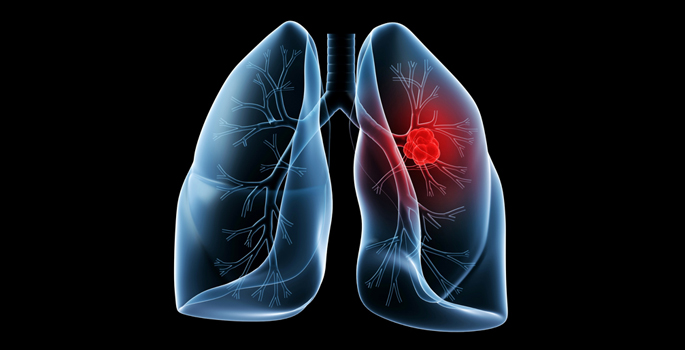
Team’s discovery offers new insight on lung cancer risk
Researchers in the Schools of Medicine and Engineering at Vanderbilt University have discovered a proteomic “signature” from the airways of heavy smokers that could lead to better risk assessment and perhaps new ways to stop lung cancer before it starts. Read MoreJan 12, 2017
-
Nominations sought for Vanderbilt Prize in Biomedical Science
Nominations for the 2017 Vanderbilt Prize in Biomedical Science are now being accepted. The deadline is March 31. Read MoreJan 12, 2017
-
Department of Medicine’s NIH funding swells
Vanderbilt University School of Medicine has long been recognized as a national leader in biomedical research. Nowhere is this more evident than in the school’s Department of Medicine, which, during the 2016 federal fiscal year that ended Sept. 30, broke another record. Read MoreJan 5, 2017
-
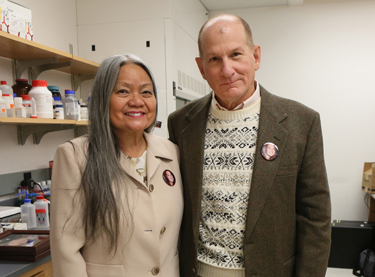
Daughter’s rare adverse drug reaction inspires family’s donation
Last year Paul and Wanpen Anderson of Champaign, Illinois, were preparing to celebrate the Christmas holidays with their two children when their 22-year-old daughter, Angela, developed a rare adverse drug reaction called SJS/TEN. Read MoreDec 21, 2016
-

New clues emerge in rare form of childhood epilepsy
Researchers at Vanderbilt University Medical Center (VUMC) are one step closer to understanding what causes early-onset epileptic encephalopathy, a rare form of childhood epilepsy that is difficult to treat and has poor developmental outcomes. Read MoreDec 15, 2016
-
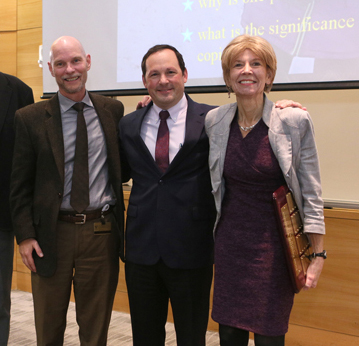
Symposium honors Casagrande’s career
Colleagues of Vivien Casagrande, Ph.D., celebrated her distinguished career in the visual sciences with a “Lifetime of Vision” symposium Nov. 18 in Biological Sciences/Medical Research Building III. Read MoreDec 1, 2016
-
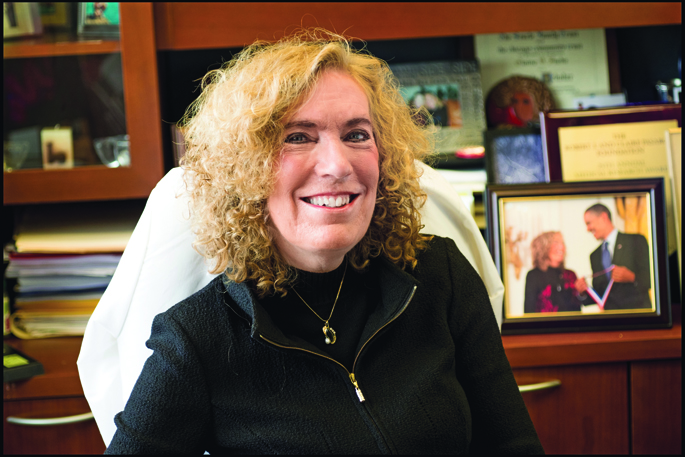
Rockefeller University’s Elaine Fuchs, Ph.D., named 2016 recipient of the Vanderbilt Prize in Biomedical Science
Elaine Fuchs, Ph.D., whose innovative use of reverse genetics has helped redefine the study of skin diseases and cancer stem cells, is the recipient of the 2016 Vanderbilt Prize in Biomedical Science, officials at Vanderbilt University Medical Center (VUMC) announced today. Read MoreNov 28, 2016
-

Building the basement membrane
Vanderbilt researchers have discovered steps in the regulation of a key enzyme that builds the basement membrane, a structure that undergirds nearly all animal tissues. Read MoreNov 21, 2016
-
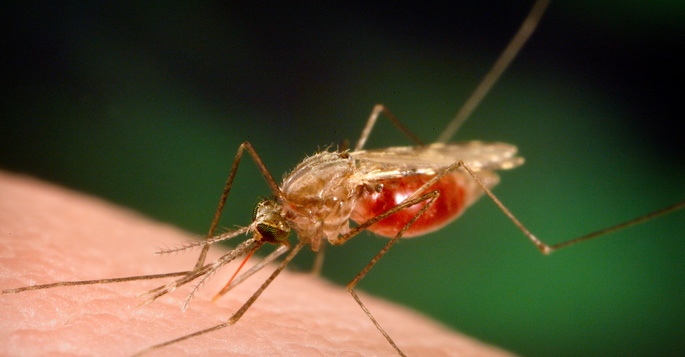
Early study finds antibody that ‘neutralizes’ Zika virus
Researchers at Vanderbilt University Medical Center and Washington University School of Medicine in St. Louis have isolated a human monoclonal antibody that in a mouse model “markedly reduced” infection by the Zika virus. Read MoreNov 7, 2016
-

Address outlines VUMC’s strategic direction
In his State of the Medical Center address on Wednesday, Jeff Balser, M.D., Ph.D., President and CEO of Vanderbilt University Medical Center (VUMC), and Dean of the Vanderbilt University School of Medicine, described a “Strategic Compass” to help the Medical Center continue to “grow and shine” in the years to come. Read MoreNov 3, 2016
-
Brown named interim director of Institute of Chemical Biology
H. Alex Brown, Ph.D., the Bixler-Johnson-Mayes Professor in the Department of Pharmacology, has been named interim director of the Vanderbilt Institute of Chemical Biology (VICB). Read MoreNov 3, 2016
-
Vanderbilt’s Dugan, Patel, Wallace set for Discovery Lecture
Three Vanderbilt University neuroscientists on the forefront of research in autism, addiction and Alzheimer’s disease will discuss their cutting-edge investigations during the next Flexner Discovery Lecture on Thursday, Nov. 3. Read MoreOct 27, 2016
-

Iadecola set for Oates Lectureship in Clinical Pharmacology
Costantino Iadecola, M.D., an expert in the molecular pathology of ischemic brain injury and neurodegeneration at Weill Cornell Medical College in New York, will present the 10th annual Meredith S. and John A. Oates Lectureship in Clinical Pharmacology on Nov. 3. Read MoreOct 27, 2016
-
DNA damage response protein
Vanderbilt researchers have determined that a previously uncharacterized protein responds to DNA replication stress and has an essential role in maintaining the integrity of the genome. Read MoreOct 21, 2016