National Institues Of Health
-

Engineering professor receives $3.1M NIH grant to develop augmented reality surgery system for precision cochlear implant procedures
Jack Noble, assistant professor of electrical and computer engineering, is working with clinical colleagues to develop and validate an augmented reality vision guidance system to help surgeons place cochlear implants more precisely. The guidance system leverages emerging artificial intelligence technology and uses inexpensive, commonly available equipment, making it practical for many operating rooms. Read MoreAug 22, 2025
-

Vanderbilt scientist collaborates with Cajal Institute in Spain to train a bank of AI models to identify memory formation signals in the brain
The researchers, including Vanderbilt’s team led by Kari Hoffman, focused their efforts on the detection of hippocampal ripples, which are considered biomarkers of memory and are affected by epilepsy and Alzheimer’s disease. Read MoreApr 15, 2024
-

NIH honors Vanderbilt with prestigious research prize
Vanderbilt University has been awarded a prize from the National Institutes of Health for its creation of the LGBTQ+ Policy Lab, which advances a culture of inclusion for sexual and gender minority individuals through interdisciplinary research and collaboration. Read MoreMar 29, 2024
-

Vanderbilt biochemists discover breakthrough evolution-resistant compound to combat antibiotic resistance
Vanderbilt scientist Houra Merrikh led a team of researchers who discovered the first evolution-resistant chemical compound that prevents drug resistance development in bacteria. The compound is also a drug development platform that targets antimicrobial resistance during treatment of infections with antibiotics and evolution in general, Merrikh said. Read MoreMar 1, 2024
-
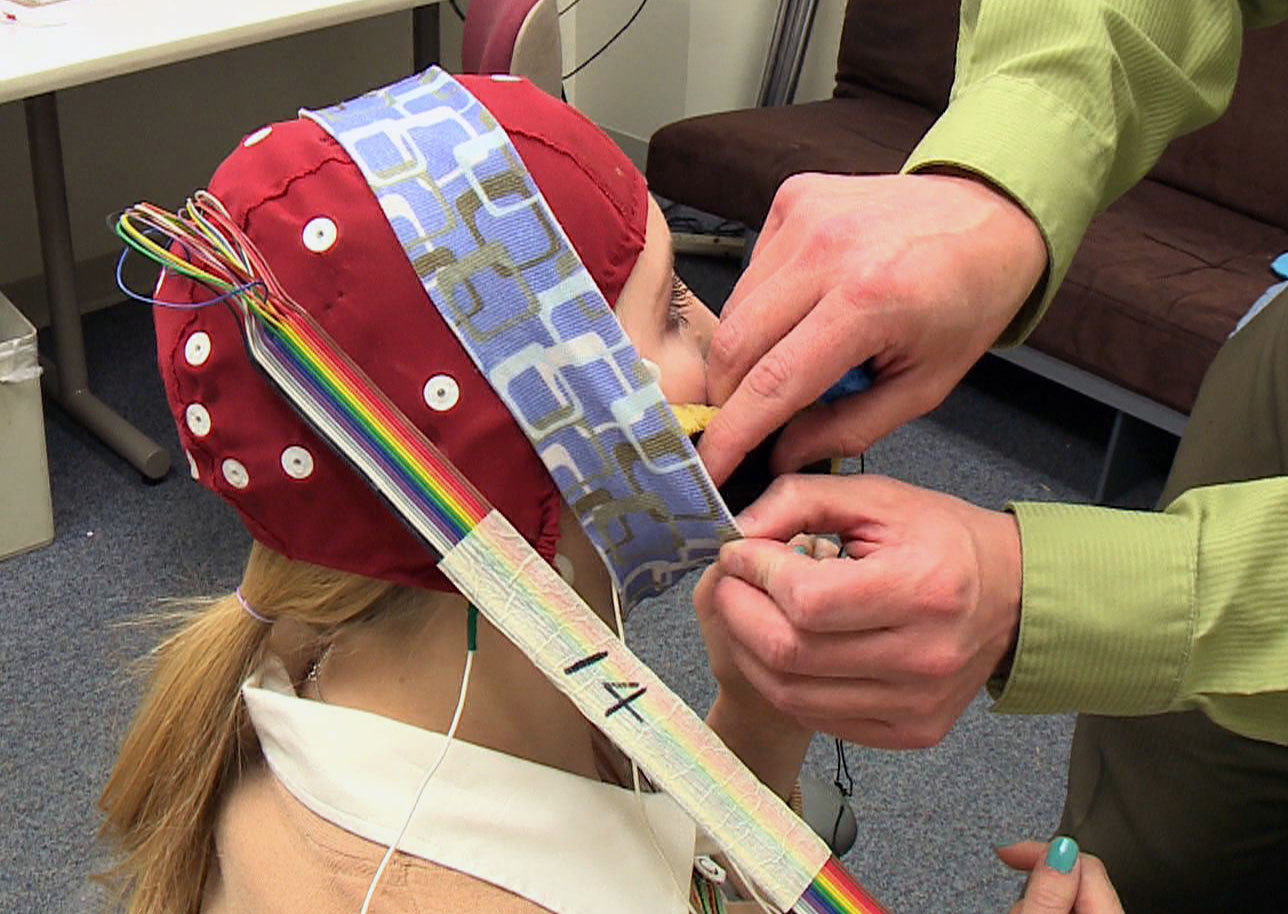
Electric “thinking cap” controls learning speed
In a new study published in the Journal of Neuroscience, Vanderbilt psychologists Robert Reinhart, a Ph.D. candidate, and Geoffrey Woodman, assistant professor of psychology, show that it is possible to selectively manipulate our ability to learn through the application of a mild electrical current to the brain, and that this… Read MoreApr 11, 2014