Karl Zelik
-

Five engineering faculty awarded Discovery Grants
Five proposals from School of Engineering faculty have been selected by the Office of the Provost for 2019 Discovery Grants, which advance new ideas and cutting-edge scholarship in the university’s core disciplines. “Discovery Grants serve as a key internal funding vehicle for fostering research that has the potential to improve lives and address society’s complex problems—a vital part... Read MoreJun 29, 2019
-
Vanderbilt engineers tripped people 190 times, but it was for a good cause
Andrés Martínez strode briskly on the treadmill, staring straight ahead and counting backwards by seven from 898, a trick to keep his brain from anticipating the literal stumbling block heading his way: a compact 35 pounds of steel specifically designed to make him fall. Special goggles kept him from looking down. Arrows on an eye-level... Read MoreJun 19, 2019
-
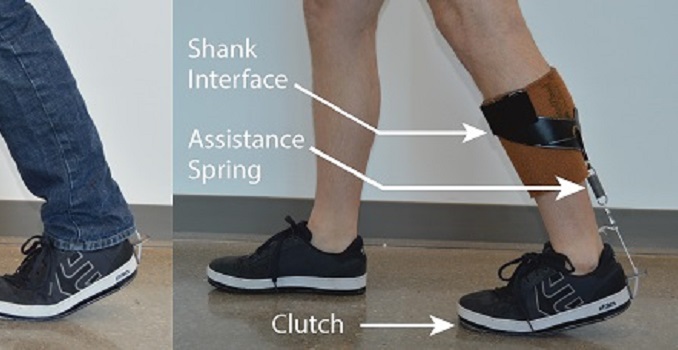
New low-profile ankle exoskeleton fits under clothes for potential broad adoption
Developed by Vanderbilt mechanical engineers, the device is believed to be the first ankle exoskeleton that could be worn under clothes without restricting motion. It does not require additional components such as batteries or actuators carried on the back or waist. Read MoreMar 22, 2019
-
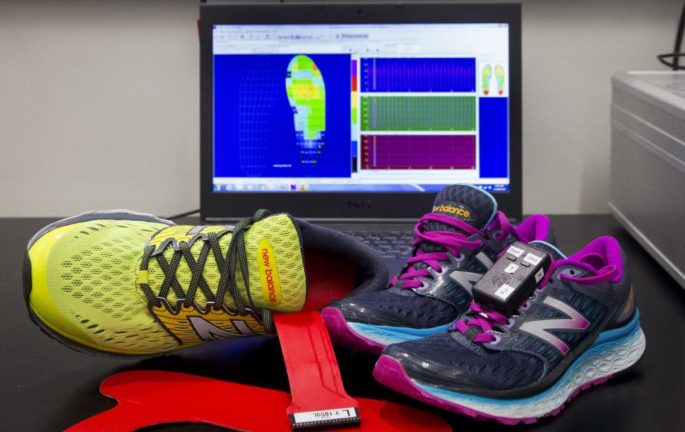
Stress fractures and running wearables: The mistake that could mean injuries
Working with an orthopedic specialist who advises the NFL Players Association, Assistant Professor of Mechanical Engineering Karl Zelik discovered that sensors only measuring the impact of the foot hitting pavement tell users little about the forces on bones that lead to stress fractures. Read MoreJan 17, 2019
-

Ultrathin device harvests electricity from human motion
A new energy harvesting system developed at Vanderbilt University can generate electrical current from the full range of human motions and is thin enough to embed in clothing. Read MoreJul 21, 2017
-

VUCast: Engineers help dog walk, caving for clues, and students on the run!
In the latest VUCast: See a rescue dog walk again, thanks to Vanderbilt engineering students; learn what we found when we followed climate researchers underground; and the Class of 2019 runs for the Commodores! Watch now. Read MoreSep 10, 2015
-

Zelik, team discover hip, foot muscles more important to walking than previously thought
In his effort to develop better prosthetic limbs, Karl Zelik had to start with deciphering more clearly how muscles function in walking. His path not only led to a better way of quantifying human locomotion, but also to the discovery that muscles around the hip and in the foot are more important to walking than previously thought. Read MoreJul 13, 2015
-

Zelik explores biological mechanisms behind human movement
Karl Zelik's Biomechanics and Assistive Technology laboratory is dedicated to locomotion—in particular, to understanding the mechanisms of human locomotion and using engineering to improve movement and mobility for people with impairments. Read MoreDec 4, 2014