Home Features
-

Collaboration propels advancements in personalized cochlear implant procedures
Vanderbilt University Medical Center is the busiest cochlear implant center in the U.S., performing more than 300 implant surgeries each year. A key driver is close collaboration among engineers, surgeons, audiologists, speech scientists and other experts. This interdisciplinary, trans-institutional work has enabled a truly customized approach for each patient. Research teams have developed image-guided surgery for... Read MoreFeb 26, 2021
-
New $2 million NIH grant advances less invasive procedure for TLE
A Vanderbilt research team has received a $2 million National Institutes of Health grant to further develop a needle-size robotic surgery system with real-time MRI guidance for drug resistant temporal lobe epilepsy (TLE). Such a procedure has the potential to reduce or eliminate seizures using a minimally invasive approach over the current standard of care,... Read MoreFeb 16, 2021
-
Vanderbilt researchers’ surgical robots could make radical prostatectomy safer, less invasive
Researchers at the Vanderbilt Institute for Surgery and Engineering have developed a minuscule robot that could revolutionize surgical procedures for treating prostate cancer, which affects one in nine men in the United States. Using a lifelike model, the team demonstrated that the surgical robot could not only remove the prostate gland and tissues through the... Read MoreFeb 10, 2021
-
Dozens of engineering professors among world’s top 2% of working scientists
Nearly 40 School of Engineering faculty members have been named among the top 2 percent of 7 million working scientists in the world. More than 60 percent of the school’s full professors are in this elite group, based on a recent study by a Stanford University professor and his colleagues. The study combines several different... Read MoreJan 25, 2021
-
Cancer Institute grant funds new integrated approach to early lung cancer detection
Vanderbilt researchers have received a National Cancer Institute grant to develop a novel, integrative approach to detect early signs of lung cancer. The four-year project builds on a related, recent study that established the value of using three separate measures—structural imaging, a protein marker and information available from electronic health records—to predict lung cancer in... Read MoreJan 22, 2021
-
Optical computing at sub-picosecond speeds developed at Vanderbilt
Vanderbilt researchers have developed the next generation of ultrafast data transmission that may make it possible to make already high-performance computing “on demand.” The technology unjams bottlenecks in data streams using a hybrid silicon-vanadium dioxide waveguide that can turn light on and off in less than one trillionth of a second. The article, “Sub‐Picosecond Response... Read MoreJan 19, 2021
-
Vanderbilt civil engineer partners with TDOT to seek ways to mitigate opioid epidemic
One of the largest obstacles for patients seeking effective substance abuse treatment is a lack of transportation to the treatment facilities. Vanderbilt University researcher Janey Camp, associate professor of civil and environmental engineering, is working on a project to help clear those roadblocks. Janey Camp (Vanderbilt University) Camp is leading an 18-month, in-depth analysis of... Read MoreJan 6, 2021
-

Computer science team wins global contest with AI model that translates English to code
IBM will use a Vanderbilt model as the end-user scripting assistant in its open-source Command Line AI Project. Read MoreDec 14, 2020
-
Researchers develop unique process for producing light-matter mixture
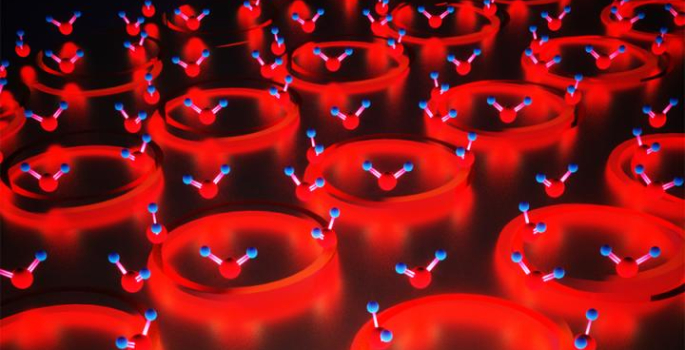
Discovery provides insight for developing next generation optoelectronic and infrared devices In groundbreaking new research, an international team that includes a Vanderbilt engineer has developed a unique process for producing a quantum state that is part light and part matter. Read MoreDec 7, 2020
-
Mahadevan-Jansen and Vanderbilt Biophotonics Center resume lab activity with renewed purpose during Research Ramp-up
Anita Mahadevan-Jansen (Vanderbilt University) The Vanderbilt Biophotonics Center, directed by Anita Mahadevan-Jansen, Orrin H. Ingram Professor of Biomedical Engineering, conducts research on clinical photonics, neurophotonics and multiscale photonics to develop optical technologies that improve patient care. When Vanderbilt ramped down in-person research activities in mid-March due to the COVID-19 pandemic, Mahadevan-Jansen and her team did... Read MoreDec 4, 2020
-
CZI grant expands training and access to high-end imaging techniques
With a grant from the Chan Zuckerberg Initiative’s Imaging Scientists program, a research assistant professor of biomedical imaging will extend the accessibility of specialized microscopy equipment and expertise within Vanderbilt University to a broader pool of researchers, including students. Bryan Millis, also a research assistant professor of cell and developmental biology, develops microscopy and imaging technologies... Read MoreDec 2, 2020
-

Engineering professor Ndukaife wins award in Rising Stars of Light global competition
Justus Ndukaife, assistant professor of electrical engineering, spent 20 minutes describing his optical nanotweezers to a panel of five distinguished professors from the United States, Australia, and China during a live online competition—Rising Stars of Light—that has drawn 260,000 viewers worldwide. Read MoreNov 30, 2020
-
Imaging brain’s white matter is predictive “biomarker” for Alzheimer’s disease progression
Measuring changes in functional connectivity of the brain’s white matter, which is made up of nerve fibers and their protective myelin coating, can predict Alzheimer’s disease progression, researchers in the Vanderbilt University Institute of Imaging Science have found. Previous studies have correlated variations in blood oxygenation level dependent (BOLD) signals detected by functional magnetic resonance... Read MoreNov 20, 2020
-
Vanderbilt researchers bring paradigm-shifting technology to endoscopic procedures
A collaboration between international and Vanderbilt University researchers is helping to update a tried-and-true medical technology for the 21st century. The development of an intelligent and autonomous Magnetic Flexible Endoscope holds the promise of making colonoscopies safer, less painful, more widely available and less expensive. The article “Enabling the future of colonoscopy with intelligent and... Read MoreNov 19, 2020
-
Engineering lab returns during Vanderbilt’s Research Ramp-up to advance research in neurodegeneration
The lab of Ethan Lippmann, assistant professor of chemical and biomolecular engineering and biomedical engineering, seeks to model, understand, and ultimately treat neurodegeneration, focusing primarily on the blood-brain barrier, a border of protective blood vessels found in the brain. Before the COVID-19 pandemic, Lippmann’s team in the Neurovascular Engineering and Therapeutic Design Laboratory was firing... Read MoreNov 16, 2020
-
Researchers create technique that corrects distortions in MRI images
Perfecting MRI images with deep learning, Vanderbilt and VUMC researchers have created a technique that corrects image distortions, which provides more accurate information for researchers, radiologists and neuroscientists to better interpret brain scans. The work by Bennett Landman, professor of electrical engineering and computer science and radiology and radiological sciences, and Kurt Schilling, research assistant... Read MoreNov 11, 2020
-
Wearable sensor algorithms powered by machine learning could be key to preventing runners’ injuries
A trans-institutional team of Vanderbilt engineering, data science and clinical researchers has developed a novel approach for monitoring bone stress in recreational and professional athletes, with the goal of anticipating and preventing injury. Using machine learning and biomechanical modeling techniques, the researchers built multisensory algorithms that combine data from lightweight, low-profile wearable sensors in shoes... Read MoreOct 28, 2020
-

Team examines operating limits in solid-state batteries to improve driving range of electric vehicles
There is huge momentum toward adoption of battery electric vehicles primarily because performances are meeting or exceeding the properties of traditional automobiles. Consumers want electric vehicles that have similar driving range (energy density) and charging styles and times (power density) to gasoline powered vehicles. “One pathway to improving the energy density of the battery, or... Read MoreOct 22, 2020
-

Team’s sustained work in T-cell immune response awarded P01 grant totaling $11 million
For more than a decade Matt Lang and collaborators across the U.S. have worked to recreate key components of T-cells and how they know when to start fighting disease. Conventional wisdom suggested that T-cells formed regular, force-free bonds with infected cells, and in doing so caused the chain reaction of immune response. The team slowly... Read MoreOct 4, 2020
-

$8.7 million DARPA grant advances AI-assisted CPS design work
A new, $8.7 million project—Design. R–AI-assisted CPS Design—involves pathbreaking work for the Defense Advanced Research Projects Agency as future cyber-physical systems will rely less on human control and more machine learning algorithms and artificial intelligence processors. Read MoreOct 4, 2020